Modular: Eye of the Beholder – The Art of Dungeons & Dragons
Art is a HUGE part of Dungeons and Dragons (D&D). In fact, you can’t separate the amazing illustrations, (from black and white sketches to glorious color panoramas) from the actual playing of D&D. Of course, this applies to other role playing games. Wayne Reynolds’ illustrations were a big draw for me in trying Pathfinder. But there’s a reason I mentioned D&D.
Eye of the Beholder: The Art of Dungeons & Dragons, a documentary by X-Ray Films and Cavegirl Productions, is due out next year. And what a BRILLIANT idea! In addition to featuring artists and their work, it will also include interviews with game designers, authors, insiders and fans.
If this preview doesn’t grab you, I’m not sure you’re a D&D fan. If you read Part One of my history of Necromancer and Frog God Games (you did, didn’t you?), you saw those awesome Necromancer covers. I’ve loved D&D art since I started playing and I even had a puzzle with Larry Elmore’s drawing from the cover of the Red Box.
There’s a very short article about it in Format Magazine that has a bunch of wonderful D&D art from several of the greats. Makes me think of those great Dragon Magazine covers.
You can read Bob Byrne’s ‘The Public Life of Sherlock Holmes’ column here at Black Gate every Monday morning.
He founded www.SolarPons.com, the only website dedicated to the ‘Sherlock Holmes of Praed Street’ and blogs about Holmes and other mystery matters at Almost Holmes.
He is an ongoing contributor to The MX Book of New Sherlock Stories series of anthologies, with stories in Volumes III, IV and the upcoming V.
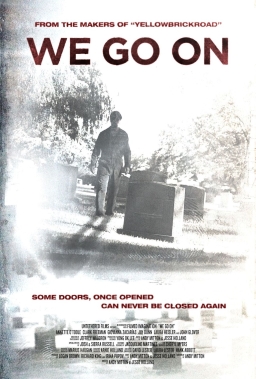 I had errands keeping me away from the Fantasia film festival on Monday, July 25. Now, interruptions are a sad fact of life, but sometimes it’s easy to get back into the swing of things; and as it happened the next day I made it back to the De Sève theatre to watch an American horror film called We Go On, which served to get me back into the Fantasia spirit. Then the day after that I saw two more movies at the De Sève, an odd Swiss romance called Aloys followed by a French horror film called Therapy. The latter had been directed by 16-year-old Nathan Ambrosioni — his second feature film. Together the movies made an odd meditation on life, death, and horror.
 Impossible to predict some things. Notably: you can’t know how you’ll react to a work of art until you’ve experienced it. Looking at the movies Fantasia offered on Sunday night, July 24, I thought I’d try If Cats Disappeared from the World (Sekai kara neko ga kietanara), which promised a tale about a terminally ill man who makes a surreal Faustian bargain. After that, I decided I should watch Superpowerless, as it was a genre piece about an aging superhero who’d lost his powers. In truth, I had my doubts about both movies; Cats looked it might suffer from excess of romanticism and forced whimsy, while Superpowerless seemed like some kind of mumblecore satire treading ground comics had worked over decades past. In the event, I was wrong to doubt. If Cats Disappeared from the World would be likely the best movie I saw at Fantasia, and probably my favourite. Superpowerless, meanwhile, turned out to be the festival’s most pleasant surprise, the film which most greatly exceeded all my expectations.