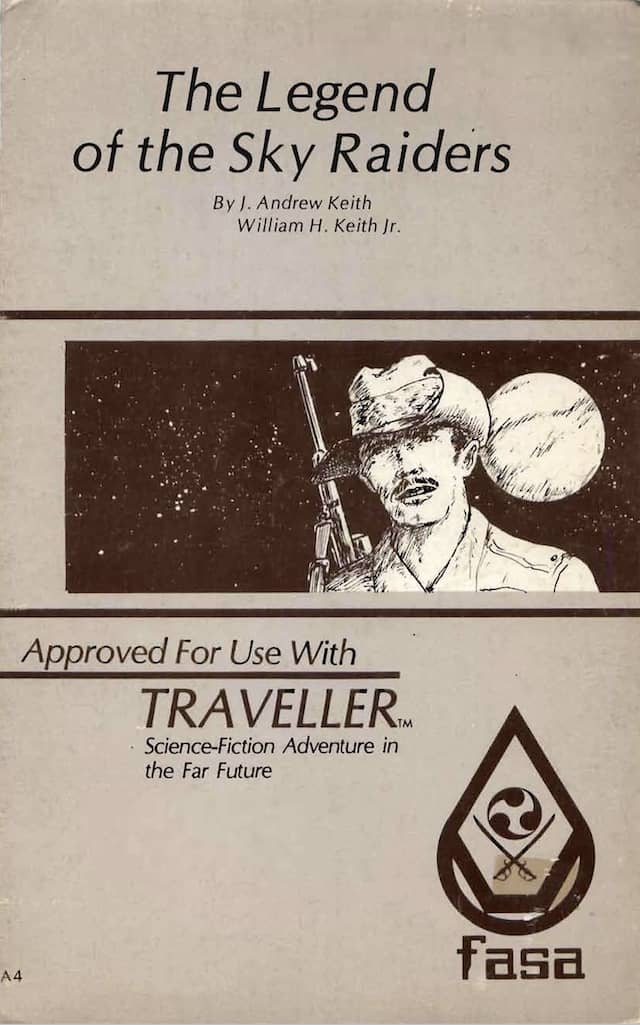
Once There Were Two Rabbits…Watership Down by Richard Adams
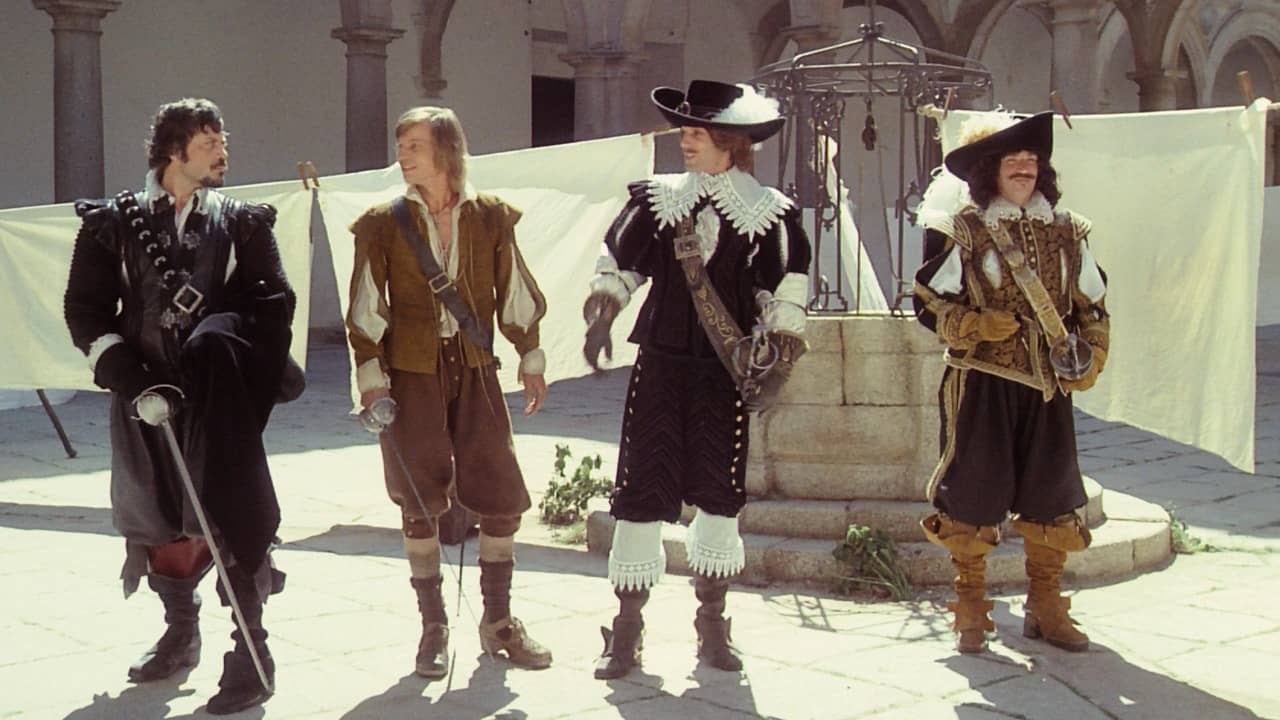
 When I was young I watched numerous live-action animal movies on The Wonderful World of Disney (Sunday nights on NBC, right after Mutual of Omaha’s Wild Kingdom). There was Run, Cougar, Run (1972), Nikki, Dog of the North (1961), and my favorite, The Incredible Journey (1963). I had, of course, also seen Bambi (1942), an animated movie that gave voice to its animal characters, unlike the live-action ones. The point being, when my friend Karl told me about an exciting book he’d just read about the adventures of rabbits, it sounded like something I’d like. Watership Down (1972) turned out to be nothing like the movies I’d seen and much more than just a book about rabbits.
Richard Adams, a British civil servant in the Ministry of Housing and Local Government, created stories to tell his daughters on car rides. He began with the words “Once there were two rabbits called Hazel and Fiver”. The stories were set in and around the real Watership Down, a grass-covered hill in Hampshire, England. It wasn’t long before his daughters insisted he write them down, and in 1966 he started to do just that. After a years-long search for a publisher, Watership Down was released and achieved commercial and critical success, garnering several awards for children’s literature as well.
The bare bones of the novel’s plot are that a band of male rabbits flee their home warren to find a safe place to establish a new one. Along the way, they face adversity in the forms of scarcity, topography, weather, animal predators, and, of course, man. Unlike all those Disney movies, though, Adams wasn’t content to tell a naturalistic story of rabbits in the wild like a lagomorphic version of Tarka the Otter (1927). In the most basic sense, then, Watership Down is not allegorical; Adams repeatedly made that clear. Nonetheless, he dug deep into the sorts of mythic tropes Joseph Campbell explored in works like The Hero with a Thousand Faces (1949)* and the novel is brimming with archetypal elements, e.g. the young man maturing into a hero, self-sacrifice, existential struggles against evil and death. Though devised as a non-allegorical children’s work, Watership Down, informed by Adams’s conservatism and Christianity, addresses some of the deepest issues of humanity and society without ever stooping to didacticism or condescension. Even socialists have discovered great political meaning in the book.
 I started the second day of Fantasia with another feature and short film bundled together. The 14-minute short was the Catalan-language “Solution For Sadness” (“Solució per a la tristesa”), a collaboration between the husband-and wife-team of co-directors Marc Martínez Jordán (also the writer) and Tuixén Benet (also the star). Benet plays a woman who lives alone and battles intense depression; one day a box arrives that promises a cure in the form of a gorilla mask. But is it really a solution, or is it a cruel trick? The short has a lot to say about masks and what people are prepared to see, and the narration makes the storytelling work — it moves quickly, and there’s a dry yet heartfelt tone that’s quite affecting. The conclusion’s surprisingly empathic, and I found an ending that might have felt simple instead stuck with me after the film ended.
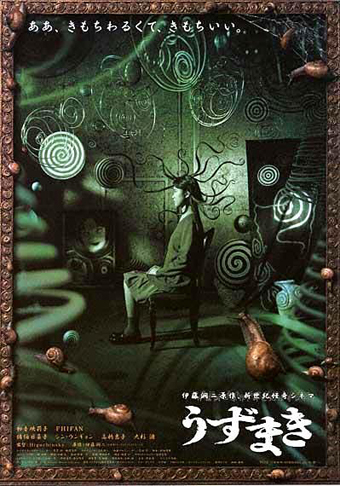 Most of the films at Fantasia 2021 were new, but some were time-honoured works given a screening either because of a new restoration or because they played the festival in the past and were brought back to celebrate Fantasia’s 25th anniversary. Uzumaki (うずまき, literally “Spiral”), from the year 2000, is a case of both — it has a new 4K restoration, and it played Fantasia in 2000. The film’s an adaptation of the manga by Junji Ito, though since it was made while the manga was still ongoing it’s an adaptation that had to find its own answers for some of the questions the text hadn’t resolved at the time of production. Directed by Higuchinsky, AKA Akihiro Higuchi, with a screenplay by Takao Niita, the movie came two years after Ringu (the original version of The Ring) and the same year as the first straight-to-video Ju-On film. It’s one of the early examples of J-horror, then, but sub-genre aside it’s something interesting to consider in its own right.
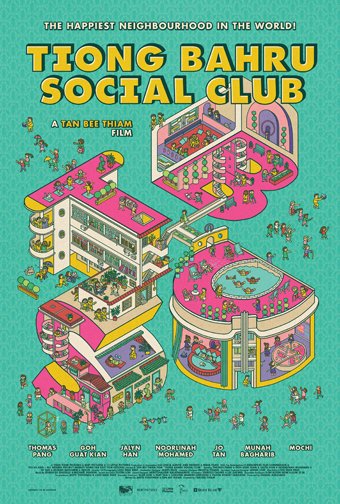 The second feature film I planned to see at Fantasia 2021 came bundled with an eight-minute short by a familiar name. That short was “Let’s Fall In Love,” written and directed by Shengwei Zhou, whose odd stop-motion feature S He