Back to the Ninth Legion . . . Yep, Still Lost: The Eagle
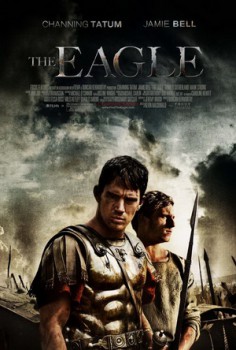 The Eagle (2011)
Directed by Kevin Macdonald. Starring Channing Tatum, Jamie Bell, Donald Sutherland, Mark Strong, Tahar Rahim.
Less than a year after Centurion was released theatrically on a small number screens, along comes another historical adventure film telling the tale of the vanished Ninth Legion. Except The Eagle got released on many screens. In a just and fair movie world, the situation would be the opposite. But anybody who has every griped about the Academy Awards knows that we live in no such world. (And by the way . . . no Best Score nomination for Daft Punk’s work on TRON Legacy?)
The Eagle is the opposite of Neil Marshall’s incredibly energetic, almost gonzo Centurion. Marshall’s film uses a great cast to flesh out its characters and themes of survival and duty while keeping an insane and glorious momentum. At every turn, Centurion does its damndest to keep audience’s adrenaline high. The Eagle, given greater dramatic space for characters between battle scenes, sketches out complete blanks for protagonists, contains no sense of the Roman frontier, and features poorly shot and edited battle scenes that emit out not single nanowatt of excitement. (Oh, I’ll be generous. Not a single microwatt of excitement.) No wonder Focus Features unceremoniously dumped this film out in early February, during Valentine’s Day weekend, up against a kid’s CGI animated movie and romantic comedy starring Adam Sandler. The Eagle is totally disposable.
And given the subject matter, it’s a shame. I hate to see any movie mess up the wonders that the Roman Empire can deliver in terms of action and spectacle. It takes a tremendous amount of work to make me dislike a film about the empire, but dammit if director Kevin Macdonald (The Last King of Scotland, State of Play) and his cast and crew put in overtime to produce a boring film.
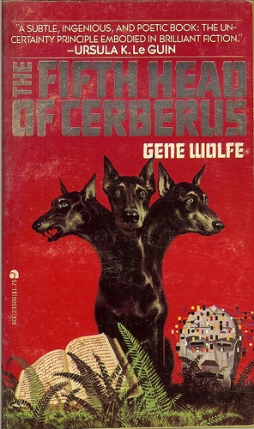 Reading The Fifth Head of Cerberus, I was struck by the way the book seemed eminently suited to the internet age. Never mind that it was written in the early 1970s. Like many of Gene Wolfe’s fictions, it’s a text whose nature is in harmony with the way the internet allows a text to be scrutinised; its depths, its meanings, its allusions — or at least some of them — can produce multiple readings, any of which can be valid, but which deepen the work as a whole the more of them you can think of and hold in your head at once. And can any one reader imagine as many different readings as a community of readers will produce?
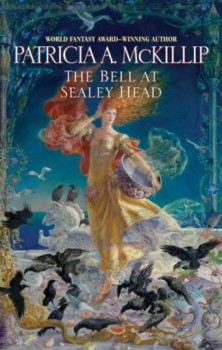 The Bell at Sealey Head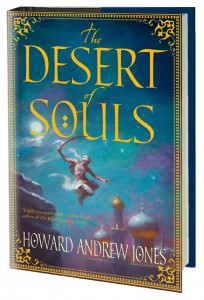
 “Noam Chomsky and the Time Box,” Douglas Lain’s lead story in the January-February