A review of Scarce Resources by Brendan Detzner
 Scarce Resources, by Brendan Detzner
Self-published (153 pages, $9.99, July 2011)
Brendan Detzner has been reading his stories of unholy compromise, quiet madness and apocalypses both great and small at Chicago open mic events for several years now. His first collection, Scarce Resources, is now available. If you’re not familiar with his work, these eighteen stories are a great overview of what he’s been doing.
The collection opens with “The Black Plague,” a mixture of bio-terror and supernatural horror that shows how much more fearsome life-and-death decisions are when placed in human hands than when left to the whims of nature.
“Dinosaurs,” “Dress Rehearsal” and “Humility” are also set in post-apocalyptic worlds where the drive to continue and rebuild society is either an act of ultimate hope or ultimate denial. I especially liked the playful tone of “Dinosaurs” (opening on a tennis match with the Devil), while “Dress Rehearsal” is reminiscent of Philip K. Dick.
“Music for Scalpel and Prepared Piano,” the shortest piece in the collection, illustrates in less than a hundred words how the path of evil can so easily become a slippery slope. “Quiet” deals with a similar theme, except that the atrocities he describes are sadly real (and still being funded by your tax dollars).
Given the recent death of Amy Winehouse, “The House Rock and Roll Built” may seem a bit more timely than originally intended, while “Veronica” portrays a brutal woman living in a brutal world, finding humanity in a bit of nostalgia.
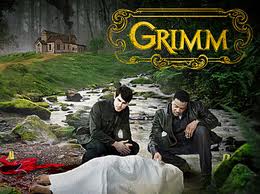 Another week, another set of new television goodness from the non-cable networks. Seriously, after a year where there’s been very little mainstream science fiction and fantasy on television, it’s nice to see it coming back in such full force. I’m still divided on which of the new shows I most like (though I still probably lean, just a touch, toward Once Upon a Time), though, and both seem to have some potential.
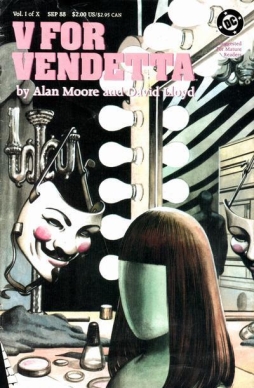 I’m taking a bit of a break from the Romanticism and Fantasy posts, as I’ve got a few other things I’d like to write about. To start with, since I discussed Alan Moore’s Marvelman a few weeks ago, I thought I’d take a look now at V For Vendetta. V started as a series that ran, like Marvelman, in the early 80s in the black-and-white anthology magazine Warrior. Though the story was left incomplete when Warrior folded, in 1988 the series was republished in colour by DC Comics, and Moore and artist David Lloyd were able to finish it as they’d hoped. (Some spoilers for the book follow; also spoilers for Watchmen, oddly enough.)
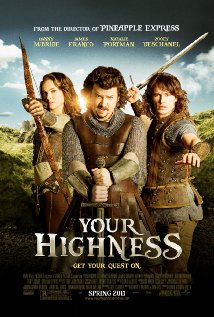 Sometimes a film comes along which redefines a genre. It brings a new, vibrant life to traditional storytelling structures. It makes you look forward to the new tales that will be inspired by it.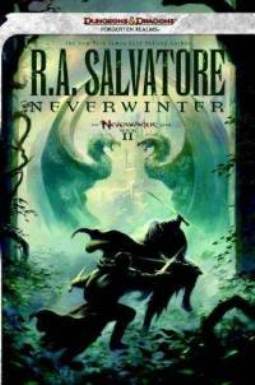
 The latest Apex Magazine is now