Byzantine and Early Modern Greek Magic
Every society has magic. In some, it’s kept underground. In others, it’s incorporated into the fabric of accepted religion. The Byzantine Empire had both.
Of the forbidden magic, time and Church censors have erased all but a trace. The accepted or at least tolerated magic, however, gives us a fascinating glimpse into the minds of a society that considered itself a continuation of the Roman Empire.
Late last year I was sent on assignment to write a series about travel in Greece. One of the highlights was a visit to the Byzantine Museum in Athens, which had a display on Byzantine and early modern Greek magic.
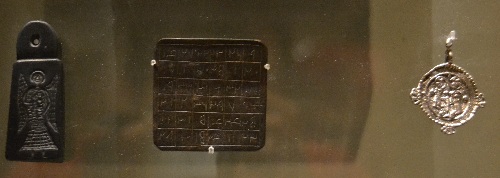
Apotropaic magic, which protects the user from evil influences, was very popular in the Byzantine era. It’s unclear what particular evil these charms protected their wearers from.
 The July-August issue of Interzone features new stories by Sean McMullen (”Steamgothic”), Aliette de Bodard (”Ship’s Brother”), David Ira Cleary (”One Day in Time City”), Gareth L. Powell (“Railroad Angel”), and the 2011 James White Award-winning story “Invocation of the Lurker” by C.J. Paget; cover artwork by Ben Baldwin; an interview with Juliet E. Mckenna by Elaine Gallagher; “Ansible Link” genre news and miscellanea by David Langford; “Mutant Popcorn” film reviews by Nick Lowe; “Laser Fodder” DVD/Blu-Ray reviews by Tony Lee; and book reviews by various contributors.


 Tales of the Gold Monkey only lasted one season in the early 1980s, but the series has developed a steady cult following in the years since its brief network run. Dismissed as nothing more than an inferior small screen knockoff of the contemporaneous Raiders of the Lost Ark, the series has finally started to earn the recognition denied it at the time. While it took a Hollywood blockbuster to convince network executives to green-light the series, the proposal had been around since the 1970s and the show was conceived, like Raiders, in homage to the serials and classic adventure stories of the past.