Spiritualism during the American Civil War
 Spiritualism was well established by the time the Civil War started. As the death toll mounted — a new estimate puts the body count at 750,000 — spiritualists enjoyed ever-greater demand for their “services.”
When you consider that the 1860 census showed only 31 million people living in the U.S., pretty much everyone had a reason to go to one. The Banner of Light newspaper ran a column with messages from dead soldiers of both armies channeled through a Mrs. J.H. Conant. One such message said,
As a favor of you today, that you will inform my father, Nathaniel Thompson of Montgomery, Alabama, if possible, of my decease. Tell him I died… eight days ago, happy and resigned.
Séances became popular with all social classes and even Abraham Lincoln attended a few hosted by the medium Nettie Colburn, a society favorite in Washington, D.C. The details of these meetings are hazy, but from what we know he went with his wife Mary Todd Lincoln, who grieved over the deaths of two of her young sons. The President may have gone along just to humor her. Apparently he found séances entertaining, once reportedly sitting on a piano with several soldiers as it levitated into the air.
It might seem strange that the President of the United States would engage in such activities, but his experiences were more the rule than the exception. Spiritualism was hugely popular with upper and middle class whites. Less is known about the working class or black experience with the Spiritualist movement during the Civil War, as there is little written record.
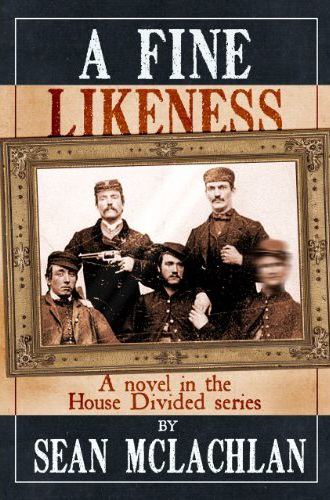
In my Civil War novel, A Fine Likeness, Union Captain Richard Addison visits a medium in order to speak to his son, who was killed at Vicksburg.


 Pssst. Hey, buddy. Yeah, you. Come over here a sec. Listen. Did you know that by virtue of reading this, by virtue of even cruising this site, you live in a ghetto?
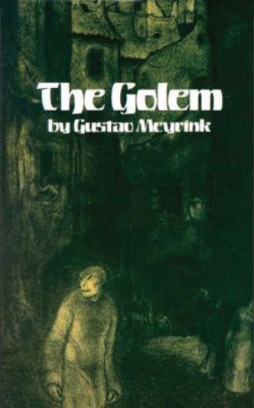 The first thing I feel I have to say about Gustav Meyrink’s novel, The Golem, is that it’s intensely, thrillingly strange. Dreamlike, elliptical, informed by theosophical and occult symbols, it wrong-foots you; nothing in it develops the way you’d expect, not in terms of character or plot or imagery. And yet that strangeness feels almost like a side-effect, a byproduct of its insistence on its themes, on its vision, on its focus on the reality of Prague and on whatever it is that lies beyond that reality. Perhaps the strangest thing about the book, published in installments in 1913 and 14 and published as a whole in 1915, was that this odd esoteric horror story was also tremendously popular in its day.