Teaching and Fantasy Literature: Weird Things My Students Have Been Told About Writers

Most of my students and their families have perfectly ordinary misperceptions about how books come into the world. They ask what non-writers ask–where do ideas come from, that kind of thing. They’re not sure whether they expect all writers to be starving or loaded, but they’re pretty sure it’s all one or the other. Writing professionally is something that other people do in some other world, not something mere mortals who stand in their kitchens might do. That’s okay. They’re kind people who care about being literate in the best, most expansive sense. Yay them.
And then, there are the outliers.
Allow me to introduce the Client Mom from Hell.
It was my first freelance tutoring gig. My student was a charming sixth-grader who had somehow talked me into reading Redwall with him. There are people who love Redwall, which is fine, but it’s just not my thing. So my student asked me how I would write about a book I just didn’t like, since he had to do that at school all the time. A good, practical question.
“I try to set aside what I want in a book,” I said, “and to think about what the author was trying to accomplish. He didn’t write this story the way I would have, but he must have had a reason for writing it the way he did.”
The Client Mom from Hell dropped whatever she was doing in the kitchen and blustered into the dining room to interrupt our lesson.



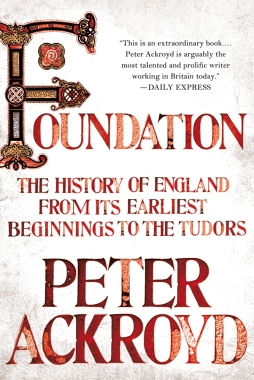 I’ve been reading Peter Ackroyd’s writing for almost twenty years now, and I’m frankly beginning to fall behind. It’s hard to keep up with the man: he’s produced poetry, fiction, biographies, creative nonfiction, and, most recently, narrative history. One of his nonfiction books, Albion, was subtitled ‘the English Imagination,’ and was an essay or set of essays investigating exactly that; in fact, much of Ackroyd’s work can be seen as an investigation of, or a struggle with, the nature of English literary, historical, and imaginative traditions — especially as manifested in the history of London. And so his current project (or one of them) is an ambitious six-book history of England. Two have been published so far; as I say, I’m behind, and have only just completed the first, Foundation, examining the past of England from prehistory to the end of the Wars of the Roses.