Tangent Online on “Life on the Sun”: “This One Captured a Piece of my Soul. Brilliant.”
 Louis West at Tangent Online reviews C.S.E. Cooney’s original fantasy novelette, published here on Sunday, February 10th:
C.S.E. Cooney’s “Life on the Sun” is bold and powerful… While the previous story in this series, “Godmother Lizard,” entranced me, this one captured a piece of my soul. Brilliant.
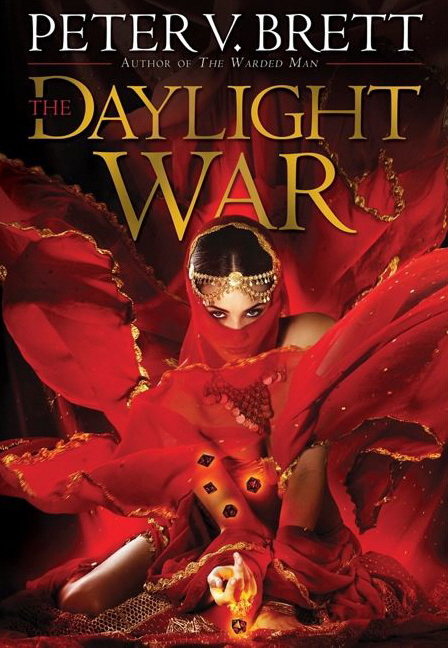
Kantu, warrior of the Bird People, seeks to rid her desert city, Rok Moris, of the occupiers from the Empire of the Open Palm. When Fa Izikban Azur and his Army of Childless Men march upon Rok Moris, Kantu and her people rise up. But the Fa did not come to liberate, but to reclaim those who belonged to him — Kantu, his daughter, and the Rokka Mama, mother to the Bird People and the Fa’s favorite wife, even after she had killed him…
I don’t know how Cooney weaves so many rich story arcs into a single novelette tapestry. But, on a scale of 1 to 10, I rank this one as a twelve.
“Life on the Sun” is the sequel to C.S.E.’s “Godmother Lizard,” which Tangent Online called “a delightful fantasy tale about an orphan girl… The dialog has a pleasantly oblique edge to it which entranced me from the beginning.” We published “Godmother Lizard” right here on November 11th.
Read Louis West’s review at Tangent Online, and read “Life on the Sun” completely free here.
The complete catalog of Black Gate Online Fiction, including stories by Vaughn Heppner, E.E. Knight, Jason E. Thummel, Gregory Bierly, Mark Rigney, Judith Berman, Howard Andrew Jones, Dave Gross, Harry Connolly, and others, is here.

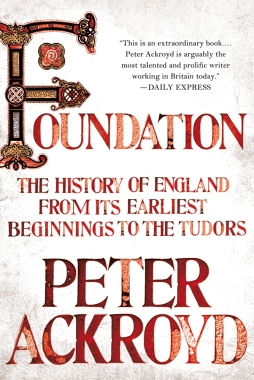 I’ve been reading Peter Ackroyd’s writing for almost twenty years now, and I’m frankly beginning to fall behind. It’s hard to keep up with the man: he’s produced poetry, fiction, biographies, creative nonfiction, and, most recently, narrative history. One of his nonfiction books, Albion, was subtitled ‘the English Imagination,’ and was an essay or set of essays investigating exactly that; in fact, much of Ackroyd’s work can be seen as an investigation of, or a struggle with, the nature of English literary, historical, and imaginative traditions — especially as manifested in the history of London. And so his current project (or one of them) is an ambitious six-book history of England. Two have been published so far; as I say, I’m behind, and have only just completed the first, Foundation, examining the past of England from prehistory to the end of the Wars of the Roses.