Teaching and Fantasy Literature: Or Maybe It Can’t Be Toned Down
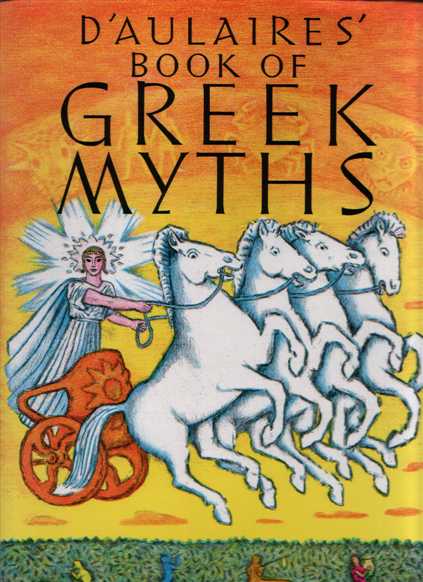 I got my first taste of Greek mythology from D’Aulaire’s Greek Myths. Later, when I was old enough for Bulfinch’s Mythology, I thought I had graduated to the real thing. Homer came to me by way of a dusty turn-of-the-century book with a title along the lines of The Boy’s Own Homer, with glorious color illustrations. D’Aulaire gave me the Norse myths, too, though I didn’t get The Ring of the Niebelungen until a friend gave me a mixtape that included Anna Russell’s brilliant twenty-minute Ring cycle sketch.
When my parents realized I knew nothing whatever about the Bible — I was ten — they rectified my cultural illiteracy with Pearl Buck’s two-volume The Story Bible. Of all those beginner versions of classics, only Buck’s biblical books kept all the sex and violence in. Imagine my shock when my mother handed me Ovid’s Metamorphoses in Mandelbaum’s complete and very faithful translation. I was twelve. What was she thinking? If the Metamorphoses were a blog, every post would have cut text with PTSD trigger warnings.
Mark Rigney’s post on how old a kid should be before reading or watching The Hunger Games touched on a problem I face often as a teacher of teenagers, some as young as 13. Since I’m a freelance teacher, making house calls, my students’ parents are sometimes directly involved in the question of how old is old enough for which book. Other times, especially when the parents don’t speak much English, I actually wish I could involve them more directly than the language barrier allows.
I’ll face the age question all over again, differently, when my own kids can read on their own. Inevitably, I come at the predicament through my own history as a reader — which stories I was denied too long or permitted too early. As a maker of stories, I’m fascinated also with seeing what of a story can survive the translation into the consciousness of the young, either through the efforts of adult writers who reinterpret the stories, or through the efforts of kids themselves when they try to make sense of them.