Browsed by
Category: Vintage Treasures

Germ Warfare, Sentient Planets, and Dark Age Alchemy: The Best of Murray Leinster

Germ Warfare, Sentient Planets, and Dark Age Alchemy: The Best of Murray Leinster

The-Best-of-Murray-Leinster-small The-Best-of-Murray-Leinster-back-small

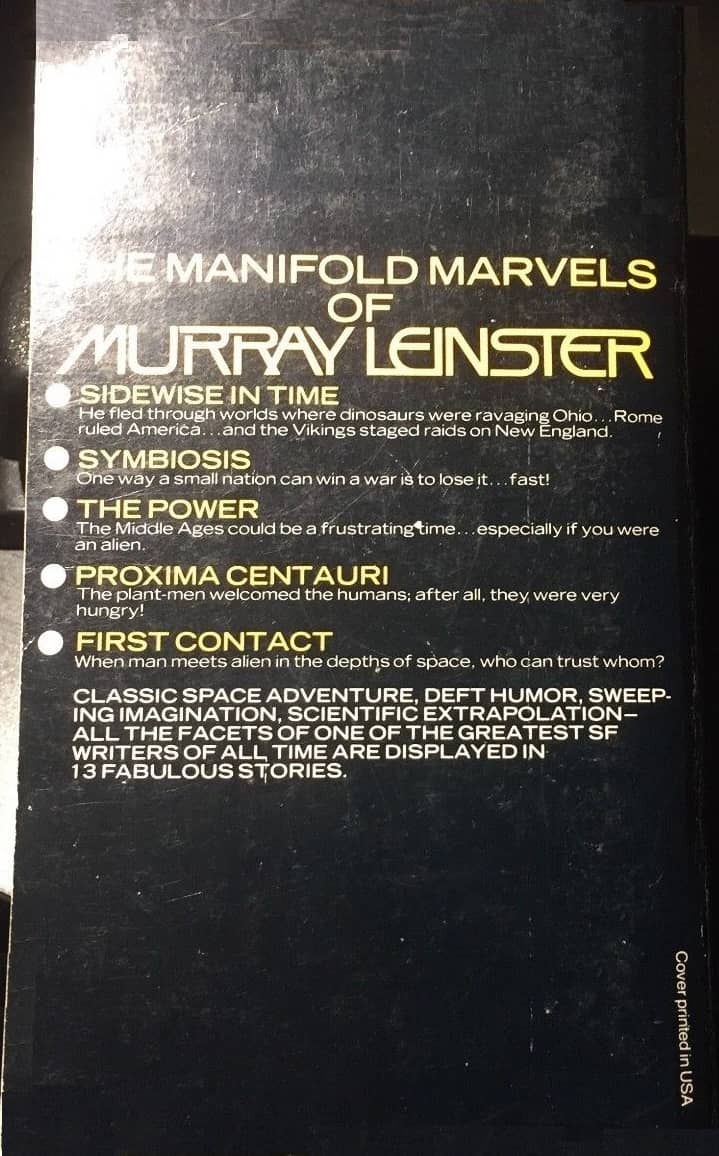
The Best of Murray Leinster (1978) was the fourteenth installment in Lester Del Rey’s Classic Science Fiction Series. J. J. Pierce returns to give the introduction to this volume. H. R. Van Dongen (1920–2010) returns to do his fourth cover of the series, having done the cover for the seventh volume in honor of John W. Campbell, the tenth volume in honor of Fredric Brown, and the eleventh in honor of Jack Williamson. Since Leinster was already passed away in 1978, no afterword is included in this volume.

Murray Leinster (1896–1975) was the nom de plume of American writer William Fitzgerald Jenkins. Pierce refers to Leinster as ‘The Dean of Science Fiction”, clearly showing a deep respect for him, and I think also an indication of Leinster’s representativeness as an early and grand leader of pulp SF.

I’ve often heard early pulp SF described as basically following “engineer-solving” plots. I think I’ve understood what this meant, and I know I’ve seen examples of these in earlier volumes of the Del Rey’s Classic Science Fiction Series. But Leinster is sort of a practitioner of this sort of plotting par excellence. What do I mean? Leinster’s plots tend to center upon some difficult problem that is presented as unsolvable (or nearly so), but by the end of the story the problem is usually solved in some sort of rational or scientific way. At first blush, this may sound fairly boring, and it has the potential to come off as overly preachy about the goodness of science. But in reading Leinster, you often get pulled into the problem of the story, and are sometimes surprised with how science answers or attempts to answer the issue at hand.
Read More Read More

The Golden Age of Science Fiction: “Encased in the Amber of Eternity,” by Robert Frazier

The Golden Age of Science Fiction: “Encased in the Amber of Eternity,” by Robert Frazier

Cover by Vincent di Fate

Cover by Tim Mullins

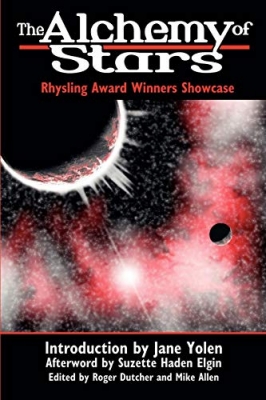
The Rhysling Awards, named for Robert A. Heinlein’s poet from The Green Hills of Earth, were established by the Science Fiction Poetry Association in 1978. Both the association and the award were founded by Suzette Haden Elgin. Each year, awards are given for Short Form poetry and Long Form poetry. The first three years of the award resulted in ties, with three poems tying in the first year, and two each tying in the second and third year.

Robert Frazier’s poem “Encased in the Amber of Eternity” depicts a Pacific Northwest in the aftermath of a nuclear war that has depopulated the North American continent (and presumably most of the rest of the world). His imagery moves briskly from descriptions of various objects associated with lights and fire representing the falling missiles, to the bone-like remnants of human civilization, represented by Portland. The poem’s narrator, who seems to be a survivalist type, has managed to come through the catastrophe and offers a glimpse of hope that he will be able to find other survivors to rebuilt some sort of civilization, or, even if it is only him, at least he is still around.

Read More Read More

Vintage Treasures: Machines & Men by Keith Roberts

Vintage Treasures: Machines & Men by Keith Roberts

Men & Machines Keith Roberts-small Men & Machines Keith Roberts-back-small

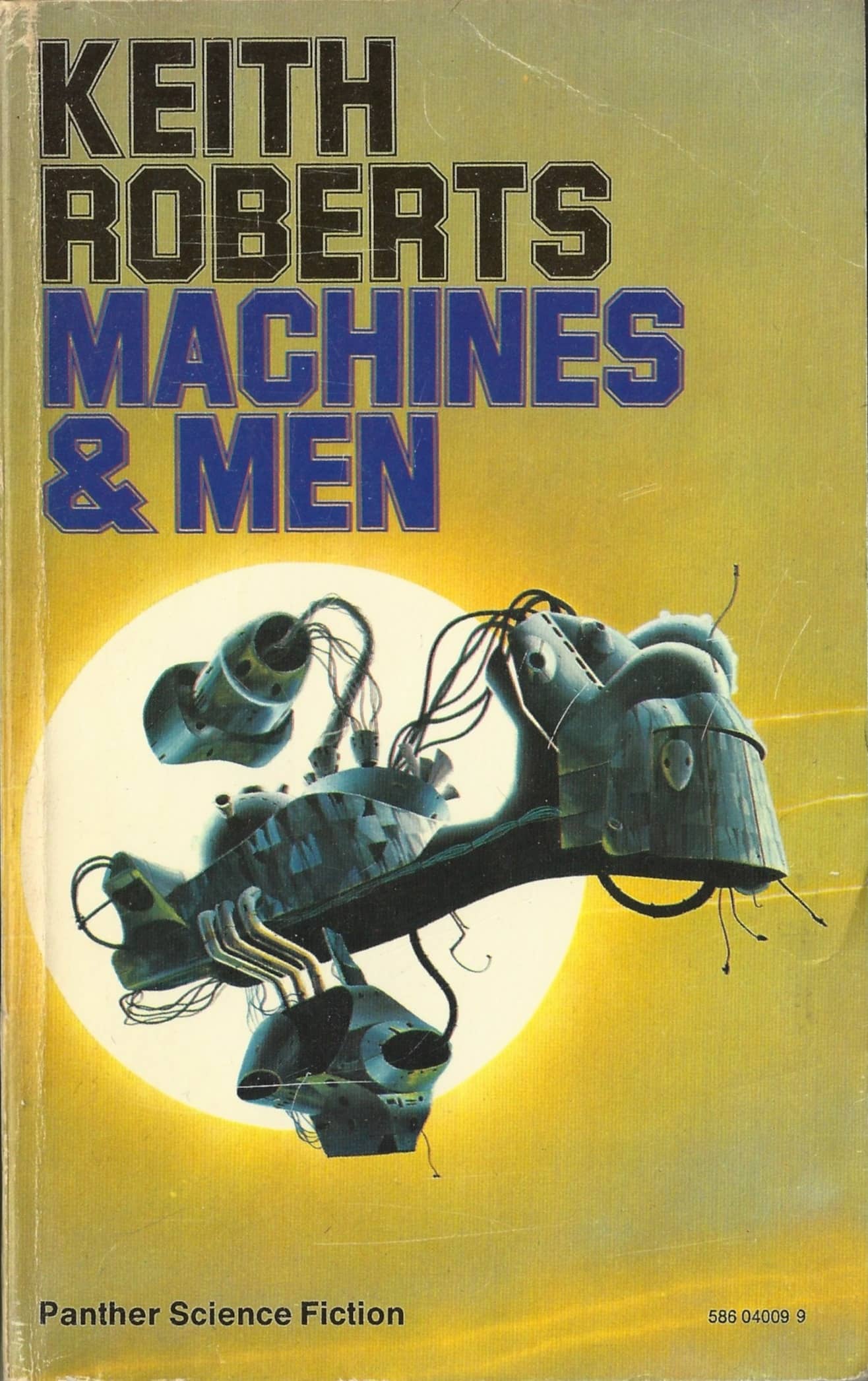
Cover by Anthony Roberts

I love discovering British vintage SF paperbacks. There’s a lot to discover, they’re relatively inexpensive, and they’re virtually unknown here in the US. Recently I’ve been accumulating British short story collections by John Wyndham and Keith Roberts, and they’ve been well worth tracking down. I admit I enjoy the covers as well — especially the ones featuring exotic spaceships.

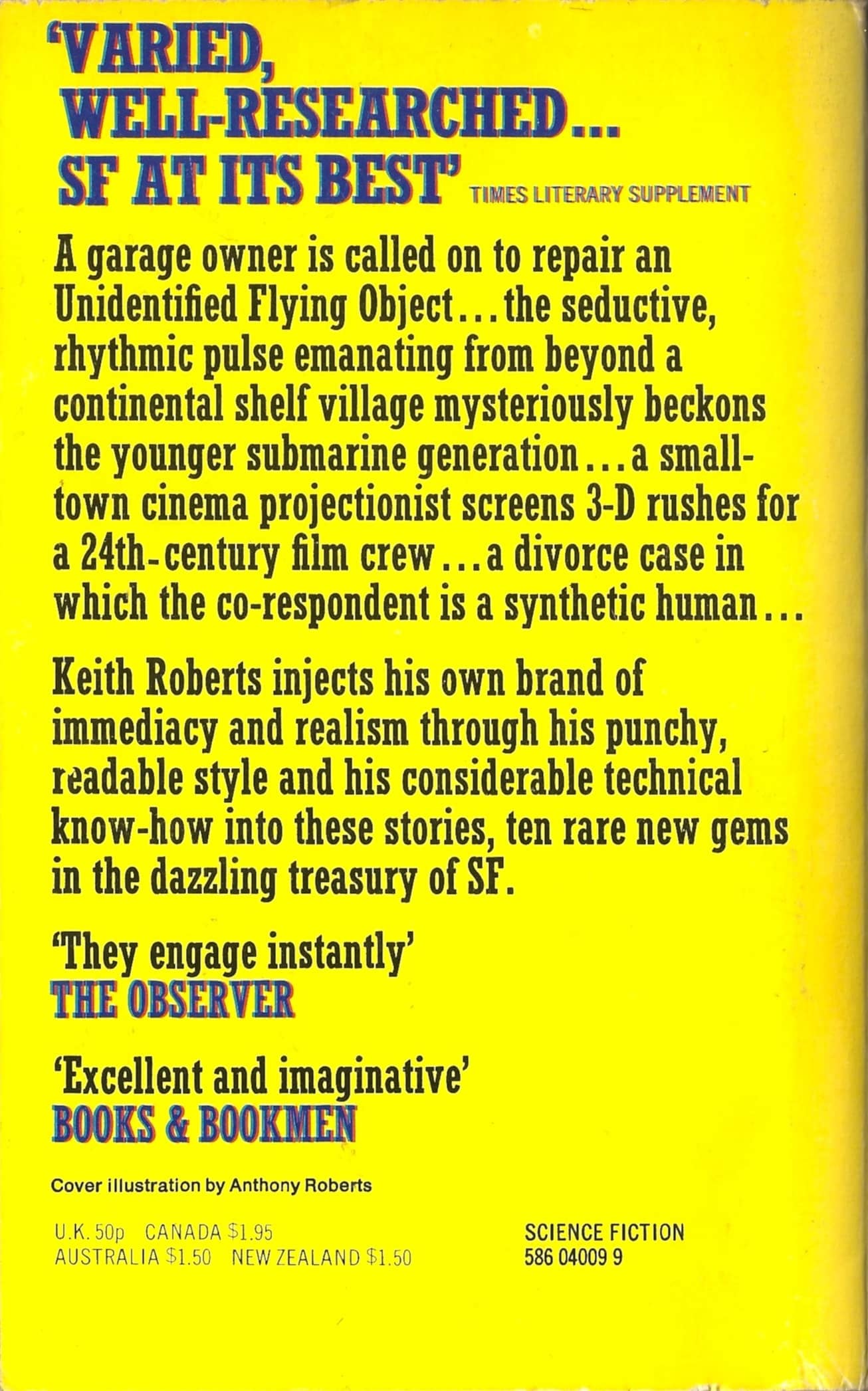
My latest discovery is Machines and Men, the second collection by Keith Roberts, published by Panther in 1973 and which was never reprinted in the US. It’s a slender volume, yet packed with tales of UFOs, wary submariners, a 24th-Century film crew, a synthetic human getting a divorce, and much more. And lo! There’s an exotic spaceship on the cover, which sorta looks like a futuristic curling iron.

The fiction within originally appeared between 1964-69, in places like SF Impulse magazine and John Carnell’s long-running New Writings in SF anthology series. Here’s the complete Table of Contents.

Read More Read More

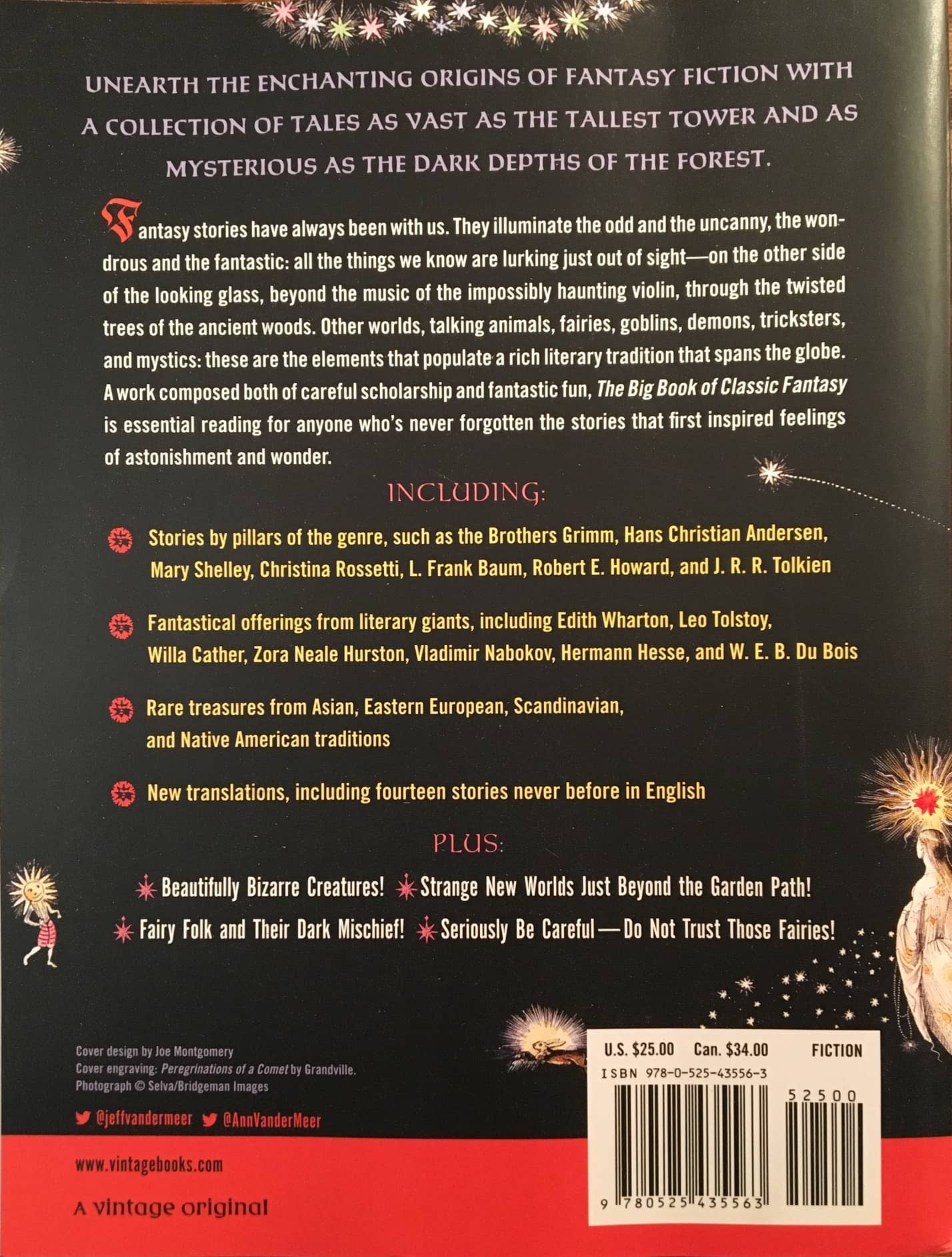
New Treasures: The Big Book of Classic Fantasy edited by Ann and Jeff VanderMeer

New Treasures: The Big Book of Classic Fantasy edited by Ann and Jeff VanderMeer

The Big Book of Classic Fantasy-small The Big Book of Classic Fantasy-back-small

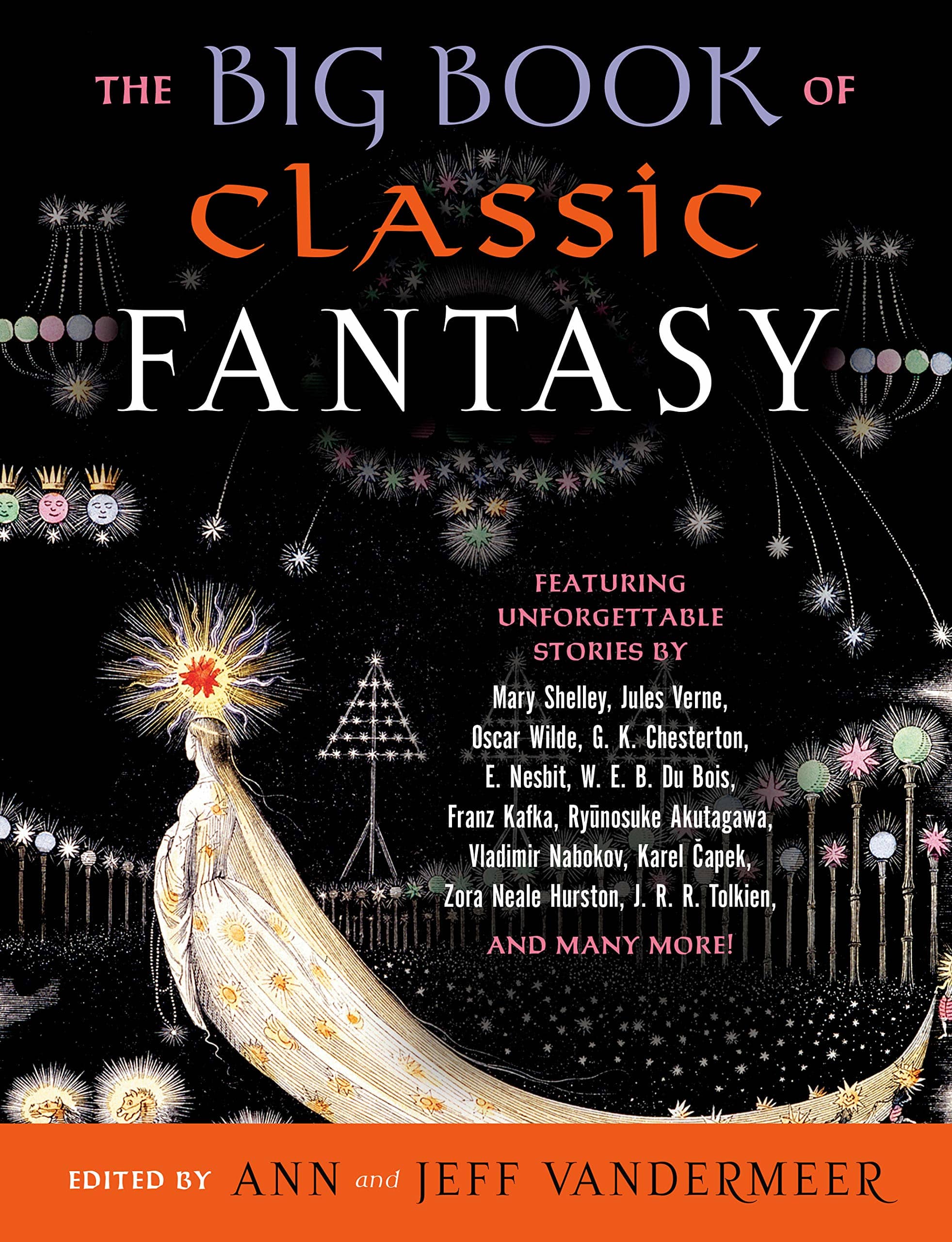
One of my favorite anthologies of the past few years — perhaps my absolute favorite — is The Big Book of Science Fiction, edited by Ann and Jeff VanderMeer. It’s a companion book of sorts to their 2012 Tor volume The Weird: A Compendium of Strange and Dark Stories, a monumental 1152 page collection of weird fantasy from roughly the last century.

But I don’t file it with that book, or the Vandermeer’s other fine anthologies. Instead, I give it a place of honor on the shelf with my other Vintage Big Books, which include Otto Penzler’s The Big Book of Adventure StoriesThe Big Book of Ghost Stories, and The Vampire Archives. Which is why I was so excited to see the VanderMeer’s add another book to that illustrious set this month: The Big Book of Classic Fantasy, a thoroughly impressive tome that unearths the fascinating origins of modern fantasy.

Kirkus Reviews calls The Big Book of Classic Fantasy a “quintessential anthology destined to become the standard by which future fantasy classic anthologies are measured… a must-have.” It contains rarely-seen tales from Asian, Eastern European, Scandinavian, and Native American traditions, including brand-new translation of fourteen stories never before printed in English. Contributors include the Brothers Grimm, Hans Christian Andersen, Mary Shelley, Edgar Allan Poe, Nathaniel Hawthorne, Herman Melville, Charles Dickens, E. Nesbit, Christina Rossetti, Jules Verne, Lewis Carroll, Oscar Wilde, L. Frank Baum, H. G. Wells, Arthur Machen, Edith Wharton, George MacDonald, G. K. Chesterton, Leo Tolstoy, Willa Cather, Zora Neale Hurston, Vladimir Nabokov, Hermann Hesse, William Hope Hodgson, Lord Dunsany, A. Merritt, E. R. Eddison, John Collier, Edgar Rice Burroughs, Fritz Leiber, Robert E. Howard, J. R. R. Tolkien, Clark Ashton Smith, and many, many others.

Here’s the impressive Table of Contents.

Read More Read More

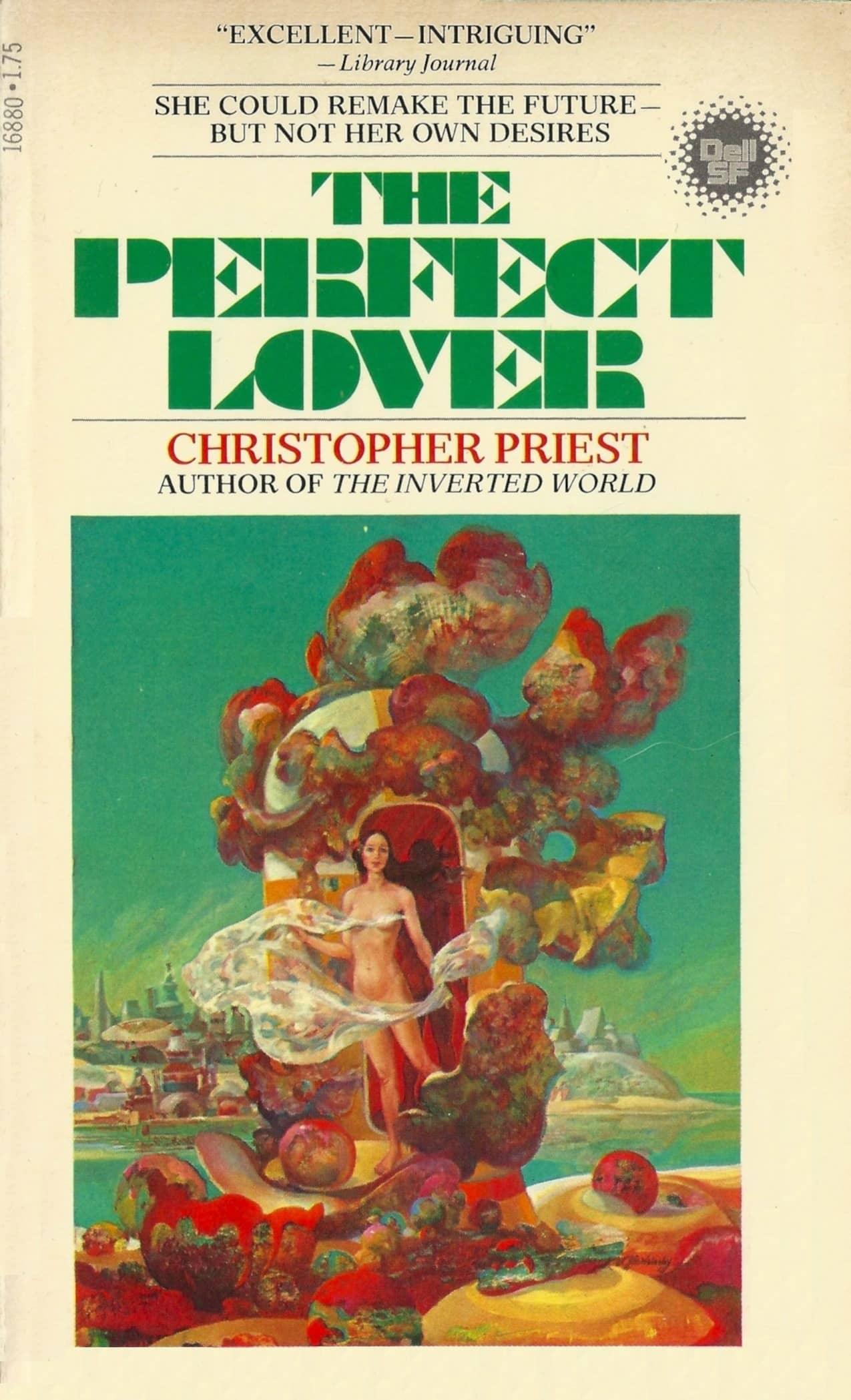
Vintage Treasures: The Perfect Lover by Christopher Priest

Vintage Treasures: The Perfect Lover by Christopher Priest

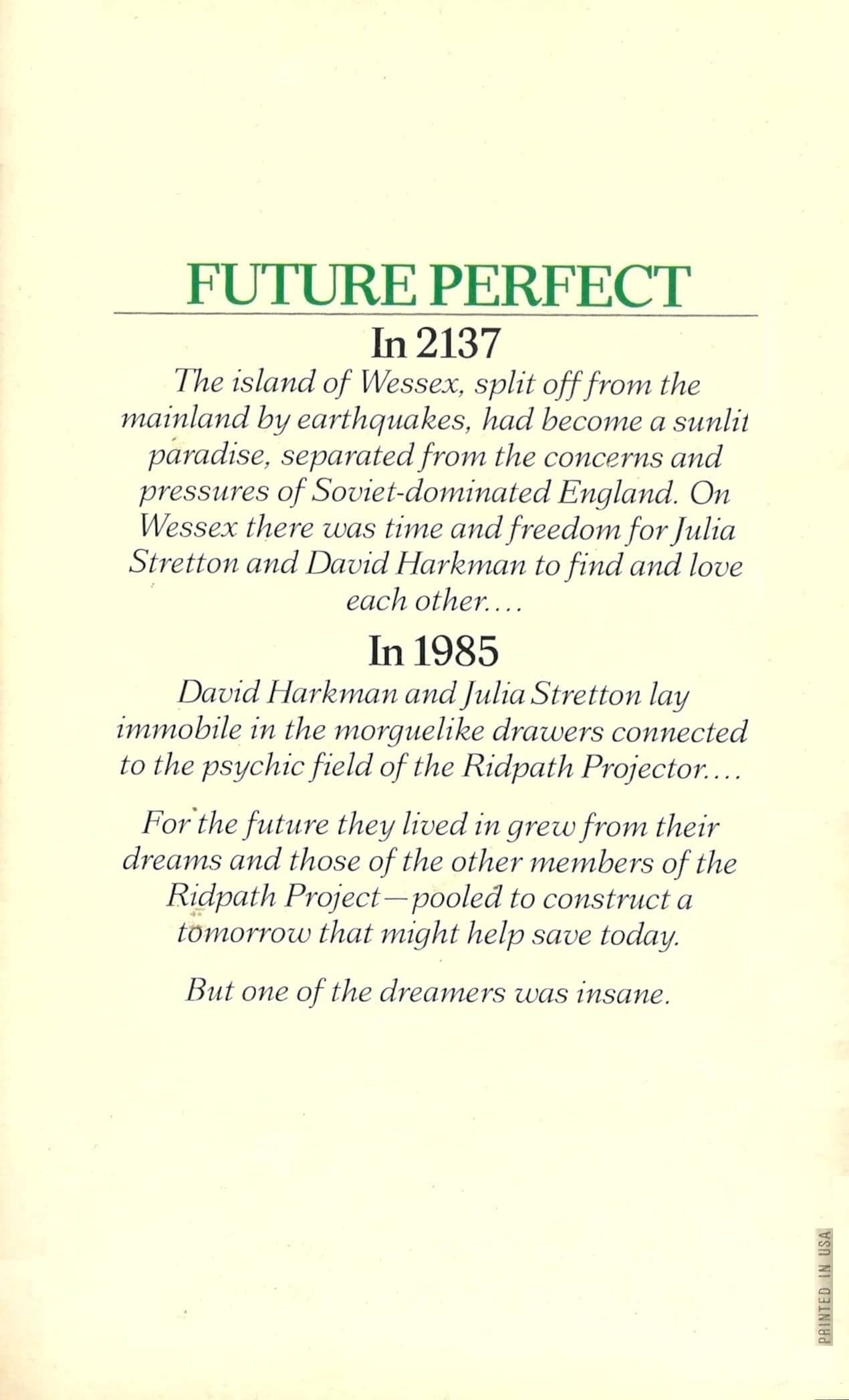
The Perfect Lover Christopher Priest-small The Perfect Lover Christopher Priest-back-small

Cover by Walter Bachinsky

Christopher Priest is one of the most celebrated modern British science fiction authors. He won a World Fantasy Award for his 1995 novel The Prestige (filmed under the same name in 2006 by Christopher Nolan, with Hugh Jackman and Christian Bale), the British Science Fiction Award award for Best Novel no less than four times (for Inverted World, The Extremes, The Separation, and The Islanders), and he’s been nominated for a Hugo Award for Best Novel, Best Novella, Best Novelette, and Best Non-Fiction Book (that last one for his epic expose on Harlan Ellison’s Last Dangerous Visions, The Book on the Edge of Forever).

But in the mid-70s he was still a young SF writer trying to make a name for himself, building on the Campbell nomination for his second novel Fugue for a Darkening Island (1972) and the BSFA win and Hugo nomination for his third, The Inverted World (1974). His fifth novel, A Dream of Wessex, is the one I want to talk about today. It was a very early take on virtual reality — published a full 30 years before the first Oculus Rift prototype.

A Dream of Wessex is the tale of a group of volunteers who create a utopian consensus VR world where they’re unable to remember their past lives. It appeared in the UK in 1977, and was published in the US by Dell under the name The Perfect Lover. Here’s an excerpt from the Kirkus Review of the novel in December of 1977.

Read More Read More

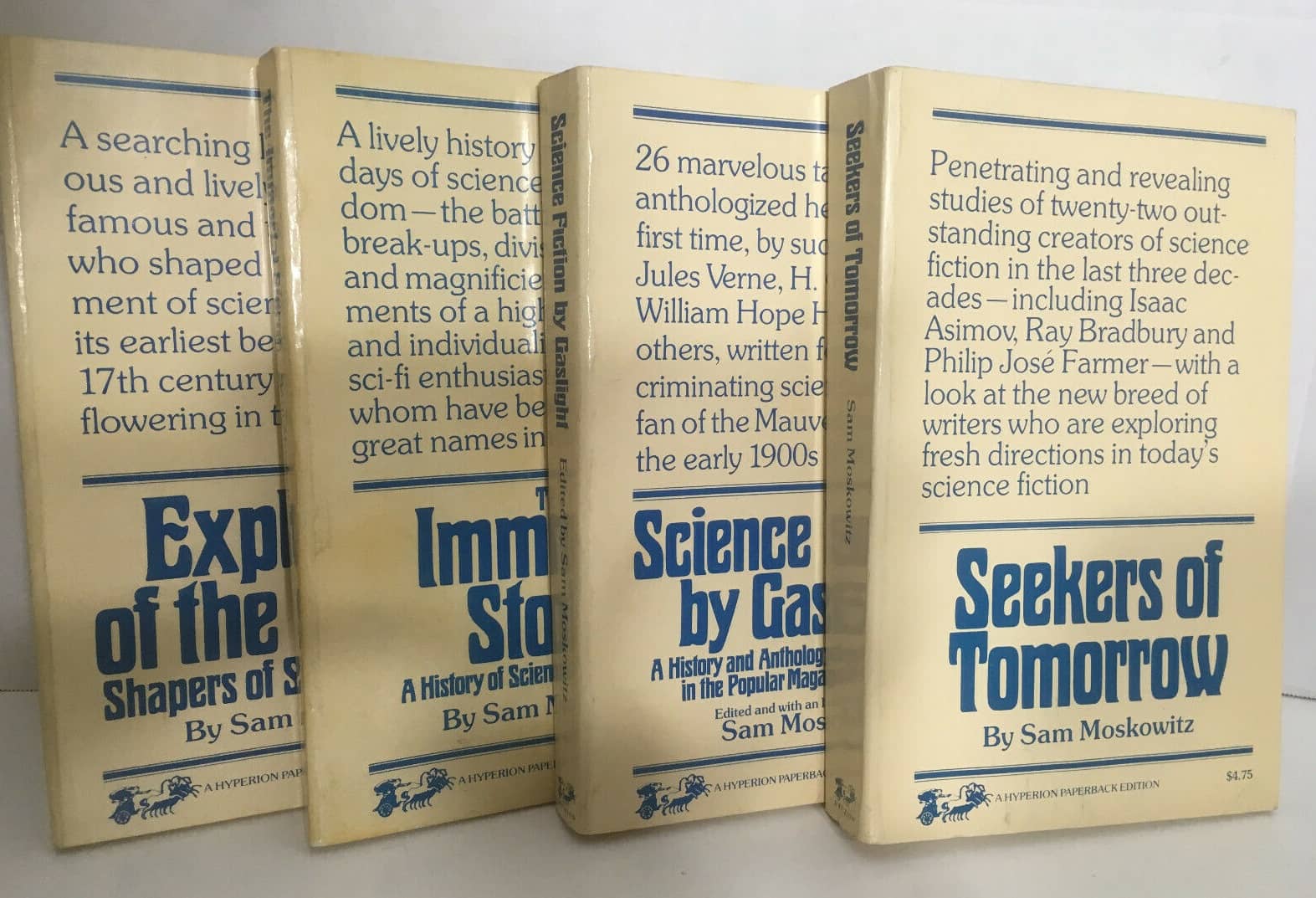
Sam Moskowitz’s Classics of Science Fiction

Sam Moskowitz’s Classics of Science Fiction

Sam Moskowitz History of Science Fiction-small

Sam Moskowitz was one of the great science fiction historians. A writer, editor, and collector extraordinaire, he was the chairman of the very first World Science Fiction Convention in New York in 1939. He was one of the first nonfiction writers to take the new field of science fiction seriously, and produced a number of anthologies and histories considered early classics today.

They’re also hard to track down, dammit. Especially his history of Science Fiction fandom, The Immortal Storm, which was printed in miniscule numbers in its original hardcover edition, and which today sells for, like, a billion dollars. It was never reprinted in paperback, unless you want to count the 1974 paperback Hyperion edition, which I didn’t even know existed until yesterday. What the hell, man. I could have saved myself a lot of collecting heartache if I’d known about this thing 20 years ago.

I discovered the Hyperion edition while I was researching Moskowitz’s Modern Masterpieces of Science Fiction, a 1965 anthology containing stories which, let’s just say, are no longer modern. But it’s still an excellent survey of early 20th Century SF, perfectly suited for a Vintage Treasures post. At least it was, until I discovered at the last minute that it was one of no less than six Moskowitz volumes published by Hyperion in 1974. So I guess I’m writing about them instead.

Read More Read More

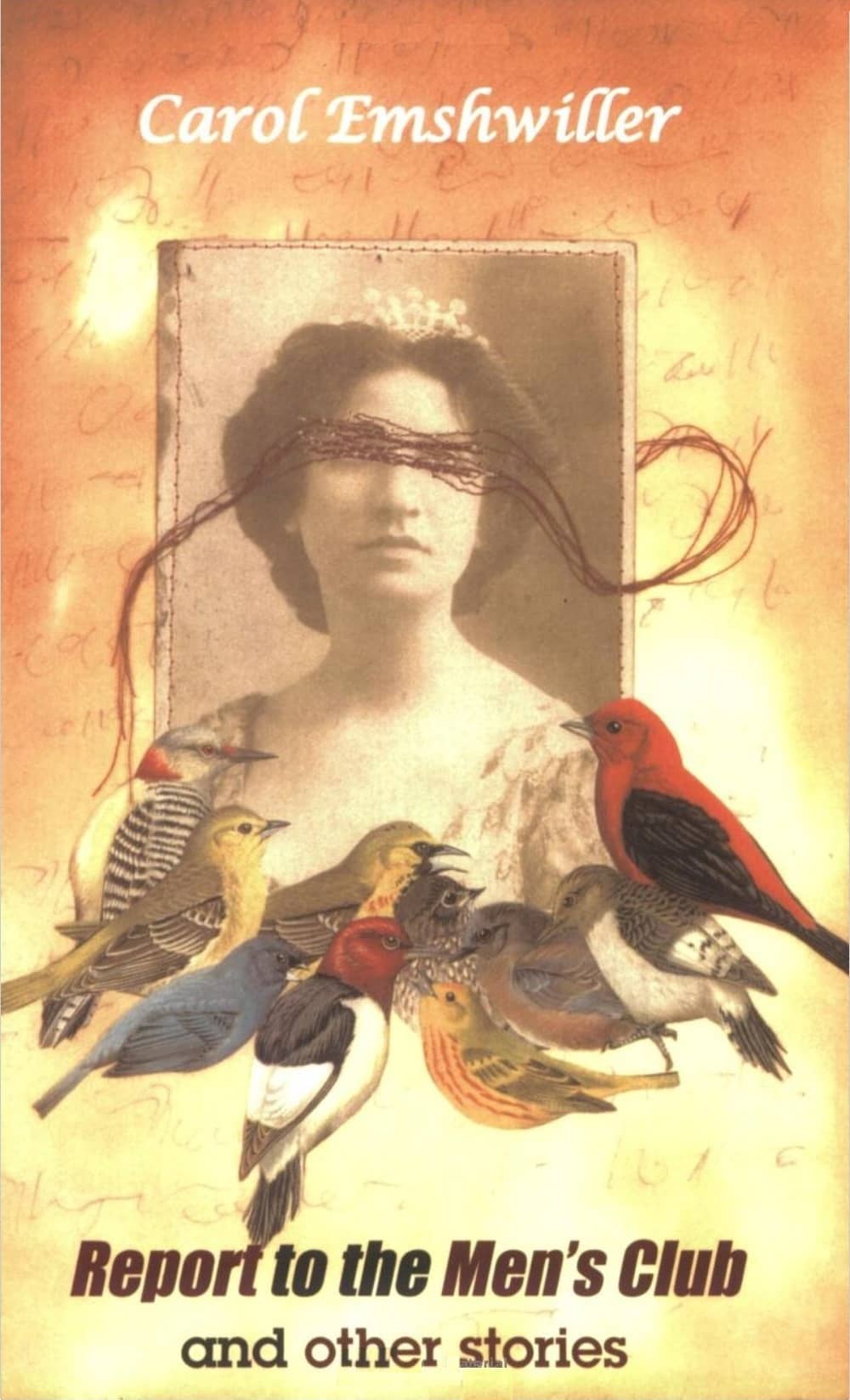
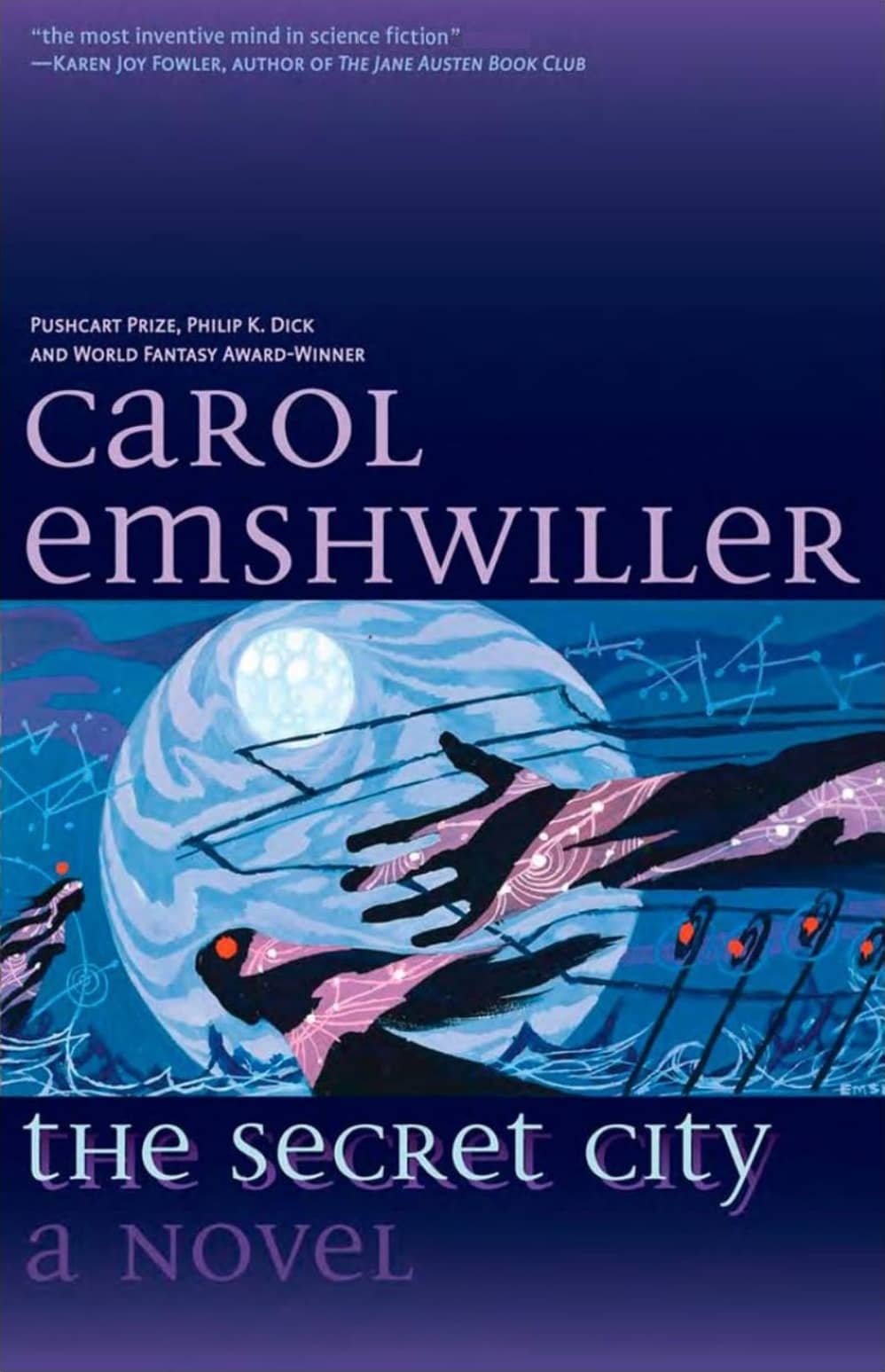
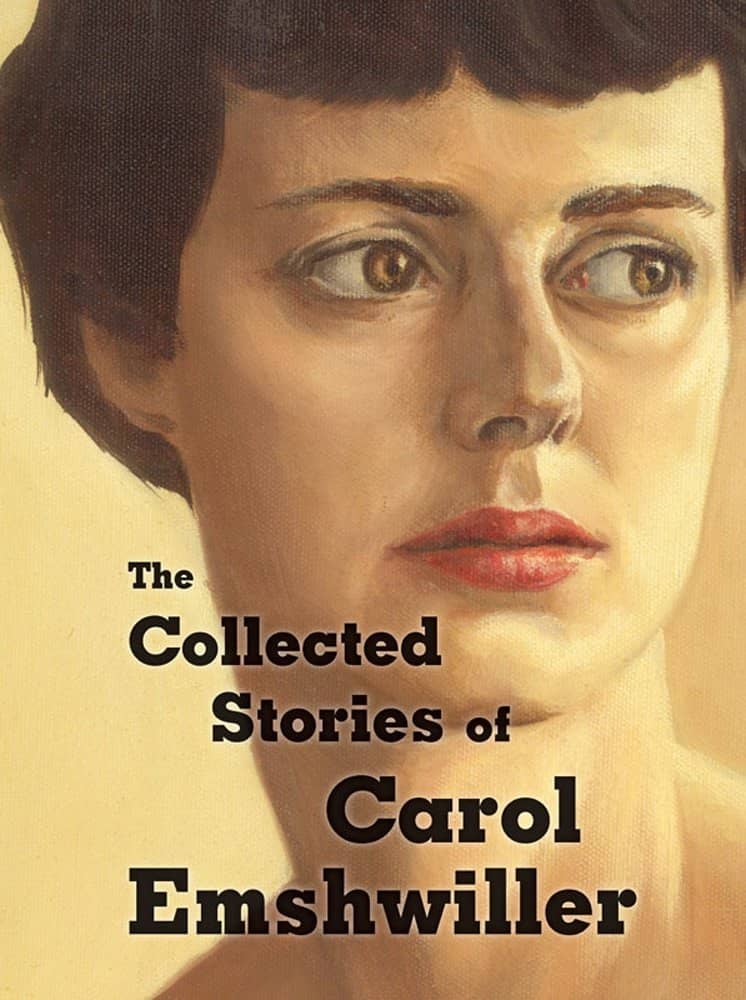
Carol Emshwiller wins the Cordwainer Smith Rediscovery Award

Carol Emshwiller wins the Cordwainer Smith Rediscovery Award

Report to the Men's Club-small The Secret City Emshwiller-small The Collected Stories of Carol Emshwiller Volume 1-small

Author Carol Emshwiller, who died in February of this year at the age of 97, has won the Cordwainer Smith Rediscovery Award, which honors overlooked and neglected science fiction and fantasy writers who deserve to be discovered by modern readers.

I met Carol only a couple of times, always at the World Fantasy Convention. I’m pretty sure she was in her 90s both times we met. She was friendly, approachable, and absolutely charming. Many writers have a late flowering in their career; Carol, who was the wife of Ed Emshwiller, one of the most popular and prolific SF cover artists of the 50s and 60s, and who famously was the model for most of the beautiful women in his paintings, published her first stories in 1955, but wrote the majority of her substantial body of short fiction from 1985 – 2011, after she turned 60. She published the first of her four SF novels, Carmen Dog, in 1988, when she was 67.

It took far too long for Carol to be acknowledged as a serious writer, but it eventually happened. Her short story “Creature” won a Nebula Award in 2002; she won again for “I Live With You” in 2005. Her 2002 novel The Mount was nominated for a Nebula and won the Philip K. Dick Award. Her 1990 collection The Start of the End of It All won the World Fantasy Award, and she received the World Fantasy Award for Life Achievement in 2005.

Read More Read More

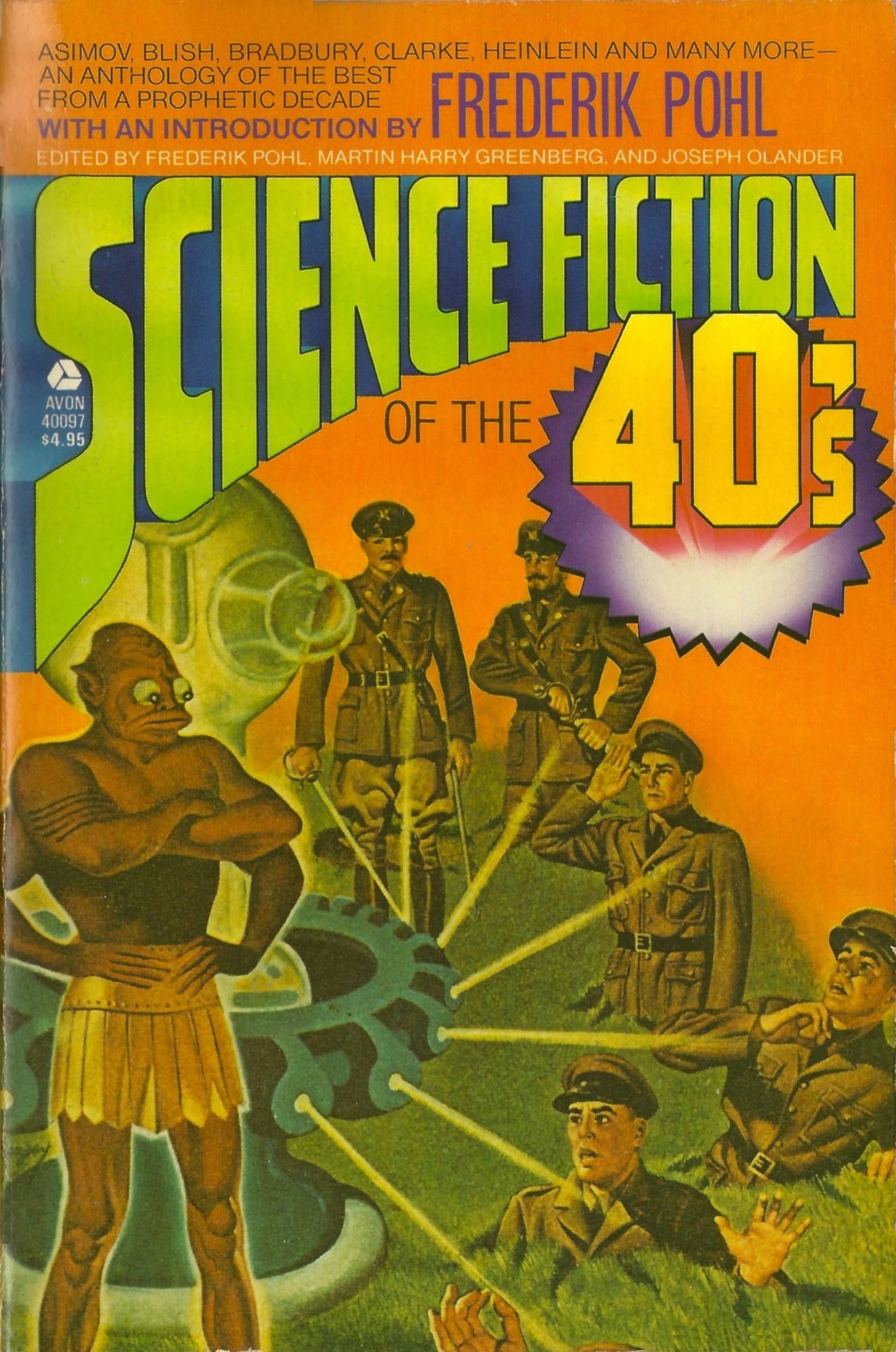
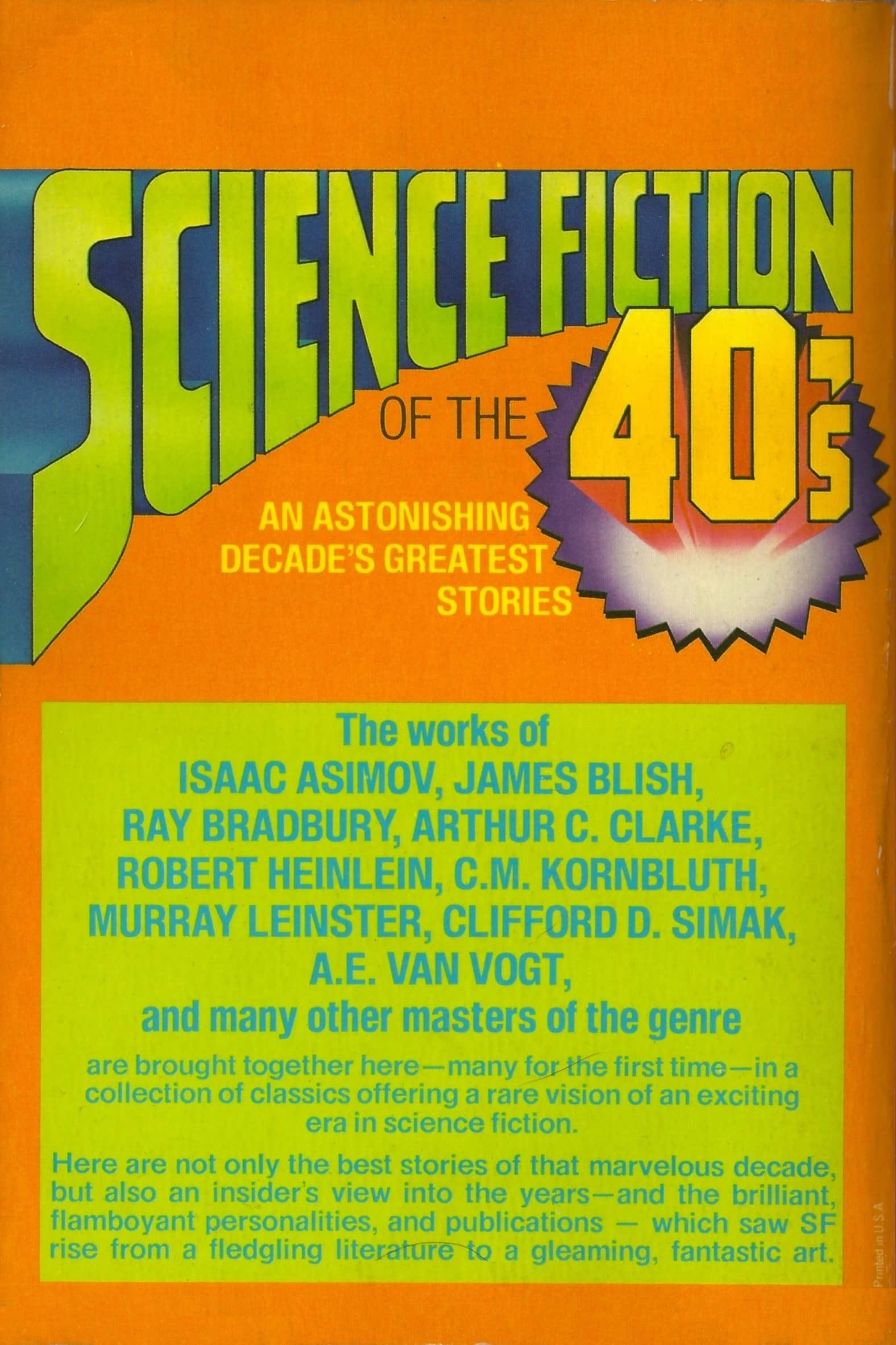
Vintage Treasures: Science Fiction of the 40’s, edited by Martin Harry Greenberg, Joseph Olander, and Frederik Pohl

Vintage Treasures: Science Fiction of the 40’s, edited by Martin Harry Greenberg, Joseph Olander, and Frederik Pohl

Science Fiction of the 40s-small Science Fiction of the 40s-back-small

Cover by Earle Bergey

In 1972, Knight famously wrote a cranky essay for Robin Scott Wilson’s Clarion II about the disappearance of SF’s old guard, focusing on the long-forgotten pulp writer Henry J. Kostkos, who published a dozen stories in Amazing and Astounding from 1933-1940. Knight complained that it was impossible to sell pulp reprints to a modern audience, mostly because the stories were crap.

In 1974 Isaac Asimov published Before the Golden Age, a massive 928-page retrospective of the early science fiction pulps, wth stories by Edmond Hamilton, Jack Williamson, Murray Leinster, P. Schuyler Miller, Clifford D. Simak, Stanley G. Weinbaum, John W. Campbell, Jr., Charles R. Tanner, and many others. It was picked up by the Science Fiction Book Club and became a huge hit, remaining in print for nearly 15 years.

Two years after Asimov proved just how wrong he was, Knight published his own pulp anthology, Science Fiction of the 30’s. He opened with this mea culpa in his introduction.

In compiling this volume I have partially fulfilled an old ambition, one which I thought I had give up years ago — to reread all the old science fiction magazines I loved when I was young and write their critical history. I wrote about this in an essay called “Goodbye. Henry J. Kostkos, Goodbye” [Clarion II, edited by Robin Scott Wilson], where I said the project was no longer possible because there was no audience for the old stories, and, in addition, because they were all junk. This was sour grapes. In fact, as you will see, many of the forgotten stories of thirties are neglected gems.

Science Fiction of the 30’s was a success, and it was quickly followed by Science Fiction of the 40’s (1978) and Science Fiction of the 50’s (1979), all three of which were reprinted as oversize trade paperbacks by Avon Books. For the 40’s volume the editing reins were picked up by Martin Harry Greenberg, Joseph Olander, and Frederik Pohl, who assembled a very fine book that still reads well today, with a robot story by Isaac Asimov, a Martian Chronicles tale by Ray Bradbury, a City story by Clifford D. Simak, a classic novella by William Tenn, and Retro Hugo Award nominees by CL Moore, Leigh Brackett, and Fredric Brown.

Read More Read More

Mourning the Loss of a Way of Life

Mourning the Loss of a Way of Life

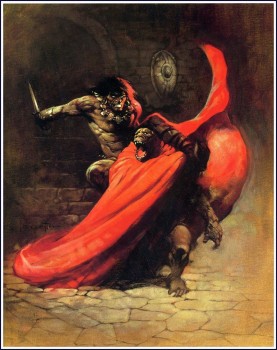
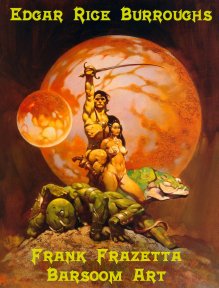
REHfrazetta barsoomIt may seem a bit peculiar to write an article about the decline in reading for a site that has done so much to promote the works of writers past and present. Most assuredly, regular visitors to this site are readers. Unfortunately, they are the exception and not the rule in the present day.

During the pulp era, writers were sometimes referred to disparagingly as the Penny-a-Word Brigade. Flash forward to the end of the second decade of the 21st Century and you’ll find far too many pulp writers who would salivate at the thought of earning a penny a word for their efforts. Far too many receive no financial compensation at all, some do not even receive comp copies of their own titles.

The purpose of this article isn’t to disparage small presses that are labors of love for publishers who regularly soldier on year after year failing to turn a profit. When you are a small operation, economies of scale aren’t even a concern. You could publish two dozen titles a year and still lose money. Paying writers or artists is not always possible for those who are in it for something other than financial return.

Read More Read More

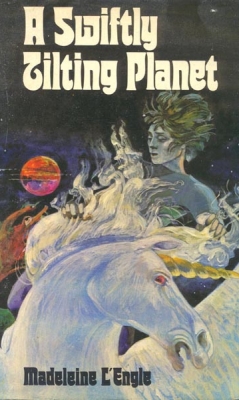
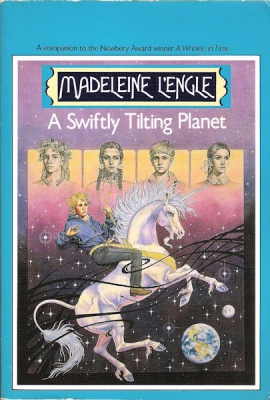
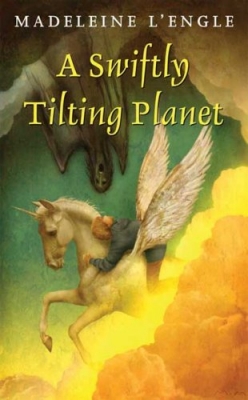
The Golden Age of Science Fiction: A Swiftly Tilting Planet by Madeleine L’Engle

The Golden Age of Science Fiction: A Swiftly Tilting Planet by Madeleine L’Engle

Cover by Carolyn Beresford

Cover by Jody A. Lee

Cover by Matt Mahurin

The National Book Awards were established in 1936 by the American Booksellers Association. Although the Awards were not given out between 1942 and 1949 because of World War II and its aftermath, the awards were reestablished in 1950 and given out annually since then. Since 1950, only US authors are eligible for the award, which is designed to celebrate the best of American literature, expand its audience, and enhance the value of good writing in America. From 1980 through 1983, the American Book Awards were announced as a variation of the National Book Awards, run by the Academy of the American Book Awards.

The first Children’s Book award was presented to Meinhardt DeJong for Journey from Peppermint Street. In 1980, the award rebranded as the American Book Awards (TABA) and increased the number of awards given, including creating both a hardcover and paperback award for Children’s Books. The winner of the first Paperback Children’s Book Award was Madeleine L’Engle’s A Swiftly Tilting Planet.

A Swiftly Tilting Planet was the third book published in Madeleine L’Engle’s Time Quintet (although it is the fourth volume viewed by internal chronology). It follows the established character of Charles Wallace Murry who must save the world from an impending nuclear disaster. Charles Wallace has demonstrated the ability to read other people’s minds and thought and connect to his older sister, Meg, through a process called kything.

Read More Read More