Browsed by
Category: Vintage Treasures

Vintage Treasures: Wasp by Eric Frank Russell

Vintage Treasures: Wasp by Eric Frank Russell

Wasp 1959-small Wasp 1959 back-small

Eric Frank Russell is one of my favorite early SF writers. His prose sparkles, and his stories have genuine warmth and humor. His first novels, including Sinister Barrier (1939), Dreadful Sanctuary (1948), and Sentinels from Space (1953), made him instantly popular in the United States and his home country, the UK.

His fifth novel, Wasp (1957), is the story of a human saboteur, sent to the home planet of a hostile race during an interstellar war. All alone, he wages a campaign of terrorism to bring down a vast alien empire.

Like virtually all of Russell’s work, it remained in print for decades. Its first paperback appearance in the US was in February 1959, from Perma Books (above; click for bigger images). It was 170 pages, priced at 35 cents. The cover was by Art Sussman.

Read More Read More

Haunted Bushes, Serial Killers, and Mysterious Strangers: Algernon Blackwood’s The Listener and Other Stories

Haunted Bushes, Serial Killers, and Mysterious Strangers: Algernon Blackwood’s The Listener and Other Stories

The Listener and Other Stories-smallThe Listener and Other Stories
By Algernon Blackwood
1907/1917

The Listener and Other Stories was Blackwood’s second fiction collection. It was published a year after the first one, The Empty House and Other Ghost Stories. It contains “The Willows,” a novella that’s arguably one of his best known works and one whose reputation is well deserved. The rest of the collection doesn’t come off quite as well as the previous one but it has some good moments.

“The Listener”

An understated story, as with so much of Blackwood’s fiction. As the story progresses the narrator, who lives in a boarding house that isn’t exactly the Ritz, has various odd experiences and seems to be coming apart at the seams. Well done, but for some reason it didn’t really work for me.

“Max Hensig — Bacteriologist and Murderer”

No supernatural or weird content in this one but it’s not a bad effort. Max Hensig is a sort of prototype of the Hannibal Lecter type of serial killer, who happens to like poisoning people. Plays out as a cat and mouse game between the killer and a reporter.

Read More Read More

Vintage Treasures: Tales From Gavagan’s Bar by L. Sprague de Camp and Fletcher Pratt

Vintage Treasures: Tales From Gavagan’s Bar by L. Sprague de Camp and Fletcher Pratt

Tales From Gavagan's Bar-small

In March of 1925, the great Lord Dunsany created the character of Joseph Jorkens for the short story “The Tale of the Abu Laheeb.” Dunsany would return to the character many, many times, writing over 150 Jorkens tales over the next 32 years. They were some of his most popular stories, published in widely-circulated magazines like The Strand, Atlantic Monthly, The Saturday Evening Post and Vanity Fair. The Jorkens tales are widely credited with creating the genre of the “Club Tale,” which take place almost exclusively in comfortable settings like clubs or bars, where the narrator (himself, in Dunsany’s case) hears outlandish and fantastic tales from regulars and the occasional traveler from far away.

L. Sprague de Camp and Fletcher Pratt, both skilled American fantasists, imitated Dunsany with their own series of barroom tall tales, originally published in The Magazine of Fantasy & Science Fiction between 1950-1959. The first 23 tales were collected as Tales From Gavagan’s Bar (Twayne Publishers, 1953). Bantam Books released a much-expanded paperback edition in 1980 (above), which contained six new stories and a chatty essay on the origins of the stories by de Camp, “By and About,” written in 1978, after Pratt’s death.

Read More Read More

Galaxy, October 1967: A Retro-Review

Galaxy, October 1967: A Retro-Review

Galaxy October 1967-smallA bit of a change of pace here, a late ’60s issue of Galaxy. Frederik Pohl was the editor. It is billed as the “Seventeenth Anniversary Issue, and the conceit is that the contributors are all celebrating an anniversary in the field. For example, Pohl himself published a poem in an SF magazine in 1937, making this his 30th anniversary. George O. Smith’s first story was published in 1942, so his 25th anniversary. H. L. Gold is here as the founding editor. Fair enough. The contributor that puzzles me is Roger Zelazny. The cover says “representing his 17th anniversary, but never explains that. This was the fifth anniversary of his first published story. Does it mean he started reading SF in 1950? I don’t know – it’s not explained at all.

The cover is by Gray Morrow, illustrating Gold’s story accurately enough. Interiors are by Gaughan, Morrow, and R. Dorfman (his or her only appearance, according to the ISFDB, in SF). Willy Ley contributes a science essay in his “For Your Information” series, which ran from 1952 through 1969. This one, “The Worst of all the Comets,” is about the great comet of 1680, which has a 574 year period, and which one writer speculated was the comet that caused the Biblical Flood (by raining water on the Earth when it passed very close). Pohl’s brief editorial is about the changes since his poem was published, in 1937.

Algis Budrys’ Galaxy Bookshelf covers Damon Knight’s anthology Worlds to Come (he objects that too many of the stories aren’t really SF), a reissue of Fritz Leiber’s The Big Time (which, Budrys reminds us, is really a play), Robert A. Heinlein’s landmark collection The Past Through Tomorrow (his big Future History collection, which Budrys praises highly), and, most significantly, Samuel R. Delany’s The Einstein Intersection. In the Thomas Disch piece just reprinted in Stories for Chip Disch writes of Delany telling him happily that Budrys had declared him (Delany) the best SF writer in the world. I don’t know if this is the review that prompted Delany’s happiness (apparently it was his review of Nova), but it would certainly make one happy. One quote: “The man simply operates on a plane that Robert Heinlein never dreamed of.”

Read More Read More

Vintage Treasures: The Well of the Unicorn by Fletcher Pratt

Vintage Treasures: The Well of the Unicorn by Fletcher Pratt

The Well of the Unicorn-smallIt’s no surprise that I don’t get to pick up as many novels as I used to — and I finish even fewer than I start. I tell myself that at least I’m pretty well grounded in classic fantasy… but even then there are embarrassing holes. Like Fletcher’s Pratt’s groundbreaking The Well of the Unicorn, which the great Lester del Rey called “The best piece of Epic Fantasy ever written.” It’s one of his two truly major novels (the other being The Blue Star), and it influenced an entire generation of fantasy writers. It has been out of print for decades, and there is no digital edition, but copies aren’t hard to find. I tracked one down last week, and I’m very much looking forward to reading it.

A rousing epic fantasy of romantic adventure and swashbuckling sorcery by the author of The Blue Star.

Outcast of the Well

The ruthless and greedy Vulkings drove young Airar Alvarson from his people and his heritage. But soon, aided by the mysterious enchanter Meliboe, he embarked on a desperate odyssey through a treacherous world where magic worked — sometimes at a perilous price. As one of a band of desperate rebels, fighting against his Vulking oppressors, Airar’s future quickly became enmeshed with a trio of women… each one seemed born to alter his destiny!

Gython: A snow blonde beauty who fired his blood with a heart as cold as ice…
Evadne: A savage warrior maid determined to have her way with her battles and her men…
Argyra: A princess of the Well from whose waters come peace. A lady who brought him only turmoil and strife…

In a flash Airar Alvarson was trapped in the bloodiest battles, the most sinister of intrigues… and the most amazing romance of all.

The Well of the Unicorn was first published in hardcover by William Sloane Associates in 1948 (under the name George U. Fletcher). It was first printed in paperback in 1967 by Lancer Books, and then Ballantine in May 1976, with a classic cover by the Brothers Hildebrandt. The Ballantine edition is 388 pages, priced at $1.95 (click the image at right for a bigger version).

Read More Read More

Beyond the Immediate Shiver: The Rim of Morning by William Sloane

Beyond the Immediate Shiver: The Rim of Morning by William Sloane

The Rim of Morning-smallAccording to either Google or Oz the Great and Powerful (I forget which, and for God’s sake, don’t look behind that curtain!), over 300,000 books are published in the United States every year. That’s over 800 a day, every day, day in and day out.

Most, of course, are utterly worthless and are destined to vanish without a trace almost immediately (see Sturgeon’s Law), and given the magnitude of this never-ceasing flood of words, even worthy books by fine writers will inevitably go out of print sooner or later — most likely sooner.

But here’s the thing — even when they drop out of print, books that are good enough are remembered, and sooner or later, like Marely’s Ghost or that particularly embarrassing anecdote that your mother loves telling at every family gathering (especially when a new significant other is present), the good ones come back.

Hence The Rim of Morning: Two Tales of Cosmic Horror, an omnibus volume reprinting two novels that William Sloane wrote a long time ago: To Walk the Night (1937) and The Edge of Running Water (1939). The books have been reprinted a few times, mostly in paperback, over the more than seventy five years since their first appearance, but the last editions were over thirty years ago under the Del Rey imprint (see the hardcover and paperback editions in a previous BG post here.)

Sloane was not exactly prolific; the two novels collected here are the only ones he ever wrote (or are at least the only ones that were ever published; I for one am hoping that there’s a big trunk somewhere, stuffed with manuscripts that he never bothered to mail in.) Shortly after writing them, Sloane launched a literary career of impressive solidity, especially coming from a man who had mostly given up writing himself. He started his own publishing house, edited a pair of science fiction anthologies, taught at the prestigious Bread Loaf Writer’s Conference for over twenty five years, and eventually became the managing director of Rutgers University Press, a position he held until his death in 1974.

Read More Read More

R. J. Myers and the Crucifixion of Mary Shelley

R. J. Myers and the Crucifixion of Mary Shelley

NOTE: The following article was first published on May 16, 2010. Thank you to John O’Neill for agreeing to reprint these early articles, so they are archived at Black Gate which has been my home for over 5 years and 250 articles now. Thank you to Deuce Richardson without whom I never would have found my way. Minor editorial changes have been made in some cases to the original text.

Myers Cross 2Myers Cross 1Robert J. Myers is a study in contradictions. A veteran CIA operative, he became the publisher of The New Republic. In the mid-1970s, Myers authored two sequels to Mary Shelley’s classic, Frankenstein or: The Modern Prometheus (1818). Having a longstanding interest in literary pastiches, I tracked down these two long out-of-print titles and read the first, The Cross of Frankenstein (1975). The prolific nature of the Universal and Hammer Frankenstein movies was understandable, but the original novel has always seemed more challenging to extend – even more so than Bram Stoker’s Dracula (1897). Neither story demands literary sequels, nor did their authors choose to pursue them – a fact that makes the ambitions of prospective continuation authors all the more difficult to realize with any degree of success.

Mary Shelley’s original reads like a modern fable. The scientist who transgresses nature’s laws is destroyed by the abomination he brought into existence with his own hand. It is the same fable Michael Crichton fashioned nearly 200 years later into Jurassic Park. Shelley’s alternate title for the book, The Modern Prometheus is frequently forgotten, but it is critical to an understanding of how the novel differs from the 1931 Universal horror classic that imbued itself in the public consciousness. The monster of Shelley’s novel may be lacking a flat head and neck bolts, but he makes up for it in spades with his philosophical yearning for his own place in the universe and with the father/creator who abandoned him.

Read More Read More

Sax Rohmer Goes Ape

Sax Rohmer Goes Ape

Sax Rohmer The Moon is Red-smallThe Moon Is Red_2The Moon is Red was first published in the UK in hardcover by Herbert Jenkins in February 1954. A paperback edition from Digit Books followed in 1964. The first US edition was published by Bookfinger as a limited edition hardcover in January 1977. It was the last non-series Rohmer novel. While far from his best work in my view (the author was already 70 years old at the time of its writing), it is certainly of interest as a curio to devotees.

The late Rohmer scholar, Dr. Robert E. Briney (editor and publisher of The Rohmer Review) considered it the best of Rohmer’s last dozen books. In my view it is far inferior to Virgin in Flames (1952) and even less successful an effort than Bianca in Black (1958) which was written by (or at least credited to) the author’s wife. The authorship of those late period works has always been a matter of contention by fans. While Rohmer certainly never employed professional ghost writers, both his wife and his protégé and secretary, Cay Van Ash were indispensable to him in later years. Their names appear with his on a number of radio and television scripts he authored during this period. When questioned on the matter in the 1970s, Van Ash maintained he only served as a typist and did minor editing of manuscripts while the author’s widow stated her input was limited to discussing plot points and occasionally suggesting story ideas (she claimed the first Sumuru story was her original concept). Regardless, Rohmer’s best fiction of the 1950s was largely confined to the short story market as his full-length novels more evidently display the frailties of age and the passage of time to their overall detriment.

Read More Read More

Hypnojewels, Smugglers, and Ancient Alien Races: Rich Horton on The Plot Against Earth/Recruit for Andromeda

Hypnojewels, Smugglers, and Ancient Alien Races: Rich Horton on The Plot Against Earth/Recruit for Andromeda

The Plot Against Earth-small Recruit for Andromeda-small

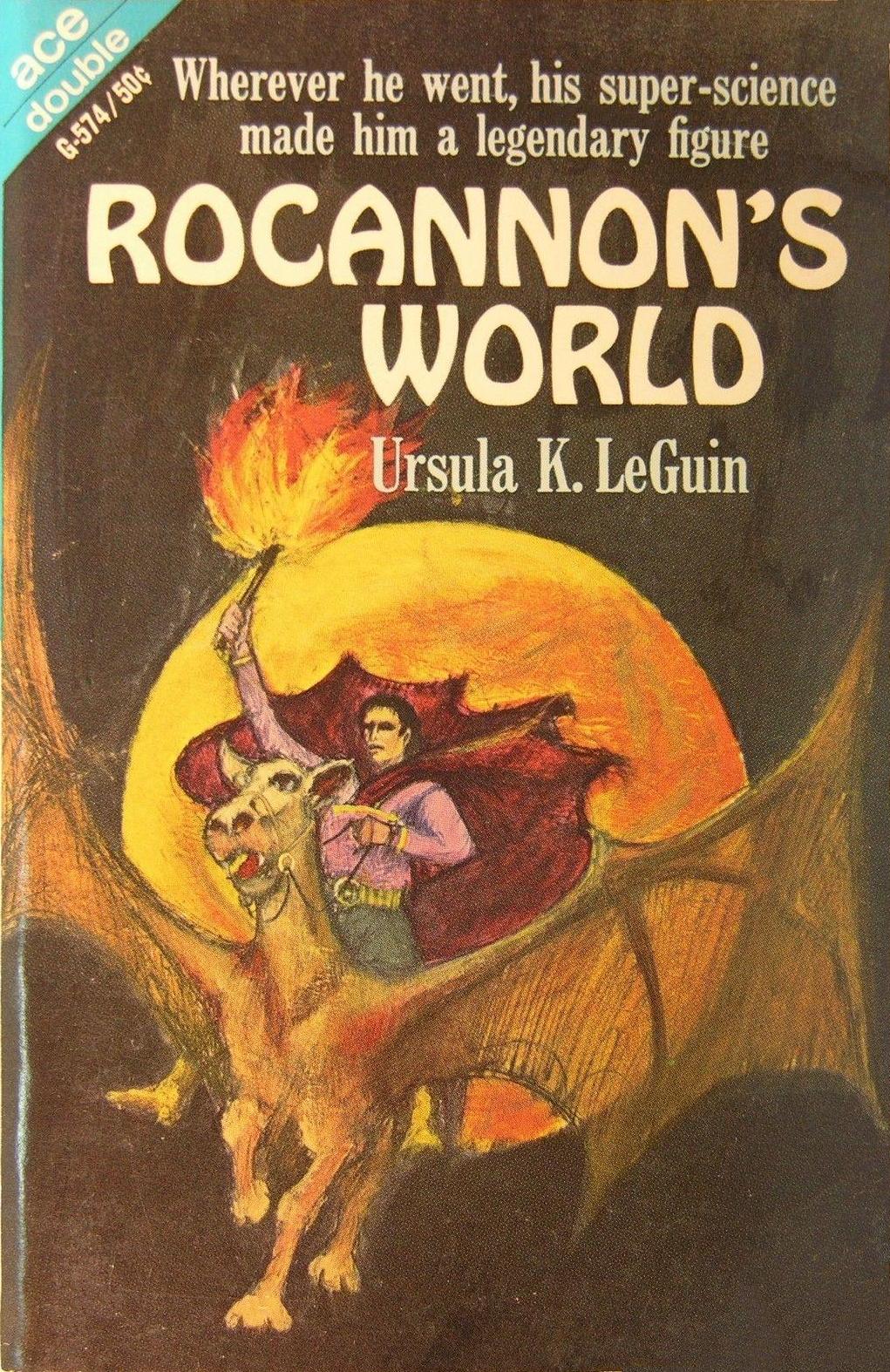
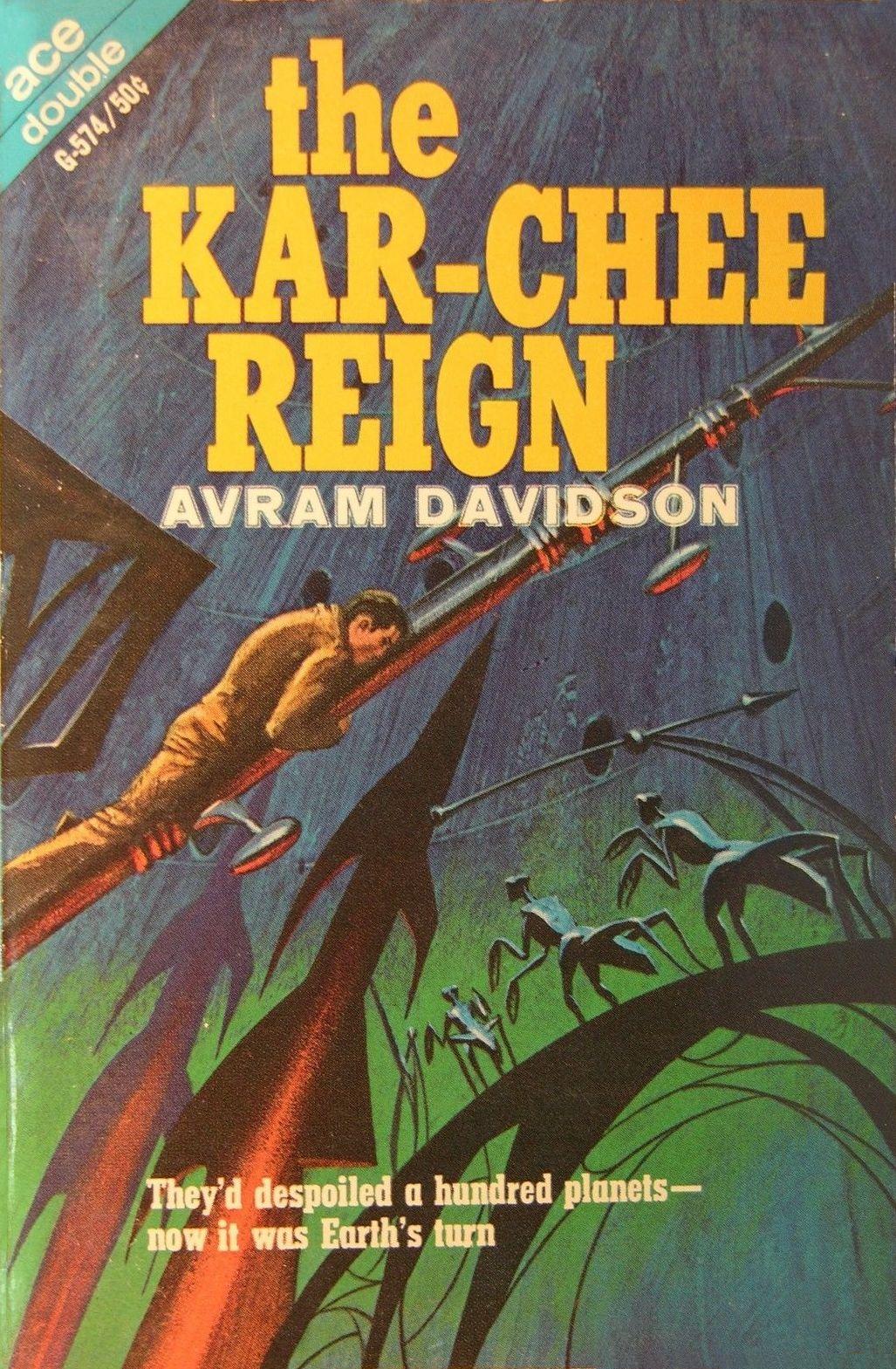
“Calvin M. Knox” is one of Robert Silverberg’s most well-known pseudonyms. He used it extensively to write reviews, over two dozen short stories (frequently in magazines where he also had a story under his own name), and three novels: Lest We Forget Thee, Earth (1958), The Plot Against Earth (1959), and One of Our Asteroids is Missing (1964), all Ace Doubles.

Milton Lesser was born in Brooklyn in 1928, and changed his name to Stephen Marlowe in 1956. Under that name he wrote 40 crime novels and fictional autobiographies. He began publishing SF under his original name while still a teenager, and he continued to to do so through the 50s and 60s, producing seven novels and nearly 100 short stories between 1950 and 1965.

Silverberg and Lesser were published back-to-back in Ace Double D-358 in 1959, with the novels The Plot Against Earth and Recruit for Andromeda. The latter has never been reprinted, and has now been out of print for over 55 years.

Read More Read More

Vintage Treasures: The Midwich Cuckoos by John Wyndham

Vintage Treasures: The Midwich Cuckoos by John Wyndham

The Midwich Cuckoos Dean Ellis-smallJohn Wyndham’s first SF story, “Worlds to Barter,” was published in the May 1931 issue of Wonder Stories, one of the very first pulp magazines I ever bought (which still brings back fond memories every time I see the cover). It appeared under his pulp pseudonym, John Beynon Harris, and alongside “Through the Purple Cloud” by Jack Williamson, and stories by Fletcher Pratt, Ed Earl Repp, and an editorial by Hugo Gernsback. Wyndham was just 27 years old.

His real fame, of course, came with his novels. The first to appear under his own name was the international bestseller The Day of the Triffids (1951), followed by The Kraken Wakes (1953), The Chrysalids (1955), The Outward Urge (1959), Trouble with Lichen (1960), and Chocky (1968).

The Midwich Cuckoos was first published in hardcover in the UK by Michael Joseph in 1957, and made into the classic SF film Village of the Damned in 1960 (and remade by John Carpenter in 1995).

A nightmare tale of a quiet English village where nothing ever happened until late one September night, when every woman in town became inexplicably pregnant…

Nine months later, sixty beautiful children were born… sixty unbelievable threats to the human race!

Today The Midwich Cuckoos is something of a neglected classic. It has been out of print in the US since the Del Rey paperback edition shown at right was released in May 1980. It is 189 pages, priced at $1.50. The cover is by Dean Ellis. An ebook was published in July 2010 by RosettaBooks, and that’s probably your best bet if you’re trying to track down a copy.