Top Choice October: Dracula ‘58 (Horror of Dracula)
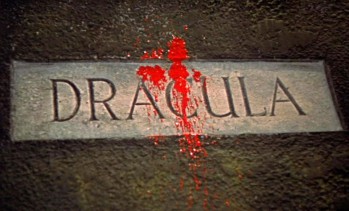 October films come in two flavors for me: Universal and Hammer. I have affection for almost any Gothic horror films these studios produced during their Golden Ages (1930s and ‘40s for Universal, 1950s and ‘60s for Hammer), even the lesser entries. The studios have such opposite visual approaches to similar material — the black-and-white shadows of Universal, the rococo lurid colors of Hammer — that they create a perfect Yin and Yang for Halloween, a Ghastly Story for Whatever Suits Your October Mood.
And what suits my mood best, most of the time? Hammer’s 1958 Dracula, released in the U.S. as Horror of Dracula. This isn’t my top pick of the Hammer canon — I lean toward two 1968 films for that honor, Frankenstein Must Be Destroyed and The Devil Rides Out — but it is the film I turn to more than any other when the calendar changes into the deep orange and serge hues of the Greatest Month.
Dracula ‘58 is my favorite version of the Dracula story, and perhaps my favorite vampire anything — with the possible exception of Matheson’s novel I Am Legend. It has flaws, but scoffs at me for even thinking that they exist. It is so desperately alive, so exploding with its own entertainment value, and so rich in execution that it never fails to be “exactly what I wanted to watch tonight.” I can say that about few films, even objectively better films.
Dracula is the cornerstone of the Hammer Film Productions legend, and an icon of the Anglo-Horror revival that seized the 1960s. Hammer had already entered the field of horror with their science-fiction “Quatermass” films, the intriguing spiritual spin-off X the Unknown, and the unusual creature-search adventure The Abominable Snowman. In 1957, the studio made their first color period horror movie, The Curse of Frankenstein, which whirled far away from both standard source materials — Mary Shelley’s novel and the 1931 James Whale film starring Boris Karloff — to represent an accidental manifesto of the new terror. It also introduced the horror-watching world to the double-team of Peter Cushing (Doctor) and Christopher Lee (Monster).
 October has come, my favorite time of the year. I have my special rituals during this season, such as reading classic weird tales (Algernon Blackwood and M. R. James are among my top picks for seasonal fun) and evenings watching Universal and Hammer Horror films.
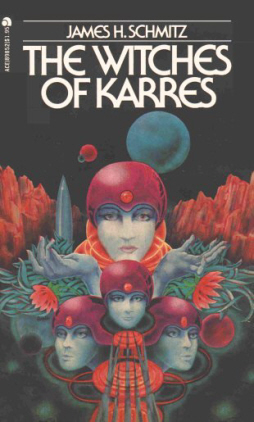 I decided to review The Witches of Karres mostly because I remember seeing some sequels, written by different authors, as James H. Schmitz died in 1981.
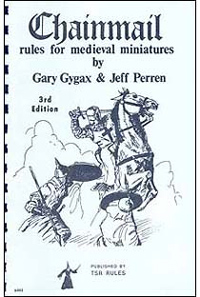 I’m an old TSR module fan, and as such I’ve always been intrigued by how the concept of such media came into existence. For the most part they fall in series, kind of like writers follow Tolkien with the concept of connected books and characters in a trilogy. It makes perfect sense, especially if you’re trying to create an extended campaign with a gaming group that meets on a regular basis. Series modules facilitate that, and recently I had the opportunity to chat with one of the original designers of a TSR foundation adventure path, the L Series ‘Lendore Isles.’
 In one of my first posts here, I mentioned that I was hoping to figure out what it is, exactly, that I like about fantasy fiction; what it is I get from fantasy that I get nowhere else.
 Hallo again, Ye Faithful Paladins of the Black Gate!
 “For the love of God, not another one!”
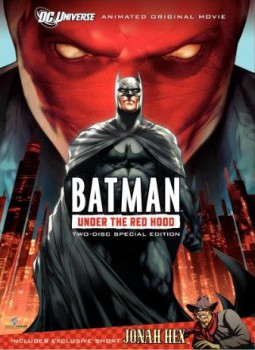 Batman: Under the Red Hood (2010)