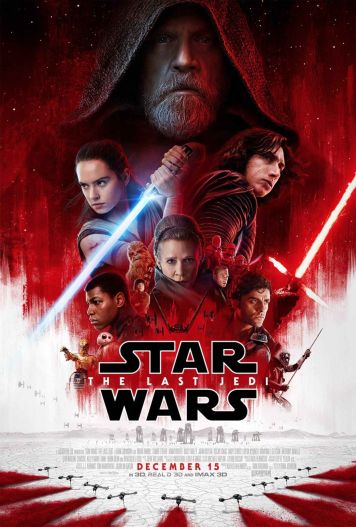
The Last Jedi: The Creature of the Lagoon Trashes the Toxic Tropes (Porg is a Verb)
(Spoilers after the cut. But seriously, if that matters to you, look at the date! You should have seen the movie by now.)
I liked The Last Jedi.
We liked The Last Jedi: my wife, my 14yr old son, my 10 yr old daughter, and me, I liked it.
It wasn’t prose Military Science Fiction, so we didn’t hold it to the standards of a Tanya Huff or Jack Campbell novel. Nor was it Mundane SF, so those bombs didn’t bother us. Rather, we sat down and enjoyed it the way we also enjoyed Guardians of the Galaxy.

It was less EC Tubb than the last instalment, and more (according to my son) like an RPG campaign that kept changing GMs and (so I reckoned) flipflopping between Traveller and FATE. My daughter loved seeing girls having adventures (though, being 10, she rather takes this for granted), liked the light saber fights, and also the porgs. (“Porg” is now a verb in our house, as in, “Don’t try to porg me into giving you more chocolate ice cream.”)
I’ll admit I also enjoyed the very thing that seems to have upset so many knee-jerk critics: it went through the tropes the way the Creature of the Lagoon goes through scenery and people in that hilarious NSFW mashup on YouTube:
“BLEEP this! BLEEP this also! And this in particular. BLEEP this guy…!”
Mysterious But Significant Parentage went up in a puff of wasted fan theories. As did Dark Lord, Wise Mentor, Heroic Sacrifice Saves the Day, Ancient Wisdom, Epic Redemption. (“BLEEP this guy, BLEEP those books, BLEEP in particular this tree…“)
The movie even trashed some of the things fans mock about Star Wars. The Jedi really aren’t the good guys. Darth Emo really is a boy in a stupid mask.
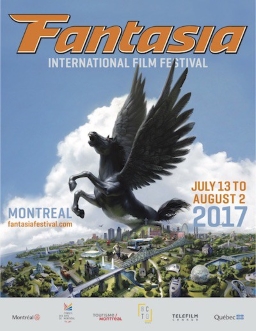 With another year’s worth of Fantasia reviews now finished, I thought I’d take the time once again to look back at what I saw and write a general overview of the films as a whole. Doing so this year, though, leads to thoughts about film on a slightly larger scale than just Fantasia alone.
 After the Fantasia festival had officially concluded I still had three movies to watch. During the festival I’d requested links to view screening copies of three films I couldn’t see in theatres due to schedule conflicts, but it wasn’t until Fantasia ended that I had time to sit down and watch them. These movies were a Japanese comedy-drama called Japanese Girls Never Die (also released under the English title Haruko Azumi Is Missing, in romanised Japanese Azumi Haruko wa yukue fumei); a Thai historical martial-arts movie called Broken Sword Hero (also Legend of the Broken Sword Hero, from the romanised original Thong Dee Fun Khao); and a Chinese blockbuster historical war movie called God of War (Dang kou feng yun, now on Netflix). They made for an interesting mix.
 On the last day of the 2017 Fantasia film festival I planned to watch three movies. First, at the De Sève Theatre, Indiana: a movie about a pair of ghost-breakers in the Midwest who may or may not deal with actual paranormal events. Second, I’d go to the festival’s screening room, where I’d see a dark psychological thriller called Fashionista. Finally, I’d close out the festival with a screening of a restored version of Dario Argento’s classic 1977 horror film Suspiria.
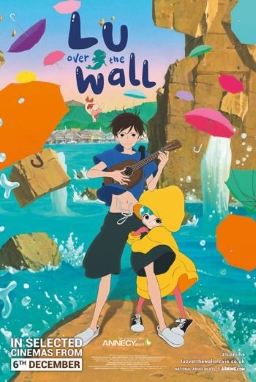 Tuesday, August 1, was the next-to-last day of Fantasia. I had three films I wanted to see as the festival raced to its end, all at the De Sève Theatre. Lu Over the Wall (Yoake Tsugeru Lu no uta) was an animated young person’s adventure about indie rock and mermaids, from the mind of Masaaki Yuasa. Spoor (Pokot) was a Polish-Czech co-production of a mystery-horror film about animals that may or may not be turning against human beings. And Nomad (Göçebe) was a Turkish science-fiction/fantasy film that promised mythic overtones.