Browsed by
Category: Movies and TV

Zombieland: Bringing the fun, and a few rules to live by
Zombieland: Bringing the fun, and a few rules to live by

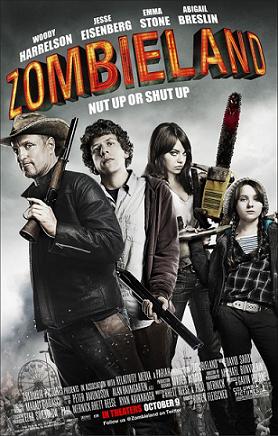
zombieland-posterLike most horror fans, I love zombie movies because they’re fun, gory, and suspenseful. I find the survivalist angle intriguing, too (I often find myself wondering if and how I could survive an initial outbreak of the walking dead. Equipped with my copy of The Zombie Survival Guide I’d like to think at least I’d have a fighting chance. But probably not).

But in the end the zombie films I like best are those that aspire to more than just empty action. Like all good movies, the best zombie films contain underlying social and/or political messages that give them an added dimension and another level on which they can be enjoyed.

I’m not a horror historian, but as far as I can tell the zombie film as social commentary started with George Romero. Broadly, zombies have always been a metaphor for death, but it wasn’t until 1978’s Dawn of the Dead that the walking dead were used to critique concepts like capitalism and unchecked consumer culture (as a sidenote this is why I didn’t like the new Dawn of the Dead as much as the original—the 2004 version is not only too nihilistic, but it removes all the subtext in favor of high-speed, sprinting zombie carnage).

Since Dawn other zombie films have hopped on the bandwagon of zombie apocalypse as societal/cultural critique. The most recent example is the comedic zombie horror of Zombieland (2009). Zombieland tells the story of a group of survivors trying to find their way in the aftermath of the zombie apocalypse. These include 20-something “Columbus” (played by Jesse Eisenburg), a nerdy, World of Warcraft playing recluse; “Tallahassee” (Woody Harrelson), a modern cowboy with an apparent death wish, a sardonic sense of humor and a mean streak a mile wide when it comes to zombies; “Wichita” (Emma Stone), a beautiful, guarded, hard-bitten realist, and “Little Rock” (Abigail Breslin), Wichita’s younger sister and resourceful partner in crime.
Read More Read More

Top Choice October: Dracula ‘58 (Horror of Dracula)

Top Choice October: Dracula ‘58 (Horror of Dracula)

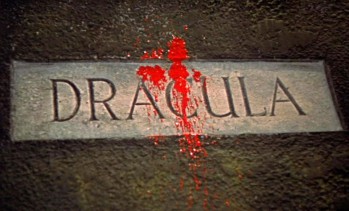
dracula-58-title-on-coffin-with-bloodOctober films come in two flavors for me: Universal and Hammer. I have affection for almost any Gothic horror films these studios produced during their Golden Ages (1930s and ‘40s for Universal, 1950s and ‘60s for Hammer), even the lesser entries. The studios have such opposite visual approaches to similar material — the black-and-white shadows of Universal, the rococo lurid colors of Hammer — that they create a perfect Yin and Yang for Halloween, a Ghastly Story for Whatever Suits Your October Mood.
And what suits my mood best, most of the time? Hammer’s 1958 Dracula, released in the U.S. as Horror of Dracula. This isn’t my top pick of the Hammer canon — I lean toward two 1968 films for that honor, Frankenstein Must Be Destroyed and The Devil Rides Out — but it is the film I turn to more than any other when the calendar changes into the deep orange and serge hues of the Greatest Month.

Dracula ‘58 is my favorite version of the Dracula story, and perhaps my favorite vampire anything — with the possible exception of Matheson’s novel I Am Legend. It has flaws, but scoffs at me for even thinking that they exist. It is so desperately alive, so exploding with its own entertainment value, and so rich in execution that it never fails to be “exactly what I wanted to watch tonight.” I can say that about few films, even objectively better films.

Dracula is the cornerstone of the Hammer Film Productions legend, and an icon of the Anglo-Horror revival that seized the 1960s. Hammer had already entered the field of horror with their science-fiction “Quatermass” films, the intriguing spiritual spin-off X the Unknown, and the unusual creature-search adventure The Abominable Snowman. In 1957, the studio made their first color period horror movie, The Curse of Frankenstein, which whirled far away from both standard source materials — Mary Shelley’s novel and the 1931 James Whale film starring Boris Karloff — to represent an accidental manifesto of the new terror. It also introduced the horror-watching world to the double-team of Peter Cushing (Doctor) and Christopher Lee (Monster).

Read More Read More

Goth Chick News: Satan Took the Elevator, But I Took the Stairs

Goth Chick News: Satan Took the Elevator, But I Took the Stairs

image0043“For the love of God, not another one!”

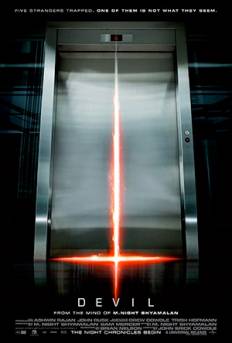
I was in the midst of exchanging text messages with my regular movie-date crowd, trying to decide what we were going to see. At the top of my list was a new release called Devil which to its apparent detriment, had M. Night Shyamalan’s name attached to it.

You remember him, right? He’s the director who once told us amazing stories such as The Sixth Sense and Signs, but of late has attempted to force feed us unpalatable drivel like The Happening and The Last Air Bender.

M. Night is an amazing teller of tales. Were we all sitting around a campfire while he scared the crap out of us with masterful plot twists, I would never want to go home.

But apparently when he’s handed an all star cast and a multi-million dollar studio budget, what might have been an unforgettable fable makes me want to slit my wrists, at least lately.

If only M. Night would stick to the story-telling and leave the movie making to someone else…

Read More Read More

Batman: Under the Red Hood

Batman: Under the Red Hood

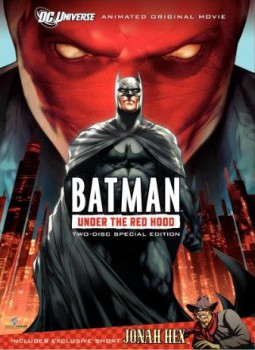
batman_under_the_red_hood_posterBatman: Under the Red Hood (2010)
Directed by Brandon Vietti. Featuring the Voices of Bruce Greenwood, Jensen Ackles, Neil Patrick Harris, John DiMaggio, Jason Isaacs, Wade Williams.

Warner Bros. Animation’s series of straight-to-video PG-13 releases set in the DC Comics universe has been a great success. Starting in 2007 with Superman: Doomsday (which completely embarrassed the previous year’s live-action Superman Returns) the team at Warner Bros. that originally kicked off the DC Animated Universe with Batman: The Animated Series has turned out high quality, adult-slanted fare that has even excited me about characters that I don’t usually care much about, like Wonder Woman and the Green Lantern.

But, no surprise, much of the new DVD series has featured Batman, the hottest property in Warner Brothers’ DC catalog because of the huge success of the Christopher Nolan-directed movies. Batman got his own compilation disc with Batman: Gotham Knight (set in the Nolan-verse and featuring a round-robin of top anime-directing talents), co-starred with Superman in Superman/Batman: Public Enemies (an adaptation of the Jeph Loeb-written arc in the popular Superman/Batman ongoing comic), and played a major part in Justice League: The New Frontier and Justice League: Crisis on Two Earths.

Now Batman has his second solo-starring release in the series. Based on a recent popular storyline in Batman’s eponymous comic book that tied into the mega-crossover event “Infinite Crisis,” Batman: Under the Red Hood brings PG-13 to the small screen in a big way. In fact, the film flirts with a “soft R” rating, and it’s definitely not for children—unless you don’t mind your children watching not one but two brutal beatings with a crowbar.

Read More Read More

Goth Chick News – Shadowland Part Deux: Thirteen Questions for Actor Jason Contini

Goth Chick News – Shadowland Part Deux: Thirteen Questions for Actor Jason Contini

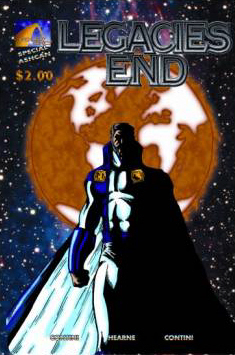
legacies-endIn case you hadn’t noticed, and I’m pretty sure you did, the Black Gate webmaster got a little worked up by my last post. Though I was telling you about my latest indy-horror obsession, Shadowland, one might have gathered from the choices of accompanying pictures, that I was instead bringing you a story about lead actress Caitlin McIntosh and her former life as a beauty queen. Somewhere, wedged between those images was my interview with Wyatt Weed, Shadowland’s writer and director; but good luck finding it.

This is what happens when there are too many boys on the staff and they are left unattended for too long.

So this week I’m personally bringing you the second installment of my Shadowland coverage; an interview with lead actor Jason Contini and co-creator of the new comic series Legacies End.

I can assure you there will be no further shenanigans involving staff members who forget their professionalism and get carried away by lust.

Now where was I…?

Read More Read More

Thirteen Questions for Wyatt Weed – Writer and Director of Shadowland

Thirteen Questions for Wyatt Weed – Writer and Director of Shadowland

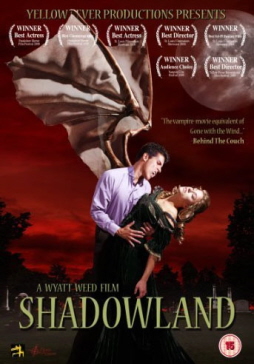
poster3A few weeks back at the Chicago Comic Con, I had the pleasure of meeting the cast of Shadowland, a new indie horror movie written and directed by Wyatt Weed.

Forget the stars were beyond hot and that lead actress Caitlin McIntosh was a beauty queen. Forget my photographer Mr. Disney nearly put a perma-fog on his zoom lens trying to shoot through a crowd that was about six people deep; because in spite of the fact that all normal indicators point toward me having a thorough dislike for this whole crew, I couldn’t help it. I love indie film makers and the passion they have for making something different and “outside the system.”

And since being anti-establishment is part of the whole angst-y persona I’m trying hard to cultivate, I couldn’t wait to interview this lot and find out what drives such an all-consuming level of creativity.

So, since Wyatt soon realized I’d just keep stalking him until he relented (see past Goth Chick entries for proof), here it is.

Read More Read More

English Gothic: Britain Goes to the Movies

English Gothic: Britain Goes to the Movies

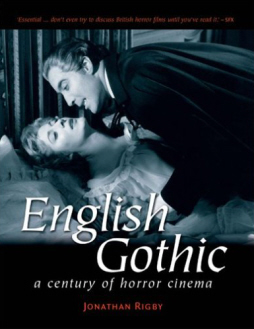
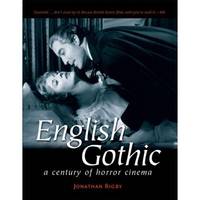
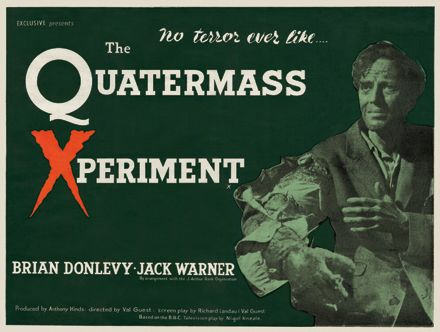
english-gothic2Jonathan Rigby’s ENGLISH GOTHIC (2000) is an excellent survey of British horror and science fiction films. Misleadingly subtitled A CENTURY OF HORROR CINEMA; the book focuses instead on the 20 year period from THE QUATERMASS XPERIMENT (1955) through TO THE DEVIL, A DAUGHTER (1976) when British production companies like Hammer, Amicus, and Tigon consistently outperformed the Hollywood majors in producing the finest and most influential genre films.
Part of the book’s strength is not just Rigby’s detailed and chronological survey of nearly every genre film to come from the British Isles during these two decades, but the fact that he captures the social and economic factors that helped shape the pictures and, more importantly, the public’s reception to them.

The rise of the horror genre in film started with the German Expressionist classics of the silent era and the contemporary Lon Chaney and John Barrymore efforts in the States. The genre solidified with the phenomenal impact of Universal’s horror franchises of the 1930s and 1940s.

The interesting thing here is that the majority of these films remained unscreened or else limited to adult-only audiences in the UK where censorship was extremely puritanical in the first half of the last century.

Read More Read More

Die Hard With Avatars: A review of Surrogates

Die Hard With Avatars: A review of Surrogates

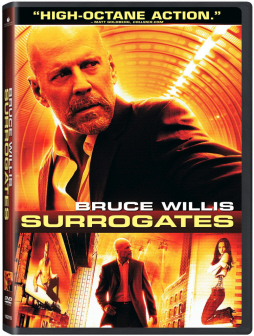
surrogates-dvdEarly on in this film we see Bruce Willis with hair and looking young, and not Die-Hard bashed up, and we wonder absently if this time he’ll actually finish the film as scar-free as he began it. The Willis we begin with is quickly established as a ‘surrogate,’ the robot avatar of the real Willis character, Tom Greer, and it doesn’t take long for both Greer and his surrogate to get bashed up in familiar form.
The problem for the inhabitants of near-future Boston — as well as of the rest of the world — is that mind-boggling economies of production have resulted in custom made, universally affordable, avatars brought to market for just about anyone who wants one, and now real people are vegetating alone in their homes while vicariously carrying on social interaction with each other through their surrogates.

The two inventors have had a falling out as to how much of a good thing surrogates really are. The ousted partner, Lionel Canter (James Cromwell) has decided they are robbing humankind of their humanity and has taken steps to sink the business.

Read More Read More

Black Gate Zeppelin to Dragon*Con Update

Black Gate Zeppelin to Dragon*Con Update

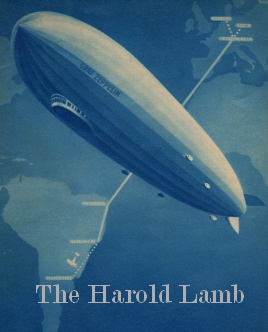
zepplein-brochure2bThere’s a temporary lull in operations and the skies are clear over Oklahoma, so I thought I’d take the time to set the record straight about our expedition to Dragon*Con via the Black Gate zeppelin, the Harold Lamb. John described the start of our journey just after we departed the Black Gate rooftop headquarters Thursday.
Those of you who know publisher John O’Neill are aware that he has a tendency to exaggerate. For instance, he stated that the zeppelin is capable of Mach 2, but it usually maxes out around 1.5. He’d probably report that we were attacked by a flock of cybernetic pterodactyls, but in truth it was really only a half dozen, and Bill Ward and I took out most of them with the electric railguns. John was only blown back a few feet when the aft railgun exploded, too, so just nod politely if he tells you he was smashed into the hull and stunned.

I really wish John hadn’t broadcast our route, because I’m afraid it’s attracted unwanted attention. I’m fairly certain Dr. Zaius sent the cybernetic pterodactyls after us, but John Fultz tells me he sent mocking letters to both Aquaman AND the Legion of Doom on Black Gate letterhead, so there’s just no telling. Still, we’re prepared for pretty much anything on our journey, and we’ve decided to stick with the plan.

Now I thought I’d take a few moments to respond to some questions that have come in during our trip.

Read More Read More

Dracula’s Daughter: From Script to Screen

Dracula’s Daughter: From Script to Screen

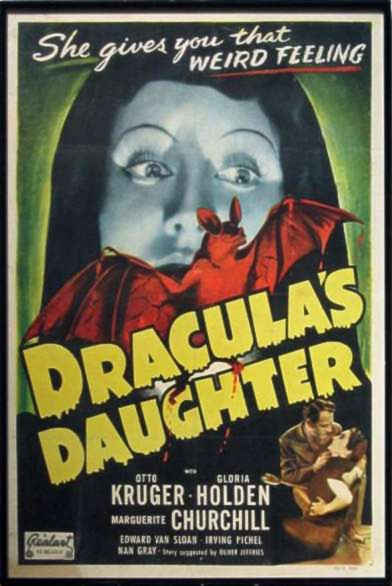
The success of Universal’s Dracula (1931) starring Bela Lugosi made not only a cycle of similar horror films inevitable, it virtually demanded the studio turn their attention to a direct sequel.

alt2_draculas_daughter_bigAs had happened with Lon Chaney in the silent era, MGM was quick to top Universal at its own game. They secured the services of Lugosi and director Tod Browning for a remake of Chaney’s silent classic, London After Midnight (1927). Browning had directed that notorious lost classic and having Lugosi fill Chaney’s shoes as the faux vampire seemed an inspired choice.

Browning’s remake, Mark of the Vampire would wing its way to theaters in 1935. Joining Lugosi’s Count Mora was Carroll Borland as his incestuous daughter, Luna. Borland was heavily featured in publicity photos with Lugosi despite not having much of an acting career (the following year she was reduced to a bit part in the first of Buster Crabbe’s Flash Gordon serials for Universal), but her portrayal of Luna was enormously influential on the cinematic female vampires who followed.

Borland contributed more than just the definitive screen depiction of a female vampire, however. Several years before Mark of the Vampire was born, she began a longstanding (and allegedly unconsummated) relationship with Bela Lugosi. She remained obsessed with the actor long after his death and had written a lengthy treatment for a Dracula sequel to star both of them entitled Countess Dracula.

Read More Read More