Solomon Kane Movie Needs More Solomon Kane
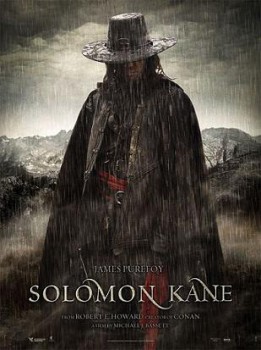 The sixteenth- and early seventeenth-century Puritan adventurer Solomon Kane is my favorite of Robert E. Howard’s serial characters: a fascinating mixture of obsession, religion, righteousness, history, and dark fantasy awesomeness. However, it’s the character I love, not necessarily the stories in which he appeared. With the exception of “Wings in the Night,” the Solomon Kane stories are mid-range pieces in Howard’s canon, not at the consistent level he delivered later with Conan, King Kull, or many of his one-shots. Solomon Kane appeared early in Howard’s short professional pulp career, with the first published story in the August 1928 issue of Weird Tales. Perhaps if Howard stayed longer with the Puritan hero while his storytelling skills increased, he might have equaled the Conan series in quality.
But a great character is always an excellent starting point to make a great movie, and in concept a Solomon Kane film should be an easy third-base hit for any talented filmmaker. The 2009 British-French-Czech Solomon Kane, which finally received its limited U.S. theatrical release today (also on VOD if you can’t find a local theater), showed many hints of not only getting on third, but possibly stealing home. Tonally, it captures the 1930s version of Weird Tales. The violence is graphic and bloody without falling into the slapstick idiocy of Marcus Nispel’s Conan the Barbarian. The production design is top-tier for a mid-budget movie and feels saturated with the benighted European dreariness of Kane stories such as “Skulls in the Stars” and “Rattle of Bones.”
What the movie does not have: Solomon Kane. This tends to undermine most of the right steps the filmmakers take, as you might imagine.
It makes no difference if audiences know the first thing about the character of Kane or even know the name Robert E. Howard. The film’s failure to exploit what makes Solomon Kane so fascinating spills over into the story and pacing. Solomon Kane is an origin tale that stretches out for a hundred minutes — an origin for a character who doesn’t even need an origin. As James Purefoy’s voiceover at last declares Solomon Kane’s intentions to battle evil wherever it lies, and the hero leaps onto his horse decked with the swirling black coat and the wide-brimmed slouch hat, the audience will be primed to see this strange avenger work his bloody craft. But then the director’s name appears and the end credits start. Sorry folks, movie is over.
…
 Originally a series of short stories appearing in manga (Japanese comic book) anthologies, Pet Shop of Horrors premiered on the Tokyo Broadcasting System as a series of short animated clips in 1999. Viewers would see a two-minute piece (usually between music videos or short films) every few days until an entire episode was completed. Four whole episodes were broadcast before the animated series was discontinued. The collected episodes were released in North America in 2000 by Urban Vision.
 The Charge: Attempting to re-start a film franchise about a classic comic book character.
 The cheap shots are kind of tempting — analogies, or allegories even, about the SAT as a form of gladiatorial combat. Some of my students do experience the test that way. Certainly the SAT has become a fasting ordeal, now that it’s four hours long and still allows only one break long enough for scarfing down an energy bar. But I’m not enlisting the aid of Katniss Everdeen to fight the College Board over its test. Odd as it sounds, there are some admirable, humane aspects to the SAT in its current incarnation. I’ve just started using the Neo-Roman culture of Suzanne Collins’s Panem setting to work to take the fear out of Latin-derived vocabulary words.
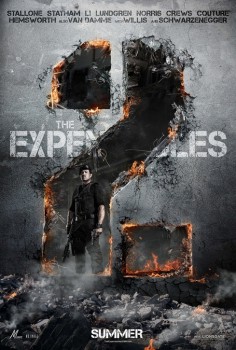 Two years ago I walked out of a theater showing The Expendables, shaking my head in mild bewilderment. I don’t just have a high tolerance for ‘80s action cheese; I actively embrace it. I was nearly as excited about the release on Blu-ray last week of Death Wish 3 as I was about Jaws’s simultaneous hi-def debut. (Well, not really, but that’s my way of drawing your attention to what an over-the-top great/stupid movie we have in Death Wish 3.) But 2010’s The Expendables pushed none of my buttons. It was dull, the action flat, and Stallone seemed to think audiences would care about the tangled romantic lives of his and Jason Statham’s characters (at the expense of the rest of the cast). Stallone also seemed ignorant of the premise’s goofy appeal and played too much of it straight. The film ended up wasting most of the names on the marquee and couldn’t live up to its modest goals. It was also badly tarted-up with occasional post-production blood to get an R rating after it was shot for PG-13. It was a misfire for what looked like a simple shot.
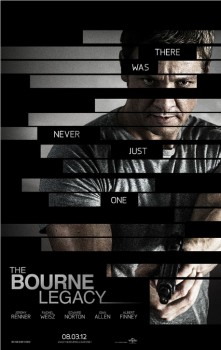 The Bourne Legacy, Paramount’s attempt to extend their successful Jason Bourne franchise — based very loosely on the novels of Robert Ludlum — does give the impression of the first film of a trilogy. It feels like The Bourne Identity (2002), the inaugural movie of the Matt Damon trilogy: it’s a starting point with some excellent sections, but also the nagging sense that all the finest moments are yet to come. Overall, there is something slight about the enterprise, making it a minor disappointment for a film I hoped would salvage August. Will Expendables 2 be this year’s “August Surprise”? I never thought that might be a possibility at the beginning of the season.
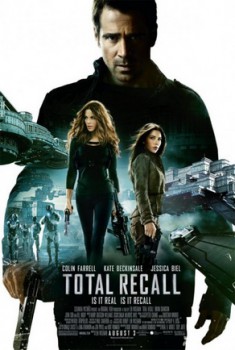 In a charming case of movie irony, the new Total Recall has already been mostly forgotten, even though it only came out on Friday. The Dark Knight Rises, in its third week, handily crushed the Len Wiseman-directed remake. I’m writing this on Tuesday, and it already feels as if the movie was never even released: it was a dream implant that never took, and the original memory of the 1990 Paul Verhoeven-Arnold Schwarzenegger Summer blockbuster has already taken back all the cerebral space. Nonetheless, I’ll still perform this brain autopsy on Total Recall ’12 to see why no one bothered to show up except for people writing reviews.
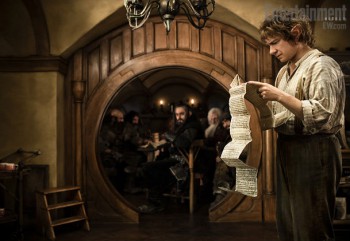 Fans of Peter Jackson’s The Lord of the Rings should be thrilled that The Hobbit, originally planned as two feature films,