Browsed by
Category: Movies and TV

Was Star Trek‘s Theme Music Stolen From Beethoven?

Was Star Trek‘s Theme Music Stolen From Beethoven?

The CBC’s Tom Allen and the Gryphon Trio do some amazing musical detective work, following the clues from Mahler to Brahms to Beethoven to the 23rd Century, in this delightful single-take through the twisted subterranean corridors of Paul Hahn’s piano studio in Toronto. Also starring teleporting pianist Jamie Parker, and a little cosplay.

Goth Chick News: Samuel L. Jackson Takes On Japanese OVA – Hold On To Your Butts…

Goth Chick News: Samuel L. Jackson Takes On Japanese OVA – Hold On To Your Butts…

image002Frankly, it occurred to me to just post this video clip with “Hell yes!” underneath it and call this week’s GCN done.

When you watch it, you’ll understand you would not have blamed me.

But then I would have missed out on the chance to share some very juicy background tidbits about this little gem.

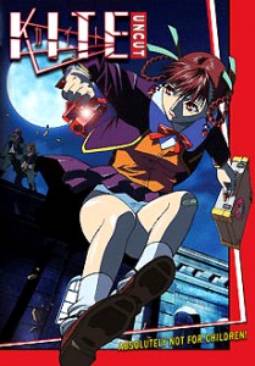
Here in the US ,the live action film starring Samuel L. Jackson will be called Kite. But in Japan, where the source material originated, it is known as A Kite; Yasuomi Umetsu’s 1998 animated film. Though I have attempted to find out the meaning of the title, my Japanese is a tad rusty and so far no joy.

Kite started out as an OVA (“original video animation”) and the Japanese version ran for two 30-minute episodes. Though anime generally gets away with a heck of a lot more than traditional media could, Kite is still unique in its controversial depiction of extreme gory violence and strong sexuality. It was subsequently banned in many countries including Norway due to some scenes in the film being labeled child pornography, which didn’t stop it from gaining underground-cult-classic status from OVA fans.

Banned or not, it won’t take you much digging to find A Kite online and uncut for free, which I did and be warned — it is pretty hard to watch (and do not try watching it at work). In a rare change of heart I actually feel rather glad the US film version took liberties with the source material, or this post could have been the very first red-band GCN.

Read More Read More

Observations: The Fellowship of the Ring Movie

Observations: The Fellowship of the Ring Movie

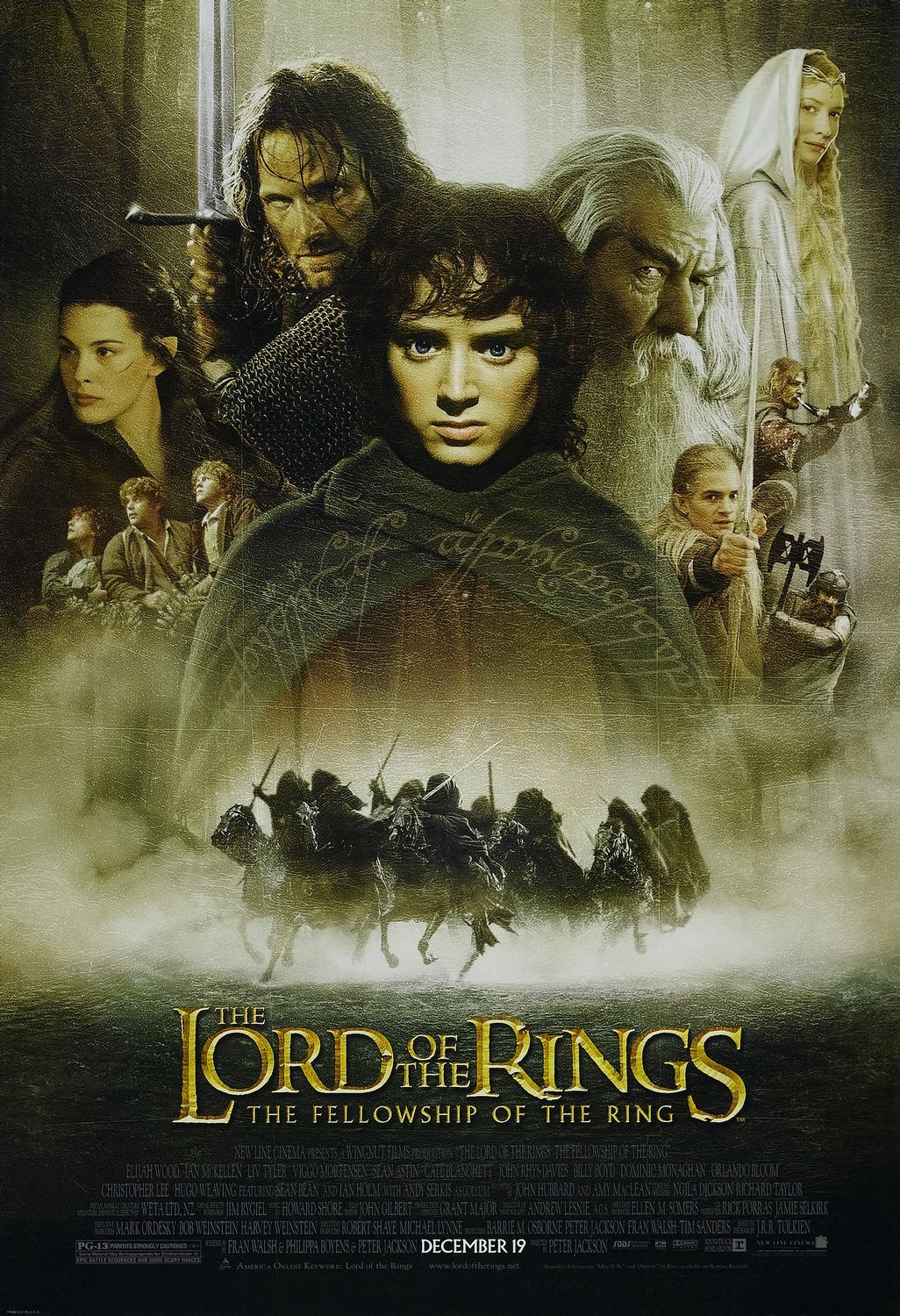
The Fellowship of the Ring poster-smallThe release of the second installment of The Hobbit got me thinking about The Lord of the Rings movies. And since I hadn’t watched them in a couple years, I decided to pop in my extended version DVDs and re-live what I consider to be one of the best film experiences in my lifetime. I watched with an eye toward what worked for me and what didn’t.

What I won’t be doing in this article is comparing the movies to the books. I love the LOTR books. I’ve read them several times and consider them among the most important novels ever written. However, I want to consider the films on their own, because movies and books are such different media.

So, let’s plunge into the fray. Shall we?

The movie begins with an extended introduction that explains who Sauron is and how he lost the One Ring, how it came into the possession of a furry little fellow named Bilbo. It’s well-done and probably very helpful to those who aren’t familiar with the events in The Hobbit. The highlight to me was when the Dark Lord of Mordor comes out and starts dishing out the pain with a huge mace.

Then we move to the real opening of the story, with Frodo in the Shire. The world of the hobbits is simple and charming, exemplifying a “good life.” I actually forgot how much good stuff happens in these first couple scenes while old Bilbo throws his 111th birthday party. There’s a nice bit of foreshadowing as Bilbo writes his book. He says that there’s always been a Baggins living at Bag End, and there always will be. That little nugget, to me, unlocks one of the powerful themes of the entire franchise: the idea of home as a place in your heart that can see you through the bad times, no matter where you are.

Read More Read More

A History of Godzilla on Film, Part 2: The Golden Age (1963–1968)

A History of Godzilla on Film, Part 2: The Golden Age (1963–1968)

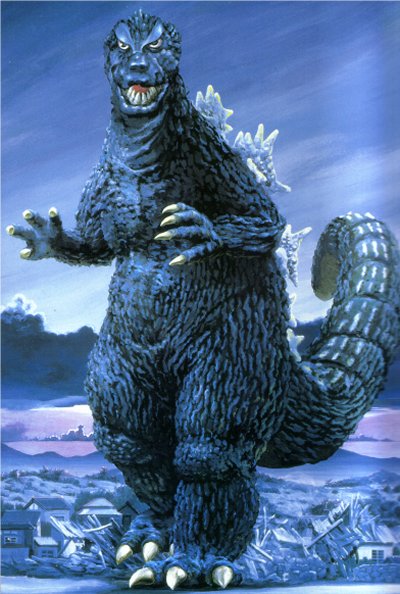
MosuGojiWelcome back… the double holiday interruption delayed this march across (and on top of) the Tokyo skyline. But now the Big-G is back and about to enter the Golden Age of Japanese Fantasy Cinema and the peak of kaiju movie greatness.

Other Installments

Part 1: Origins (1954–1962)
Part 3: Down and Out in Osaka (1969–1983)
Part 4: The Heisei Era (1984–1997)
Part 5: The Travesty and the Millennium Era (1996–2004)
Addendum: The 2014 Godzilla

The Godzilla Masterpiece: Mothra vs. Godzilla (1964)

The astronomical success of King Kong vs. Godzilla made Toho Studios commit to yearly Godzilla movies for the rest of the decade, as well as increasing their giant monster output in general. The studio shifted away from broader science-fiction epics like The Mysterians: the same year that King Kong vs. Godzilla ignited the box-office, Toho’s more ambitious and expensive science-fiction movie from the team of director Ishiro Honda and special effects creator Eiji Tsubaraya, Gorath, made a poorer showing. From now on, Toho would push that they had monsters and were ready to hurl them against each other for audience’s viewing pleasure.

After briefly considering a King Kong re-match, G-series producer Tomoyuki Tanaka turned to a hometown hero: Mothra, the monster-goddess from the popular 1961 Ishiro Honda film of the same name. Mothra was the point where the Japanese kaiju film came into its own as a specific cultural style different from the US model that first inspired it. The lovely yet powerful Mothra was a perfect foe to put in the opposite corner from Godzilla — at least in terms of box-office appeal. From a story and special-effects perspective, it was a trickier idea: Godzilla fighting a giant mystical moth?

But the creative team came through in an astonishing way: Mothra vs. Godzilla is the height of the Godzilla series and one of the finest monster epics ever put on film. This is the movie to show people at the start of a Godzilla odyssey, since it captures so well the Japanese interpretation of the giant monster genre, has Godzilla at his most charismatic yet menacing, and is more fun than most amusement parks.  Eiji Tsubaraya was at his zenith with visual effects; after some wonky optical work in King Kong vs. Godzilla, the effects here are seamless, especially the scenes featuring the miniature Twin Fairies (the shobijin, played by pop singing duo The Peanuts). The two monster battles, with Godzilla against the adult Mothra and then against two larval Mothras, are thrillingly staged and scored.

Read More Read More

Inkjetlings Round eTable: Jackson’s Desolation of The Hobbit?

Inkjetlings Round eTable: Jackson’s Desolation of The Hobbit?

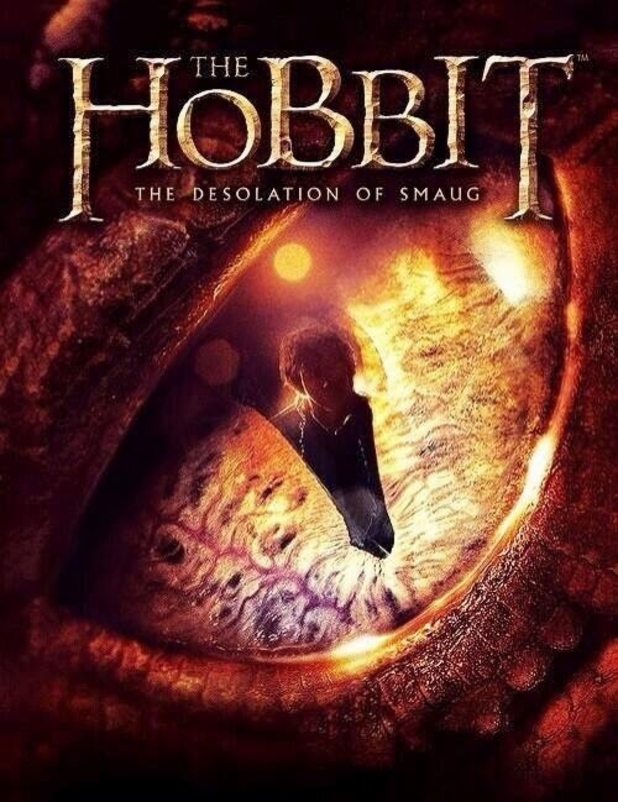
smaugThis week Frederic S. Durbin, Gabe Dybing, and I discuss our impressions of Peter Jackson’s latest film The Hobbit: The Desolation of Smaug. The conversation is a casual and meandering one among friends, although I have tried to group observations under distinct topics. In keeping with the informal nature of the exchange, I have used our first names.

First Impressions (and a link to a completely different review)

FRED: It’s a lot of fun. I was surprised in this one by the extreme departures from the book . . . so this one felt to me like I was watching really well-done fan fiction. But if you can accept that, the movie really is entertaining. It’s fun seeing the characters and settings. I’ll hold off saying any more until I’m sure you guys have seen it.

GABE:  It was a lot of fun, but it certainly will be interesting to talk about. How about you, Nick? Are we waiting for you to see it?

NICK: I finally did get to The Desolation of Smaug — Mel and I arranged a date night and saw it together. She is a HUGE fan of the LOTR movies, but with this film, she feels that something is just off. I found it an enjoyable spectacle, with the caveat that in tone it is very little like Tolkien.

Read More Read More

Universal Labels 47 Ronin a Flop less than 24 Hours After Release

Universal Labels 47 Ronin a Flop less than 24 Hours After Release

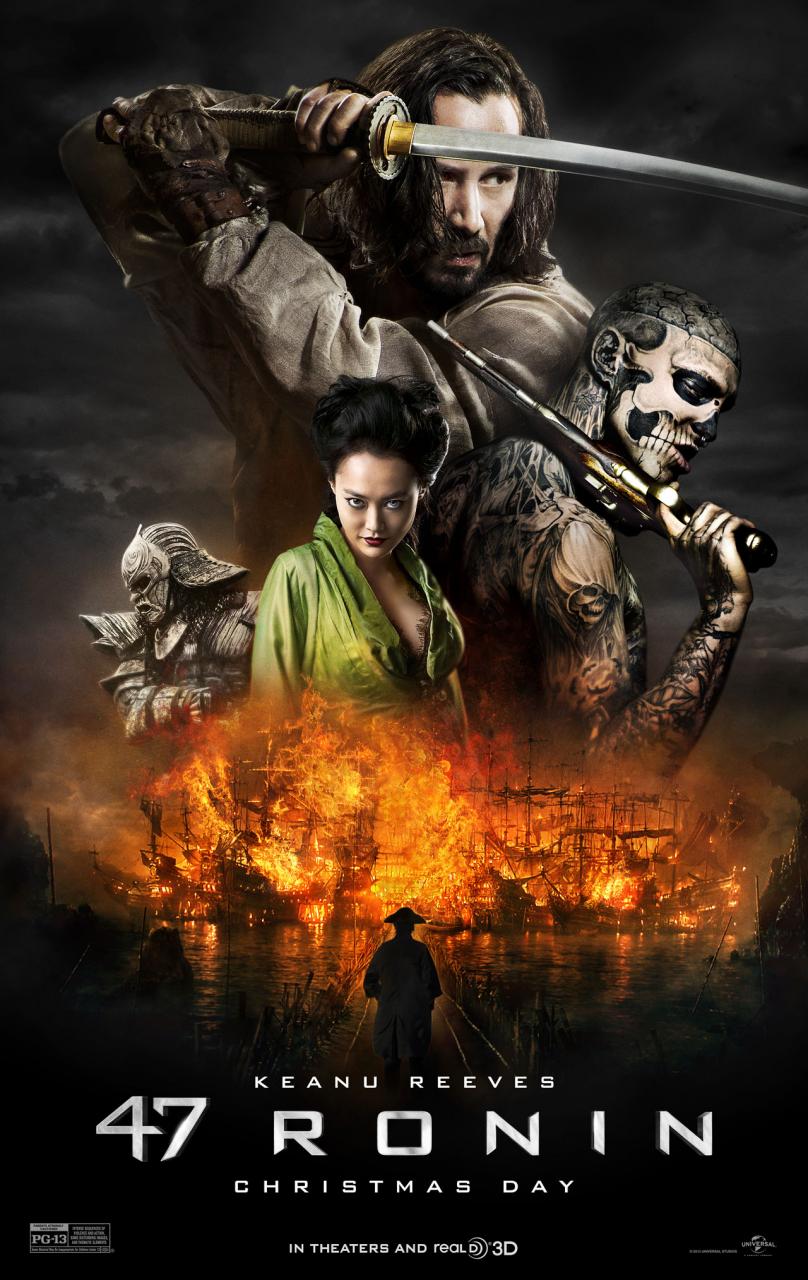
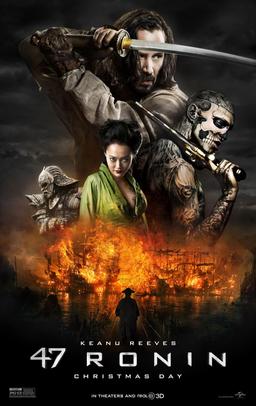
47 Ronin poster-smallUniversal Pictures announced it would take a writedown on its $175 million fantasy epic 47 Ronin on December 26th, the day after the film entered wide release on Christmas Day.

While it’s routine for studios to write off projected losses for underperforming films, it’s highly unusual for one to announce that such a major project is a bomb so early in the film’s run, virtually killing what little hope it had to defy expectations and turn things around.

My teenage sons, oblivious to wider industry news, saw the trailer — packed with gorgeous fantasy landscapes; pirates; dark dungeons; and life-and-death swordfights against samurai, monsters, and flying dragons — and were sold immediately.

For myself, I wasn’t expecting a masterpiece, but I was astounded that Universal had dismissed the film so cavalierly, and my curmudgeonly nature immediately made me assume they were idiots. So we caught a matinee showing yesterday, in a nearly empty theater.

And you know what? It wasn’t bad. Rinko Kikuchi does a marvelous job as the (literally) scenery-chewing, shape-shifting witch and veteran actor Hiroyuki Sanada (most recently seen in The Wolverine and the TV shows Lost and Revenge) carries the film as the leader of the legendary band of 47 disgraced samurai who avenges the death of their noble lord, against the direct orders of the Shogun.

Even Keanu Reeves delivers an entirely serviceable performance as Kai, the half-breed who leads the weaponless ronin into a demon-infested forest and wins them some cool samurai ordnance. The marketing has portrayed Reeves as the lead, but it’s really Sanada who has the most screen time.

The tale of the original 47 ronin, whose 18th century graves still stand today at Sengaku-ji in Japan, is perhaps the most famous example of bushidō, the samurai code of honor, in Japanese history, and is considered by some the country’s “national legend.”

Read More Read More

You Can’t Go Home Again . . .

You Can’t Go Home Again . . .

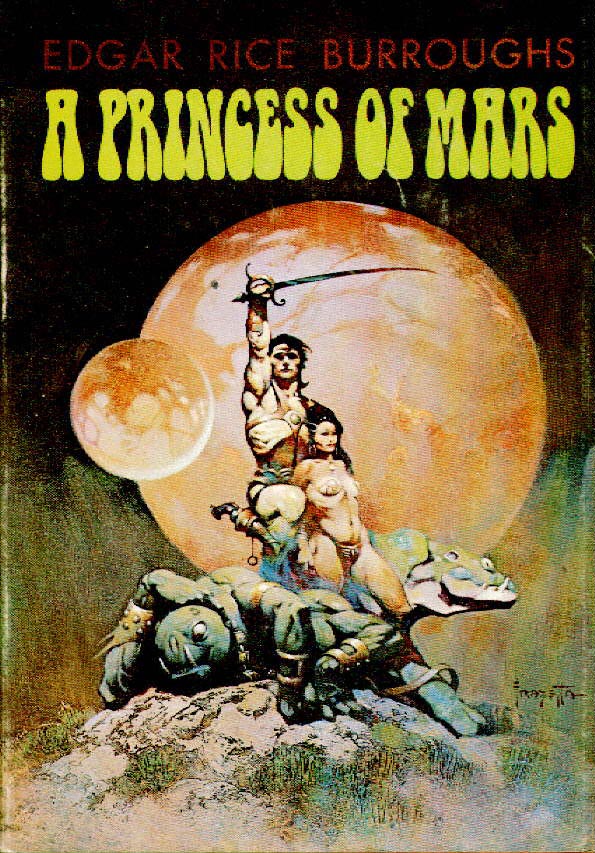
A princess of mars-smallLast week I talked about my Window Theory of Emotional Response and I got some responses from people telling me about some books and films they’d encountered after the window had closed for them – and one or two who talked about works they’d loved once, but no more. Works where the window had once been open and was now closed.

It was pretty clear that I wasn’t talking about stuff we merely liked, or thought well of, but rather stuff that changed the world for us. Where the earth moved, the stars realigned and our understanding of the world was either fundamentally reordered or fundamentally approved.

We all know you can’t go home again. You’re not going to be able to relive that feeling of shock and awe, that feeling that the world just re-oriented itself, by rereading the book that did it for you or re-watching the movie or the TV series. Sometimes it happens that revisiting Parnassus leads us to feel it’s just a hill in Greece.

Read More Read More

Goth Chick News: I, Frankenstein… You, Potentially Disappointed

Goth Chick News: I, Frankenstein… You, Potentially Disappointed

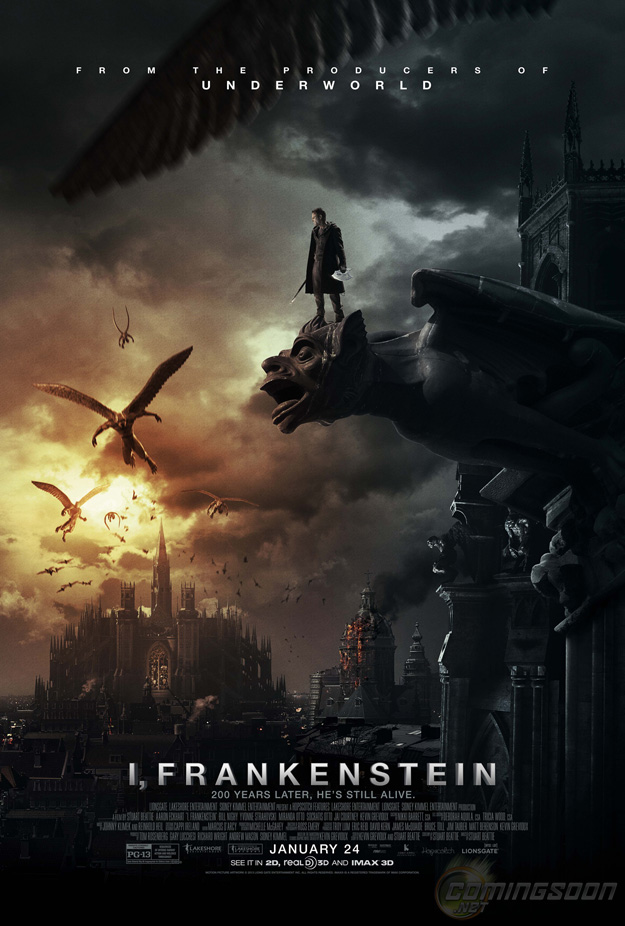
I Frankenstein Poster-smallI am just not sure how to feel about this one.

On January 24, I, Frankenstein the film will finally come to life in theaters nationwide. This after the U.S. release was originally set for February 22, 2013. Then five months prior to release, in the fall of 2012, it was abruptly moved to September 13, 2013; then in April 2013, the date was moved again to January 24, 2014.

In February 2013, Lions Gate said they would release the film in 3D and then in September 2013, they came back to tell us the film would be digitally re-mastered and released in the IMAX format – in 3D.

I, Frankenstein’s release strategy has been retooled more than the old guy himself.

There are a lot of reasons for a studio to postpone a movie release: like problems with the script/ talent/ director, the test audiences didn’t react well and new footage needs to be shot, the studio doesn’t want the release to be diluted by a competitive release in a similar genre…

Or the film just isn’t good and the studio needs time to add some additional razzle-dazzle — like 3D and IMAX.

As a fan of the graphic novel and after seeing the movie trailer, I tend to believe this case might be a combination of all of the above.

Read More Read More

Lay Down Your Weary Year

Lay Down Your Weary Year

time-enough-at-last-350x263“It… is… later… than… you… think.” — Arch Oboler, Lights Out radio program

10…

There’s that classic Twilight Zone episode about the bookwormish little gentleman who has a list long as his arm of books he’s always wanted to read, but who is constantly thwarted by the day-to-day demands of society and pressures of life. He happens to be down in the basement library stacks when a nuclear war breaks out. He emerges to find every other human being gone. After this revelation sinks in, he heads back to the library. Cut to hours or days later: he has amassed piles of books in the order he plans to — finally — read them all.

And then…the unexpected happens. The ol’ TZ twist. In this case, his glasses fall off, and he accidentally steps on them. In the closing shot, he stands there, blind as a bat without his reading glasses, with a look of utter despair on his face that dwarfs any emotions he may have felt on realizing that the rest of his fellow creatures were gone. With the books, even authors long dead were still with him. Now even they have been wrested away, leaving him truly alone.

Rod Serling provides his usual wry commentary in the coda of the closing narration, but everyone who’s seen that episode (“Time Enough at Last”, 1959, starring Burgess Meredith) remembers that final scene — within the context of the story’s simple little narrative, that pair of broken glasses is somehow, improbably, more devastating than the destruction of the human race.

Read More Read More

Space 1999: The Fantasy in Your Mirror May Be Closer Than It Appears

Space 1999: The Fantasy in Your Mirror May Be Closer Than It Appears

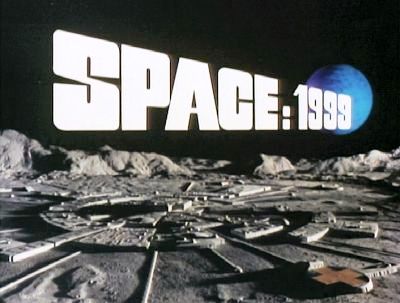
Space 1999When I was a kid, hurling rocks at dinosaurs and running away, there were not many otherworldly shows on TV. Battlestar Galactica ran for two years and then Buck Rogers for about the same, with some incomprehensible Land of the Lost or Dr. Who thrown in at seeming random. Saturday mornings were a rich source of imagination, with Tarzan, Space Academy, Jason of Star Command and Flash Gordon, but unfortunately, in my day, Saturday mornings were only on Saturdays.

Every so often though, I’d find Space 1999 in the TV Guide; it was pretty cool. The sets and ships were pretty different from the sleek models in every other scifi show, and the space suits and the Moon seemed so alien. Twenty-five years later, armed with a couple of science degrees, I ordered a season for nostalgia’s sake.

O. M. G.

It was awful. Aside from the terrible writing and passive characters, and the apparent scattering of Caucasian British humans throughout the cosmos, I could do nothing but choke on the science and toss this drivel into a corner (actually, I think I left the boxed set in Havana, but that’s a story for another time…).

Read More Read More