Browsed by
Category: Movies and TV

Fantasia 2016, Day 1: Outlaws and Angels
Fantasia 2016, Day 1: Outlaws and Angels

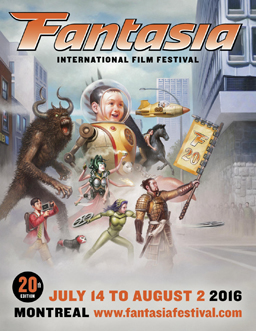
Fantasia 2016Thursday, June 14: as good a day as any to begin an adventure. I walked downtown that afternoon under looming clouds to Concordia University’s EV Building, where I picked up my accreditation for the 2016 edition of the Fantasia International Film Festival. I’d been looking forward to writing about this year’s festival for Black Gate virtually since last year’s had ended. Now things were finally about to begin. A laminated press pass, a festival schedule, a thick program book: the guide to the adventure unfolding over the next three weeks, to fantasy and horror and science fiction and a lot more.

Fantasia is a genre film festival that traditionally has a strong focus on Asian film. I’ve covered it for Black Gate both of the last two years, and I’m looking forward to doing it again, especially since this year marks the twentieth edition of Fantasia (spread over twenty-one years). Once again I’ll be posting in a diary format, covering the films I see in the order they’re shown while also reporting on special events accompanying the screenings — interviews, presentations, and whatever else comes along. I’ll try to get the posts up as quickly as I can, but realistically I’ll be seeing so many movies from now until the festival ends on August 3 that I don’t know when I’ll have time to type up my notes. There’ll probably be scattered posts from now until then, with a flood of posts following through August. We’ll see.

The festival proper began for me that Thursday evening at the De Sève Theatre, the smaller of the two main Fantasia theatres. I saw a western named Outlaws and Angels, which intrigued me since one of the leads is surnamed Eastwood. In this case, that’s Francesca Eastwood, daughter of Clint. I thought the casting choice was fascinating, and was also struck by writer/director J.T. Mollner’s decision to shoot the movie on 35mm film. I wondered how these things would work out; and besides, the only other movie showing at the same time was Kickboxer: Vengeance, a relaunch of the Jean-Claude Van Damme series from the 80s. Having seen the first three seasons or so of Community, I knew I’d only be able to think of that movie as Kickpuncher. Outlaws and Angels seemed like the clear choice.
Read More Read More

See the History of Horror Film in 12 Minutes

See the History of Horror Film in 12 Minutes

Diego Carrera has created a captivating and wordless 12-minute video essay that proposes “a timeline of influential and aesthetically beautiful horror movies around the world since 1895 until 2016.” It offers us a brief clip from one film every year, starting with The Execution of Mary, Queen of Scotts (1895), and working up through The Haunted Curiosity Shop (1901), Frankenstein (1910), The Cabinet of Dr Caligari (1920), Nosferatu (1922), Bob Hope’s hilarious The Ghost Breakers (1941), Abbott and Costello Meet Frankenstein (one of my favorite horror films, 1948), Psycho (1960), The Exorcist (1973), Alien (1979), The Thing (1982), The Blair Witch Project (1999), Let the Right One In (2008), It Follows (2015) and The Witch (2016).

It’s oddly captivating — check it out. And see more of Diego Carrera’s video work on Vimeo here.

When It’s Time to Railroad . . .

When It’s Time to Railroad . . .

DraculaI don’t think there’s anyone in the Fantasy and SF community that isn’t familiar with this concept (I first came across it in a Heinlein novel) but just in case: There’s a point at which all the necessary components to allow for an invention to flourish are in existence, and at that point – and not before – the invention takes off.
In other words, when it’s time to railroad, everybody railroads. It explains in part why so many inventors seem to file patents within weeks or months of each other, and why so many different people are credited with being the first one to invent something.

Look at it this way, Leonardo da Vinci is credited with the invention of numerous devices he didn’t actually build and/or wasn’t able to build, because the supporting industry, or the supporting technologies weren’t yet in existence.

I want to suggest that this happens in the arts as well. Consider the vampire, as an example. For all intents and literary purposes, the vampire was invented by Bram Stoker. A few other writers showed an interest, but not much was done with the idea until the latter half of the 20th century, when it became time to vampire.

Read More Read More

Goth Chick News: Kiefer Sutherland and Hollywood Both Flatline

Goth Chick News: Kiefer Sutherland and Hollywood Both Flatline

Flatliners-small

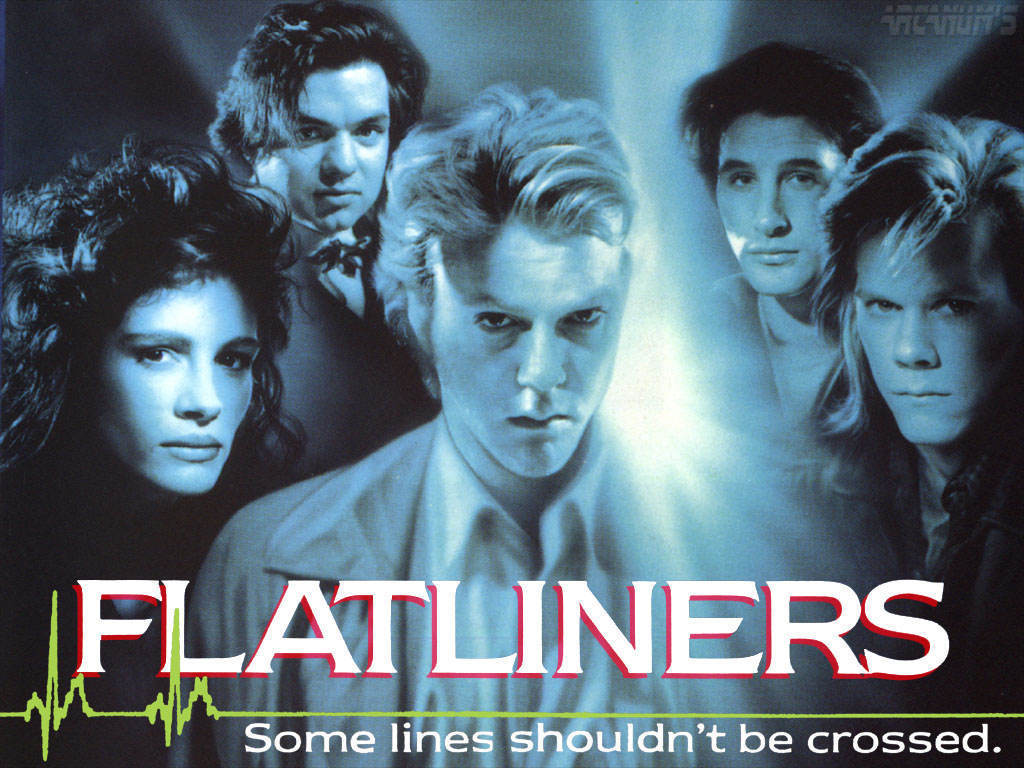
Back in 1988 a then-unknown Boston screenwriter Peter Filardi had an idea for a story based on a very personal source; a close friend of his suffered a severe allergic reaction to the anesthesia after an operation and had a near-death experience.

Filardi went on to write The Craft and Salem’s Lot, but in 1990 he and director Joel Schumacher (St. Elmo’s Fire) turned that potential tragedy into the very lucrative film Flatliners.

The original Flatliners followed a group of medical students and close friends who conduct experiments with near death experiences. Each one has their heart stopped before being revived instantly, which causes them nightmarish visions, reflecting either sins they have committed or sins committed against them.

As you can imagine, their unorthodox extracurricular studies have very dark consequences, as the supernatural apparitions they experience during their “deaths” begin to follow them into the living world.

Read More Read More

Belated Movie Review #7: Towards a Unified Theory of Hudson Hawk

Belated Movie Review #7: Towards a Unified Theory of Hudson Hawk

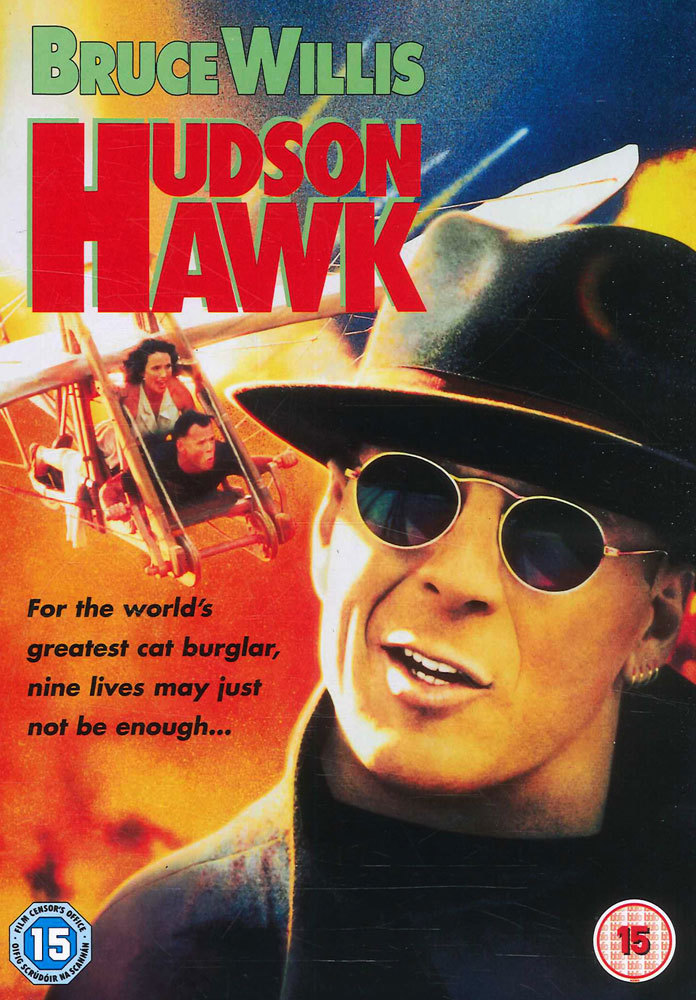
Hudson Hawk poster-smallSo there’s this network, Comet TV, that shows old sci-fi shows and movies and such. As I live in a media cave without cable or Netflix I sometimes catch said old movies there. A couple of weeks ago I caught the 1991 Bruce Willis vehicle Hudson Hawk — a movie both loved and reviled! An action/comedy that is, in most senses, the final word on action comedies.

Most people absolutely HATE this movie. Especially snobs whose jobs depend on them hating movies. Can I provide examples? Oh yes:

Terry Cliffored, writing for the Chicago Tribune notes:

Boring and banal, overwrought and undercooked, Hudson Hawk is beyond bad.

Kenneth Truan scribbling gloomily for the L.A. Times had this to say:

The saddest thing about Hudson Hawk is that director Lehmann and co-screenwriter Waters were previously responsible for the clever, audacious “Heathers,” a film that represented all that is most promising about American film, while this one represents all that is most moribund and retrograde. Perhaps they both earned enough money here so that they won’t be tempted to indulge themselves in similar big-budget fiascoes. Here’s hoping.

And I would be remiss if I didn’t include Rolling Stone’s Peter Travers trying to be cool by bemoaning it thusly:

A movie this unspeakably awful can make an audience a little crazy. You want to throw things, yell at the actors, beg them to stop.

You know what? Screw them! There are some movies that are simply beyond the grasp of tiny minds — and this is one of those movies, if not the king of such movies.

Read More Read More

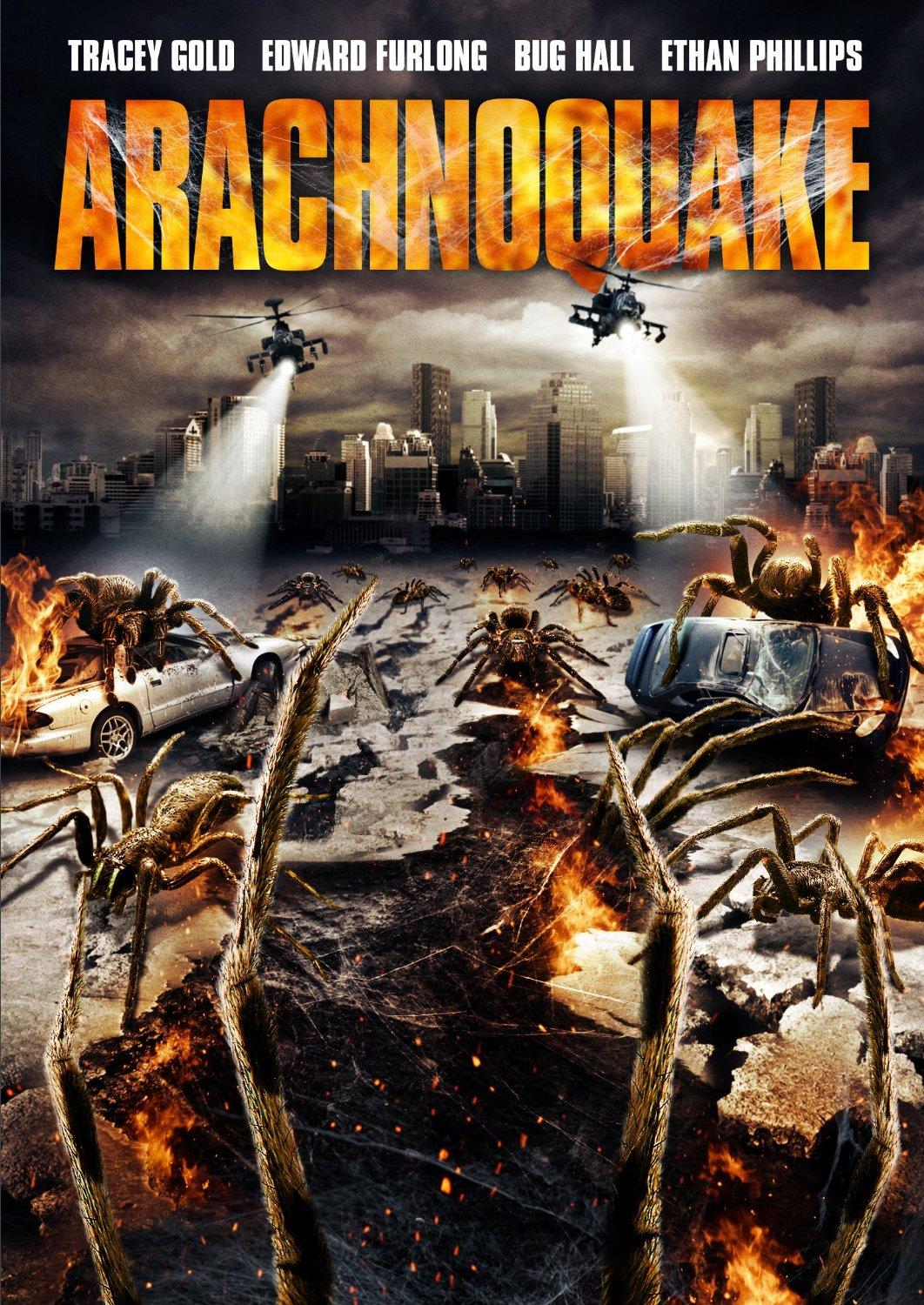
Here Be Spiders: Arachnophobia & Arachnoquake

Here Be Spiders: Arachnophobia & Arachnoquake

Arachnophobia-small Arachnoquake-small

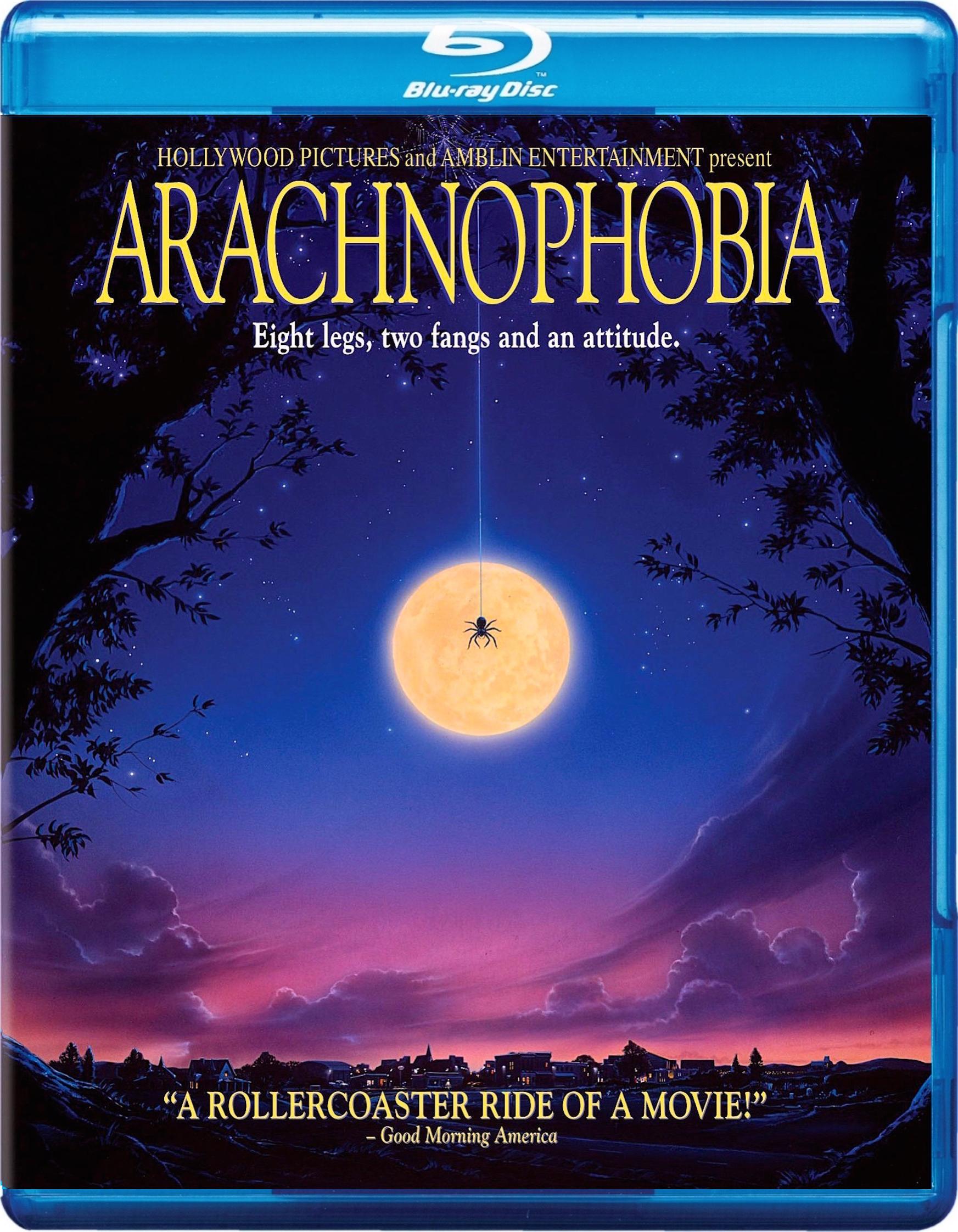
After watching and reviewing all five of the Tremors movies lately, I decided to turn my attention to movies about critters that mostly dwell above the ground — spiders.

Arachnophobia, a big-budget mainstream effort from 1990, is one of the better known examples of this sub-sub-genre. Then there’s Arachnoquake, one of those SyFy originals (yes, one of those) that came out in 2012.

Read More Read More

The Public Life of Sherlock Holmes: Don’t Panic!

The Public Life of Sherlock Holmes: Don’t Panic!

BG_AdamsDontPAnicTo those who ascribe to Dirk Gently’s belief in the fundamental interconnectedness of everything (the working premise that made him the holistic detective that he was), you might be able to tie together today’s rambling post. If you do, feel free to explain it to me. My Sherlockian approach failed miserably in the attempt. I got to the point where, once I had eliminated the impossible, whatever remained, however improbable, must be the truth. Except what remained was still impossible.

(I wrote about the Gently books here and the television miniseries here. Go ahead and read them. You know you want to.)

And since I’m talking about a mega-successful series, that has sold/rated well in almost every medium short of Mime, you don’t get a Spoiler Alert. If you’re not familiar with Adams’ works, I don’t know why you’re reading this post anyways. Go read/watch/play/listen to some incarnation of this stuff.

Dirk Gently’s Holistic Detective Agency is my favorite Douglas Adams book (many folks would like me to explain how that could be!). But I first came to Adams’ just like everybody else: through The Hitchhiker’s Guide to the Galaxy. Note I use the unhyphenated spelling.

I wouldn’t tackle that controversy without downing at least two Pan Galactic Gargleblasters first. And since I would lose consciousness two swallows into the first one, we can put that issue to bed right now. And I don’t mean on one of the follopping mattresses from the swamps of Sqornshellous Zeta, either. There.

Now we can move along. Though if you want to delve deeper into the issue on your own, see Don’t Panic: The Official Hitchhiker’s Guide to the Galaxy Companion by Neil Gaiman – pages 50-51.

Read More Read More

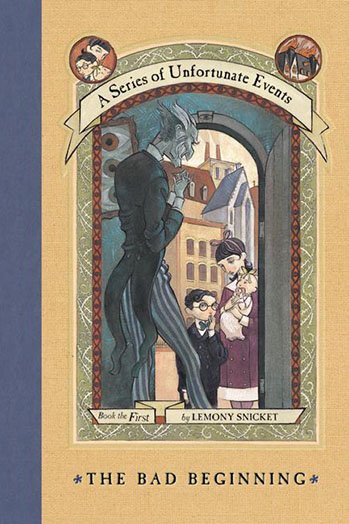
Goth Chick News: A Series of Unfortunate Events, or This Is Where I Came In

Goth Chick News: A Series of Unfortunate Events, or This Is Where I Came In

A Series of Unfortuante Events-smallWay back in 2000, I submitted a book review to Black Gate magazine on a dare.

I had recently fallen in love with the first three installments of the newly published Series of Unfortunate Events by Lemony Snicket (aka Dan Handler) and was going on about them at work to anyone who would listen. Finally, a coworker dared me to tell someone who might actually care and send my annoyingly enthusiastic review to his favorite publication, Black Gate – assuming, I am sure, that head honcho John O’ would effectively tell me to shut it, in writing.

But sixteen years later, thanks to that annoyed coworker and the high tolerant nature of our editor-in-chief, I continue to occupy a subterranean office at Black Gate where I perpetually maintain a small shrine to Handler beside the blender: not only because his work is where Goth Chick News began, but because he remains to this day, just that entertaining.

In 2004, five years after the first book in the Series of Unfortunate Events was published, Hollywood made what I deem a truly disastrous attempt to bring them to life on the big screen; “disastrous” because rather than focusing on the three, young protagonists, Violet, Klaus and Sunny, Paramount Pictures offered it up as a vehicle for Jim Carey. And pulling out every facial expression and delivery shtick from every one of his past characterizations all the way back to In Living Color, Carey dealt the potential franchise an agonizingly slow, 108-minute death.

At least that is what I say happened.

Read More Read More

The Public Life of Sherlock Holmes: Lt. Columbo

The Public Life of Sherlock Holmes: Lt. Columbo

Columbo_HandsUpThe mystery field is full of great detectives and private eyes, both amateur and professional, created by authors. Hercule Poirot, Nero Wolfe, Father Brown, Inspector Morse, Sam Spade, Philip Marlowe, Mike Hammer, The Continental Op: and of course, Sherlock Holmes. The list goes on and on.

There have also been quite a few detectives created for television. McCloud, Matt Houston, Magnum PI and Jim Rockford to name a few. The germaphobic Adrian Monk was immensely popular. But perhaps the supreme television detective is Inspector Columbo.

A prototype Columbo, if you will (heck – even if you won’t), appeared in Enough Rope: a 1960 episode of The Chevy Mystery Hour, played by Bert Freed. It was then turned into a play, Prescription Murder, starring Thomas Mitchell, who died of cancer during its run.

Next, the play evolved into a two-hour television movie. The under-appreciated Lee J. Cobb was approached but unavailable and Bing Crosby turned down the part (imagine that). Though he was considered too young at the time, Peter Falk was given the part and the movie aired in 1968.

The network ordered another TV movie to see if a series was feasible. Ransom For a Dead Man did well and Columbo became part of a rotating series of shows, including Dennis Weaver’s McCloud and McMillan and Wife, with Rock Hudson.

Read More Read More

The Paranormal on British TV: The BBC’s The Ωmega Factor

The Paranormal on British TV: The BBC’s The Ωmega Factor

The Omega Factor DVD

Starring James Hazeldine and Louise Jameson
(1979. 10 episodes, 3 disks, 510 minutes)

Saturday night at the 2016 Windy City Pulp and Paper Show back in April, I had dinner with John O’Neill and several others, including Arin Komins and her husband Rich Warren. During our discussions about Blake’s Seven and The Sandbaggers, Arin mentioned another BBC program, The Ωmega Factor. Her description sounded fascinating, so I bought it on Sunday from a dealer.

The Ωmega Factor is a British series about the limitless potential of the human mind and this theme is explored through various paranormal abilities. The show stars James Hazeldine (1947-2002) as journalist and psychic investigator Tom Crane; Louise Jameson, as psychic investigator Dr. Anne Reynolds; and John Carlisle as psychiatrist Roy Martindale. Crane and Reynolds report to Martindale who directly supervises Department 7, a secret British government group that explores psychic phenomenon mostly for use by the military.

Mind control, poltergeists, possession, witches, experimental devices, haunted houses and out-of-body experiences are a few of the paranormal subjects discussed in the ten episodes that were produced. Here’s a look at each one.

Read More Read More