Browsed by
Category: Movies and TV

Fantasia 2016, Day 10 Part 1: Sequels and New-Told Tales (Assassination Classroom: Graduation, Revoltoso, Nova Seed, and the Samsung Virtual Reality Experience)

Fantasia 2016, Day 10 Part 1: Sequels and New-Told Tales (Assassination Classroom: Graduation, Revoltoso, Nova Seed, and the Samsung Virtual Reality Experience)

Assassination Classroom: The Graduation Saturday, July 23, was going to be a long day for me at the Fantasia film festival, filled with some tough choices about what to watch. Some of those choices were clarified early on, when thanks to the good work of the people at Fantasia I was able to watch a screener of Assassination Classroom: The Graduation. That resolved a schedule conflict later in the day, and just after noon I’d see my first theatrical screening: Nova Seed, a Canadian animated feature that was playing with an almost half-hour-long short film from Mexico, Revoltoso. After that I had a couple hours until the next set of movies, and I planned to get a good meal. This did not happen. Instead I’d end up taking a test drive of the future — or what seems to me like the future, or at least like a future.

First, Assassination Classroom: The Graduation, directed (like the first live-action Assassination Classroom film) by Eiichiro Hasumi, from a script by Tatsuya Kanazawa based on a manga by Yuusei Matsui. I saw part one of the Assassination Classroom story last year at Fantasia and loved it. A whirlwind science-fiction comedy, it followed a high school class in Japan filled with underachievers, given the mission to kill their new teacher before the end of the school year. That professor, dubbed “UT” for “Unkillable Teacher,” was a grinning yellow smiley-face with tentacles who could move at supersonic speeds and had already blown up the moon. The more the movie went on the more imaginative and frenetic it got, adding characters and sub-plots with abandon.

The second movie keeps some of the same tone, but immediately begins deepening it: the students have to start thinking about their career paths, letting us know that their time with UT is almost up one way or another. A school festival starts out with the same surrealist humour as the first movie, as a government sniper attempts to infiltrate the festival to kill UT — who in the meanwhile has cast himself as the lead in a stage performance of the Momotaro story. Again, though, some of the goings-on here are darker, as two of the girls are briefly taken prisoner by older boys demanding sexy pictures. The girls rescue themselves, but the tone’s definitely taken a turn.
Read More Read More

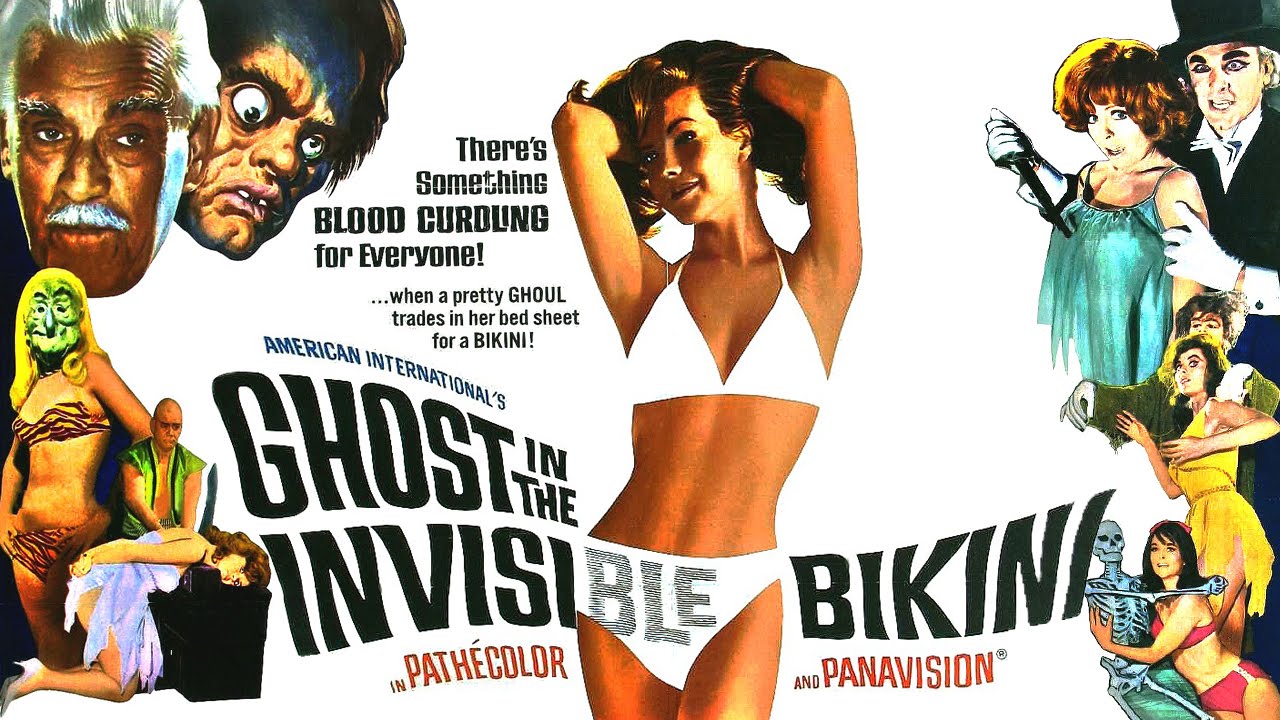
Old Dark House Double Feature III: The Ghost in the Invisible Bikini (1966) and Ghost of Dragstrip Hollow (1959)

Old Dark House Double Feature III: The Ghost in the Invisible Bikini (1966) and Ghost of Dragstrip Hollow (1959)

The Ghost in the Invisible Bikini-small

The Ghost in the Invisible Bikini
American International Pictures (1966)
Directed by Don Weis
Written by Louis M. Heyward and Elwood Ullman
Starring: Basil Rathbone, Boris Karloff, Tommy Kirk, Deborah Walley, Aron Kincaid

I’m not sure how the phrase “everything but the kitchen sink” originated. Perhaps to describe this movie, which pulls out all the stops. As with Ghost of Dragstrip Hollow, I went into it with very low expectations and ended up being surprised.

I’m pretty sure this is the only movie ever made that starred Basil Rathbone, Boris Karloff and Tommy Kirk. Black Gate readers will probably know the first two names and I think it’s safe to say that this movie wasn’t the highlight of their careers, although Rathbone turns in an energetic performance.

Read More Read More

Fantasia 2016, Day 9: Horror at Varying Levels of Self-Awareness (Shelley, The Inerasable, and Seoul Station)

Fantasia 2016, Day 9: Horror at Varying Levels of Self-Awareness (Shelley, The Inerasable, and Seoul Station)

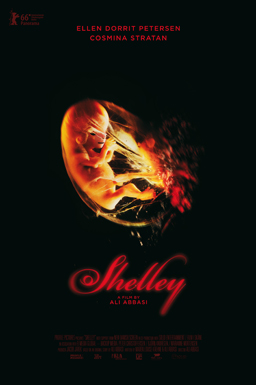
ShelleyWeekends are busy at the Fantasia International Film Festival, and Friday, July 22, saw things beginning to ramp up for me after a slow few days. After much internal debate, I decided to see three movies, all of them horror films of different kinds. First came the Danish film Shelley, at the Hall theatre, about sinister events around a surrogate mother in an isolated household. Then would come a Japanese film, The Inerasable (Zange —Sunde wa Ikanai Heya), about two women investigating a ghost manifesting in an urban apartment. Finally would come an animated Korean zombie movie, Seoul Station (Seoulyeok). They promised three very different tones. And, as it turned out, delivered nicely.
Written and directed by Ali Abbasi, Shelley follows a Romanian woman, Elena (Cosmina Stratan), who has agreed to become a live-in maid for a Danish couple, Louise and Kasper (Ellen Dorit Petersen and Peter Christoffersen). They live on their own in an isolated house without electricity, and the movie opens with Elena being driven to their home in the deep woods. As she settles in and becomes friends with her bosses we learn about all three of them — how Elena has a boy back in Bucharest, how she’s struggling to send money back to him, and then on the other hand how Louise and Kasper are vegetarians and raise their own food and want a child of their own which Louise is not physically able to bear. They soon offer Elena enough money to pay for an apartment for her and her boy if she will be a surrogate mother for their child. She agrees, but as the pregnancy goes on problems develop. Health issues; the sort of things a doctor finds normal. But then also more sinister signs. A mysterious crying in the night. Bad dreams. Is the pregnancy cursed?

If so, it’s not clear by what. The feel of horror in this movie is oddly attenuated. There are hints of bad things, but no reason why those bad things are manifesting (if they are). Nor a sense of any specific malevolence. There is a shaman-like seer (Björn Andrésen) who tends to the spiritual need of Elena’s bosses, but although at moments he seems to recognise evil at work, he doesn’t hint at why or what that evil might be.

Read More Read More

Fantasia 2016, Day 8: Animated Critiques (Psychonauts, the Forgotten Children and Harmony)

Fantasia 2016, Day 8: Animated Critiques (Psychonauts, the Forgotten Children and Harmony)

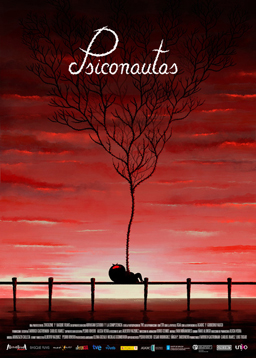
PsychonautsThere was one movie scheduled at Fantasia on Thursday, July 21 that I was determined to see: a science-fiction anime called Harmony (Hamoni). Since I had time free beforehand, I decided I’d first head to the festival’s screening room to watch something I’d missed or would be unable to see later. There, I looked over the selection available and settled on Psychonauts, the Forgotten Children (Psiconautas, los niños olvidados), an animated film from Spain. I liked the idea of a double feature of two very different cartoons.

Psychonauts is an engagingly complex movie that takes place on an unknown island, in the ruins of an industrial-age civilisation: many children go to schools, there’s a police force and a sort-of-functioning economy, but also any number of scavengers living in vast tracts of trash shaped by hills of garbage. This story isn’t to be understood as science-fiction, though, since on this island there are also monsters, separable souls, and demonic shadows. Birdboy, a mute child with the power of flight (more or less), seems to know some of the secrets of this strange place. A girl, Dinky, knew Birdboy once and still loves him. She hopes to leave the island, but won’t go without Birdboy — even though the authorities are out to get him, blaming him for selling drugs to children. The movie follows both Birdboy and Dinky as they go about their separate ways, encountering the strange societies of the island and exploring its mysteries.

Psychonauts is technically the sequel to an earlier short film, “Birdboy,” which I have not seen (and does not seem necessary to understanding Psychonauts). Both movies were co-written and co-directed by Alberto Vazquez and Pedro Rivero, based on a graphic novel by Vazquez. Psychonauts has something of the look of an indie comic, in the primitivist-yet-engaging design of its characters and the odd details of its backgrounds. If I had to point to a work in any medium which felt most like Psychonauts, I’d probably select Jim Woodring’s comic Frank, with its dreamlike, occasionally violent, and oddly complex stories. Psychonauts is an equally individual work, but has the same knack for creating oneiric symbols out of its settings and imagery.

Read More Read More

Fantasia 2016, Day 7: Immiscible Propaganda (Momotaro, Sacred Sailors; The Alchemist Cookbook; and Library Wars: The Final Mission)

Fantasia 2016, Day 7: Immiscible Propaganda (Momotaro, Sacred Sailors; The Alchemist Cookbook; and Library Wars: The Final Mission)

MomotaroAs I’ve said before, sometimes the movies I see at Fantasia on a given day have a common theme. And sometimes they don’t, however much it might look like they ought to. On Wednesday, July 20, I’d go downtown to the Hall Theatre to watch an oddity: a restored Japanese propaganda cartoon from World War II, Momotaro, Sacred Sailors (Momotaro, Umi No Shinpei). Then I planned to head across the street to the De Sève and watch an independent American horror film, The Alchemist Cookbook. I hoped to make it back to the Hall after that in time to watch the second in a series of Japanese science-fiction action movies, Library Wars: The Last Mission (Toshokan Sanso: The Last Mission). It looked like a packed day, and I wondered how the movies would play off of each other.

Momotaro was written and directed by Mitsuyo Seo, and released in 1945. Seo was apparently told by the Japanese Ministry of the Navy to make a propaganda film for children, and given Disney’s Fantasia as an example of what the Ministry had in mind. Seo, who’d already made a 37-short retelling the bombing of Pearl Harbour, produced the 74-minute Momotaro. It was believed lost during the American occupation, until a VHS copy turned up in Japan in the 1980s. Recently the original negatives were found, a 4K restored version was made, and Momotaro screened at Cannes in the Cannes Classics section.

Momotaro’s a mashing-up of the war in the Pacific with the Japanese legend of the peach boy Momotaro. The basic story of the tale has an elderly couple finding a boy in a peach that washes downstream past their house; when Momotaro grows up he sets out to defeat an island of demons, or oni, and does so with the help of various animal companions. Seo’s mapped that story onto the Japanese war effort in the Pacific. The movie begins with a group of anthropomorphic animals on leave from the Japanese navy and returning to their village to be celebrated as heroes. Various knockabout gags follow, and the animals join forces to save a child from falling over a waterfall. They rejoin their unit, and we see them at a navy base working and taking classes.

Read More Read More

Goth Chick News: Phantasmagoria the Game Turns 21 and Gets a Movie Treatment (Maybe)

Goth Chick News: Phantasmagoria the Game Turns 21 and Gets a Movie Treatment (Maybe)

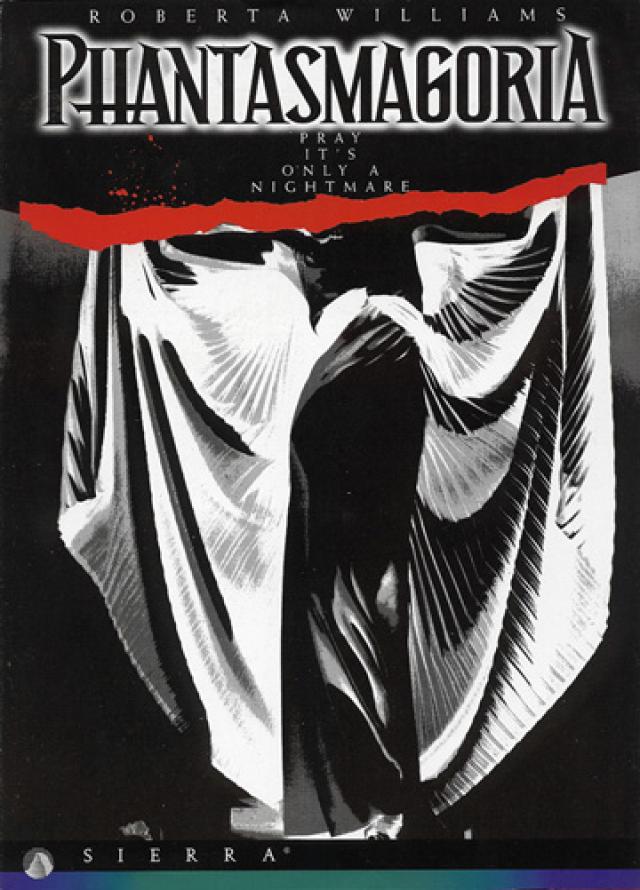
Phantasmagoria-smallAs you know (or can guess) I have publicly declared Phantasmagoria, the horror-themed video game by Sierra On-Line, as one of my all-time-favorites to this day.

Why you ask, when the quality of today’s gaming experiences are movie-like, compared to which Phantasmagoria’s live-actor-against-computer generated-background appears fairly cheesy?

To start, I’ll re-share some stats that my buds over at Bloody Disgusting dug up as part of their own Happy Birthday tribute.

Back in the ‘90’s when point-and-click adventure games reigned supreme, LucasArts and Sierra were the “Nintendo and Sega” of the era. And Roberta Williams was Sierra’s wunderkind; the designer responsible for a number of hit franchises like King’s Quest, Mystery House, and The Colonel’s Bequest. But in spite of the many titles that Williams worked on, she’s said that her sole entry in the horror genre, Phantasmagoria, is her favorite.

Phantasmagoria to this day remains one of the biggest spectacles of gaming. No expense was sparred and the game sprawled across 7 CD-ROMs due to the heavy amount of FMV (Full Motion Video).

Williams wrote a 550-page script for Phantasmagoria, (a typical movie screenplay is around 120 pages, as a point of reference), which required a cast of 25 actors, a production team of over 200 people, took two years to fully develop and four months to film. Phantasmagoria’s initial budget was $800,000, but by the end of production costs had hit a staggering total of $4.5 million (with the game also being filmed in a $1.5 million studio that Sierra built specifically for it).

Read More Read More

I Am Not a Serial Killer Film Drops (Someplaces) Tomorrow

I Am Not a Serial Killer Film Drops (Someplaces) Tomorrow

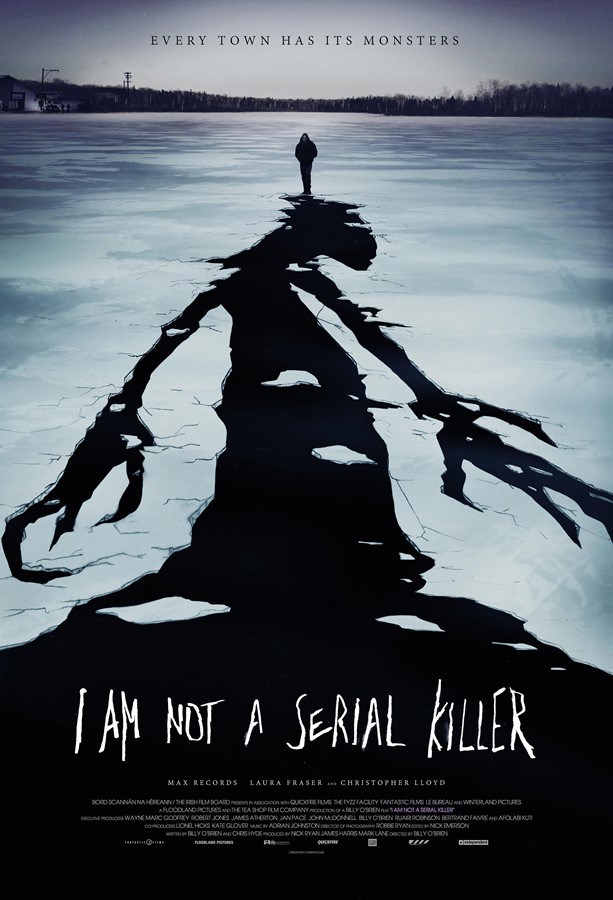
i-am-not-a-serial-killer-poster-2I am not particularly active on Twitter lately, but today I had a bit of time and hopped on, only to see the following headline shared by Dan Wells:

Retro-horror mashup ‘I Am Not a Serial Killer’ has an unexpectedly warm and fuzzy side

The tweet included a link to an LA Times review of the film I Am Not a Serial Killer which, according to IMDB, is set to release tomorrow, on August 26. Another review, over at the A.V. Club, proclaims “Psychopaths are people too.”

Despite being fond of Wells’ horror novel of the same name, I had no idea this film was on the horizon, and am definitely pleased to see it getting initial praise. If you want to really get a taste for what to expect, I suggest the fantastic trailer for it. (If you want to see the movie, check the bottom of this article for links, which I’ll update if I find more online availability after it is released. Feel free to skip there, if you have seen enough and want to avoid spoilers.)

The movie is based on the novel of the same name, which has gone on to spark a number of sequels featuring the main character, teenage John Cleaver, who is also a diagnosed psychopath. John’s fear is that his psychopathic urges will get the better of him, and that he will lose control of himself. To prevent this, he studies serial killers intently and has developed a series of rules that are designed to maintain his veneer of normalcy. One of the rules shown in the trailer, for example, is that when he feels an urge to kill someone, he instead compliments them. (A tip that is also helpful when maneuvering social media.)

John works in his family’s mortuary, which gives him some release for his interest in death. But he gets more than he bargains for when a series of murders in his quiet down prove to be the work of an actual serial killer. John’s expertise in this area leads him to discover who the serial killer is, and it turns out the police are not equipped to deal with the menace. In attempting to deal with things the “right” way, John finds events slowly becoming worse. He is forced to step up, breaking his own rules, and slowly getting in touch with his own darkness in order to combat the killer that threatens his community.

And that’s when things start getting really bad.

Read More Read More

Fantasia 2016, Day 5: Bewitched and Bewailing (The Love Witch and The Wailing)

Fantasia 2016, Day 5: Bewitched and Bewailing (The Love Witch and The Wailing)

The Love WitchI had only one movie on my schedule for Monday, July 18, but thanks to the good offices of the people at the Fantasia Film Festival and at Oscilloscope Laboratories, I ended up able to catch another film first. The Love Witch was a movie that I’d been unable to watch in its theatrical showing at Fantasia due to a scheduling conflict. After seeing it Monday, I’d go on to the Hall Theatre for The Wailing (Goksung), a two-and-a-half hour Korean horror film. The movies made for an odd contrast. In both cases I greatly appreciated them but came away fairly sure I wasn’t part of their primary audience. But movies play to whoever sees them, and perhaps writing about these films will bring them to the attention of people with better perspectives than my own.
Directed and written by Anna Biller, The Love Witch is a mix of horror, satire, and melodrama which follows Elaine (Samantha Robinson), a witch and murderess, as she moves to a new home and seeks love. Unfortunately for the men she desires, she’s both unforgiving and possessed of high standards. Any sign of weakness or emotional neediness is a sign of her partner’s unfitness, which she puts to an end both swift and fatal. Will Elaine finally find the man of her dreams? Or will her interest in Richard (Robert Seeley), the husband of her friend Trish (Laura Waddell), bring about her downfall?

From the opening shots of a bright scarlet car driving along a California highway we know this is going to be a stylish treat for the eyes. Biller’s created a colour-drenched world out of a Hollywood melodrama, circa 1970. It isn’t set in that time — we get a few signs to the contrary, mostly in scenes involving policemen trying to figure out where all the dead male bodies are coming from — but it’s largely played that way, with sets and props evoking the period. More than that, there’s a mannered artificiality to the acting styles and dialogue that (I felt) mimics the specific artificiality of the late 60s.

Read More Read More

Fantasia 2016, Day 4: Questioning Genre (Beware the Slenderman, In a Valley of Violence, and The Unseen)

Fantasia 2016, Day 4: Questioning Genre (Beware the Slenderman, In a Valley of Violence, and The Unseen)

Beware the SlendermanSunday, July 17, began early for me. I went down to the Hall Theatre to watch Parasyte: Part 2 (I’ve written about it here, along with Part 1), then took care of some personal errands before returning to the Hall to watch a documentary called Beware the Slenderman, about a case of attempted murder and its apparent inspiration in internet stories about a shadowy monster. After that I planned to watch In a Valley of Violence, a Western starring Ethan Hawke, John Travolta, and Karen Gillan. Then I’d go across the street to see the world premiere of a Canadian film called The Unseen, which promised a new take on the idea of the invisible man.
Beware the Slenderman, directed by Irene Taylor Brodsky, is an examination of a crime that took place in small town in Wisconsin on May 31, 2014. Two twelve-year-old girls took a mutual friend out to a nearby forest and stabbed her fourteen times before leaving her to die. The girls believed they were acting in the service of a terrifying creature called the Slender Man. Brodsky’s film examines the causes of the crime, presenting the background of the stories of the Slender Man before analysing the family life and mental health of the two girls, and then following the girls for a time through the justice system.

Doubts about the film immediately arise. There are elements of mystery in its structure — why did these children do this thing? — that really does it no favours. The film ends up focussing on the girls’ mental states, so the mystery aspect ultimately feels superficial at best and exploitative at worst. It’s hard as well not to notice that there’s no involvement from the victim or her family. One might wonder if the film also exploits fears about the neurodivergent. The narrative it settles on, the explanation of what led to the killing, involves undiagnosed mental conditions on the part of the two girls. This is a plausible analysis, to say the least, but what’s the film doing by presenting it? What is the point of telling this story?

Read More Read More

Fantasia 2016, Day 3: Alien Spirits (Parasyte: Part 1 and Part 2, La Rage du Démon, For the Love of Spock, and Terraformars)

Fantasia 2016, Day 3: Alien Spirits (Parasyte: Part 1 and Part 2, La Rage du Démon, For the Love of Spock, and Terraformars)

Parasyte: Part 1Saturday, July 16, began early for me. I headed downtown to the Hall Theatre for an 11:05 showing of Parasyte: Part 1 (Kiseiju), the first instalment of a Japanese science-fiction–horror duology. After that I planned to head to the festival screening room; I hoped to see La Rage du Démon (Fury of the Demon), a French horror mockumentary that mixes film pioneer Georges Méliès, occultism, and legends of mass hysteria into the story of a cursed silent movie. Then I’d head back to the Hall for a showing of For the Love of Spock, a documentary about Leonard Nimoy and his most famous role, hosted by the director, Nimoy’s son Adam. I’d wrap up the night with Terraformars, a science-fiction film directed by Takashi Miike about humans battling genetically-modified cockroaches on the surface of Mars. Miike would be present to host a question-and-answer session and receive Fantasia’s Lifetime Achievement Award.

It would be a full day of films, and it began, as I said, with Parasyte. I would see the second film — in English Parasyte: Part 2, in romanised Japanese Kiseiju Kanketsu-hen — on Sunday morning, so I’ll write here about the two films together. Both were directed by Takashi Yamazaki from scripts Yamazaki wrote with Ryota Kosawa based on the manga by Hitoshi Iwaaki (an English translation of the manga came out from Tokyopop and is now in print from Kodansha Comics USA; an anime version, Parasyte -the maxim-, ran in Japan in 2014 and 2015). The films do a reasonable job of standing alone, but the last shots of Part 1 explicitly set up Part 2, while there’s so much story in Part 1 that I’d have to think Part 2 would suffer from not having seen it. I suspect Part 2 would end up understandable, but the characters perhaps even more than the plot would feel flattened. The first film runs an hour and three-quarters and the second two hours, so they both individually have the length of full stories. But there’s no doubt to me that they benefit from being viewed fairly close together.

Read More Read More