The Public Life of Sherlock Holmes: The Scarlet Claw
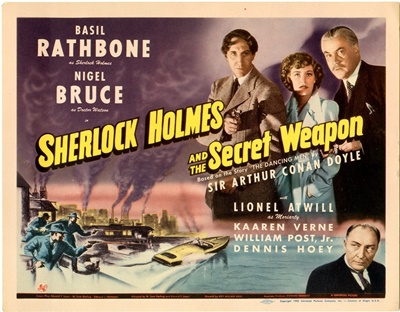
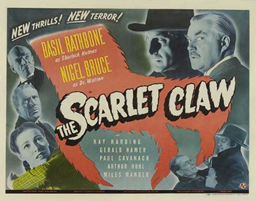 We’re back with more Basil Rathbone again this week. Of course, you read last week’s essay about Sherlock Holmes & the Secret Weapon. This week, it’s a look at The Scarlet Claw, which seems to be considered the best of the Universal films (though it’s not my favorite).
First, let me mention the restorations done for the Rathbone films. The UCLA Film and Television Archive has restored over 700 movies and television shows, including all 14 of the Rathbone/Bruce films. I had bad VHS copies of this series and UCLA did a phenomenal job in restoring them. They are a treat to watch.
They also include commentary tracks – some by Holmes author and expert (and my former editor) David Stuart Davies. These DVDs have become more affordable over the years and I highly recommend purchasing these over cheaper, much lower quality discs. Trust me. I used to run the HolmesOnScreen.com website, you know!
Moving on: We can divide Basil Rathbone’s movie career as Holmes into three phases. The first encompasses the two films from Twentieth Century Fox: The Hound of the Baskervilles and The Adventures of Sherlock Holmes. Both of these were set in Victorian England and Rathbone dons the deerstalker and Inverness cape.
Next are the first three Universal films. In Sherlock Holmes & the Voice of Terror, SH & the Secret Weapon and SH in Washington, the great detective is aiding the war effort. These three are more patriotic spy flicks than typical Holmes fare.
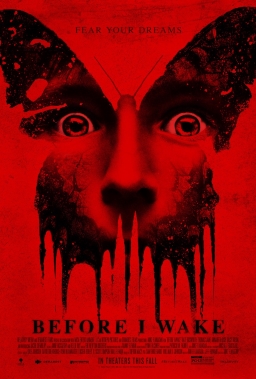 As the evening of Sunday, July 31, began I was looking forward to two films I planned to see at the Hall Theatre. The directors of both movies had interesting track records. Before I Wake, following the strange events surrounding an orphan boy whose dreams cross over into reality, was a new film from Oculus director Mike Flanagan. After that would come The Top Secret: Murder in Mind (Himitsu the Top Secret), a science-fiction murder mystery from Keishi Otomo, maker of the
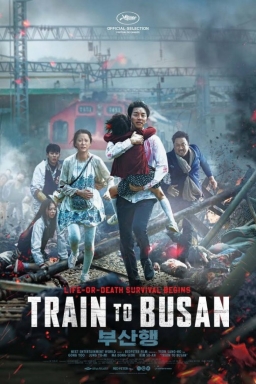 On the morning of Sunday, August 1, I was in no particular hurry to get to the Hall Theatre. I planned to see the Korean zombie movie Train to Busan, but knowing it had already played the large room of the Hall once I didn’t anticipate I’d have difficulty finding a seat. I intended after that to go across the street to the De Sève Theatre, where I’d watch Operation: Avalanche, a found-footage fiction about filmmakers who’d faked the moon landing in 1969. Then I’d go have a bite to eat and come back for two more movies. It sounded like a nice well-spaced day, but when I got to the Hall ten minutes before Train to Busan was scheduled to start I found I’d radically underestimated the film’s popularity. As the doors opened to let the ticket-holders in, the line stretched around the corner, up to the next street, and then around the corner there. Luckily enough, I was able to find a good seat in the back of the Hall, where I watched the auditorium fill up with an enthusiastic crowd.
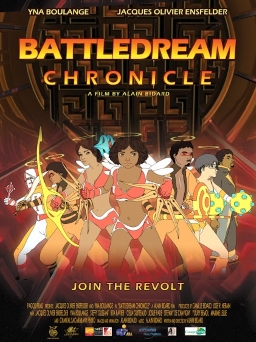 Saturday, July 30, I had hopes of seeing four shows at Fantasia. In the event, I saw three — and ended up with an interesting chat after the last one. First came an animated teen dystopia from Martinique, Battledream Chronicle, in which a young woman fights to free her homeland from digital colonialism. After that came a collection of short films, the International Science Fiction Short Film Showcase 2016 (one of the shorts being an adaptation of Ken Liu’s short story “