Disney for the Win: Wreck-It Ralph
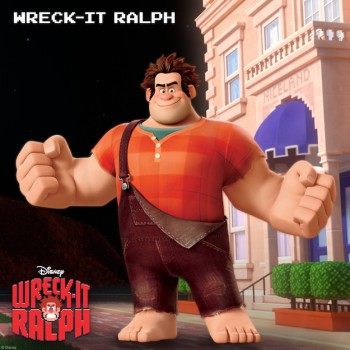 Over the last few years, I’ve been a big fan of Disney/Pixar films, but not so much of the films put out by Disney itself. While I enjoyed Tangled well enough, when compared to the Toy Story franchise or Wall-E, the more mainstream Disney movies just don’t have the same emotional impact.
Or at least they didn’t. I think Disney may have broken that trend with their newest film, Wreck-It Ralph.
It’s not for nothing that this film marks a departure from Disney’s typical formula of repackaging classic fairy tales, either. By stepping outside of this traditional storytelling structure, they allowed for something new and adventurous. There’s a creative energy behind Wreck-It Ralph that was missing from The Princess and the Frog and Tangled.
This isn’t to say that Wreck-It Ralph doesn’t rely on classic stories as its inspiration. It’s just that these are classic video game stories … the fairy tales of the modern age.
The Basic Story (Minimal Spoilers)
Ralph is the “bad guy” in an 8-bit video game called Fix-It Felix, Jr., in which he lives in the city dump and comes down every day to destroy an apartment building, while the hero of the game repairs it. On the 30th anniversary of his video game, he has an existential crisis and decides he wants to be treated with respect. Toward this end, he decides to become a hero in another video game … throwing his own game into chaos.
That’s the basic story, the one that you get in the trailers, and there’s certainly no shortage of cameos and Easter eggs for those who grew up with video games in the 80’s and 90’s. (My 7-year-old missed some of the jokes that impressed me the most, of course.)
But what this description misses is how deeply plotted Wreck-It Ralph actually is, the many layers and plot twists that come up … but for that, we’ll need to offer at least a few high-level spoilers (nothing too major, though).
 About a month ago, The Avengers
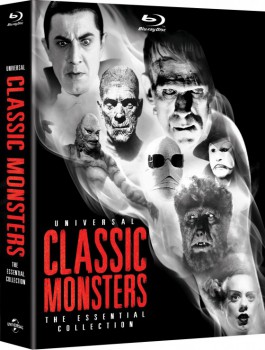 This year, the home video divisions of all the major distributors banded together and plotted a full-scale assault on the wallets and bank accounts of Blu-ray owners during September and October. Only the wealthiest could possibly survive an attack that began with the first Hi-Def release of the Indiana Jones films. But the supreme weapon, the ultimate October Surprise, is Universal’s huge ebony slab of fear, nostalgia, and latex make-up: Universal Classic Monsters: The Essential Collection. Spanning twenty-three years and nine films (advertised as eight, sorry Spanish Dracula), the long-anticipated set brings the Masters of Halloween into glorious 1080p for the first time, and in perfect seasonal position to drain your money before you waste it on a Jack Sparrow costume that forty other people are also going to wear to that same party.
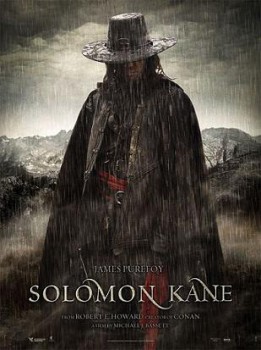 The sixteenth- and early seventeenth-century Puritan adventurer Solomon Kane is my favorite of Robert E. Howard’s serial characters: a fascinating mixture of obsession, religion, righteousness, history, and dark fantasy awesomeness. However, it’s the character I love, not necessarily the stories in which he appeared. With the exception of “Wings in the Night,” the Solomon Kane stories are mid-range pieces in Howard’s canon, not at the consistent level he delivered later with Conan, King Kull, or many of his one-shots. Solomon Kane appeared early in Howard’s short professional pulp career, with the first published story in the August 1928 issue of Weird Tales. Perhaps if Howard stayed longer with the Puritan hero while his storytelling skills increased, he might have equaled the Conan series in quality.
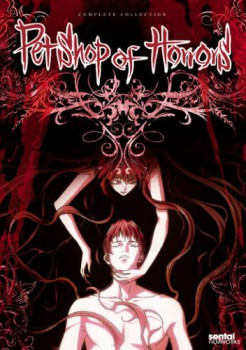 Originally a series of short stories appearing in manga (Japanese comic book) anthologies, Pet Shop of Horrors premiered on the Tokyo Broadcasting System as a series of short animated clips in 1999. Viewers would see a two-minute piece (usually between music videos or short films) every few days until an entire episode was completed. Four whole episodes were broadcast before the animated series was discontinued. The collected episodes were released in North America in 2000 by Urban Vision.
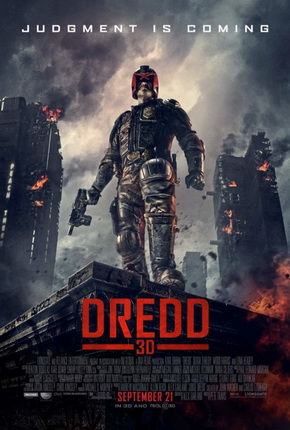 The Charge: Attempting to re-start a film franchise about a classic comic book character.