Browsed by
Category: Movies and TV

Event Report: The Last Unicorn Tour

Event Report: The Last Unicorn Tour

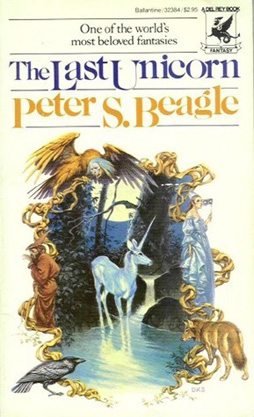
The Last UnicornIn 1962, Peter S. Beagle began writing a fantasy novel he called The Last Unicorn. Published in 1968, the book was both serious and whimsical, a kind of extended fable about a unicorn who found she was the last of her kind and adventured through a medieval fantasyland, possibly Irish and possibly not, in search of the wicked king holding all other unicorns captive. The tone embraced both the comic (one of the major characters is an incompetent magician named Schmendrick) and the dreamlike (as in the terrifying Red Bull who emerges as a crucial antagonist). The book’s a tremendous accomplishment, a vivid working-out of classic fantasy themes.
In 1982, Rankin/Bass Productions released a film version of the book, with a screenplay by Beagle. The designs had a nice touch of art nouveau, the voice cast was strong (including Mia Farrow, Angela Lansbury, Jeff Bridges, and Christopher Lee) and the plot was remarkably faithful to the book. That approach had its strengths and weaknesses: the fable-like quality of the original story was lost. On the other hand, the literalness of the adaptation gave the film a quality of strangeness of its own — by maintaining the shape of the book, it created a shape unlike most other movies.

Beagle is currently touring with a digital 2K print of the Last Unicorn movie, presenting it at showings with a question-and-answer period and an opportunity to buy Beagle’s books and Last Unicorn-related merchandise. The tour will go on through April 2016 and will visit Australia, New Zealand, Japan, Ireland, the UK, and Germany, as well as cities across North America. An extensive Canadian leg of the ongoing Last Unicorn tour has just wrapped up; I saw a showing of the film in Montreal, on Sunday, May 18, and took a few notes.

Read More Read More

Mothra vs. King Ghidorah: Which Toho Monster Will Appear in the Next U.S. Godzilla Movie?

Mothra vs. King Ghidorah: Which Toho Monster Will Appear in the Next U.S. Godzilla Movie?

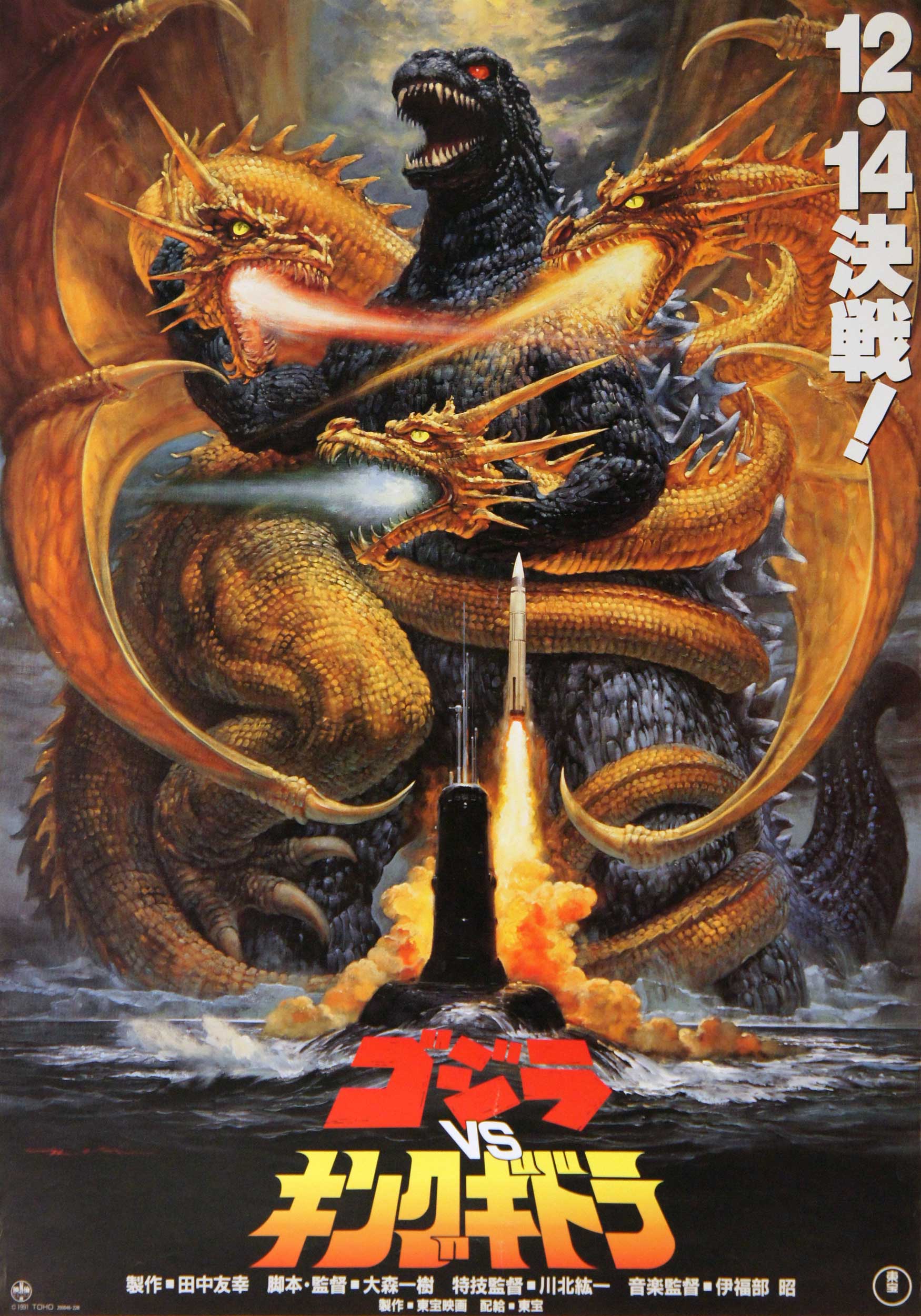
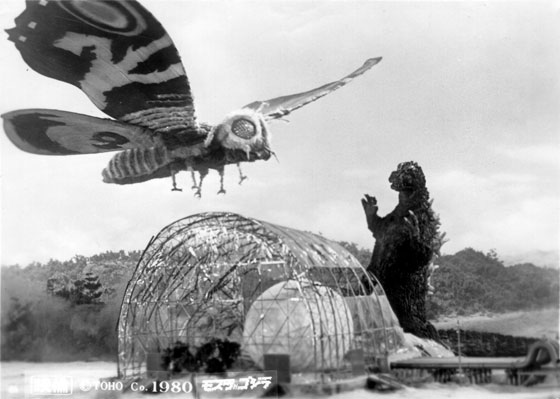
godzilla_vs_kingghidorah_91mothra vs GodzillaCaution: This article discusses some details about Godzilla ‘14 that viewers who have yet to see the film may consider spoilers. (Non-spoiler review here.) Viewers who haven’t seen the film should also go take care of that now.

Legendary Pictures and Warner Bros. felt confident enough about the almost $200 million that the new Godzilla took in at the global box office during its opening weekend — the biggest International opening of 2014 at that point — to announce a few days later what everyone knew the moment the movie started pulling in heaps of cash: “Yep, we’re gonna make another one.”

We know little more at the moment. In the build up to Godzilla ‘14, all parties involved avoided sequel speculation. Director Gareth Edwards — whose association in a follow-up is uncertain at this time, especially since he signed on to direct the first Star Wars spin-off movie — made brief mention of doing something with the “Monster Island” concept introduced in Destroy All Monsters (1968), but nothing specific. Which means we can all speculate freely and wildly about what might happen in Godzilla Raids Again or whatever title “Godzilla II” has.

The big question about any Godzilla sequel: What other monster(s) will appear? Although it’s possible for Legendary Pictures to go with an original creature — and they did well with the MUTOs — it’s almost a guarantee they’ll negotiate with Toho Studios for the rights to one of the classic kaiju. Toho is reportedly through the roof with excitement over the new movie, so the negotiations won’t be aggressive.

There are many monster possibilities, but most online speculation has landed on two superstars: Mothra and King Ghidorah. Any Godzilla fan would place these kaiju at the top of a list of “must haves.”

Read More Read More

The Public Life of Sherlock Holmes: The Hammer Hound

The Public Life of Sherlock Holmes: The Hammer Hound

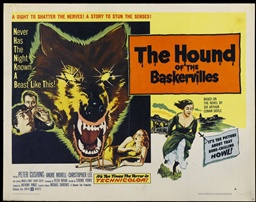
CushingHoundPoster1
There are several good posters for this film.

Last week, we looked at Tom Baker’s relatively unknown Hound of the Baskervilles. As this post is being published on May 26, which is the birthday of a classic Holmes, we’ll look his version of The Hound. For on this date in 1913, Peter Cushing was born in Surrey.

Basil Rathbone’s contract expired in 1946 and, feeling imprisoned in the role of Sherlock Holmes, he refused to renew it. So great was his shadow that it would be thirteen years before another studio even attempted to make a Sherlock Holmes movie. Hammer Films is legendary in England for their run of horror films, starting in the fifties.

Those old Universal classics from America had never caught on across the pond. Hammer, however, made a series of successful horror films, frequently co-starring Peter Cushing and Christopher Lee.

In 1959, Hammer broke new ground with the first colorized version of The Hound. Not surprisingly, they turned to Cushing and Lee to carry the movie.

Read More Read More

Godzilla (2014) Is a True Godzilla Film and a Unique Blockbuster

Godzilla (2014) Is a True Godzilla Film and a Unique Blockbuster

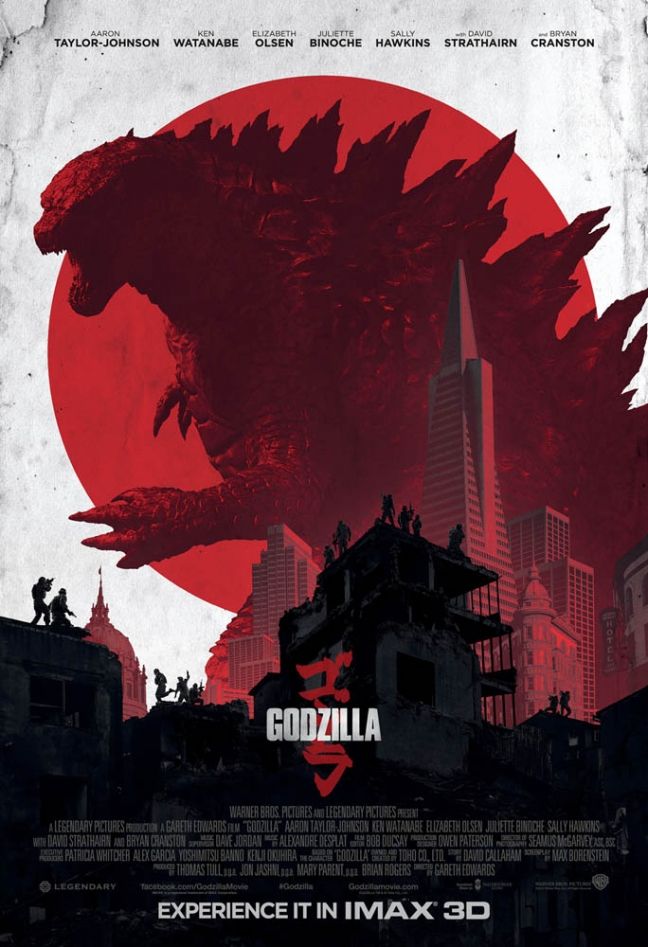
IMAX-poster-for-Godzilla-smallNew to Godzilla? Read my 5-part history series.

To all of those who saw the new Godzilla this last weekend who have never before fully understood the obsession fans have for this monster … now you will get it. Welcome to our weird world!

Godzilla isn’t just a massive monster that stomps stuff, confronts the military, and grapples with other monsters. Any giant beast can do that without much thought put into it. Godzilla is a character and a legacy. Even when playing the straight-up villain in films like 1964’s Mothra vs. Godzilla, the Big G is beyond larger than life and something you cannot help but gape at in awe and then salute. What a piece of work is a giant radioactive reptile! In apprehension how like a god(zilla)!

Director Gareth Edwards’s 2014 take on Godzilla, only the second film from a U.S. studio featuring the monster (or, if you ask most fans, the first), is a genuine Godzilla movie. Edwards’s creature isn’t the greatest incarnation to grace the silver screen, something I’m sure he would admit, as nothing could re-capture the cultural magic and hands-on effects work of director Ishiro Honda and special effects creator Eiji Tsubaraya from the classic series. But the Edwards Godzilla is a legitimate and superb version that achieves the gravity of the 1954 orignal Godzilla and the thrilling monster-vs.-monster mayhem of the films that followed it through three eras and six decades. For Godzilla fans, this movie contains the sheer ecstasy of a dream realized that brings spontaneous cheers, gasps of admiration, and watery-eyed moments of recognition. I could not imagine a better way to craft a U.S.-made Godzilla film, and it is to the immense credit of Edwards and everyone involved that, until now, I could not have foreseen how such a feat was even possible.

Even for those with scant knowledge of the great monster except what comes from the pop culture mill, Godzilla ‘14 is as an unusual Hollywood blockbuster. Gareth Edwards and Co. crafted a movie that stands apart from the stateside summer thrill machines as much as the Japanese films of 1960s did from their U.S. counterparts. Godzilla plays at the slow build, purposely restraining the sprawling spectacle until unleashing the finale. During the first two thirds, the suspense centers around scenes where the monsters remain glimpsed, their masses emphasized to drive the action without making them the centerpieces. Godzilla doesn’t receive a full reveal until an hour in, and the movie immediately leaps away after the unveiling. Instead of signaling the opening of the mayhem, the moment switches into the next step of the gradual climb to the plateau. Where many blockbusters pummel audiences with as much noise and pixels as they can afford until viewers feel only numbness for the finale, Godzilla wants to make them breathless in anticipation for the climax so that when it arrives, it means something.

Read More Read More

One of the Best Serials Ever Made: The Adventures of Captain Marvel, Chapter One: Curse of the Scorpion

One of the Best Serials Ever Made: The Adventures of Captain Marvel, Chapter One: Curse of the Scorpion

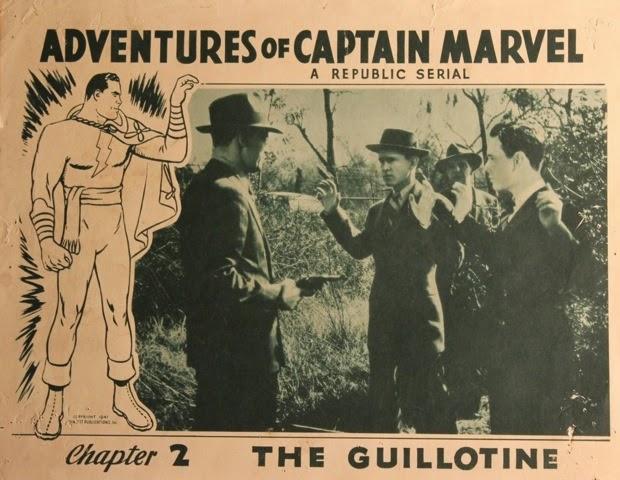
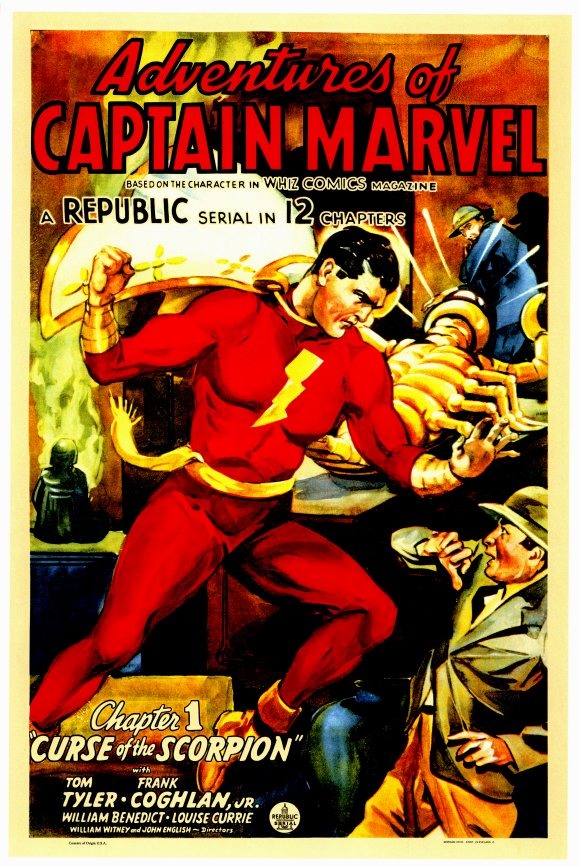
Adventures of Captain Marvel poster-smallPop quiz. Who was the first superhero to make it into film?

Yes — you in the back…what? Spawn?! Sit down! Okay… you there, in the Marvel Zombie tee-shirt… no, it was not Wolverine, though there may never be another superhero movie made without him. Yes, I see you… Superman? Good guess, but nope. Batman? Warmer, but still no.

The first superhero to make it into the movies was Captain Marvel (or as his four-color arch-nemesis, Dr. Thaddeus Bodog Sivana, contemptuously dubbed him, “That Big Red Cheese”), in the 1941 serial, The Adventures of Captain Marvel.

Captain Marvel and his alter ego, young radio reporter Billy Batson, made their first appearance in Fawcett’s Whiz Comics #2, in February of 1940. The character, the creation of writer Bill Parker and artist C.C. Beck, quickly became extremely popular, and for the remainder of the 1940’s, comics featuring him and the other members of the “Marvel Family” often outsold those featuring Superman.

National Periodical Publications (commonly known to comics fans as DC) tried to nip the rivalry in the bud by suing Captain Marvel out of existence in a legal wrangle that wouldn’t be decisively resolved until 1954. Well before that, though, Republic Pictures hopped on the bandwagon with The Adventures of Captain Marvel, a twelve-chapter serial that aficionados of the form regard as one of the best ever made.

The serial was directed by John English and William Whitney and written by the team of Ronald Davidson, Norman Hall, Arch Heath, Joseph Poland, and Sol Shor. They all keep the pot bubbling with action, peril, suspense, red herrings, and the crackling, popping energy that seems to be a unique feature of the best cliffhanger serials.

Read More Read More

The Public Life of Sherlock Holmes: Sherlock (Doctor) Who?

The Public Life of Sherlock Holmes: Sherlock (Doctor) Who?

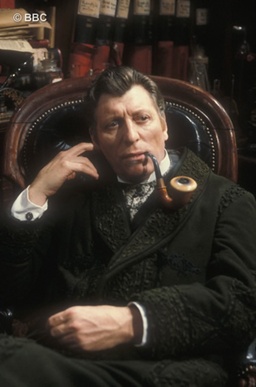
Baker_PipeThe BBC recently held a ‘Best of Doctor Who 50th Anniversary Poll’ and Tom Baker came out number one. This is a bit surprising, as he roamed in the Tardis from 1974 to 1981, which was over three decades ago. And less relevant but still of note is that the Doctor never really broke big in America until David Tenant took on the role.

Baker_Moore
Roger Moore starred in the TV movie Sherlock Holmes in New York. It’s not quite as bad as it might appear, though John Huston was woefully miscast as Moriarty.

After Baker gave the Doctor up for regeneration, the BBC approached him and asked what project he would like to do next with his popularity still soaring. Baker immediately replied, “Sherlock Holmes,” and traded his scarf for a deerstalker.

With England’s most iconic actor (sorry, Roger Moore) to play England’s most iconic character (sorry, James Bond), only the biggest Holmes story would do. Though that’s not the smartest choice to showcase Holmes.

The BBC hadn’t tackled The Hound of the Baskervilles since Peter Cushing’s second attempt at it for his 1968 television series (a role he secured after failed attempts to land Robert Stephens and Eric Porter). There had been an American TV version in 1972 starring a dull Stewart Granger with Bernard Fox as yet another doofus Watson who mumbled his lines.

Read More Read More

King Conan Gets a Movie Poster

King Conan Gets a Movie Poster

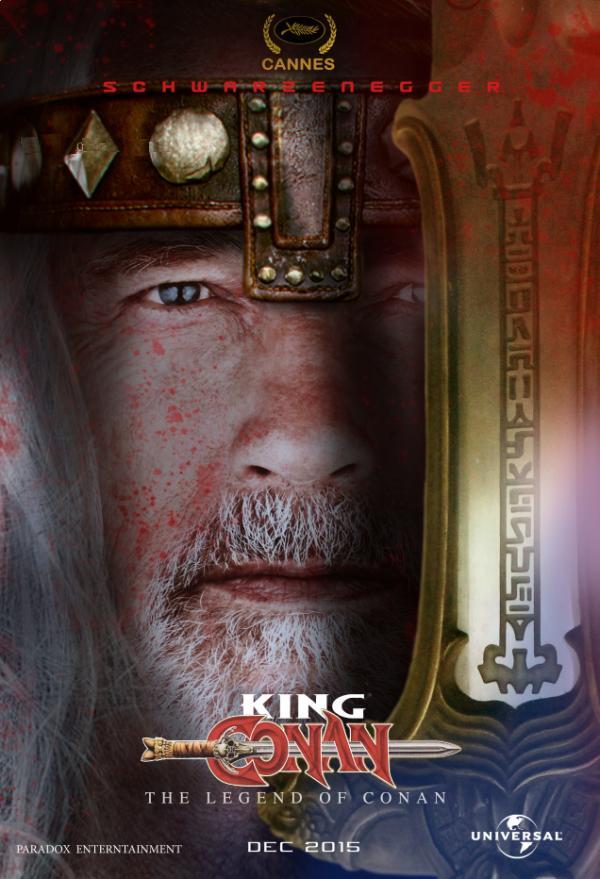
King Conan poster-smallSo here’s a fun thing. The King Conan movie poster at right, featuring Arnold Schwarzenegger as everyone’s favorite barbarian monarch, was spotted at the Cannes Film Festival this weekend, and is now making the rounds on the Internet.

Before you get too excited, the existence of the poster does not actually imply the existence of a movie… or even a soon-to-be-movie. Apparently, this is a thing at Cannes: using promotional posters to generate excitement among possible investors.

Still, it warms my heart. And it sent me on a hunt for the latest news of the next Conan film, which everyone seems certain will be announced Real Soon Now. Last summer, producer Fredrick Malmberg provided some details on the plot, clarifying that “this takes place AFTER Conan has been king… if we do this right, we can do two more Conan movies right after.” Andrea Berloff  took over script duties from Chris Morgan last October.

Schwarzenegger has expressed clear interest and has been tied to the film since word first leaked. In an interview last year, he shared his thoughts on the project:

The important thing with Conan is to make it into an A-movie, to treat it like a 300, or any of those great movies, rather than a B-action movie… The audience today, and the fans, are very sophisticated… They’ve seen it all. They demand something — when they see a Conan movie — that isn’t just a spectacle.

Opinion is divided on whether the final version will be called King Conan or The Legend of Conan. Whatever the case, we’ll keep you posted as things develop.

The Resurrection of Dr. Mabuse, Part Two

The Resurrection of Dr. Mabuse, Part Two

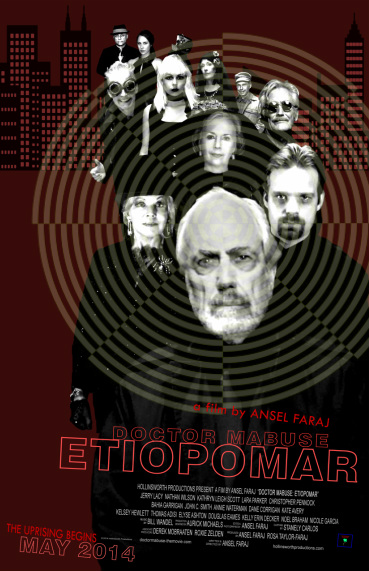
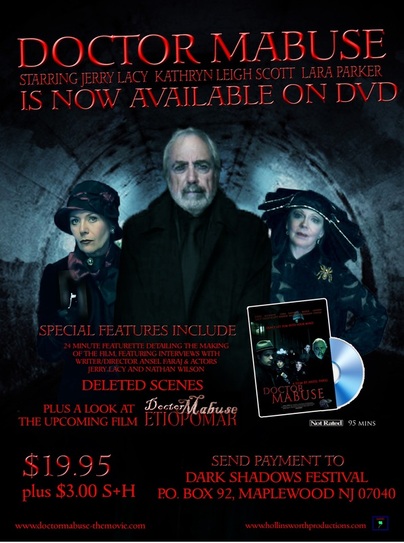
etipomarMabuseLess than six months ago, I reviewed indie wunderkind Ansel Faraj’s 21st Century update of Dr. Mabuse. The Rondo-nominated film garnered more attention from genre fans for Faraj’s stunt casting of veterans of the 1960s Gothic soap opera Dark Shadows than it did for his faithful recreation of Expressionism in the digital age of indie filmmaking.

I won’t claim Faraj is the equal of Fritz Lang or that his Hollinsworth Productions offers the resources of UFA at its peak, but this is a young man who impresses in spite of the limitations of budget and time. There is a dreamlike quality to his work which is helped rather than hindered by the Spartan production values. One wonders just what he would be capable of rendering given studio backing.

Faraj’s latest production, Etiopomar, is the second half of his Dr. Mabuse reboot and deftly blends elements of Norbert Jacques’s original novel that Fritz Lang and his screenwriter wife Thea Von Harbou jettisoned from their 5-hour two-part adaptation of the book in 1922, while incorporating characters from Lang and Von Harbou’s Metropolis (1927). When one considers Lang’s silent masterpieces, the visionary Metropolis easily supersedes his Mabuse pictures. Metropolis is a stunning sci-fi epic that is still influential nearly 90 years on.

Read More Read More

A History of Godzilla on Film, Part 5: The Travesty and the Millennium Era (1996–2004)

A History of Godzilla on Film, Part 5: The Travesty and the Millennium Era (1996–2004)

GodzillaMillenniumHey, kids: guess what comes out in theaters this Friday? Oh, wait … I have something I need to finish up here. (Sorry about the delay. It’s a boring story.)

Other Installments

Part 1: Origins (1954–1962)
Part 2: The Golden Age (1963–1968)
Part 3: Down and Out in Osaka (1969–1983)
Part 4: The Heisei Era (1984–1996)
Addendum: The 2014 Godzilla

Godzilla ‘98: An American Tragedy

Oh, I wish Theodore Dreiser wrote this.

All right, let’s get this mother*&!%ing thing over with as much speed as possible: Godzilla ’98 stinks like rotten Limburger. We can all agree on this. It isn’t the worst film in the Godzilla series, but that’s because it doesn’t belong in the series and has no business associated with anything with the name “Godzilla” on it. It has zero connection to any version of Godzilla, nor does it make any attempt to interpret the monster whose name it crassly exploits — which is probably the most insulting thing about this massive heap of industrial Hollywood sewage.

Read More Read More

The Public Life of Sherlock Holmes: Eille Norwood: the Silent Detective

The Public Life of Sherlock Holmes: Eille Norwood: the Silent Detective

Norwood_Doyel
Norwood and Sir Arthur Conan Doyle at the Stoll Pictures Annual Dinner

This may shock you, but there were on-screen Sherlock Holmes before Benedict Cumberbatch! And for you old-time fans, even before Robert Downey Jr. Really! The first great movie Holmes comes from the silent film era. And he shared a last name with another actor who would give arguably the greatest portrayal of the world’s first private consulting detective.

William Gillette had come to personify Sherlock Holmes through repeated performances of his stage play in the U.S. and Europe. His 1916 film version certainly helped as well, but was not a critical part of his success. Anthony Edward Brett would become the first great movie Holmes, though he would achieve it as Eille Norwood.

Born in 1861, Norwood was primarily a stage actor in England when he landed the role that would make him famous throughout the U.K..

In 1921, a British film company named Stoll decided to film a series of shorts based on Doyle’s stories. For the next two years, they would produce forty-five of the twenty-minute films, along with two longer ones. Doyle’s short stories fit the twenty-minute length quite well and Stoll wasn’t forced to add inauthentic filler to them.

The first fifteen, chosen randomly from among Doyle’s stories, were called The Adventures of Sherlock Holmes. That same year, the first version of what would be the most famous film title in the Canon was made, The Hound of the Baskervilles. Maurice Elvey directed all sixteen films. That same year, Elvey made a romantic drama called The Fruitful Vine. The lead was played by a young man named Basil Rathbone. How about that?

Read More Read More