Browsed by
Category: Role Playing Games

Modular: Adventuring in Dangerous Terrain – Frog God Games’ Perilous Vistas
Modular: Adventuring in Dangerous Terrain – Frog God Games’ Perilous Vistas

Fields_CoverBack in 3rd Edition D&D, there were five supplements that fell under the ‘Environmental Series’ category (I’d argue it should only be the first three, but I don’t make that decision):

  1. Sandstorm: Mastering the Perils of Fire & Sand (Bruce R. Cordell)
  2. Frostburn: Mastering the Perils of Ice & Snow (Wolfgang Baur)
  3. Stormwrack: Mastering the Perils of Wind and Wave (Richard Baker)
  4. Dungeonscape: An Essential Guide to Dungeon Adventuring (Jason Buhlman)
  5. Cityscape: A Guidebook to Urban Planning (Ari Marmell & C.A. Suleiman)

It’s not uncommon to hear one of those books cited as a favorite by players from that era. They gave Dungeon Masters lots of material to incorporate into their adventures. Necromancer Games (who you read about here, right?) added to the concept with Glades of Death (a wilderness book) and Dead Man’s Chest (sea adventuring).

The concept has been continued by Frog God Games (surely you read this post about them!) for Pathfinder, Swords & Wizardry and 5th Edition D&D under the moniker, Perilous Vistas. Along with an updated Dead Man’s Chest, there have been four releases so far, all written by Tom Knauss:

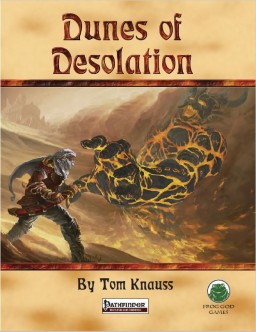
Dunes of Desolation (Deserts)
Fields of Blood (Plains)
Marshes of Malice (Wetlands)
Mountains of Madness (Mountains)

The fifth installment, Icebound (Frozen Wastes), is in the works!

The general idea is that if the Dungeon Master wants to infuse some atmosphere and environment into the adventure, these supplements provide a myriad of options. Sure, they can just have the party get to the abandoned fort in the desert, or have them uneventfully move through the mountains to the deserted abbey or the monster-infested dwarven hall. Some folks like to just get to the dungeon crawl and start hacking away. That’s fine.
Read More Read More

New Treasures: Myth of the Maker, Bruce R. Cordell’s Novel of The Strange

New Treasures: Myth of the Maker, Bruce R. Cordell’s Novel of The Strange

The Strange RPG-small The Strange RPG-back-small Myth of the Maker Bruce R Cordell-small

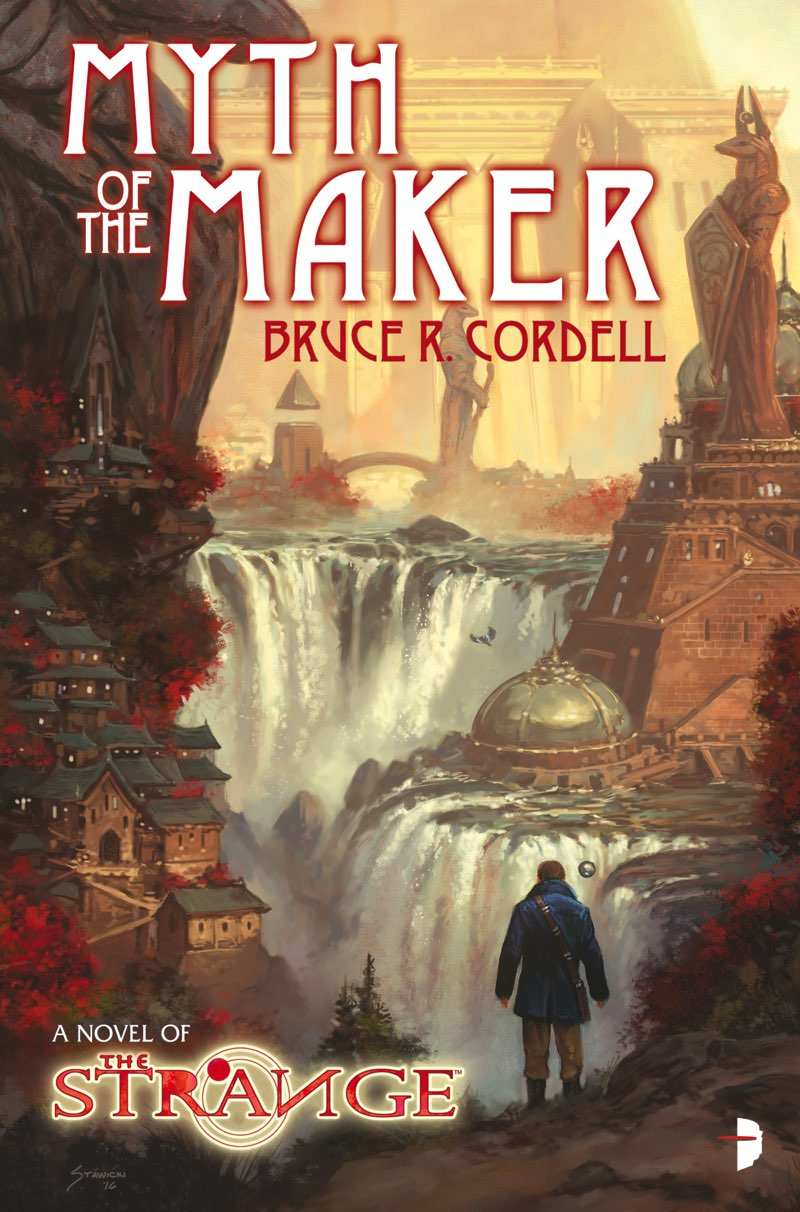
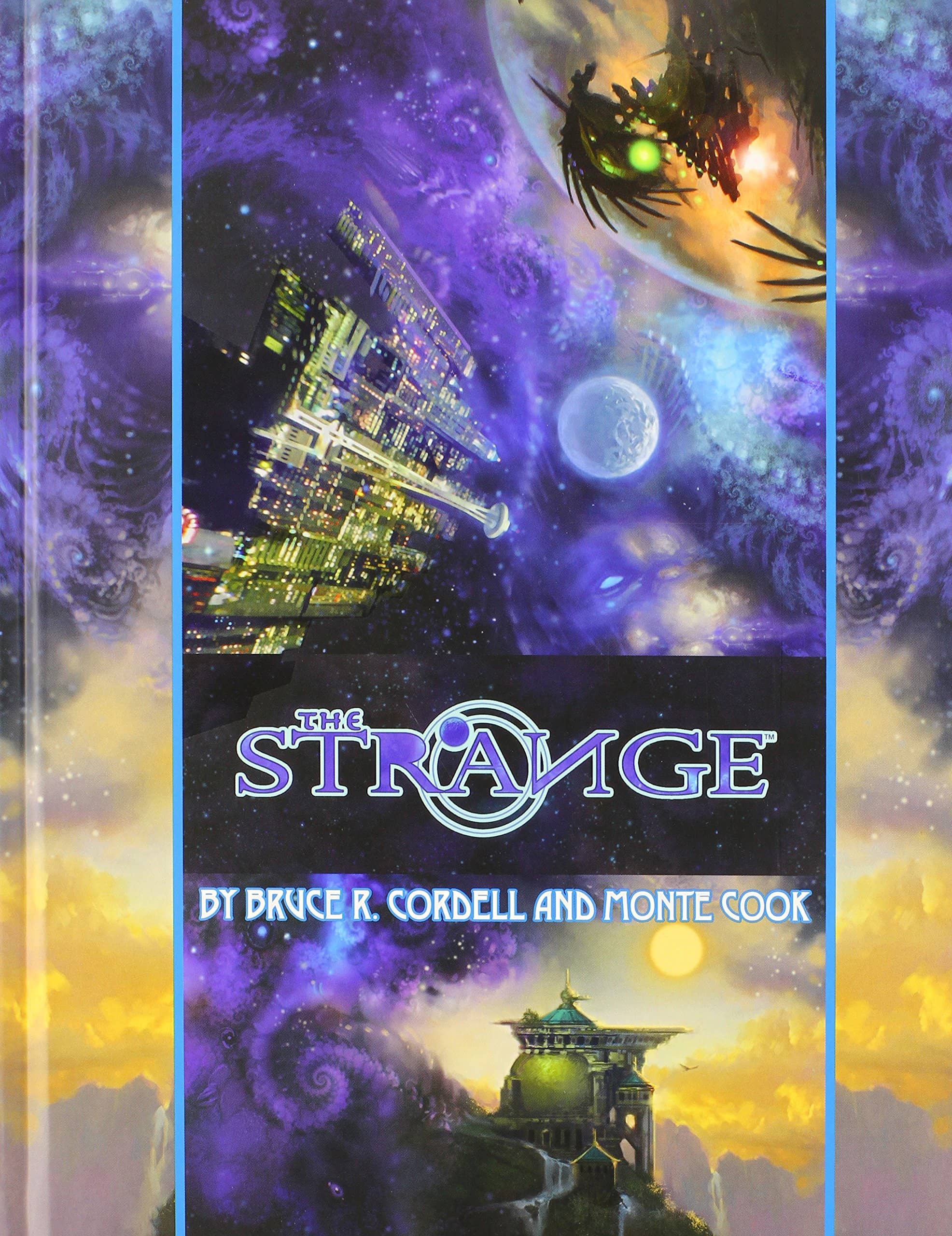
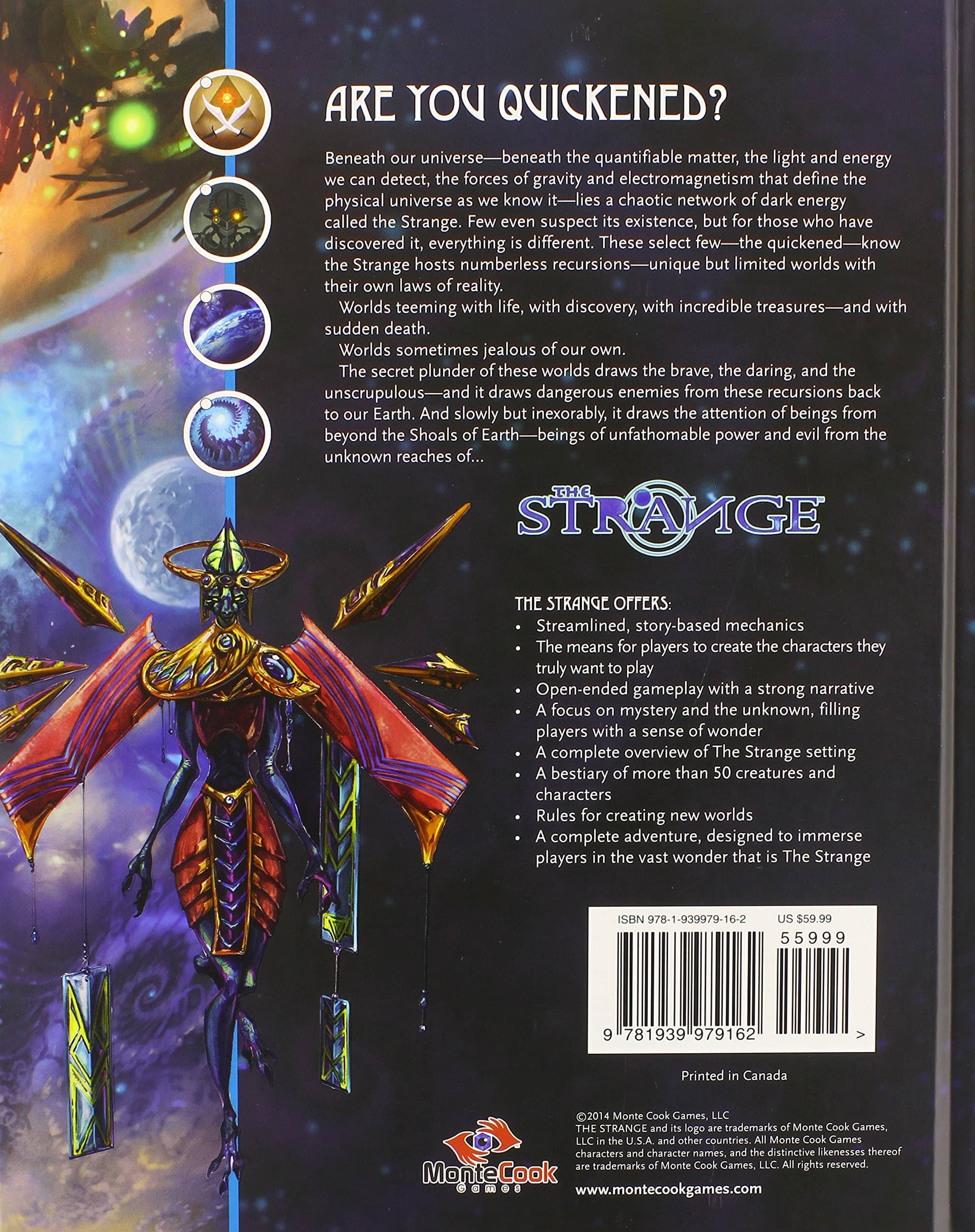
The Strange, the RPG of dimension-hopping weirdness by Bruce R. Cordell and Monte Cook, was published by Monte Cook Games in 2014. We all know that all the coolest role playing games eventually spawn a fiction line, and thus it wasn’t too much of a surprise to see Bruce R. Cordell’s Myth of the Maker: A Novel of The Strange arrive from Angry Robot last month. It seems a fine intro to the powerful and mythic worldbuilding that’s gone into the vast cosmic canvas of The Strange. Check it out.

Carter Morrison didn’t want to kill his friends, or himself, but he had a good reason. It was them, or the end of all life on the planet.

Their sacrifice saved the world. Not that anyone knew it. Until Katherine Manners stumbled over a melting man in a computer room clutching a message of doom from another world.

Follow Carter Morrison, Catherine Manners, Elandine the Queen of Hazurrium, and Jason Cole — also known as the Betrayer — as they try to understand, survive, save, and in Jason’s case, break free of the fictional worlds that insulate Earth from the dangers of the Strange, where world-eating monstrosities called planetovores lurk.

This is by no means Cordell’s first foray into fiction… he’s authored at least half a dozen Forgotten Realms novels, including The Abolethic Sovereignty trilogy (2008-2010). Myth of the Maker was published by Angry Robot on April 4, 2017. It is 384 pages, priced at $9.99 in paperback and $6.99 for the digital edition. The cover is by Matt Stawicki.

The Rationality of the Monstrous: Fourscore Phantasmagores

The Rationality of the Monstrous: Fourscore Phantasmagores

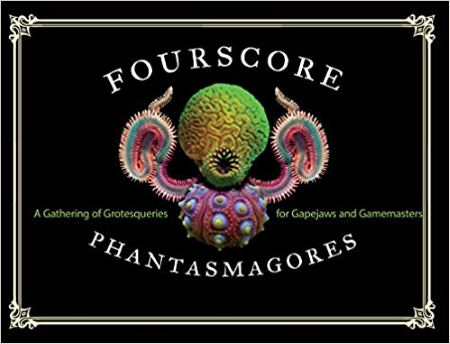
Fourscore PhantasmagoresThere’s a paradox in the nature of a dictionary of monsters. The medieval bestiaries at least claimed to be compendia of actual knowledge. But books like Jorge Luis Borges and Margarita Guerrero’s Book of Imaginary Beings (Manual de zoología fantástica) and perhaps even Katharine Briggs’ Dictionary of Fairies are only superficially rational collections of information. Though alphabetised and cross-referenced, the logical framework’s a way of presenting wild fantasy and dream: basilisks and baldanders, brownies and banshees, sylphs and sphinxes. The Monster Manual, and the role-playing handbooks it inspired, take this contradiction to a new level — detailed statistics for each creature described along with the avowed intent of inspiring new stories featuring the legendary or imaginary entities. Quantified, numerically precise, the monsters in these enchiridia still crack open the inside of the head, driving readers to imagine worlds big enough to hold dungeon-dwellers and dragons. Rupert Bottenberg’s Fourscore Phantasmagores is the newest volume of these wonders for gamers and monster-lovers of all stripes, presenting, as it says on the cover, “A Gathering of Grotequeries for Gapejaws and Gamemasters.” And, conscious of its predecessors, the book’s a rich source of inspiration; a grimoire seeding new myths.
Published by ChiZine Publications’ imprint ChiGraphic, Phantasmagores mixes words and pictures, all from Bottenberg, into 80 different monstrous imaginings. (In the interests of full disclosure I’ll note that I know Bottenberg through his work as director of the animation section at the Fantasia International Film Festival; well enough that I wouldn’t normally call him by his last name, but such are the conventions of criticism.) A foreword by Ian C. Esselmont and introduction by Bottenberg help establish the precedents and aim of the book: this is explicitly a collection of creatures for use in role-playing games, even though it can be read as illustrated prose poetry. Each of the monsters gets a full-page full-colour image; brief and often ironic notes on its type, size, habitat, traits, and attacks; and a paragraph of allusive descriptive text. There are virtually no numbers, and nothing system-specific, but enough information to get the essence of each creature across. Which is to say: there’s enough detail to work with, enough that individual gamemasters can work up stats and campaign-related specifics as needed. The book’s success lies not just in the cleverness and craft of its language and art, but in the precision with which it implies more than it says, spurring readers to imagine even more. You don’t need to be a gamer to enjoy this book — but you’ll get practical use out of it if you are.

Read More Read More

Modular: Black Gate Exclusive – Two New Starfinder Starships

Modular: Black Gate Exclusive – Two New Starfinder Starships

I’ve been looking forward to seeing what Paizo ends up putting together for their upcoming space fantasy game, Starfinder RPG, blending the worlds of science and magic to create a cosmic-scale adventure setting and game system. I’ve spoken with Starfinder Creative Director James L. Sutter a couple of times (available here and here) about the project, and his sincere enthusiasm for the project is certainly contagious.

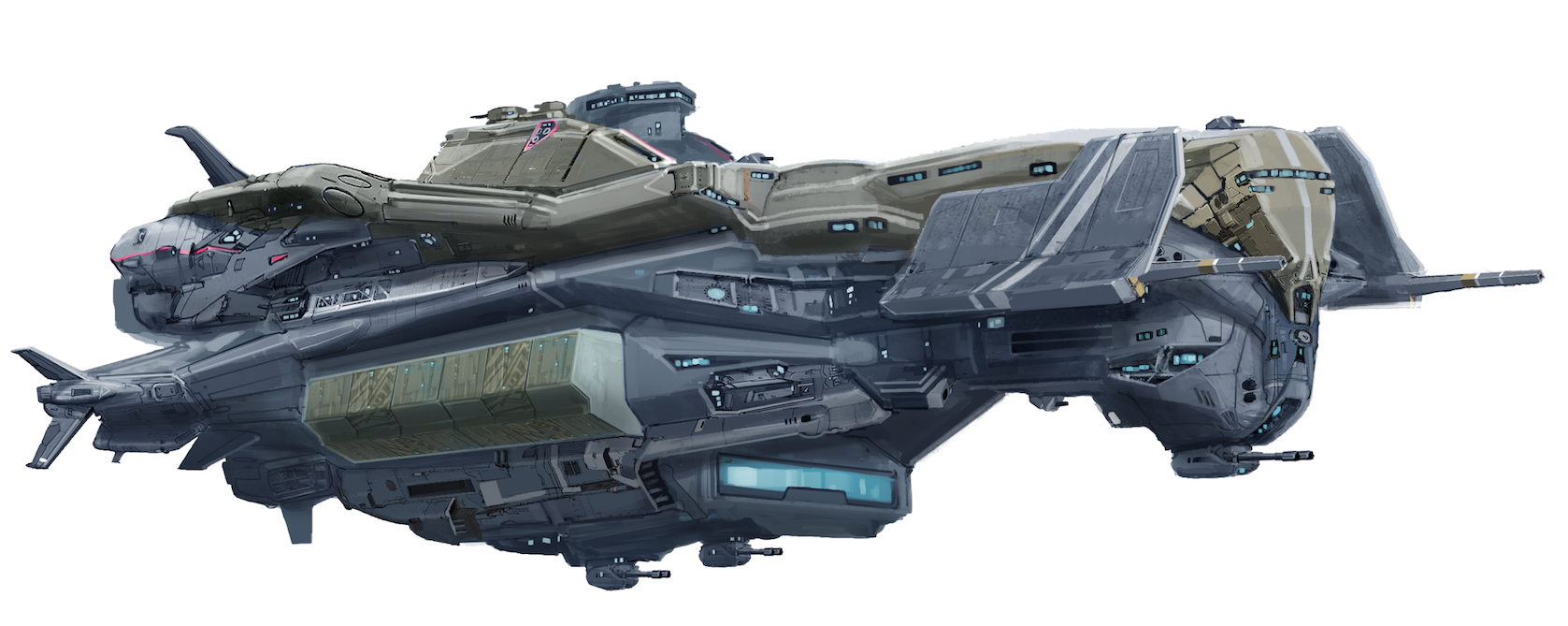
Black Gate has been fortunate enough to acquire information on two new starships that will be available for the Starfinder RPG. Pay close attention… many space goblins died to bring you this information …

Atech Immortal Starfinder

Read More Read More

Talislanta Returns!

Talislanta Returns!

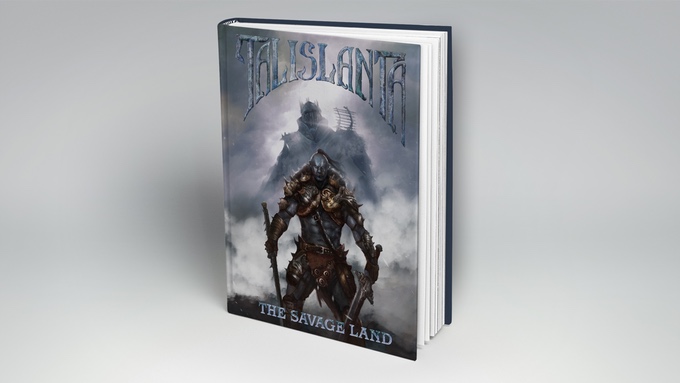
Talislanta


Talislanta
s back with a new Kickstarter, and if you love great world building, you need this book. Trust me on this. Really. Go buy it.

If you INSIST on hearing more reasons why, though, I’ll make my argument. And as an added treat, after extolling this wonderful game world I’ll show you an interview I conducted with Talisanta‘s creator, the brilliant Steven Sechi.

If you’ve never seen me gush over a Talislanta product here on Black Gate it’s because Talislanta has been out of print for a long while — since before I became the games editor of the print version of Black Gate. That doesn’t mean I haven’t mentioned it from time to time, usually when praising some other product. Occasionally I’ve felt compelled to say, owing to a product’s excellence, that “it’s the best world building I’ve seen since Talislanta.”

Read More Read More

Modular: The New Mongoose Traveller #2 — More Than Just a Science Fiction Midlife Crisis Simulator?

Modular: The New Mongoose Traveller #2 — More Than Just a Science Fiction Midlife Crisis Simulator?

(Read First Article)

Seen from one angle, the Traveller RPG has always been a Science Fiction midlife crisis simulator, “40-somethings Innnnn Spaaaacccce.”

Seriously!

The character generation system is a mini-game that lets you play through your character’s career all the way into middle-age, a career that most of the time ends in disaster, and always ends with you mustering out to go “travelling.”

Kurtzhau (13) and I rolled up a party and ended up with:

  • A scientist, feeling the bite of age, who’d made a big discovery in his youth, but had been stuck in admin ever since and now craved adventure.
  • A senior NCO soldier forced by job cuts to muster out and now very much adrift in search of a purpose.
  • A pilot who’d unwillingly ended up in the Scouts and spent most of his time as a courier and now belatedly wanted to do something less boring.
  • A veteran of the Merchant Marine who really wanted to be a Free Trader.

You could put them all in a shared apartment and make a quirky sitcom about them. (We put them in a ship and sent them to our Dacre Sector.)

Read More Read More

My Favorite Game: Mount and Blade/Warband – Part Two: Playing the Game!

My Favorite Game: Mount and Blade/Warband – Part Two: Playing the Game!

warband_Troops

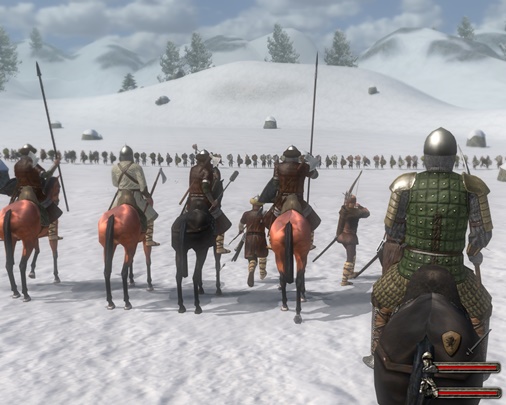
Okay – hopefully you read Part One of my look at Mount and Blade/Warband. If so, you’ve got an idea of what the game is about and got a taste of the combat portion. Now it’s time to look at the shiny parts of the game: selecting, fighting with and leading your band of warriors to conquer your foes!

 Troop Combat

I LOVE troop combat. Throughout the game, you are building up your band with cavalry, infantry and/or archers. You start out solo and begin recruiting with the first quest. I’m not sure what the maximum band size is, but I’m at 249 in one of my current games (it went way up from just over 100 when I started my own Faction). And I have over 300 more soldiers garrisoned in cities and castles I control, some of which I can draw upon to change the makeup of my band.

On the map, you can choose whether to encounter other units or try to avoid them (they may chase you down, though). If they are hostile, you can choose to fight, pay them off or surrender. Usually, you’re looking for trouble and you fight.

At game start, you can choose to allow quitting without saving, or to require saving before quitting. If you decide on the latter, if something bad happens, you’re stuck with it. You can’t just quit and reload: no do-overs. And bad things happen a lot. If you are defeated, you can lose your current band and have to start over. I don’t play hardcore. If you do, pick your fights VERY carefully.

Read More Read More

Modular: Castles & Crusades 7th Printing

Modular: Castles & Crusades 7th Printing

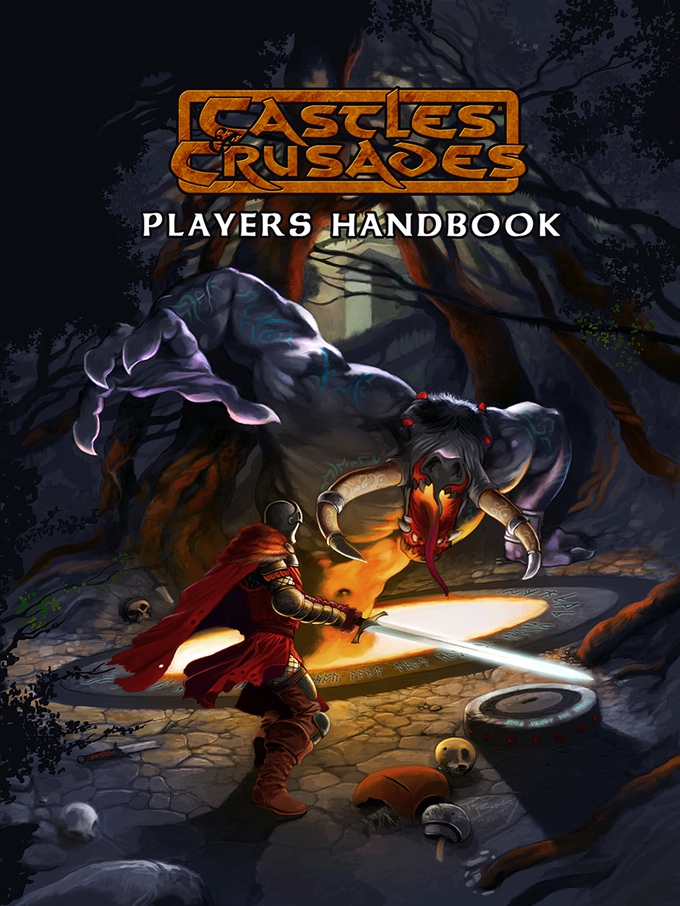
castles crusades 7Troll Lord Games has just hit its funding goal for the 7th edition of Castles & Crusades Player’s Handbook, to be released in June of 2017. What’s Castles & Crusades and why should you want it when you have so many other fantasy games to choose from? Take it away, Troll Lords:

You’ll find with C&C that the game is easy to play, but more importantly is its versatility. You can take your house rules and drop them right on top of the C&C mechanic (the Siege Engine) and keep on playing. You are in control. Take the advantage/disadvantage system from 5E and use it with C&C. There’s nothing stopping you.

What’s even better, because the whole game is driven by attribute checks that have only loose guidelines, the game master chooses what attribute check the player rolls. If they want the wizard to swim better, make the character roll an intelligence check to swim the river. It’s your game. Take it.

How does the Siege Engine Work?

  • You are already familiar with Castles & Crusades.
  • You’ll find the same classes, races, attributes and many of the same monsters as in most other games.
  • To succeed at any action, you need to make an attribute check (unless the CK deems it doesn’t need one)
  • There are two types of attributes: Primary & Secondary
  • Primary attributes have a base chance to succeed of 12 on a d20. Secondary have a base chance to succeed of 18. The CK adds a challenge level based on hit dice and other circumstance. The character adds their attribute bonus and level to their roll.
  • You are playing C&C.

It’s fast, versatile and open. Allowing you to make it as complex or as simple as you desire.

I happen to agree with the advertising copy; Castles & Crusades is one of my very favorite role-playing systems because everything discussed above is quite true.

Read More Read More

Modular: Chaosium Announces New Version of RuneQuest

Modular: Chaosium Announces New Version of RuneQuest

Runequest Quickstart Free RPG Day-small

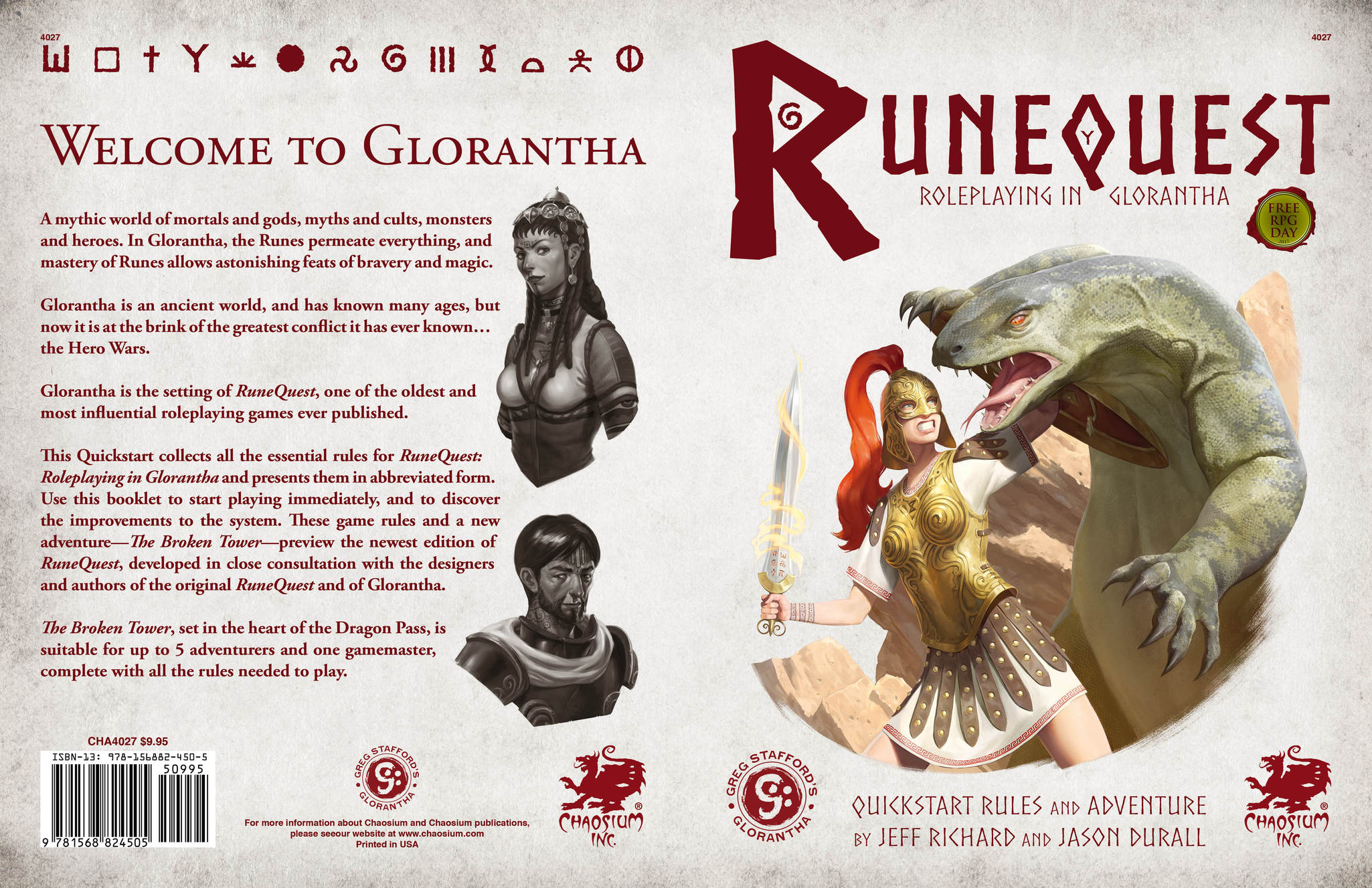
Chaosium announced last week that a new version of its classic RPG will be released by Christmas 2017.

The new edition of the iconic roleplaying game RuneQuest will be formally known as RuneQuest: Roleplaying in Glorantha, or ‘RQG‘ for short, Chaosium announced today… RQG is built off the chassis of the acclaimed RuneQuest 2nd Edition (1980). This enables RQG to be compatible with RuneQuest Classic, the updated reprints of the RQ2 line which Chaosium recently kickstarted to great success.

“Fans had been referring to the new rules variously as ‘RQ4‘ and ‘RQ7‘”, said Chaosium creative director Jeff Richard, “But our new game is simply not a layer atop the Avalon Hill edition (RQ3) or the Mongoose variants that came after that. Nor is it built from the version Design Mechanism produced under license (RQ6). So, rather than try to give the new edition a number, calling it ‘RQG‘ neatly avoids any confusion…”

The products scheduled for 2017 release are the RuneQuest: Roleplaying in Glorantha core rules, a Gloranthan Bestiary, and a scenarios book featuring adventures by game design legends Steve Perrin (RQ1 & 2), Ken Rolston (RQ3‘s ‘rune czar’, Morrowwind, Elder Scrolls), Chris Klug (DragonQuest II, James Bond 007 RPG) and the ‘grand shaman of gaming’ himself Greg Stafford… The first new RQG product is the RuneQuest Quickstart, which will be available in June for Free RPG Day and at the Chaosium website from July 1, 2017.

The products will not be kickstarted. The Art for the RuneQuest Quickstart is by Andrey Fetisov; old-school gamers will recognize it as an homage to Luise Perrine’s much-loved cover for the classic 2nd edition.

Read More Read More

Modular: Star Trek Adventures is Versed in Multiple Techniques

Modular: Star Trek Adventures is Versed in Multiple Techniques

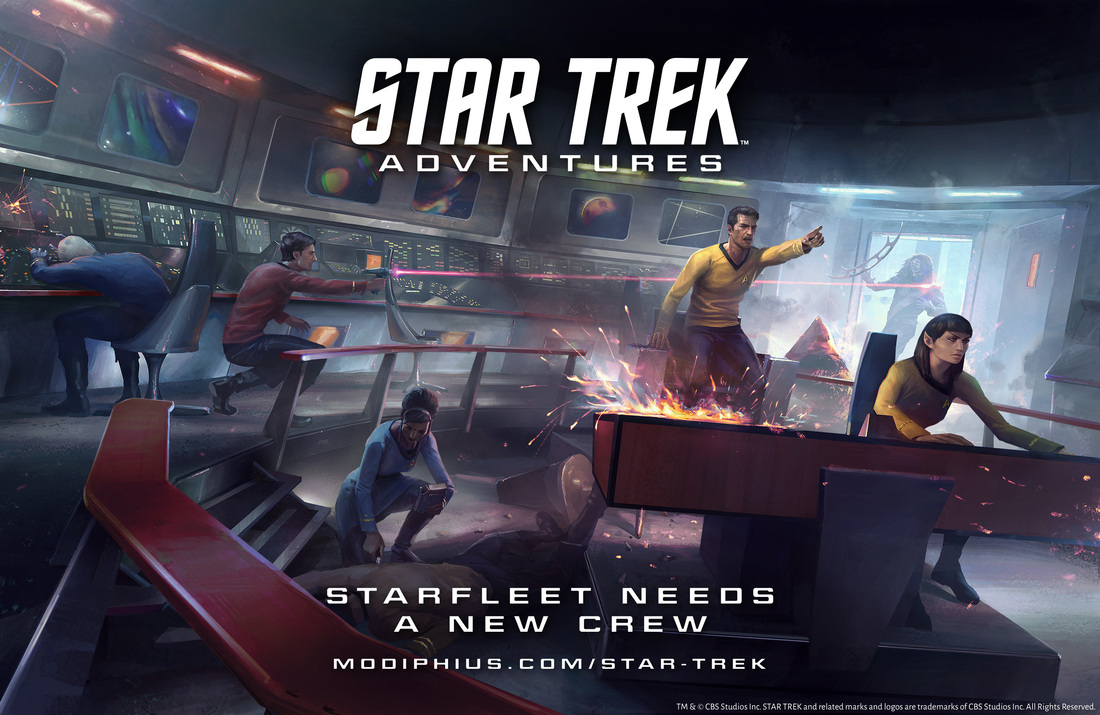
startrekadventuresThis week marked the -46th anniversary of First Contact Day, the date in 2063 when Zefram Cochrane was the first human to create and engage a warp drive (time travel situations excluded), as depicted in the film Star Trek: First Contact. As such, it seems appropriate to look at the state of affairs with the upcoming Star Trek Adventures roleplaying game, slated for a 2017 release from Modiphius Entertainment.

Modiphius has been playtesting the game since late last year as an open live playtest, using gamers from across the world as guinea pigs to find bugs in their design and crowdsourcing improvement suggestions. In addition to the Alpha set of rules for playtest, the Round 1 included a generic “starter” adventure that all of the playtesters could run through. I discussed my thoughts on this shortly after I playtested it, back in December, playing the group with a mix of Star Trek enthusiasts and their less-enthusiastic spouses, all of whom are relative novices at roleplaying games.

Earlier this year, based on feedback from the first round, Modiphius released a second round of playtest, as well as new adventures focused on the specific ship that you signed up to test for, allowing them to test science/exploration missions vs. combat-oriented missions vs. diplomacy missions, and so on. The new set of rules contained updates to earlier rules, but also a key new gaming system: starships. Once we provided feedback on the Round 2 playtest, playtesters were given access to the character creation system.

So let’s take a moment to dive into Star Trek Adventures …

Read More Read More