Browsed by
Category: Essays

The Nightmare Men: “A Doctor, Darkly”
The Nightmare Men: “A Doctor, Darkly”

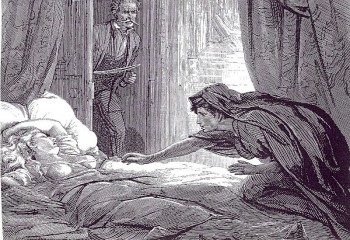
800px-carmillaIt’s always best to begin at the start, to quote no one in particular. We’ll start with the introductions: my name is Josh Reynolds and I wanted to be a detective when I grew up…no, not just a detective.

I wanted to be an occult detective. I wanted to be Donald Pleasance hunting down the Horse of the Invisible, or Peter Cushing making a cross out of candlesticks and shoving them right all up in Christopher Lee’s fang-y mug. I wanted to be Carl Kolchak, Thomas Carnacki and Dr. Strange. I wanted to bust up eldritch cults, Draculas and devil-worshipping biker gangs.

Unfortunately, my wife won’t let me. So, instead, I scratch the monster-hunting, ghost-busting itch by writing…well, stuff like this. ‘This’, of course, being ‘The Nightmare Men’ (of which this is the first installment, natch), a series of semi-regular essays on the subject of occult detectives; one part introduction, one part analysis, all awesome, all the time. Basically, if you’ve ever wanted a primer on occult detectives, the Nightmare Men is for you. And we begin with the granddaddy of them all…

Sheridan Le Fanu’s Dr. Martin Hesselius.
Read More Read More

Some Thoughts on the Nature of a Serial

Some Thoughts on the Nature of a Serial

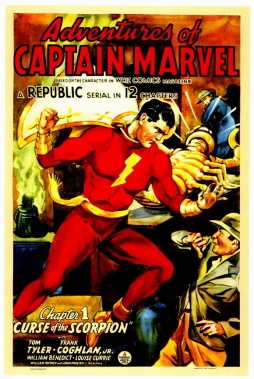
The Adventures of Captain MarvelSerial storytelling is something of a mystery; even more so, perhaps, than most storytelling. When done right, it seems to hook an audience, to get them to invest heavily in the story being serialised. But for whatever reason, most serial forms have been pigeonholed as strictly popular arts; serial storytellers have generally been assumed to have a low amount of literary ambition. These presumptions about serials, and the way the form works, have always intrigued me — the more so since I’ve set out to write a serial prose fantasy of my own.
Let me try to define what I mean by ‘serial.’ The OED has “(of publication) appearing in successive parts published usually at regular intervals, periodical,” which is a start. More precisely, I’m talking about a narrative told across many installments, usually on a regular schedule, with each installment except the first and last expected by the audience to be incomplete, but usually containing some element of a genre or other story convention which will satisfy the audience.

Every installment of The Adventures of Captain Marvel movie serial made sure at some point to have the titular super-hero in costume, using his powers, and usually also included fight scenes, detective work, plot twists, and exotic locales — because that was the sort of story it was, and that was what audiences were looking for. Individual chapters (or issues) of a serial may play about with these conventions — like an issue of the Steve Ditko Amazing Spider-Man, in which scripter Stan Lee apologised for not having the hero fight a villain in that particular issue, something unusual in the mid-60s. But go too far, too often, and you just end up telling a different kind of story — like, say, Scott McCloud’s Zot!, which started as a retro-adventure-hero story, and ended up becoming an examination of adventure fantasy and how it contrasts with realism.

Read More Read More

Why Do You Like to Write? The Story of Janelle

Why Do You Like to Write? The Story of Janelle

mead-notebooksWriters of the Future Volume XXVII is now available for pre-order from Amazon. That any book with my work in it is available on Amazon blows my mind.
Anyway . . . this week I started writing some more observations on my experience at the Writers of the Future Workshop, but somehow got sidetracked into the rest of what you’re going to read. So I’m delaying more WotF until next week.

“Why did you become a writer?” or “Why do you like to write?” These are variants of the same question — one that most writers, whether career authors, part-timers, or hobbyists, encounter many times. The simplest questions are the trickiest to answer, as the Tao Te Ching points out: “Straightforward words sometimes seem paradoxical.”

Here are my straightforward words to answer both these questions: I enjoy telling stories by using words in interesting ways.

Now, to confuse the issue and make it paradoxical, allow me to tell you about a girl named Janelle.

Read More Read More

The Lord of the Rings: A Personal Reading, Part Three

The Lord of the Rings: A Personal Reading, Part Three

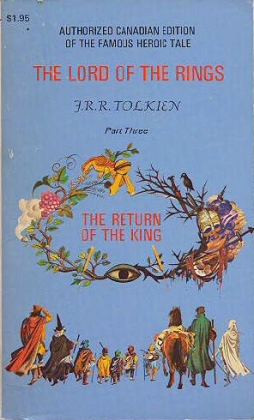
The Return of the KingThis is the third of three posts on The Lord of the Rings, prompted by a recent re-reading of the book. You can find the first post, looking at Tolkien’s sense of character, here; the second post, about Tolkien’s use of landscape, is here. This week I’m going to write about structure, irony, and postmodernism.
Which means that I need to start with some definitions. I’ll get to what I mean by ‘postmodernism’ later. I want to start with ‘irony,’ a vexed word that means a number of things which aren’t really much like each other. The general description of irony I have in mind is ‘what happens when a text says the opposite of what is meant.’ On perhaps the simplest level, that’s sarcasm. But there are other ironies. ‘Dramatic irony,’ for example, is what happens when, without realising it, a character acts in a way opposite to his wishes, or unintentionally foreshadows some future event; the sort of thing that happens, for example, when an oracle gives a misleading answer to a question. Supposedly Croesus appealed to the Delphic oracle before leading his army against the Persians, and was told that if he went to war he would destroy a great empire — so he did, and the empire he destroyed was his own.

Read More Read More

This Page is Half Empty: The Five Horsemen of Literary Apocalypse

This Page is Half Empty: The Five Horsemen of Literary Apocalypse

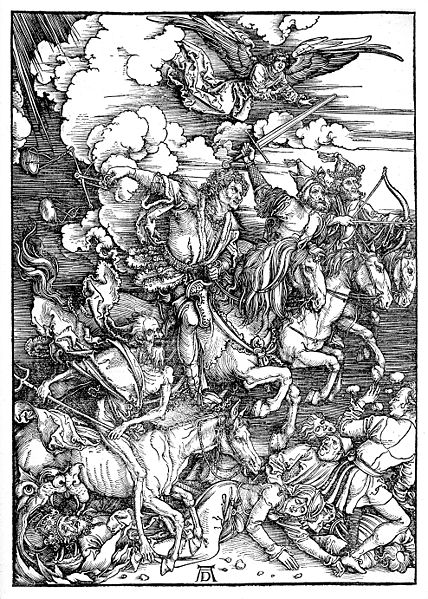
428px-durer_revelation_four_riders1Right now, as I type this — and as you read it — I’ve got a new manuscript half done. For a writer, this is sort of like me saying that at this very moment I’m not wearing anything under all of my clothing. Well, duh, most people are thinking, while trying to not involuntarily imagine me naked. For writers, the thought continues, there’s always the current project.

The process of forging the first draft is much like any other relationship between the mind and the will. Romance, for instance. There’s the initial flare of interest, the slower “getting to know you” stage, and a much longer “I know you, now” period. These are all easy to navigate, because they are exciting and interesting. They are effortless, and writers know the feeling of a Work-In-Progress crush.

But this infatuation period cannot last. While in it, there’s always the potential that your feelings are mercurial, diaphanous dream-fluff that make no sense when you try to go deeper. To your shock, you realize that perhaps your burning love isn’t the stuff of ages, but mere puppy love. Your ardor has brought you no glamour, but instead made those around you somewhat uncomfortable, hoping, for your sake, that it will all end soon without you getting hurt too badly.

Am I just a puppy-lover? you find yourself asking.

Read More Read More

The Meta-Reality of Fandom

The Meta-Reality of Fandom

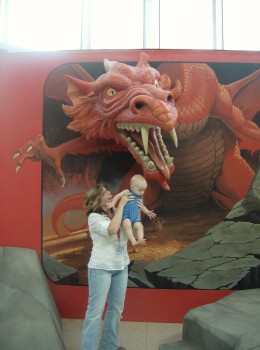
Did I say I was an unapologetic geek? My wife, Amber, offered our son to a dragon at GenCon!

I’m an unapologetic geek. I don’t just watch genre shows and read genre books, I immerse myself in them. The ones that stay with me, that I actually decide to devote myself to, linger with me, becoming part of the fabric of my internal world, the thought processes that help me deal with the mundane levels of reality. I analyze these cultural components, trying to pick them apart to figure out why the events unfolded the way they did and, more importantly, what I can learn from it. (For an example, consider how I found an excuse to talk about Thor on my Physics blog, using the film as a lesson in how to be a good scientist.)

Black Gate is also dedicated toward this sort of exploration, publishing not just fantasy fiction but also thoughtful commentary on the genre, in both the magazine and also on this blog. (At this point, I feel the need to point out Aaron Starr’s recent excellent post “The Gods Never Urinate,” which is an exceptional case of this.) Even on our Twitter feed, @BlackGateDotCom, we try to share as much of this sort of material as we can.

But let’s really think about what’s going on here. The genre of science fiction and fantasy, more than any other, reflect upon the fundamental nature of reality. They can do this literally, metaphorically, or (when at its best) in complex combinations of the two. So you have reality, and then you have the genre literature which is reflecting upon that reality.

And the truly motivated fans don’t just read the literature. Remember, the word “fan” comes from “fanatic.” If you don’t obsess at least a little bit, you aren’t a fan, you’re just someone who likes the show or the book. Fans go a step further, and we reflect upon the genre. We reflect in our own minds, and through the written word, both online and in print, in podcasts and vidcasts, and in person at gaming stores, comic shops, bookstores, conventions … or, let’s be honest, any time more than two of us are in contact with each other. The depth of the analysis can vary widely, of course, but that reflection on the genre is the defining trait of fandom.

Fandom is the process of reflecting upon the reflection of reality.

Read More Read More

The Lord of the Rings: A Personal Reading, Part Two

The Lord of the Rings: A Personal Reading, Part Two

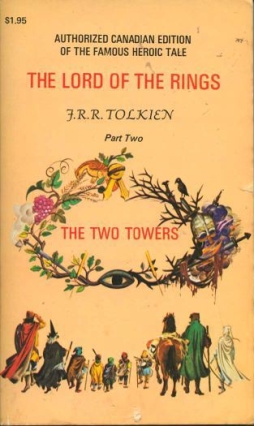
The Two TowersThis is the second of three posts prompted by a recent re-reading of The Lord of the Rings. As I said in the first post, I went back to the book with the general idea of approaching it as one would a medieval saga, rather than a contemporary novel, and seeing what struck me as a result. I wrote in that post about what it seemed to suggest to me about Tolkien’s sense of character, and next week I intend to write about his use of irony — or, if you prefer, an anti-irony that shows how good can emerge out of apparent evil.
But this week I want to consider the aspect of the work which is perhaps the least saga-like thing in it, and something which has been criticised even by readers who have generally liked the book. And that is Tolkien’s depiction of landscape, and his approach to the natural world. Specifically, his tendency to describe his settings in detail.

I should say firstly that I am not one of the readers who dislikes the detail of the book. I generally prefer long books; I think the tendency to brevity is natural for stage and film dramas, but I’m not convinced it’s either natural or desirable in prose narratives like the novel or the romance. That is, the short story obviously has to be brief, and you can get certain effects from stories of certain lengths. But when you’re talking about a novel-length work, I think there are many approaches one can take; and I think that sometimes the best books are made out of digressions and an author exploring obsessions at the risk of apparent narrative shapelessness.

Read More Read More

The Gods Never Urinate

The Gods Never Urinate

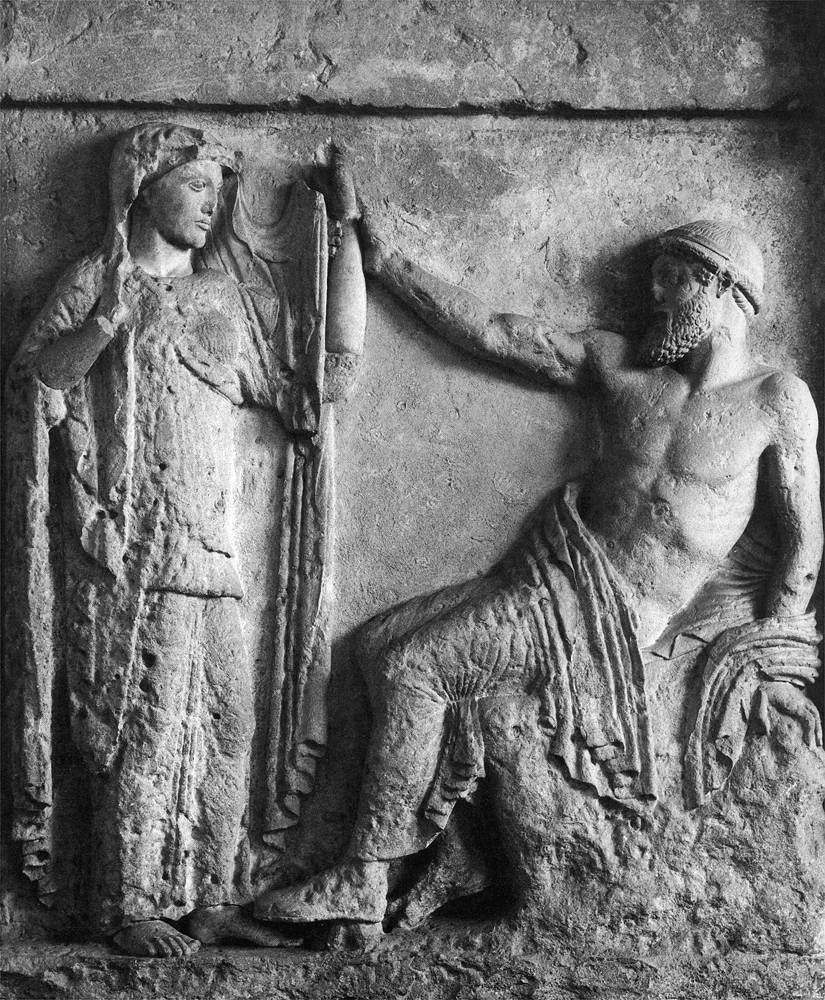
zeus-heraIt’s true: the gods never have to go pee.

Unless they want to, that is. But they’re never inconvenienced by it. As far as I know, never in the history of human mythology has a divine being hurried someone else along during a meeting, or interrupted some vital piece of work, to relieve themselves. Even nature deities, whom you’d image to be most in tune with this sort of bodily necessity among the living, and, presumably, have some sway over its function (or lack thereof… yow!), don’t seem to bother with it themselves.

Eating? Sure, okay.

Sex? Yes, please.

Excretion? Nothing beyond normal breathing, thank you.

And that is the true magic of deities, and why fantasy is destined, on the longest scales, to have greater longevity than science fiction. Because fantasy never gets brought down to the level of the mundane. It never misses a mark that reality has hit square. Science fiction, for all its glories, inevitably diverges from reality, and rarely for the better. We expect science fiction to be somewhat oracular, in that the technologies and situations presented remain plausible.

Read More Read More

The Novels of Black Gate

The Novels of Black Gate

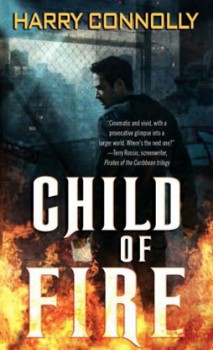
childoffire“Why do the review pages always seem to be full of books which no one buys and the bestseller lists full of books no one reviews?”

This was tweeted the other day by a lit. agent called missdaisyfrost and the first thing it brought to my mind was Black Gate.

Day by day, genre short fiction magazines seem to grow more literary even as their sales plummet, while BG — may I call you BG? — is one of the few to proudly assert its pulp roots and to cater to the majority of people who like, you know, something to happen in the stories they read.

So, it’s interesting that while a lot of my fellow BG buddies haven’t had stellar success in most of the Big Mags out there in the wild, many of them are now kicking ass in the real market, novels: the only place outside of Hollywood that writers can make an actual living from their craft.

The first story I ever read in the magazine was Harry Connolly‘s The Whoremaster of Pald. It totally knocked my socks off.

Nor was I the only one to suffer from sudden chills in the foot area — people raved about that story and now, years later, Child of Fire, by the same author has 108 reviews on Amazon.com, most of them equally thrilled.

Read More Read More

The Lord of the Rings: A Personal Reading, Part One

The Lord of the Rings: A Personal Reading, Part One

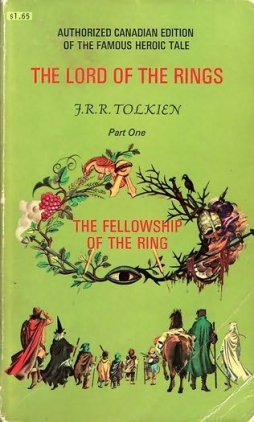
The Fellowship of the RingWhen I first read The Lord of the Rings I was young enough that I no longer remember how old I actually was. It’s a story that seems to me to have been around forever, a part of the background from which the world was made. I reread it often, though not as often as I’d like; and I’m not sure that ‘reread’ is even the right word here, because every time I go back to it, it’s a new tale.

These are characteristics of a great book: having read it once, you’re drawn back to it again and again; and, once returned to it, you find always something within it that you did not remember. Or else you find a new way of reading it. You are not the same person and the book is not the same book; the rhythm of the plot has a more subtle balance, the imagery aligns in a new way, the characterisation acquires new significance.

I went back to The Lord of the Rings recently, in part because I had some ideas about character and setting and irony, and how they manifest in the book, and I wanted to see if they made sense. That is, I wanted to see if these ideas suggested, not so much a meaningful way to read the book, but a way to read the book to help one approach the meaning within it. I think they did, and now I want to try to work out how and why.

Read More Read More