The Public Life of Sherlock Holmes: More Playing Sherlock Holmes – 221B Baker Street
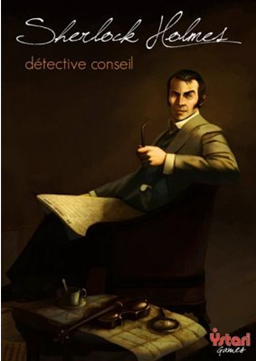
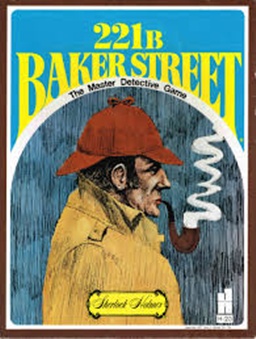 Last week, I looked at the reissued Sherlock Holmes: Consulting Detective (SHCD), originally released in 1981. That game was undoubtedly influenced by 221B Baker Street: The Master Detective Game (221B), which had come out a few years earlier in 1975.
In 221B, two to six players take on the role of Sherlock Holmes, though there’s a reference in the rulebook to being “Watsons.” It makes no difference, but I’m gonna go with being the world’s first private consulting detective, myself.
The game comes with 20 Case cards, generic, colored plastic player pieces, Scotland Yard and Skeleton Key “cards,” a solution checklist pad and a slim booklet with all the rules, clues and case solutions.
Unlike SHCD, which included a map, 221B uses a board. Players start and finish at 221B Baker Street, moving to various locations on the board, such as the Apothecary, Hotel, Museum, Tobacconist, etc. Each location is assigned a number in each case. When the player moves to the location, they look up the corresponding number in the clue section of the rulebook. The clue, such as “Earl Longworth has constant headaches” is recorded on the solution checklist – kept secret from other players.

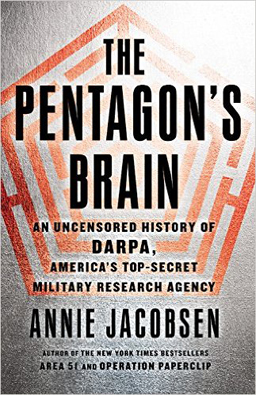 I sat down to read Annie Jacobsen’s 2015 book The Pentagon’s Brain — subtitled An Uncensored History of DARPA, America’s Top Secret Military Research Agency — thinking I’d get a new perspective on the development of the American military-industrial complex. And a new angle on the history of science in the 1950s and 1960s and beyond. Also that I’d learn a bit about the development of the internet, and who the people were who came up with it, and why they did, and what they were thinking. I got all of that. But I also found a new angle on science fiction, and the way SF shapes the world for better or for worse.