Browsed by
Category: Comics

Wizard and ToyFare Magazines Cease Publication

Wizard and ToyFare Magazines Cease Publication

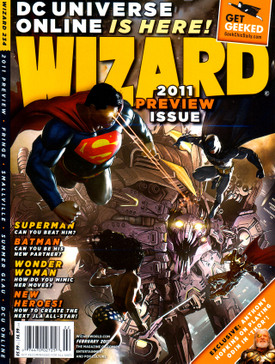
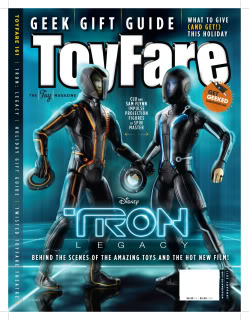
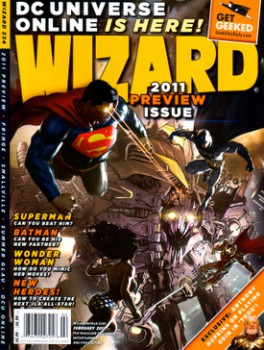
wizard-issue-234Longtime comic magazine Wizard, once one of the most popular publications in the industry, has folded. Its sister magazine ToyFare, dedicated to pop-culture toys and action figures, has also ceased publication. Both magazines were owned by Wizard Entertainment.

Wizard was launched in 1991, near the height of the “speculator boom,” fueled by the arrival of Image Comics and the rise of superstar artists such as Todd McFarlane and Jim Lee. Dedicated to covering news, pricing trends, and personalities in the field, Wizard quickly captured a large readership and brought real production values — including glossy paper, full-color interiors, and rock-star journalism — to comic fandom for the first time.

With its regular Wizard Top 10 and Market Watch columns, which reported on the “hottest back issues” of the month and predicted future price trends, Wizard catered to a new generation of fans and buyers who purchased comics chiefly for their collectability and perceived future value.

It also shared much of the blame when the comic marketplace collapsed as those speculators, burned by numerous bad investments, fled the market in the late 90s.
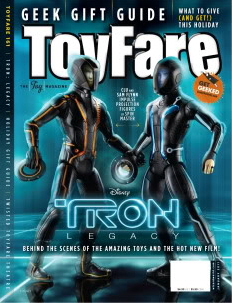
toyfare-16111Two-thirds of comic book stores across the country closed between 1993 and 1997,  many major publishers were driven out of business, and even Marvel Comics declared bankruptcy in 1997.

For most of its life every issue of Wizard also had a price index, allowing collectors to track the price of their latest hot comics month-to-month (but I only read it for the articles).

At the peak of its popularity Wizard sold over 110,000 copies/month through Diamond alone.  With its final issue, that number had dropped to 17,000.

Publisher Wizard Entertainment made this announcement yesterday:

Wizard Entertainment is ceasing publication of the print magazines Wizard and ToyFare. Wizard World, Inc. will begin production of the online publication ‘Wizard World’ beginning in February. We feel this will allow us to reach an even wider audience in a format that is increasingly popular and more readily accessible.”

Wizard Entertainment continues with its other ventures, including the Chicago Comic Con and many other conventions. Their website is here.
The Best KULL Comic Ever: “Demon in a Silvered Glass”

The Best KULL Comic Ever: “Demon in a Silvered Glass”

kullsmall-1Happy Birthday, Robert E. Howard…

I am a huge Conan fan, but I have to admit that I like Howard’s King Kull stories even better. The Kull tales are more poetic, more lyrical, more mystical … and they reveal more of Howard’s Shakespearean influence than any of his Conan tales.

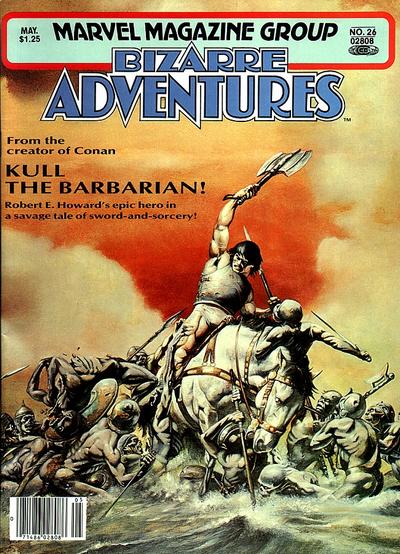
All of those terrific Kull tales are collected in a terrific illustrated volume from Del Rey entitled Kull: Exile of Atlantis.  If you want the true Kull experience, this book has it all. Yet of all the Kull and Conan comics produced by Marvel Comics in the 70s and 80s, there is one that stands head-and-shoulders above them all: Bizarre Adventures #26, featuring Kull the Barbarian. John Bolton’s dark, lush artwork brought Kull, Brule, and the City of Wonders alive in a work of timeless excellence.

Kull always had it rougher than Conan in the comics world. When the fantastically talented Barry Windsor-Smith put his unique stamp on the Conan character in 1971’s Conan the Barbarian #1, he and writer Roy Thomas ensured it would become a Marvel mainstay. Yet when Marvel added a Kull the Conqueror comic a few years later, they weren’t lucky enough to strike gold again. Various artists did the Kull series, and despite a terrific run by Marie Severin and a couple of great Mike Ploog issues (and later work by Alfredo Alcala and Ernie Chan), the series never approached Conan in popularity or longevity. However, in 1981 King Kull finally got his due in a true masterpiece of sword-and-sorcery: “Demon in a Silvered Glass.”

Read More Read More

Scott Pilgrim vs. A Second Viewing

Scott Pilgrim vs. A Second Viewing

Earlier this week, Andrew Zimmerman Jones posted a review of Scott Pilgrim vs. The World. I’m here to provide a different take on the film…

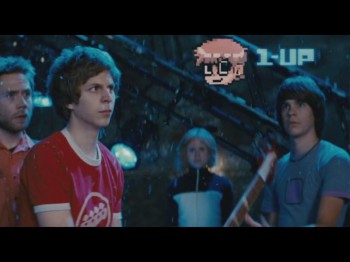
Scott Pilgrim vs. The World is, in my opinion, one of the best movies of 2010. I’d even go so far as to say it’s one of my favourite films of the past five years, but after its lackluster release last August, viewers seem divided as to whether or not they enjoyed the whole Scott Pilgrim experience.

Scott gets a life
Scott gets a life

Some have said that it’s mostly style with very little substance or, as Mike Allen put it, “the cinematic equivalent of a box of Nerds – fizzling sweetly on the tongue, then gone and forgotten!” But I disagree, staunch Scott Pilgrim fan that I am, and I’m here to tell you why, if you found yourself wholly underwhelmed by the film, you should give it just one more chance. If you know where to look, Scott Pilgrim vs. The World will surprise you with its intricacies.

This all started when the lovely and mysterious C.S.E. Cooney posted as her Facebook status: “Didn’t like Scott Pilgrim VS the World as much as I wanted to. Entertaining, though.”

Read More Read More

A Novel Superman

A Novel Superman

The Last Son of KryptonMedia tie-in novels are common nowadays, and people have debated how good tie-in novels are and how good they can be. I don’t have any strong opinions, other than to note that a) the usual conditions under which tie-ins are written don’t seem encouraging; b) on the other hand, great books can be and have been written under much less encouraging conditions and much greater restrictions; and c) I’m really looking forward to reading Michael Moorcock’s Doctor Who novel.

But I will say this: when the question of the quality of media tie-in novels arises, there are two books I think of as both tie-in novels and excellent fiction in their own right. There may be more, but these two have stuck with me from a young age, and every time I re-read them (as I do every few years), I find they’re still powerful and resonant work. The language is tight, terse and moving. The characters are strong. The world is well-conceived, feeling fresh and new.

The books are Superman: Last Son of Krypton and Superman: Miracle Monday, by Elliot S! Maggin (follow the link to uncover the mystery of the exclamation point). Published to accompany the release of the first two Superman movies, the books have little to no connection with the movies as such, being instead original and utterly fascinating stories.

Read More Read More

Blogging Alex Raymond’s Flash Gordon, Part Five: “The Witch Queen of Mongo”

Blogging Alex Raymond’s Flash Gordon, Part Five: “The Witch Queen of Mongo”

flashgordon2_1cvr1“The Witch Queen of Mongo“ was the fifth installment of Alex Raymond’s Flash Gordon Sunday comic strip serial for King Features Syndicate. Originally printed between April 21 and October 13, 1935, “The Witch Queen of Mongo” picked up the storyline where the fourth installment, “Caverns of Mongo” left off with Flash and Dale setting out to conquer the cave kingdom that was awarded to Flash following the tourney held by Ming and Vultan.

Writer/artist Alex Raymond benefitted greatly from the contributions of ghost writer Don Moore who developed characterization to bring much-needed balance to the nonstop parade of cliffhangers. The serial quickly sets the tone with Dale’s mounting frustration with Flash’s preference for continued adventures over settling down and marrying her. This development coincides with the introduction of Azura, the titular Witch Queen of the Kingdom of Syk.

azuracomicsAzura is the second of Alex Raymond’s stunning exotic women of Mongo and rivals Aura in complexity and appeal. The Witch Queen’s descent from the heavens on a stair of flames is an iconic image that may have influenced Frank Frazetta’s cover art for Conan the Freebooter three decades later. Likewise, Flash’s Nordic-style horned helmet suggests the strip was a vital inspiration on the depiction of Robert E. Howard’s barbarian pulp hero.

From the very start, the point is made that the Witch Queen’s “magic” is nothing more than advanced technology. The continued juxtaposition of the futuristic with medieval fantasy remained a potent formula for success with the stip.

Read More Read More

Gods and Monsters

Gods and Monsters

nammahs-kissJacqueline Carey’s third Terre d’Ange trilogy, the Moirin books, seem to be in general better liked than the books about Imriel. I can’t agree with this opinion. It might be because I read them first, and therefore had gone pretty far into Naamah’s Kiss before I got a satisfactory translation of “diadh-anam“. From context, I was forced to conclude that “”diadh-anam” was Cruithne for “plot”. As in “Jehanne, I adore you, but I find that the plot is telling me I must go to China.”

Of course all the main characters in the Terre d’Ange books have been a singularly god-ridden bunch. However, Phèdre and Imriel and their cohorts had to deal more with powers and inclinations that they received from their gods in much the same way that other heroes have received them from radioactive spiders. The actions they take are to help friends, or make bargains with enemies, or act for their country, or earn a living, or do stupid things because of lust or youth or stupidity.

Moirin, on the other hand, has a goddess that micromanages her every action. Go to Terre d’Ange. Date a hot magician. Learn tai chi. Etc., etc. The Maghuin Dhonn winds up being a character as present in the book as poor, sexy, silly Moirin herself, only a lot less interesting. It’s the Q problem. How do you use a god among mortals as a character? Alan Moore did it with Dr. Manhattan, but that worked because he let us into Dr. Manhattan’s brain, showed us what the world looked like to him. But all you ever see of the Maghuin Dhonn is just her moving her favorite character around like a chess piece; and why would you ever want to read a book about the adventures of a chess piece, when you could read about the mind behind the chess game?

Read More Read More

Marvel’s The Monster of Frankenstein, Part Four

Marvel’s The Monster of Frankenstein, Part Four

fm13The 20th Century adventures of Mary Shelley’s famous monster continued with a guest-star stint in Giant-Size Werewolf #2. Doug fm14Moench scripted and Don Perlin provided the artwork. Moench gets to make his familiar point about judging by appearances (as he did several times in his Frankenstein 1974 scripts for Monsters Unleashed) with an opening sequence in which a hippie and an African-American are discussing the injustice of unfounded prejudices when they encounter the Monster and immediately flee in terror at his appearance. The Monster subsequently overhears a conversation between two winos about eccentric millionaire Danton Vayla who has discovered the ability to transmigrate souls. Intrigued, the Monster sets off for Los Angeles (by freight train) in the hopes of gaining a new, normal body for himself.

The story then shifts gears to pick up a plot strand from Marvel’s monthly Werewolf by Night title where Lissa Russell has joined a Satanic cult, The Brotherhood of Baal in the hopes of finding a cure for her werewolf brother. Lissa quits the cult after learning that they practice human sacrifice. The Brotherhood abducts Lissa and scrawl Manson-style graffiti on the walls of her home. This sends Jack Russell in search of his sister. He soon discovers that Danton Vayla (who resembles Anton LaVey in name as well as appearance) is the leader of the Brotherhood of Baal and about to sacrifice Lissa as part of the same ritual that the Monster’s soul is to transmigrate into the body of a handsome young cult member. One lengthy Werewolf-Monster scuffle later and Vayla lies dead, the cult is ruined and Lissa is freed.

Read More Read More

Marvel’s The Monster of Frankenstein, Part Three

Marvel’s The Monster of Frankenstein, Part Three

fm12The 19th Century adventures of Mary Shelley’s famous monster conclude with Issue 12 of Marvel’s The Frankenstein Monster as the new creative team of writer Doug Moench and artist Val Mayerik begin the drastic process of updating the series to the present-day.

The Monster is dying of a gunshot wound inflicted by Vincent Frankenstein in the previous issue. After surviving an attack by a pack of wolves, the Monster falls off a cliff into an icy river. The story then jumps ahead to 1973 as an oil freighter hits an iceberg containing the frozen body of the Monster. This being a comic book, the Monster never died of his gunshot wound since the ice preserved him in a state of suspended animation.

The sailor who spotted the Monster trapped in the ice has a brother who runs a carnival. They conspire to steal the body before it can be turned over to the authorities. We are then introduced to a young neurosurgeon, Dr. Derek McDowell who sees the Monster exhibited at the carnival and correctly concludes that it is the immortal creation of Victor Frankenstein.

mu2From here we segue to the pages of Marvel’s more mature (as in free of the censorship imposed by the Comics Code Authority) comic magazine, Monsters Unleashed which first launched the Frankenstein 1973 feature in their second issue the preceding year under the aegis of Gary Friedrich and John Buscema. The events of The Frankenstein Monster # 12 would now be considered an example of ret-conning in order to retroactively satisfy the continuity established in the sister magazine.

Friedrich’s portrayal of Derek McDowell is far from appealing. He’s an abusive hippie loser who beats up his fiancée, Tisha in frustration when the carnival refuses to sell the Monster to him. McDowell believes he has the skill to bring the Monster back to life whereas Tisha just wants things to go back to the way they were before he became obsessed with the journals of Robert Walton and the story of Victor Frankenstein and his creation. To this end, Tisha decides a little arson at the carnival is in order.

The fire ends up not only disfiguring Tisha, but ironically melting the ice and reviving the Monster. The military is called in while the Monster climbs to the top of a roller coaster. He’s shot with a mortar, falls to the ground, lands on some cables and is electrocuted. The issue ends with the hard luck Monster who can’t seem to catch a break apparently killed off mere minutes after he awakens from his 80-year slumber.

Read More Read More

Marvel’s The Monster of Frankenstein, Part Two

Marvel’s The Monster of Frankenstein, Part Two

frankie1Read Part One of this article here. Click on images for larger versions.

The 19th Century adventures of Mary Shelley’s famous monster following Gary Friedrich and Mike Ploog’s adaptation of the classic novel continued in Issue 5 of Marvel’s The Monster of Frankenstein with another standalone filler story. This time out it is a more serviceable horror yarn that sees the Monster bravely rescuing a beautiful girl from being burned at the stake. She claims that her town is under the spell of a demon dressed in black that only she could resist. The Monster confronts and subdues her abusive father in his quest to end her persecution.

Along the way, there are hints that the girl is not as virtuous as she initially appeared. The Monster learns at the climax that the girl is actually a werewolf. The demon in black is revealed to be the village priest. The story is a familiar yarn having been utilized in numerous other comics and short stories for several prior decades. Gary Friedrich’s script puts the tested story to good use, but this is one of Mike Ploog’s less-inspired issues as artist.

Ploog’s swan song with the series was Issue 6. The title was modified slightly to The Frankenstein Monster starting with this issue. Ploog’s artwork here is simply stunning recalling at times Barry Windsor-Smith’s run on Marvel’s Conan the Barbarian. His Frankenstein Monster also strongly resembles Herb Trimpe’s interpretation of The Incredible Hulk and yet, there is much that is undeniably Ploog’s own brilliant style throughout. This final issue for the artist is his best for the series and does much to underline what made his artwork so beloved by comics fans.

Read More Read More

Marvel’s The Monster of Frankenstein, Part One

Marvel’s The Monster of Frankenstein, Part One

300px-essential_frankenstein1Click on images for larger versions.

Following the success of The Tomb of Dracula in 1972, Marvel Comics launched The Monster of Frankenstein the following year. Gary Friedrich and Mike Ploog kicked the series off with a fairly faithful three-part adaptation of the Mary Shelley novel.

At the outset, Marvel determined to keep the Monster in period. This was an interesting approach considering the modern update Dracula had received. Vampires were an easier sell for the twentieth century as numerous film and television updates had already established contemporary vampire stories whereas the Frankenstein Monster somehow seemed an antiquated concept, despite the character’s ongoing appeal.

It is important to remember that at the time the series debuted, literary critics had not yet embraced Mary Shelley’s work as a classic. Shelley, like Bram Stoker, was looked down upon as low-brow and her work was not afforded serious consideration.

Television syndication of the Universal Frankenstein pictures of the 1930s and 1940s and the character’s transformation into the patriarch on the 1960s sitcom, The Munsters were largely responsible for its longevity. It would be several more years before Shelley’s cautionary tale would gain widespread acceptance as a modern myth whose resonance had not diminished with the dawn of the Industrial Revolution.

Read More Read More