Browsed by
Category: Books

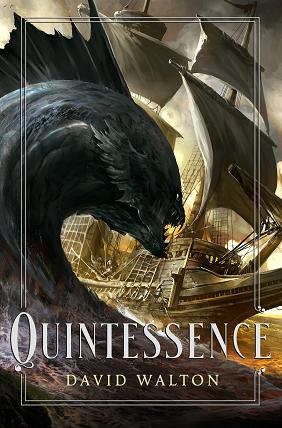
New Treasures: Quintessence by David Walton
New Treasures: Quintessence by David Walton

Quintessence David WaltonThere are few things as intriguing as an exciting new author. Maybe an all-you-can eat Indian buffet, or finding a mysterious note in a 10-year old jacket. And goliath birdeater spiders. Man, they give me the willies.

But back to exciting new authors. David Walton is an exciting new author. Back in 2008 he won the Philip K. Dick Award for his first novel, Terminal Mind, published by tiny Meadowhawk Press. That’s intriguing.

Even more intriguing is the arrival of his long-anticipated second novel: Quintessence. A slipstream counterhistory set in a fourteenth century featuring beetle-based navigation, alchemy, deadly storms, mutiny, sea monsters, and a trip to the edge of the earth, Quintessence promises to be a very different kind of fantasy, and the early buzz has been very favorable indeed.

Imagine an Age of Exploration full of alchemy, human dissection, sea monsters, betrayal, torture, religious controversy, and magic. In Europe, the magic is thin, but at the edge of the world, where the stars reach down close to the Earth, wonders abound. This drives the bravest explorers to the alluring Western Ocean. Christopher Sinclair is an alchemist who cares only about one thing: quintessence, a substance he believes will grant magical powers and immortality. And he has a ship.

Quintessence was published on March 19 by Tor Books. It is 320 pages for $25.99 ($12.99 for the digital edition). Check out the first three chapters on David Walton’s website.
Gardner Dozois on the 2013 Hugo Nominations

Gardner Dozois on the 2013 Hugo Nominations

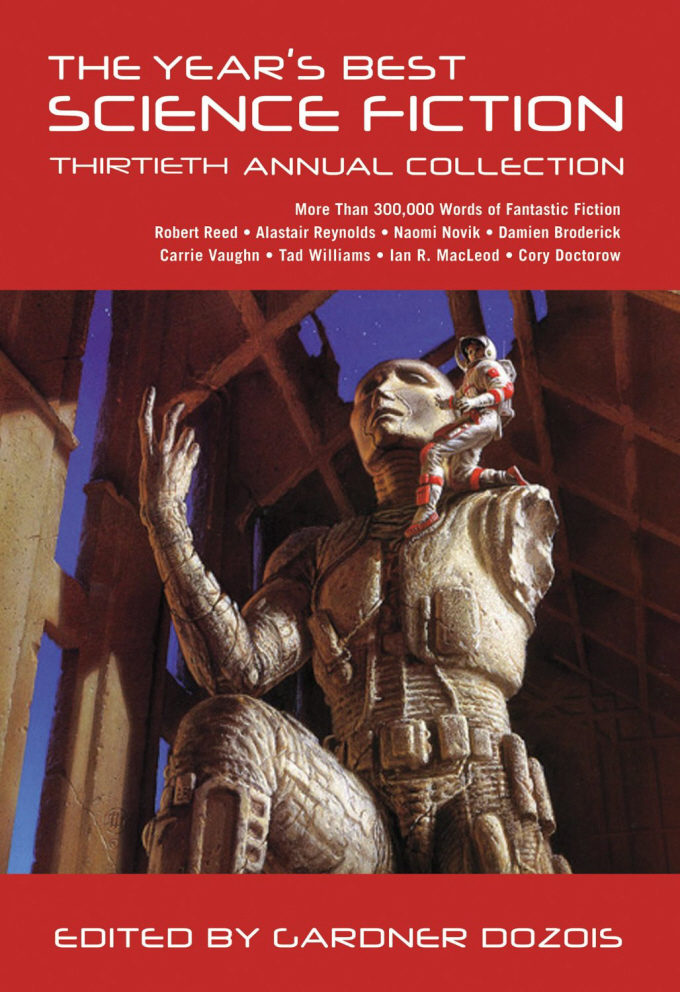
Year's Best SF 30Gardner Dozois, editor of the upcoming The Year’s Best Science Fiction: Thirtieth Annual Collection (and about a billion other science fiction and fantasy anthologies), offered some astute and telling observations on the 2013 Hugo Awards nominations this week.

In case you haven’t noticed, I thought that I’d point out that this year’s Hugo Award ballot represents a historic shift in demographics. This has been coming on for a couple of years now, but this year a tipping point has been passed.

In the fiction categories, only Nancy Kress, Pat Cadigan, Kim Stanley Robinson, and Lois McMaster Bujold come from the literary generation that came to prominence in the ’80s. Everybody else is from a younger literary generation (which doesn’t always mean that they’re younger, although that’s usually the way to bet it; literary generations are different from actual generations). There’s only one story, Jay Lake’s, from a traditional genre market, Asimov’s, and only one story from a trade SF anthology, Cadigan’s. Only six out of the thirteen shorter works even come from PRINT publications, and four of those were novellas published in chapbook form by small presses; all the rest are from online publications. Only two of the five people nominated for Best Editor, Short Form, work at traditional print magazines; the rest edit online publications. ALL of the nominees for Best Semiprozine are online publications.

This is not going to change back. This is the way things will be from now on.

We discussed the complete Hugo ballot here on Monday.

Martha Wells’ Emilie and the Hollow World On Sale Today

Martha Wells’ Emilie and the Hollow World On Sale Today

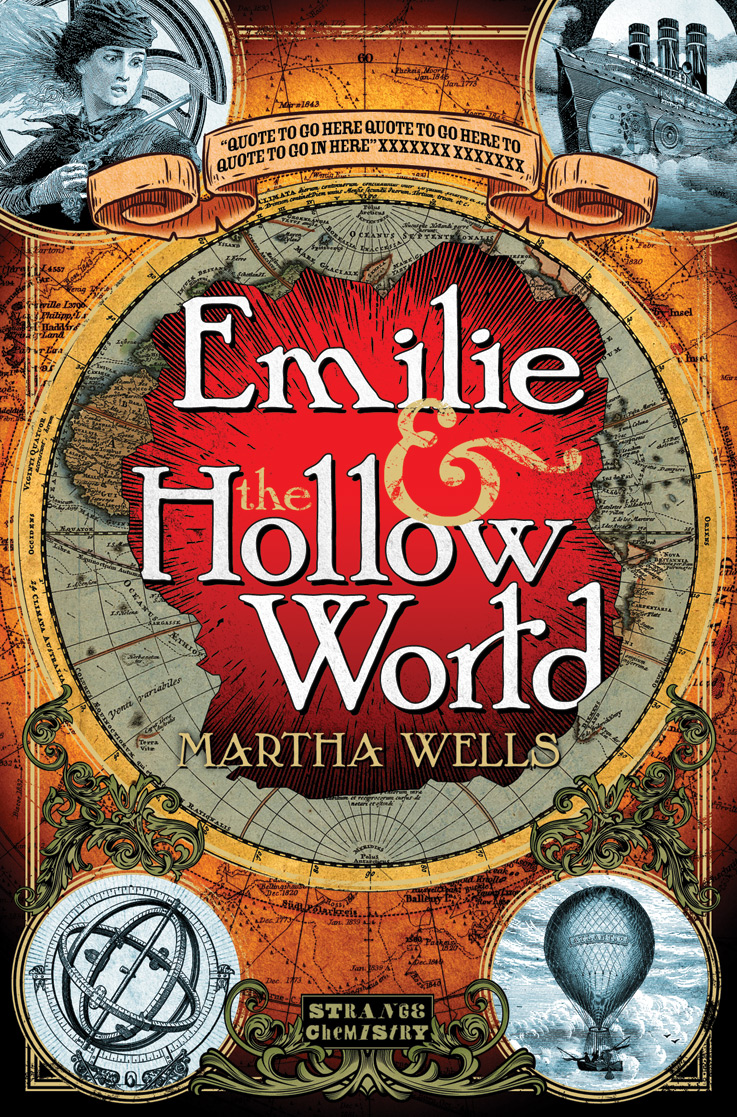
Emilie and the Hollow World-smallMartha Wells is one of our superstar contributors. In fact, it’s probably not an exaggeration to say that, in terms of raw ability to move sales, she was the superstar contributor to Black Gate.

Every magazine has authors who help sales. But it wasn’t until we published Black Gate 10, containing Martha’s Giliead & Ilias story “Reflections,” that I really saw what a single author could do. Subscriptions started to pour in, with letters from excited fans asking for “More Martha Wells!” We were happy to comply.

Novels are where she truly built her career, however — including The Fall of Ile-Rien trilogy, The Cloud Roads trilogy, and the Nebula-nominated The Death of the Necromancer. Today her first young adult novel, Emilie and the Hollow World, arrives in bookstores, and Martha discussed the ups and downs in her career that led her here with refreshing candor on her blog:

This is the third book I finished back in 2009, during my career crash that lasted from around 2006-2007 to 2010. A career crash for a writer is kind of like if you had a job where you’ve been going in to work every day and everything seems fine. But then gradually, over time, you realize you’ve been fired, and they don’t want you there and they aren’t going to pay you and everyone you work with knows this. It’s just that no one has told you.

The novel follows the adventures of young Emilie, whose clumsy attempt to run away and join her cousin in the big city lead her to stowaway on the wrong ship, where she’s quickly caught up in a grand adventure involving an experimental engine, an attempt to ride the aether currents, and a journey to the interior of the planet — not to mention sabotage, an encounter with the treacherous Lord Ivers, and the strange race of the sea-lands.

Emilie and the Hollow World was published today by Strange Chemistry. It is 304 pages in paperback for $9.99 ($6.99 for the digital edition). The only version of the cover we have is the pre-publication version (which still has a placeholder quote), but you can see all the detail on this handsome cover by clicking on the image at right.

Vintage Treasures: The Blind Spot, by Austin Hall and Homer Eon Flint

Vintage Treasures: The Blind Spot, by Austin Hall and Homer Eon Flint

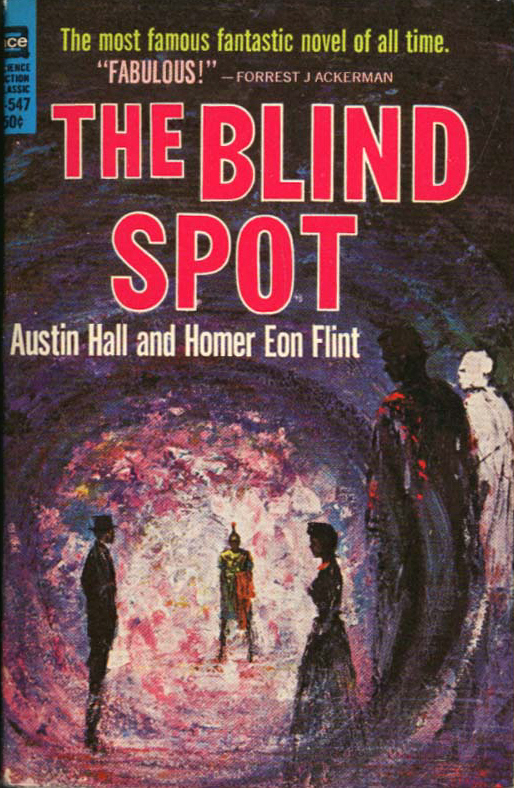
The Blind SpotAll right. Listen up, all you young fantasy punks. I know you’re out there, devouring contemporary fantasy by the truckload, while I’m trying to school you on the forgotten classics of the past. I know you’re not listening, because I rarely paid attention to the crotchety old-timers who tried to get me to read forgotten fantasy classics 30 years ago. I was too busy with Lord of Light, Bridge of Birds, Watership Down, and Swords Against Death.

Eventually, of course, I learned the error of my ways. I began to listen to my elders, and appreciate the glory of the pulp era of fantasy. I read the books they passed to me, and gradually became wiser, more worldly, healthier, and better looking, with fuller and more lustrous hair and better posture.

Mostly. I didn’t read, like, everything they foisted on me. Because Star Trek was on in the afternoon, and Dr. Who in the evenings (the Tom Baker episodes, naturally), and a lad needs some down time.

Now, these Vintage Treasures articles are my vehicle to pass along the accumulated knowledge and wisdom of a fabulously well-read generation (i.e. old people) to the eager and outstretched hands of the readers of tomorrow (you lot). That’s admittedly harder to do with the great classics of fantasy I haven’t read yet. Theoretically though, it might be possible to duck some of my personal responsibility by passing them along instead.

In short, skipping a generation and cutting out the middleman. Now pay attention, because this is where you come in.

I am tasking you with a sacred undertaking, upon which the very future of our beloved genre rests: to read, appreciate  and evangelize the great works of 20th Century pulp fantasy. The ones I never got around to, anyway. So I can get back to that Season Two Star Trek DVD which arrived last week. Appreciate it.

Let’s start with The Blind Spot, by Austin Hall and Homer Eon Flint. What’s it about? I have no idea. If you were paying attention, you’d have clued in to that. But right there on the cover Ace Books calls it “The most famous fantastic novel of all time,” and the esteemed Forrest J. Ackerman shouts out the word “Fabulous!” That should be good enough for you.

The Blind Spot was published in 1921 as a serial in Argosy-All Story Weekly, and reprinted by Ace Books in 1964, with a doubtlessly fascinating and informative introduction by Ackerman that would have made writing this post a lot easier if I’d known about it 15 minutes ago. It is 318 pages in paperback for 50 cents. Finding a copy is left as an exercise to the reader (I got my copy on eBay for under a buck.) And get a move on, the cultural heritage of fantasy is at stake. But no pressure.

2013 Hugo Award Nominees Announced

2013 Hugo Award Nominees Announced

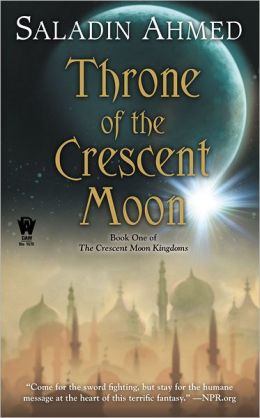
Throne of the Crescent MoonThe nominees for the 2013 Hugo Awards were announced this weekend. There’s a lot of great reading on this list and, if you’re like me, you’re still planning to get to most of it.

It’s not too late — and if you finish your reading before voting closes, you can help decide the winners. Voting is open to all attendees of LoneStarCon 3, the 2013 World Science Fiction Convention, and the winners will be announced at the convention on Sunday, September 1, 2013.

One odd thing about this year’s ballot? There are only three nominees for short story (usually there are five). The adminstrators state this is “due to a 5% requirement under Section 3.8.5 of the WSFS constitution.” No, I don’t know what that means either. I’m sure it will be much discussed, and somebody will explain it to me.

The nominees for the 2013 Hugo Awards are:

Best Novel

2312 by Kim Stanley Robinson (Orbit)
Blackout by Mira Grant (Orbit)
Captain Vorpatril’s Alliance by Lois McMaster Bujold (Baen)
Redshirts: A Novel with Three Codas by John Scalzi (Tor)
Throne of the Crescent Moon by Saladin Ahmed (DAW)

Best Novella

After the Fall, Before the Fall, During the Fall, by Nancy Kress (Tachyon Publications)
The Emperor’s Soul by Brandon Sanderson (Tachyon Publications)
On a Red Station, Drifting, by Aliette de Bodard (Immersion Press)
San Diego 2014: The Last Stand of the California Browncoats, by Mira Grant (Orbit)
“The Stars Do Not Lie,” by Jay Lake (Asimov’s SF, Oct-Nov 2012)

Read More Read More

Raising the Golden Fortress in Oil Country: Minister Faust’s The Alchemists of Kush

Raising the Golden Fortress in Oil Country: Minister Faust’s The Alchemists of Kush

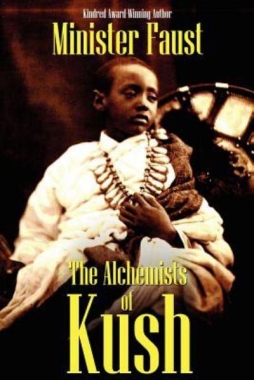
The Alchemists of KushWriting about fantasy fiction seems sooner or later to involve writing about myth. The two aren’t the same, but have a connection difficult to articulate. Similarities and contrasts both feel obvious and yet are hard to nail down. Perhaps it’s fair to say both fantasy and myth challenge consensus reality. But that they differ in the relation they have to truth, or to what is to be taken as truth.


Minister Faust is the pen name of Edmontonian Malcolm Azania. Faust is a novelist, as well as a journalist, radio host, activist, and former teacher. He’s written four novels; I want to write here a bit about his 2011 book The Alchemists of Kush. As I read it, it’s about a myth, both an exposition of that myth and an exploration of how the myth might be used in the contemporary world. How people can be affected by a story, and how a community can be created by the stories it tells itself. Mostly, though, I think the book’s about one person, and how he’s transformed — alchemised — by the story he finds.

Technically, the novel’s made up of three different books: ‘The Book of Now,’ ‘The Book of Then,’ and ‘The Book of the Golden Falcon.’ ‘The Book of the Golden Falcon,’ presented as a kind of appendix at the back of the novel, is divided into ten chapters and written in dense — mythic — langage which retells the story of Horus, Osiris, Anubis, and Set. Most of the novel consists of alternating chapters of ‘The Book of Then,’ which retells that story in a more novelistic (or, at least, less fable-like) style, and ‘The Book of Now,’ set in contemporary Edmonton, Alberta. ‘The Book of Now,’ by far the longest of the three books, tells the story of Rap, an Edmonton teen of Somali and Sudanese parentage, as he meets a society of adults who follow the moral and ethical lessons of ‘The Book of the Golden Falcon.’ Rap joins them and helps them to create a ‘golden fortress,’ a kind of organization of local youth, specifically Black youth. But as a community, the fortress faces a number of obstacles and enemies, just as Rap himself has to work out his own relationship to the community as it develops, and find his own path to maturity.

Read More Read More

Stick This in Your Pipe and Smoke It

Stick This in Your Pipe and Smoke It

FridgeSwearing. Profanity. “Cussing” (as opposed to “cursing” which is entirely different).

We’ve all been told at one time or another (usually by people we’re swearing at) that using profanity is a sign of a weak vocabulary. It’s lazy, they’ll say. It’s easier to tell someone what he can do with himself than to really go to town on him, Shakespeare-style.

But that phrase “go to town on someone” makes me think of another aspect of language. Whether we call it “slang”, or “figures of speech”, or just “common expressions”, we all use these devices every day, often without being aware of them – or of where they come from.

Though there are all kinds of sources in the real world to help us with that last one.

But what about our Fantasy and SF worlds? We’d certainly better be aware of expressions when we’re writing, hadn’t we? Just think of the extent to which verbal expressions depend on existing technology.

Read More Read More

Adventure on Film: Why Hollywood Gets it Wrong

Adventure on Film: Why Hollywood Gets it Wrong

star-trek-game-beams-up-in-april-2013.jpgAs I write this, April is just around the corner, and now that Hollywood’s best and brightest studios no longer know how to calculate the beginning of summer, I smell blockbuster season ripening fast on the vine. Just think, in mere weeks, we can all flock to see Star Trek: Into Darkness, Iron Man 3, Wolverine, Oblivion, Pacific Rim, Elysium, and Man of Steel.

What do nearly all of these movies have in common? I’ll tell you, spoiler-free: the fate of the world will hang in the balance.

Which is why I shall be staying home –– again –– for blockbuster season. If I have learned anything in all my forays into drama, it is this: cinema offers no more boring subject, no greater snoozefest, than global peril.

Heresy, I know.

But I’m right. Here’s why.

Read More Read More

Tell Us About Your Ideal Fantasy Hero, and Win a Copy of Writing Fantasy Heroes From Rogue Blades Entertainment!

Tell Us About Your Ideal Fantasy Hero, and Win a Copy of Writing Fantasy Heroes From Rogue Blades Entertainment!

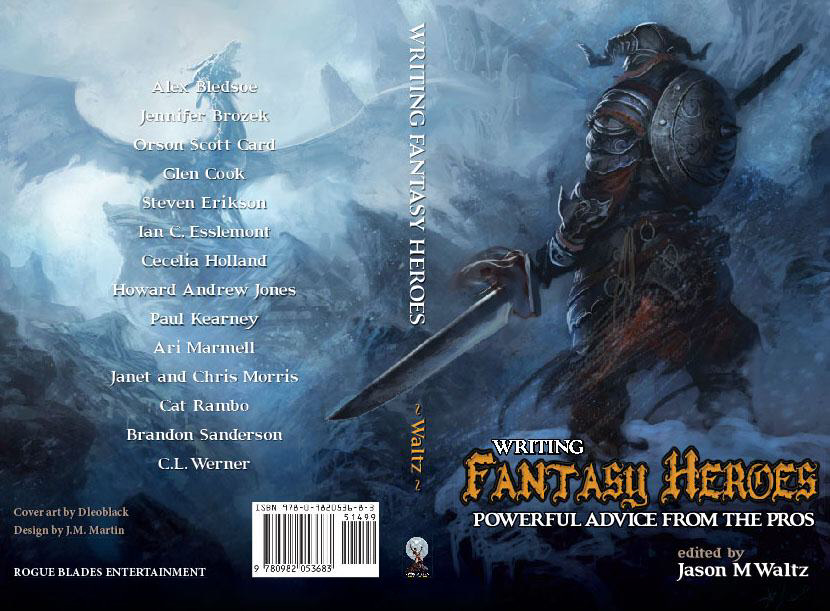
Writing Fantasy HeroesPop culture is dominated by fantasy heroes like never before, from Zelda to Harry Potter, Gandalf to Tyrion Lannister. The truth is we’ve always been fascinated by heroes, but in the last few years we’ve turned to fantasy like never before.

What makes a true hero? And which ones will endure, and which will eventually be forgotten?

These are the kinds of questions that require greater minds than ours. In fact, a riddle like this demands the sharpest, most agile minds on Earth. I’m talking about the readers of Black Gate, naturally.

To help us answer the question, we’re inviting Black Gate readers — that’s you — to tell us about your ideal hero. It can be a fictional character, or a general description of those qualities that make one ideal. In one paragraph or less, tell us what makes her a hero.

We’ll publish the best entries here on the blog, and randomly draw three names from all qualifying entries. Those three winners will each receive a copy of the new book Writing Fantasy Heroes, compliments of Rogue Blades Entertainment. Each of these experts on heroes will also be invited to submit a brief review of the book, to be published here on the Black Gate website.

Please submit entries by e-mail to john@blackgate.com with the title “My Ideal Hero.” All entries become the property of New Epoch Press. No purchase necessary. Must be 12 or older. Decisions of the judges (capricious as they may be) are final. Terms and conditions subject to change as our lawyers sober up and get back to us. Not valid where prohibited by law. Or anywhere postage for a hefty trade paperback is more than, like, 10 bucks. Good luck!

New Treasures: The Shadow’s Heir by K.J. Taylor

New Treasures: The Shadow’s Heir by K.J. Taylor

The Shadow's HeirThere are so many fantasy series crowding the shelves these days that’s it’s hard to know where to spend your hard-earned book dollars.

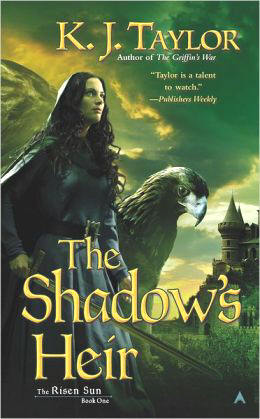
Here at Black Gate we’re hopeless fans of the fantasy series, but even we can’t cover them all. But at least we can alert you when a promising new one appears, so you can get in on the ground floor. Thus here we are, banging the drums for The Shadow’s Heir, the first novel in The Risen Sun trilogy by K.J. Taylor:

Laela Redguard was born with the black hair of the Northern kingdom and the blue eyes of the Southern people, forever marking her as a hated half-breed child of both. When her only family tie is severed, the fierce and strong-willed Laela decides to leave her adoptive father’s home in the hopes of finding acceptance in the North, where the ruthless King Arenadd and the dark griffin Skandar rule.

While Laela’s Northern features allow her to blend into the crowds of the King’s seat at Malvern, she cannot avoid falling victim to a pair of common thugs. When a stranger saves her life and gives her a place to stay, Laela is shocked to learn he is Arenadd himself — a man said to be a murderer who sold his soul to the Night God — the King without a heart.

Arenadd is unsure what compels him to help this girl, but there is something about her that seems familiar, something he cannot remember — something that may rise up to banish the darkness forever…

K.J. Tayor is the author of The Fallen Moon trilogy and The Land of Bad Fantasy. The second volume of the Risen Sun, The Shadowed Throne, is currently available in Australia, with an American edition scheduled for January 2014. Her website is here.

The Shadow’s Heir was published December 24, 2012 by Ace books. It is 351 pages in paperback, priced at $7.99 for both the paperback and digital editions.