Browsed by
Category: Books

New Treasures: Without a Summer by Mary Robinette Kowal
New Treasures: Without a Summer by Mary Robinette Kowal

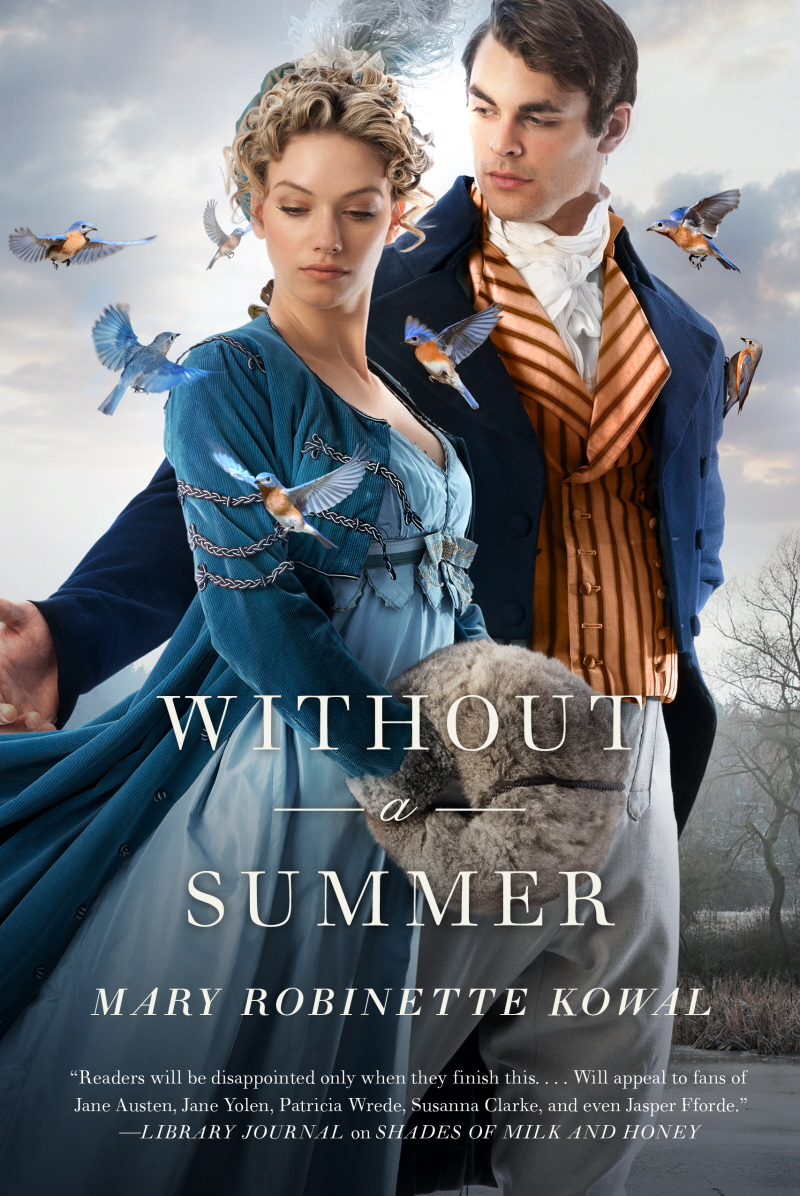
Without a SummerI attended the launch party for Mary Robinette Kowal’s Without a Summer here in Chicago this week. I don’t get to go to many launch parties — I  tend to eat all the hors d’oeuvres, and word gets around.

The venue was fabulous, the company and conversation were marvelous, and everyone pretended not to notice when I pocketed the leftover cheese. Best of all, my review copy of Without a Summer had just arrived, and Mary told me it was the first copy she had ever autographed. (She wrote a tidy “#1” and “Thanks for being my first” on the title page, which is the kind of thing which makes up for every party you’ve ever missed in your life.)

Without a Summer is the third novel in the Glamourist Histories, which began with the Nebula nominees Shades of Milk and Honey and Glamour in Glass.

Regency pair Jane and Vincent Ellsworth go to Long Parkmeade to spend time with Jane’s family, but quickly turn restless. The year is unseasonably cold. No one wants to be outside and Mr. Ellsworth is concerned by the harvest, since a bad one may imperil Melody’s dowry. And Melody has concerns of her own, given the inadequate selection of eligible bachelors. When Jane and Vincent receive a commission from a prominent family in London, they decide to take it, and take Melody with them. They hope the change of scenery will do her good and her marriage prospects — and mood — will be brighter in London.

Once there, talk is of nothing but the crop failures caused by the cold and increased unemployment of the coldmongers, which have provoked riots in several cities to the north. With each passing day, it’s more difficult to avoid getting embroiled in the intrigue, none of which really helps Melody’s chances for romance. It’s not long before Jane and Vincent realize that in addition to getting Melody to the church on time, they must take on one small task: solving a crisis of international proportions.

Without a Summer was published by Tor Books on April 2, 2013. It is 364 pages in hardcover, priced at $24.99 ($11.99 for the digital edition). Josh Wimmer reviewed the first book in the series, Shades of Milk and Honey, here.


Self-published Book Review: Broken Shell Island by Dalya Moon

Self-published Book Review: Broken Shell Island by Dalya Moon

brokenshell_sm_name-p

I don’t make much effort to make these reviews spoiler-free, but I think this one may have more spoilers than usual. So be warned.

All Opal Button wanted for her birthday was a bike. Instead, her grandfather gave her his old suitcase and a one-way trip to live with his sister on Broken Shell Island. Opal had always assumed that the island was imaginary, as it was the setting of a series of children’s books written by her grandfather’s friend, Flora Fritz. On what real island could goats talk and could real stairs and doorways be drawn with chalk? It sure seems real enough when she arrives by magic suitcase, though.

She’s not the only one arriving at the island that day. The local taxman’s mail-order bride is also supposed to be coming, thus setting up what promises to be an amusing tale of mistaken identity, at least until the body of the murdered fiancée is found. But Broken Shell Island doesn’t turn into a murder mystery either (although the mystery of who killed Svetlana is an important part of the story).

At heart, Broken Shell Island is a coming of age story for Opal. It even includes a heroic quest. Of course, the original quest–to fetch bluebeeswax to polish her great aunt’s floor–gets sidetracked when her guide, a boy her age named Peter, is blinded by a snakebite. Then they’re thrown even further off course by the appearance of a daemon, a creature of the underworld summoned by the use of dark magic. This leads directly to a visit to the witches of West Shore, who aren’t really happy to see them. The witches aren’t evil (mostly), and some of them were friendly to Opal near the beginning of the book, but they do have some dark secrets, one of which sends Opal back to the beginning to try it all again. No, there’s no time loop, but Opal does end up pretty much retracing her steps, this time sans Peter, but with the help of the sheriff and the taxman, Edwin, until she manages to return to the West Shore and try again. One would think this redo would be annoying, but it actually works out fairly well. First, because the author picks up the pace and gets through the sites much more quickly, and second, because things have changed since the first time Opal visited, and more is revealed with each place revisited.

Read More Read More

Can You Hear Me Up There?

Can You Hear Me Up There?

The Elizabethan World PictureWhat’s the difference between a catfish and a lawyer? One’s an ugly, scum-sucking bottom feeder, and the other is a fish.

An old joke, but a good one. As a joke, it works because of the shock, the unexpected conclusion. As an insult, it works because of a little concept called hierarchy.

Anyone who’s ever studied Shakespeare has read a book called The Elizabethan World Picture. It’s a great book, and essentially describes how people thought about the world back in Shakespeare’s day. I’d highly recommend reading it for yourself, but if I can sum it up quickly for you, it goes like this: up = good, down = bad.

What does that mean? Think it through: everything that’s high in the sky, you know, where the gods live, is good, and the higher the better. So, heaven, the sun, light itself, and so on. Everything that’s lower down is bad, and the lower it is, the worse it is. So, dirt, darkness, etc. Everything, including people, has a place on this scale. There’s a reason it’s the white knight who charges to the rescue, and that Goths dress in black. (I dress in black myself, so no mail please). Even people who’ve never watched a western know what it means to be a white hat.

This hierarchy permeates everything we do and think, everything we write and create – at least here in the western world. And very often without our being aware of it.

Hierarchy is the reason the Greek gods live on Olympus (highest mountain in Greece) and it’s the reason that Zeus (god of sky, thunder, etc.) is the ruler of said gods, and not Poseidon or Hades. It’s why kings had a divine right to rule, (they’re on top of the human hierarchy), and it’s why cleanliness is next to godliness – that is, it’s how we know cleanliness is a good thing.

Read More Read More

An Open Letter from Jeremy Lassen at Night Shade Books

An Open Letter from Jeremy Lassen at Night Shade Books

Jeremy LassenThere’s been a great deal of debate among authors and editors over this week’s announcement from Night Shade Books regarding a sale to avoid bankruptcy.

SFWA sent an advisory note to members, advising them that the settlement is “likely in the best interest” of writers. Respected authors such as Michael Stackpole strongly disagreed, pointing out that the contracts offered by Skyhorse/Start cut ebook royalties in half and demand audio and second serial rights — whether or not NSB originally purchased them.

It’s a painful situation for all involved. For readers anxious to see Night Shade’s future releases — including several volumes of popular ongoing series — this sale is the only way to avoid the rights to those titles ending up in bankruptcy court (where the majority may well simply die).

There’s no question that Night Shade made mistakes and burned a lot of bridges over the past few years, and that this latest unpleasantness has brought out more than a few writers with an axe to grind. As a publisher who ran a fantasy magazine as a labor of love for over a decade, until the mounting losses simply became too great to bear, I know well the kind of pain owners Jason Williams and Jeremy Lassen are experiencing now. Night Shade was one of the most dynamic and exciting publishers in the genre, willing to take extraordinary risks buying and promoting work from many new writers, and it’s undoubtedly painful to see so many of those writers apparently delighted to dance on their corpse.

Jeremy Lassen has written an open letter to his writers, and the industry at large, articulating just what’s at stake with this offer from Skyhorse and Start. The complete text of Jeremy’s letter follows.

Read More Read More

Marie Corelli and the Quality of Badness

Marie Corelli and the Quality of Badness

Marie CorelliI don’t often write here about bad books. Partly that’s because I don’t usually care to give them publicity. Partly it’s because I don’t usually care to think further about an unrewarding reading experience. Mostly, though, it’s because to me a bad book is typically an uninteresting book. And what I really want to write about, when I write about a book, is what makes it interesting. Still, there are always exceptions. And of course it’s always worth challenging one’s ideas of what ‘bad’ means. So this time out I want to talk about some books by a writer who was, in her time, notorious for literary badness.

Marie Corelli, born in 1855 as Marie Mackay, published her first novel, A Romance of Two Worlds, in 1886. It launched her career as a best-selling and critically despised author. She went on to write two dozen novels, a number of short stories, and several volumes of nonfiction. Her popularity only began to dwindle at about the time of the First World War; she died in 1924. Reviewers had never warmed to her work, and her obituary in the London Times stated that “even the most lenient critic cannot regard Miss Corelli’s work as of much literary importance.” For several decades she fell into obscurity, but lately a new wave of critics and biographers have been taking another look at her accomplishments.

Certainly Corelli’s an interesting figure. A fair amount of her work has elements of fantasy or of what would come to be called science fiction. In her day, she outsold Doyle, Wells, and Kipling, and was loved by readers of all walks of life, up to and including Queen Victoria. She never married; she seems to have been born out of wedlock to a journalist and writer named Charles Mackay, and took the name ‘Corelli’ for herself as part of an early attempt to establish a career as a pianist. For 40 years she lived with another woman, Bertha Vyver. Different biographers draw different conclusions: here’s one article arguing they were lovers, here’s another stating they weren’t. Both pieces get at another subject of interest — Corelli’s influence on later writers. The latter article argues that Corelli’s 1887 novel Thelma, which I haven’t read, was a significant influence on Tolkien’s Gollum. The first argues that her 1889 Ardath was an influence on Dunsany.

Read More Read More

Night Shade Attempts to Avoid Bankruptcy with a Sale to Skyhorse Publishing

Night Shade Attempts to Avoid Bankruptcy with a Sale to Skyhorse Publishing

Night Shade BooksWord has begun to spread this morning that Night Shade Books is in negotiations with Skyhorse Publishing and Start Publishing in an attempt to avoid bankruptcy.

Night Shade has contacted authors to explain the situation, and excerpts from those letters have been posted online:

As you probably know, Night Shade Books has had a difficult time after the demise of Borders. We have reached a point where our current liabilities exceed our assets, and it is clear that, with our current contracts, sales, and financial position, we cannot continue to operate as an independent publisher. If we filed for Chapter 7 bankruptcy, or liquidation, the rights to your books could be entangled in the courts for years as could past or current unpaid royalties or advances. However, we have found an alternative, which will result in authors getting paid everything they are due as well as finding a future home for their books, subject to the terms and conditions stated in this letter.

The deal is not yet finalized and, in fact, hinges on how many authors approve changes to their existing contracts.

Some, including Jeff VanderMeer, have asked the publisher to revert rights back to authors prior to declaring bankruptcy. That’s not likely to be an option however, as its existing publishing contracts are Night Shade’s most valuable asset. As Harry Connolly points out on his blog, bankruptcy courts generally frown on publishers who do that, and such revisions are routinely overruled in court during bankruptcy proceedings.

The loss of Night Shade would be a real blow to the field. Known for taking risks on new writers, they’ve also published some of the most celebrated authors in the genre, including Paolo Bacigalupi, Iain M. Banks, Martha Wells, Manly Wade Wellman, Greg Egan, Glen Cook, Kage Baker, Jay Lake, Elizabeth Bear, Lucius Shepard, and many others. But there have been omnibus signs for the past several years, including a deep sale last April, authors leaving their stable, and others. Publishers Weekly has more detail on the potential sale here; io9‘s report is here.

Teaching and Fantasy Literature: How to Rehabilitate a Readicidal Maniac

Teaching and Fantasy Literature: How to Rehabilitate a Readicidal Maniac

It’s good to be back at my Wednesday spot here at Black Gate. Two weeks ago, I got home from my favorite annual convention, Lunacon, to find that the kitchen sink had been left running all weekend. That added a few things to my To Do list, and believe me, I’d rather have been blogging. So here’s a long post, for all the thinking that didn’t land on the screen while my house vibrated with the roar of industrial dehumidifiers:
When a student asks me to translate an especially jargon-laden assignment from his high school, I think to myself, To the teacher who wrote this, all these buzzwords seemed like the best way to explain her idea. Surely there is an idea under here somewhere. And sometimes, when I have been as flummoxed as the kid sitting next to me at the kitchen table is, I have wondered if the fault might not be with me, or with my more freewheeling, less methodical training for college teaching. There have been times when I wondered what I missed by abandoning my almost-completed requirements for state certification in favor of grad school. I learned to speak fluent literary theory, and forgot how to speak educational jargon. Now that I’ve escaped from the classroom altogether to do the entrepreneurial tutor thing, I find that neither literary theory nor educational theory is all that useful for communicating with or helping students.

Am I wrong to dismiss the methods of most of my students’ high school teachers?

Thanks to Kelly Gallagher’s Readicide: How Schools Are Killing Reading and What You Can Do About It, that doubt will probably never plague me again. His critique of how reading is taught in most public schools is damning, and his plea to English teachers to push their profession in a better direction is urgent. As in most of the teaching books I’ve talked about here, there’s an argument for allowing students to read “high-interest reading material,” a term that includes fantasy, science fiction, and horror, along with all the other stuff human beings read for pleasure. (It’s a widely used term, despite its puzzling implication that all the books that do make it into formal curricula are somehow low-interest.) What’s unusual about Gallagher’s book is its explanation of why common teaching methods are so pernicious that even “high-interest reading material” cannot protect students’ love of reading from the good intentions of their schools.

Let’s skip most of what Gallagher has to say about high-stakes standardized testing and educational politics — I groove on reading about that stuff, but you probably don’t — and go straight to what freely chosen pleasure reading can do.

Read More Read More

New Treasures: Quintessence by David Walton

New Treasures: Quintessence by David Walton

Quintessence David WaltonThere are few things as intriguing as an exciting new author. Maybe an all-you-can eat Indian buffet, or finding a mysterious note in a 10-year old jacket. And goliath birdeater spiders. Man, they give me the willies.

But back to exciting new authors. David Walton is an exciting new author. Back in 2008 he won the Philip K. Dick Award for his first novel, Terminal Mind, published by tiny Meadowhawk Press. That’s intriguing.

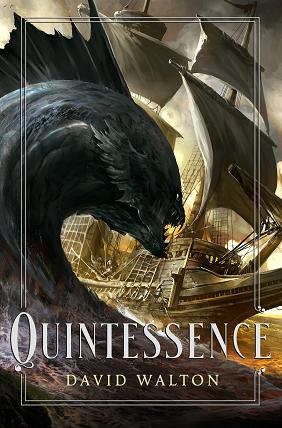
Even more intriguing is the arrival of his long-anticipated second novel: Quintessence. A slipstream counterhistory set in a fourteenth century featuring beetle-based navigation, alchemy, deadly storms, mutiny, sea monsters, and a trip to the edge of the earth, Quintessence promises to be a very different kind of fantasy, and the early buzz has been very favorable indeed.

Imagine an Age of Exploration full of alchemy, human dissection, sea monsters, betrayal, torture, religious controversy, and magic. In Europe, the magic is thin, but at the edge of the world, where the stars reach down close to the Earth, wonders abound. This drives the bravest explorers to the alluring Western Ocean. Christopher Sinclair is an alchemist who cares only about one thing: quintessence, a substance he believes will grant magical powers and immortality. And he has a ship.

Quintessence was published on March 19 by Tor Books. It is 320 pages for $25.99 ($12.99 for the digital edition). Check out the first three chapters on David Walton’s website.

Gardner Dozois on the 2013 Hugo Nominations

Gardner Dozois on the 2013 Hugo Nominations

Year's Best SF 30Gardner Dozois, editor of the upcoming The Year’s Best Science Fiction: Thirtieth Annual Collection (and about a billion other science fiction and fantasy anthologies), offered some astute and telling observations on the 2013 Hugo Awards nominations this week.

In case you haven’t noticed, I thought that I’d point out that this year’s Hugo Award ballot represents a historic shift in demographics. This has been coming on for a couple of years now, but this year a tipping point has been passed.

In the fiction categories, only Nancy Kress, Pat Cadigan, Kim Stanley Robinson, and Lois McMaster Bujold come from the literary generation that came to prominence in the ’80s. Everybody else is from a younger literary generation (which doesn’t always mean that they’re younger, although that’s usually the way to bet it; literary generations are different from actual generations). There’s only one story, Jay Lake’s, from a traditional genre market, Asimov’s, and only one story from a trade SF anthology, Cadigan’s. Only six out of the thirteen shorter works even come from PRINT publications, and four of those were novellas published in chapbook form by small presses; all the rest are from online publications. Only two of the five people nominated for Best Editor, Short Form, work at traditional print magazines; the rest edit online publications. ALL of the nominees for Best Semiprozine are online publications.

This is not going to change back. This is the way things will be from now on.

We discussed the complete Hugo ballot here on Monday.

Martha Wells’ Emilie and the Hollow World On Sale Today

Martha Wells’ Emilie and the Hollow World On Sale Today

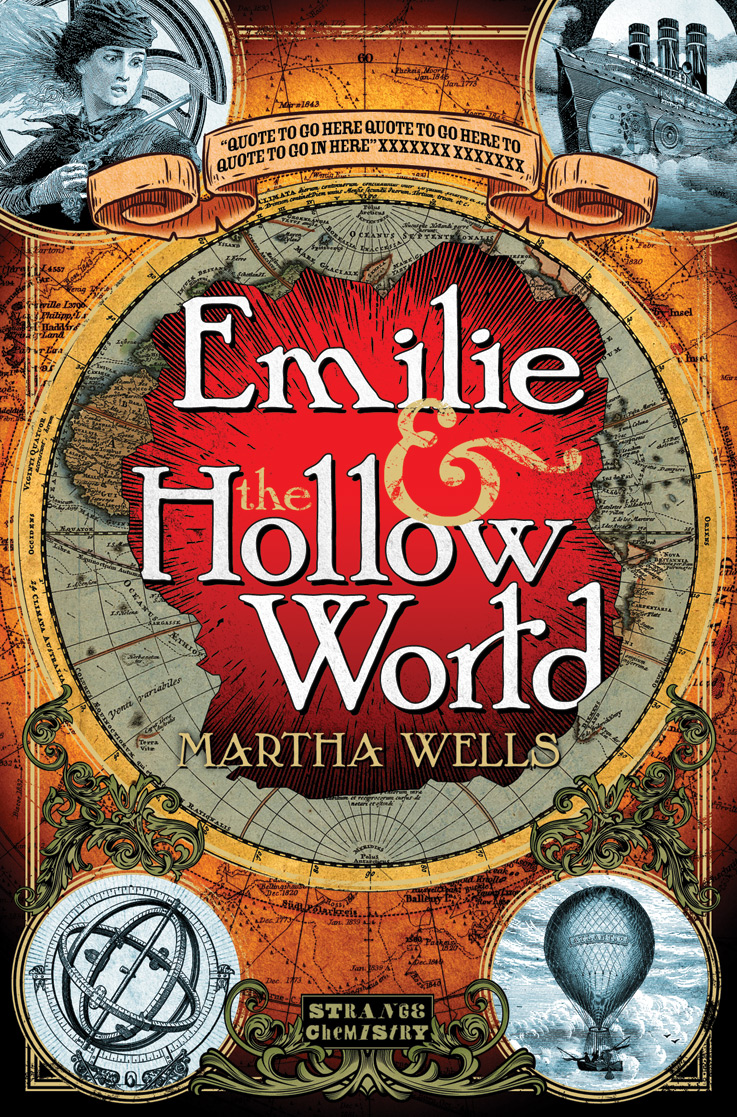
Emilie and the Hollow World-smallMartha Wells is one of our superstar contributors. In fact, it’s probably not an exaggeration to say that, in terms of raw ability to move sales, she was the superstar contributor to Black Gate.

Every magazine has authors who help sales. But it wasn’t until we published Black Gate 10, containing Martha’s Giliead & Ilias story “Reflections,” that I really saw what a single author could do. Subscriptions started to pour in, with letters from excited fans asking for “More Martha Wells!” We were happy to comply.

Novels are where she truly built her career, however — including The Fall of Ile-Rien trilogy, The Cloud Roads trilogy, and the Nebula-nominated The Death of the Necromancer. Today her first young adult novel, Emilie and the Hollow World, arrives in bookstores, and Martha discussed the ups and downs in her career that led her here with refreshing candor on her blog:

This is the third book I finished back in 2009, during my career crash that lasted from around 2006-2007 to 2010. A career crash for a writer is kind of like if you had a job where you’ve been going in to work every day and everything seems fine. But then gradually, over time, you realize you’ve been fired, and they don’t want you there and they aren’t going to pay you and everyone you work with knows this. It’s just that no one has told you.

The novel follows the adventures of young Emilie, whose clumsy attempt to run away and join her cousin in the big city lead her to stowaway on the wrong ship, where she’s quickly caught up in a grand adventure involving an experimental engine, an attempt to ride the aether currents, and a journey to the interior of the planet — not to mention sabotage, an encounter with the treacherous Lord Ivers, and the strange race of the sea-lands.

Emilie and the Hollow World was published today by Strange Chemistry. It is 304 pages in paperback for $9.99 ($6.99 for the digital edition). The only version of the cover we have is the pre-publication version (which still has a placeholder quote), but you can see all the detail on this handsome cover by clicking on the image at right.