Browsed by
Category: Books

Weird of Oz on the Art of Rating

Weird of Oz on the Art of Rating

siskel-and-ebertAs a film and book reviewer for a number of periodicals and websites over the years, I have often wrestled with the art of rating. To some, the awarding of stars to a particular work might seem a simple matter, but there is a craft to it, and it is one of those tasks that can be as complicated as you care to make it — you can assign a rating on gut instinct, jotting down the first number that pops into your head, or you can (as I often do) vacillate back and forth over whether you should add that extra half star.

It is also one of the most subjective undertakings. It is one thing to decide whether you enjoyed a movie; it is quite another to assign it some value on a fixed scale. First off, you, the reviewer, must decide on what criteria and within what framework you are going to base your ratings. In fact, this varies so dramatically from one reviewer to the next that the best you can hope for is to be as consistent as possible with yourself.

Believe me, there is no set, agreed-upon code among professional critics to which you need worry about conforming; you just need to make sure your readers can understand your reasoning. It is also helpful to communicate your personal tastes and preferences insofar as they influence your assessments, so that readers know where you’re coming from. Here are some other considerations…
Read More Read More

The 2013 Locus Awards Finalists

The 2013 Locus Awards Finalists

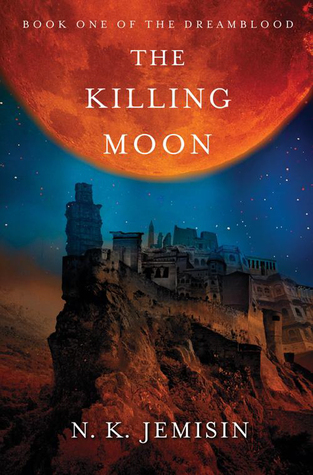
The Killing MoonI consider the annual Locus Awards to be one of the major genre prizes, right behind the Hugo and Nebula Awards.

Perhaps it’s because I’ve been a subscriber to Locus, the magazine of the Science Fiction and Fantasy field, for over 20 years, and have noticed how reliable the award is at ferreting out really important work year after year. Maybe it’s because Locus readers tend to be older, and more committed to the genre, than the average fan. Or maybe it’s just that I’m eligible to vote, and so I’m less grumpy about the results.

Whatever the reason, there’s no arguing the fact that the Locus Awards have highlighted some of the most important genre publications in the last 40 years, since they were first given out in 1971. If you’re a fantasy fan, it’s worth your time to pay attention to all the nominees.

The top five finalists in each category of the 2013 Locus Awards were announced by the Locus Science Fiction Foundation on Wednesday, May 8. The nominees are:

FANTASY NOVEL

  • The Killing Moon, N.K. Jemisin (Orbit)
  • The Drowning Girl, Caitlín R. Kiernan (Roc)
  • Glamour in Glass, Mary Robinette Kowal (Tor)
  • Hide Me Among the Graves, Tim Powers (Morrow)
  • The Apocalypse Codex, Charles Stross (Ace)

Read More Read More

Nalo Hopkinson’s Brown Girl in the Ring

Nalo Hopkinson’s Brown Girl in the Ring

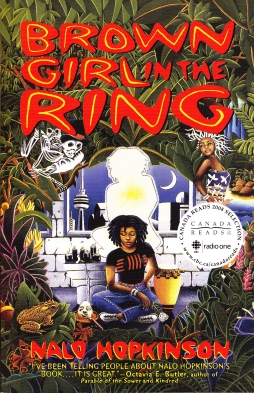
Brown Girl in the RingPublished in 1998, Nalo Hopkinson’s debut novel was Brown Girl in the Ring, the first winner of the Warner Aspect First Novel Contest. It went on to be shortlisted for the Philip K. Dick Award and the James Tiptree Junior Award, to win the Locus Award in the First Novel category, and to help Hopkinson (who had already published several short stories) win the John W. Campbell Award for Best New Writer. She’s gone on to write five more novels, along with two collections of short stories, as well as editing and co-editing several anthologies.
Born in Jamaica, Hopkinson has lived in Toronto since 1977, and a near-future version of that city is the background to Brown Girl in the Ring. In this dystopian imagining, the core of the city’s been abandoned by all levels of government. A young mother named Ti-Jeanne lives in the community that’s sprung up; she’s the granddaughter of one of the community’s leaders, Gros-Jeanne, a healer with apparently magical powers — and Ti-Jeanne herself has begun to see strange visions. When elements of the Ontario government reach out to a local boss, asking him to supply a human heart for an emergency organ transplant, both Jeannes become involved in the resulting violence.

The novel deserves the acclaim it got. On one level, it’s a strong adventure story with a fast-moving plot. But the book’s also notable for its language — specifically the dialogue, largely written in a Caribbean English. And for the story’s use of both science fiction and fantastic elements; as it works through a powerful family tragedy, played out in a dark future through the invocation of spirits and gods, it convincingly evokes the mythic.

Read More Read More

Why is it Always a Northern Barbarian?

Why is it Always a Northern Barbarian?

Taras BulbaMy mother was Spanish and my father was Polish, so there was a little north vs. south going on in my home all the time as I was growing up. My mum would encourage us to watch Zorro and El Cid, my dad was all for Taras Bulba and whoever else Yul Brynner was portraying that week on late night TV. When my mother would make remarks about the superiority of the Mediterranean culture, my father would remind her that the Spanish culture, at least, came mostly from the Moors, and that Rome fell, crushed beneath the heels of the – you guessed it – northern barbarians.

Aside to the historically educated: Yes, I know that isn’t exactly what happened. Otherwise, why did it take Gibbon seven volumes to write The Decline and Fall of the Roman Empire? I’m not talking history here, I’m talking popular (mis)conceptions.

Last week I took a look at the rise of the hero in popular culture – by which I meant not just among our genre-respecting selves, but with all those other people. This week I’d like to take a look at where heroes come from – or where we expect them to come from.

Read More Read More

The Unexpected Delights of Renner and Quist

The Unexpected Delights of Renner and Quist

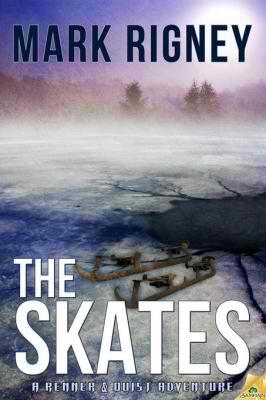
skatesSkate coverThis review wasn’t supposed to happen. I’m up in the Albian wastes in Alberta for my day job and the review that was scheduled to run this week fell through. John O’Neill came to my rescue with a short ebook just published by Samhain Publishing. The book is called The Skates and it is part of the series of Renner and Quist adventures written by Mark Rigney.

I’ll be honest up front in stating I had not heard of the publisher, author, or series before this time, although I’ve since realized Mr. Rigney is a fellow Black Gate blogger with several short stories to his credit already published by the online magazine. My main relief was that John allowed me to get a review done without missing a week and the ebook was short enough to read through in barely an hour.

Then I read the damn thing and my perception changed instantly.

I curse simply because I envy Rigney for his talents. This wasn’t a fun, enjoyable read so much as it was a story I instantly loved. I’m sure the folks at Samhain Publishing are nice people, but why hasn’t Rigney’s fiction been noticed by editors at major publishing houses? Yes, it is that good. I’m fairly familiar with the New Pulp world and Rigney can write circles around most of us as he seamlessly blurs the lines between genres and switches voice from one first person narrator to the other.

Read More Read More

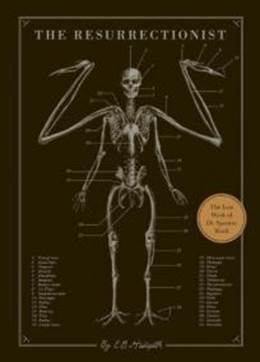
Goth Chick News Meets The Resurrectionist

Goth Chick News Meets The Resurrectionist

image006

“If they knew what horrible things were available to them they would take comfort in their own suffering.”
                                                                        -Dr. Spencer Black

I have been sitting here for long moments and I am still not sure where to start telling you about this.

It is art and science and masterful storytelling packaged and tied with a blood splattered ribbon. It is at once indescribably beautiful and nightmarishly horrifying. It is my latest obsession and my signed copy caused me to remove everything else from my coffee table to ensure no other object would detract from it.

It is The Resurrectionist, by EB Hudspeth.

Hudspeth is one of the people I couldn’t wait to introduce you to, whom I met at this year’s C2E2 event in Chicago.  When Nicole at Quirk Books got in touch, she described EB (he said we could all call him Eric) as “author, artist and creator of ‘Frankenstein meets Gray’s Anatomy.'”

Couple this with Quirk’s charter of publishing only 25 strikingly unconventional books every year, and this amounted to an opportunity there was no way I was going to miss.

Eric Hudspeth came in out of the rain (literally) to sit down and talk about The Resurrectionist during his visit to Chicago – the 1893 version of which figures prominently in his tale.

Read More Read More

New Treasures: A Matter of Blood by Sarah Pinborough

New Treasures: A Matter of Blood by Sarah Pinborough

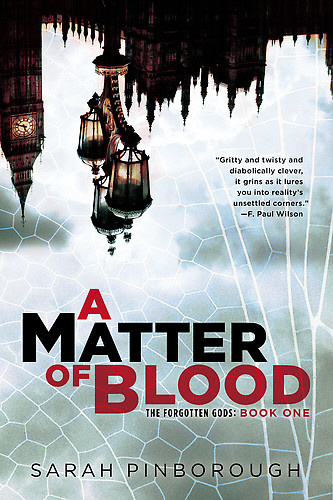
A Matter of BloodYou can’t judge a book by its cover.

But you know what you can judge by the cover? The cover. And since that’s an important part of a book, I guess you can make a successful partial judgment just by holding a book at arms length for a few seconds. Admit it — you do it all the time, I’m just giving you some air cover here.

Come to think of it, it’s a pity you can’t judge books by their covers. Because, man, that would save me a lot of reviewing time that I could put to good use playing Mass Effect.

Until that happy day, we’re stuck doing things the old fashioned way, with hours of bleary-eyed reading late into the night. Unless you’re like me, of course, picking through the weekly new arrivals until you find a cover that makes you say, “Whoa. That looks cool. I should tell people about it.”

Which brings us nicely to Sarah Pinborough’s new novel A Matter of Blood, the first volume of The Forgotten Gods trilogy. Which, if you haven’t guessed, has a great cover, with an upside-down London skyline and a cracked overlay that looks like reptilian skin.

And the book description sounds pretty intriguing too.

Read More Read More

Michaele Jordan Reviews After Death

Michaele Jordan Reviews After Death

After_Death_CoverAfter Death. . .
An Anthology of Dark and Speculative Fiction Stories Examining What May Occur After We Die
Edited by Eric J. Guignard
Dark Moon Books, an imprint of Stony Meadow Publishing, Largo FL (292 pp, $15.95, trade paperback, April 2013)
Reviewed by Michaele Jordan

As you can guess from the title, Eric J. Guignard has assembled an assortment of viewpoints about the afterlife. These thirty-four stories (illustrated by Audra Phillips) cover a surprising range, especially since the viewpoint most professed by science fiction fans is the least represented. Please do not interpret that remark as a criticism. There’s not a lot of story to tell in a story about nothing happening. Yet even the perception of the afterlife as nothingness is included with ‘The Last Moments Before Bed,’ in which Steve Rasnic Tem confronts the dreadful hole remaining after a loved one is gone.

These stories run the gamut from blissful to black; John Palisano’s ‘Forever’ anticipates a joyful reunion, while Kelly Dunn’s ‘Marvel at the Face of Forever’ is one of the darkest horror stories this reviewer has ever seen. Several authors contrast the Christian afterworld with the pagan, as in the Christian displacement of the Greek afterlife in Jonathan Shipley’s ‘Like a Bat out of Hell,’ or Valhalla’s continued rowdy intrusion into the Catholic middle ages as told by Christine Morgan in ‘A Feast of Meat and Mead.’

Read More Read More

Sean T. M. Stiennon Reviews Child of Fire

Sean T. M. Stiennon Reviews Child of Fire

Child of FireChild of Fire
Harry Connolly
Del Rey (357 pages, mass market first edition September 2009, $7.99)

When we first meet Ray Lily, he’s in unpleasant circumstances. He’s less than 48 hours out of prison, driving a junker van through a Seattle rainstorm, and serving as chauffer to a boss who a.) is a powerful sorcerer, b.) wants to see him dead at the first possible opportunity, and c.) is paying him a wage of zero dollars per hour. Ten minutes after we meet him, he’s watched a boy die in front of his parents by exploding into sorcerous flame and melting into a swarm of silver worms. And then he’s watched the boy’s parents immediately forget they ever had a son, and drive away only vaguely confused.

It only goes downhill from there.

Child of Fire is a dark book. Sometimes shockingly, disturbingly dark, as is apparent right from the opening. That said, it’s also hugely entertaining, with noir-styled prose, a likeable narrator, and one of the most imaginative and horrifying monstrous adversaries I’ve ever encountered in fiction of any medium.

Our hero, Ray Lily, narrates the book in first person, and he bears comparison to hardboiled heroes like Philip Marlowe and Archie Goodwin, as well as the fantasy genre’s own Harry Dresden. He’s not quite as, well, heroic as Harry, though.  He’s a criminal, recently out of a prison sentence that came at the tail end of a car-jacking career in L.A. county, and he still has a tendency to sort everyone he meets into two categories: victim and dominant.

But mysterious circumstances surrounding the death of his childhood friend have pulled him into the shadowy world of the Twenty Palaces, a league of sorcerers formed to protect the secrets of magic from outsiders and to hunt down the supernatural entities known only as “predators.” These are hungry creatures from an extra-dimensional world called the Empty Spaces, who exist in a constant state of hunger. When summoned to our world, they can offer terrible power in return for a chance to sate that hunger on humans.

Read More Read More

Penpal by Dathan Auerbach

Penpal by Dathan Auerbach

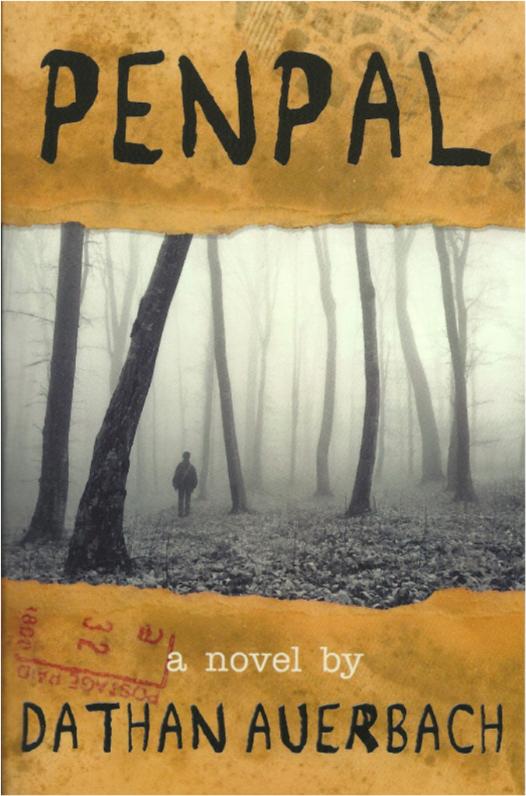
Penpal by Dathan AuerbachIt began in October 2011, when an anonymous poster on Reddit, going by the username 1000vultures, posted a creepy little short titled simply “Footsteps.” Over the following weeks, the fanbase for 1000vultures swelled as five more stories were posted. Eventually, Dathan Auerbach (the author’s “civilian” name) began the process of revising those six little pieces, connecting and expanding them until he had his first novel, Penpal. After a successful Kickstarter campaign (where he made more than ten times his initial goal), he was ready to publish the thing.

Honestly, I picked up all of that after the fact. I’d never frequented Reddit’s No Sleep page, nor did I catch the Kickstarter campaign when it was going on. I just heard about a creepy little book by a new name on the horror scene and thought I’d check it out.

The book is broken into six parts, each set in a different point in the narrator’s childhood. Taken together, the stories come away like snapshots of one great horror, taken from different angles. The first story, “Footsteps,” evokes the universal fear felt by every child at least once: the fear of being lost. “Balloons” is the story that lays out the groundwork for what is to come. “Boxes” takes the story out of being strictly psychological horror and into something more physically threatening. “Maps” is the point when we are shown that the mystery might truly be something unknowable. “Screens” is the point when the author lets some of his own influences show. And the last story, “Friends,” wraps up the cycle with a couple surprises and a revelation of what truly is the heart of the story.

To be sure, this is the author’s first novel and there are some learning curve mistakes made in the narrative. The only problem I really had with the story was a sort of floating timeline. Ordinarily, it shouldn’t matter in what specific year a story takes place, but cell phones and the Internet seems to float in and out of existence. (Seriously, how do you not know how to find somebody’s phone number?) Otherwise, it’s a creepy little novel from a rising talent who hopefully produces many more.

You can pick up Penpal in print ($9.99) or as an e-book ($4.99) and learn more about the imprint 1000 Vultures (including how Auerbach came up with the name) at his website.