Browsed by
Category: Books

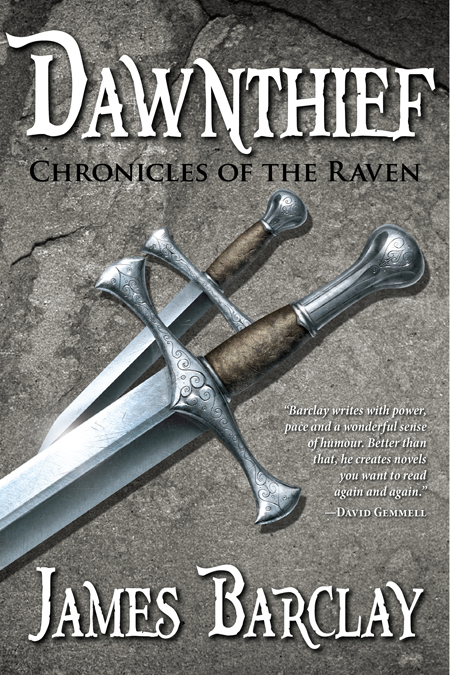
Some of the Best Battles in Recent Memory: A Review of Dawnthief
Some of the Best Battles in Recent Memory: A Review of Dawnthief

Dawnthief Pyr-smallDawnthief (Chronicles of the Raven 1)
By James Barclay
Pyr (403 pages, $17 September 22, 2009)

Balia, the setting of Dawnthief, isn’t a very nice place, not at all. Rape, murder, betrayal, lust, and just plain old human cruelty, yep it’s all here by the bucket-load. But as interesting as the world is, it can’t even compare to the people who populate it.

Dawnthief follows a group of mercenaries called ‘The Raven’ as they are employed by one of the four magic colleges, Xetesk, to find Dawnthief, a spell apparently designed to end the world and the only thing capable of destroying the ‘wytch lords’: all powerful beings bent on destroying the world, who for no particular reason, have decided to wake up again, and, for no particular reason, destroy the world.

Needless to say, our intrepid adventurers set out to stop them, accompanied all the while by Denser, a mage from Xetesk, sent to oversee the operation, cast Dawnthief and cause a lot of trouble for The Raven. Now in order to do what they want to do, they must find four catalysts, which are basically the things needed to cast a spell. These are located across Balia and must be found if they are to have any chance of success.

The plot is the book’s weakest point; it all feels a bit clichéd, a bit tired and, to be frank, a bit boring. The catalysts serve only to ferry the team from one battle to the next, all they do is give the group an excuse to move from point A to point B and set up the next fight, or puzzle.

It’s not exactly original either, is it? Just another “save the world from the dark lord” story, another Lord of the Rings mimic; tried and true, but contrived and unoriginal. I mean come on, care a little bit.
Read More Read More

Sean McLachlan’s The Quintessence of Absence Now Available as a Free eBook

Sean McLachlan’s The Quintessence of Absence Now Available as a Free eBook

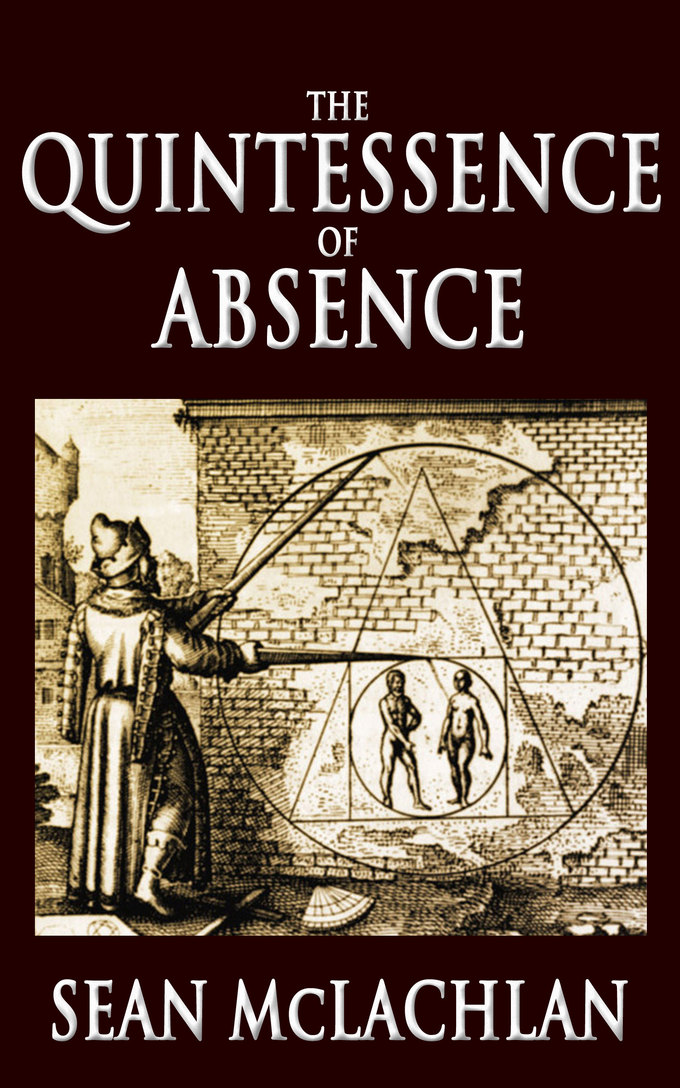
The Quintessence of Absence-smallIt’s been a good day for free fiction.

We’ve heard from BG blogger Sean McLachlan that his original noir fantasy novella, “The Quintessence of Absence,” is now available as a free ebook at Smashwords.

Can a drug-addicted sorcerer sober up long enough to save a kidnapped girl and his own Duchy?

In an alternate 18th century Germany where magic is real and paganism never died, Lothar is in the bonds of nepenthe, a powerful drug that gives him ecstatic visions. It has also taken his job, his friends, and his self-respect. Now his old employer has rehired Lothar to find the man’s daughter, who is in the grip of her own addiction to nepenthe.

As Lothar digs deeper into the girl’s disappearance, he uncovers a plot that threatens the entire Duchy of Anhalt, and finds the only way to stop it is to face his own weakness.

“The Quintessence of Absence” was originally published right here at Black Gate. It’s a terrific dark fantasy novella, in which a young wizard in the grip of addiction discovers his drug of choice is at the center of a sorcerous conspiracy in an alternate 18th century Germany.

Sean McLachlan is the author of the collection The Night the Nazis Came to Dinner, and Other Dark Tales; A Fine Likeness, a horror novel set in Civil War Missouri; and numerous history books on the Middle Ages, the Civil War, and the Wild West. He is an occasional Black Gate blogger; his most recent piece for us was “Spanish Castle Magic.”

“The Quintessence of Absence” is a 25,000-word novella, available in a variety of digital formats. Get it for free at Smashwords.

See the complete catalog of Black Gate Online Fiction here.

Get Five Years of Fiction from Tor.com — For Free!

Get Five Years of Fiction from Tor.com — For Free!

Tor The StoriesTo celebrate their fifth anniversary, Tor.com is releasing an anthology crammed with all the original fiction they’ve published since their launch.

It’s a hugely impressive list — over 150 short stories. Authors include Charles Stross, John Scalzi, Cory Doctorow, Steven Gould, Elizabeth Bear, Terry Bisson, Jay Lake, Brandon Sanderson, Jeff VanderMeer, Jo Walton, Ken Scholes, Rachel Swirsky, Harry Turtledove, Michael Bishop and Steven Utley, and Kij Johnson. And that’s just in the first twelve months!

Short fiction from Tor.com has won virtually every major award in SFF. Want examples? “Ponies” by Kij Johnson (Jan 2010) won the Nebula and Charlie Jane Anders’s novelette “Six Months, Three Days” (June 2011) won the Hugo. There are numerous Nebula nominees among the collected stories as well, including “The Finite Canvas” by Brit Mandelo (Dec 2012), “Swift, Brutal Retaliation” by Meghan McCarron (Jan 2012), and two novelettes by Rachel Swirsky: “Portrait of Lisane da Patagnia” (Aug 2012) and “A Memory of Wind” (Nov 2009).

There’s no shortage of Hugo nominees in this lot either, including John Scalzi’s “Shadow War of the Night Dragons: Book One: The Dead City: Prologue” (April 2011), “Ponies” by Kij Johnson (Nov 2010), “Eros, Philia, Agape” by Rachel Swirsky (Mar 2009), and “Overtime” by Charles Stross (Dec 2009).

In short, this is one of the most impressive and monumental anthologies to come along in years. And Tor.com is giving it away absolutely free. We’re not worthy, but we won’t let that stop us.

You can see the complete list of fiction Tor.com has published in the last five year at their Original Fiction index. And just to prove that they’re not resting on their laurels, they’ve announced five new stories will be published tomorrow, by Carrie Vaughn, Nancy Kress, Lavie Tidhar, Ben Burgis, and Tina Connolly.

Fiction for Tor.com is acquired and edited by Liz Szabla, Ann VanderMeer, Susan Dobinick, Ellen Datlow, Noa Wheeler, George R. R. Martin, Paul Stevens, Calista Brill, Patrick Nielsen Hayden, Brendan Deneen, Janine O’Malley, and a talented community of Tor editors and their pals.

Get the free book here.

New Treasures: Brilliance by Marcus Sakey

New Treasures: Brilliance by Marcus Sakey

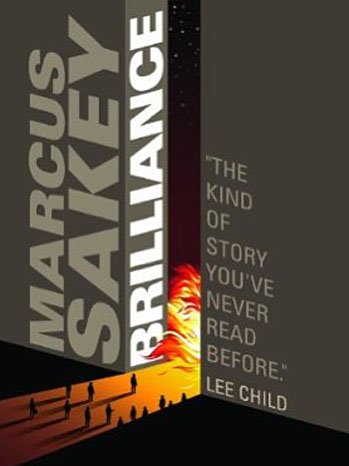
Brilliance Marcus Sakey-smallI think of Marcus Sakey chiefly as a thriller writer. Mostly because he is.

Publications like The Chicago Sun-Times call him “a modern master of suspense” and he gets blurbed by fellow thriller writers like Michael Connell (who called him “one of our best storytellers.”) His previous efforts, including The Two Deaths of Daniel Hayes and Good People, were contemporary suspense novels. Sounds like a thriller writer to me.

So at first I didn’t pay much attention to his newest book, Brilliance. My mistake. Set in an alternate reality that diverged from ours in 1980 when 1% of births became people with extraordinary gifts, the novel follows federal agent Nick Cooper, born with the talent to hunt the world’s worst criminals, on the trail of a brilliant whose talent could lead to unheard-of destruction.

In Wyoming, a little girl reads people’s darkest secrets by the way they fold their arms. In New York, a man sensing patterns in the stock market racks up $300 billion. In Chicago, a woman can go invisible by being where no one is looking. They’re called “brilliants,” and since 1980, one percent of people have been born this way. Nick Cooper is among them; a federal agent, Cooper has gifts rendering him exceptional at hunting terrorists. His latest target may be the most dangerous man alive, a brilliant drenched in blood and intent on provoking civil war. But to catch him, Cooper will have to violate everything he believes in — and betray his own kind.

For those of you who care about such things, the novel has already been optioned by Legendary Pictures (makers of 300, Watchmen, The Dark Knight, Man of Steel, and this summer’s best movie, Pacific Rim). For me, the premise alone is intriguing enough to get my attention.

Brilliance will be published tomorrow by Thomas & Mercer, a division of Amazon.com that focuses on mystery and thrillers. It is 452 pages, priced at $14.99 in trade paperback. The Kindle edition lists at $9.99, but is currently just $3.99 — check it out.

See all of our recent New Treasures here.

J.K. Rowling Outed as the Author of The Cuckoo’s Calling

J.K. Rowling Outed as the Author of The Cuckoo’s Calling

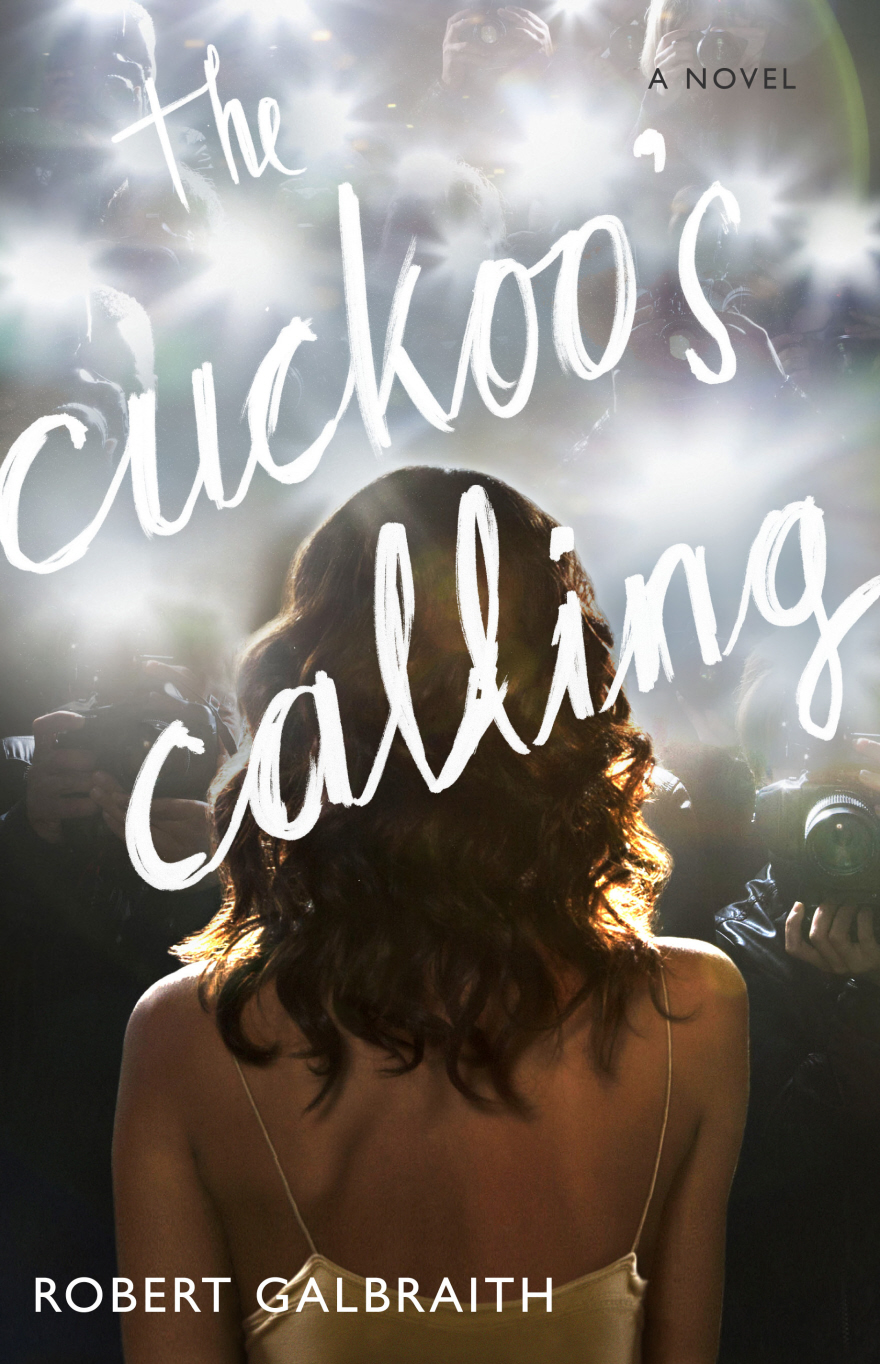
The Cuckoos CallingThere’s been a huge surge of interest in Robert Galbraith’s debut crime novel The Cuckoo’s Calling today.

That’s because “Robert Galbraith” was revealed late yesterday as Harry Potter author J.K. Rowling.

The book’s publisher has been touting the book as a “classic crime novel in the tradition of P.D. James and Ruth Rendell.” Up until yesterday, it had sold around 1,500 copies in hardback. But in the hours since its author was revealed, it has hit the bestseller list. Amazon is currently out of stock and listing it as shipping in 10 to 14 days (Barnes & Noble still has it in stock online). If you want a first edition hardcover, you better move fast.

The Sunday Times has reported that Rowling has completed a second novel featuring the same detective, Cormoran Strike. It is due next year. Rowling’s first novel for adults, The Casual Vacancy, was published last year.

After losing his leg to a land mine in Afghanistan, Cormoran Strike is barely scraping by as a private investigator. Strike is down to one client, and creditors are calling. He has also just broken up with his longtime girlfriend and is living in his office.

Then John Bristow walks through his door with an amazing story: His sister, the legendary supermodel Lula Landry, known to her friends as the Cuckoo, famously fell to her death a few months earlier. The police ruled it a suicide, but John refuses to believe that. The case plunges Strike into the world of multimillionaire beauties, rock-star boyfriends, and desperate designers, and it introduces him to every variety of pleasure, enticement, seduction, and delusion known to man.

You may think you know detectives, but you’ve never met one quite like Strike. You may think you know about the wealthy and famous, but you’ve never seen them under an investigation like this.

The Cuckoo’s Calling was published April 30 by Mulholland Books. It is 464 pages, priced at $26 for the hardcover (if you can find one). You’ll have better luck with the digital edition, priced at $12.99.

Virgil Burnett’s Towers at the Edge of a World

Virgil Burnett’s Towers at the Edge of a World

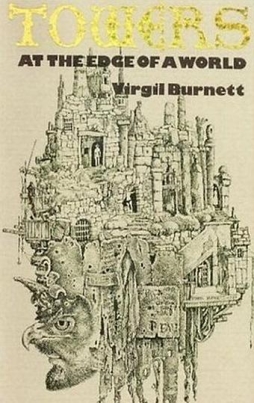
Towers at the Edge of a WorldOne of the distinct pleasures of book fairs and used book sales is finding an intriguing book you’ve never heard of. A greater and related pleasure comes when that book turns out to be quite good. Then, in reaction to that, there’s a melancholy that sets in from the fact that a worthwhile book is largely unknown. I’d like to think I can take the edge off that last sense by writing about some of these books here. So, given all that, a few words about Virgil Burnett’s Towers at the Edge of a World:
First published in 1980 by St. Martin’s Press and republished in 1983 by The Porcupine’s Quill with illustrations by the author, it’s a collection of 15 short stories and an introduction, all set in an imaginary French town in times ranging from the Dark Ages through to the near-present. It’s tied together by imagery and theme more than plot, both as a whole and in the individual stories. There’s little dialogue or drama, though more as the book goes on — it could be seen to be replicating the (supposed) historical development of a sense of character.

Born in Kansas in 1928, Burnett passed away last year. As well as being an author, teacher, and acquaintance of Stein and Joyce, he was an artist and art historian whose work included cover illustrations for Penguin (I’ve included examples of his art that I’ve found online alongside this article). From 1974 to his death, he lived in Stratford, Ontario, where he taught Fine Arts at the University of Waterloo. In addition to Towers, he wrote Skiamachia: A Fantasy (1982), A Comedy of Eros (1984), a collection of short stories called Farewell Tour (1986), and Scarbo Edge: A Romaunt (2008). He co-wrote two mystery novels with Bruce Barber under the name Bevan Underhill, The Bloody Man (1993) and The Running Girl (1994), and with Barber co-edited the 2004 anthology, Habaneras, which he published through his own Pasdeloup Press. In 2010, he published an essay on drawing, Object and Emblem. In 2003, a translation of his play Leonora was published in French; I can’t find a record of an English publication.

Read More Read More

Challenging the Classics: Questioning the Immutable Hallmarks of Genre

Challenging the Classics: Questioning the Immutable Hallmarks of Genre

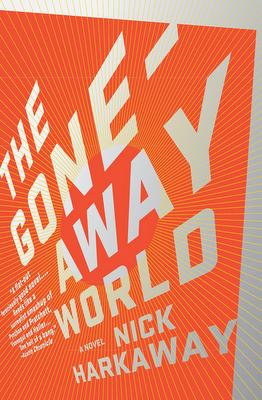
The Gone-Away WorldEvery once in a while, usually in the midst of conversations about the history of SFF or arguments about its greatest works and writers, I’ll guiltily remember how few of the Classics I’ve read, and make rash promises to remedy the situation.

I know Orson Scott Card is a raving homophobe, I’ll think to myself, but I really should read Ender’s Game. In a fit of mad optimism, I’ll add various works by Isaac Asimov and William Gibson to my Amazon wishlist, only to delete them the next time I’ve got money to spend, because I just can’t muster up the interest. Friends have lent me copies of Jack Vance, Vernor Vinge, and Gene Wolfe, and each time, despite my best intentions, the books are left to molder by the bedside in favor of something by Catherynne M. Valente or Nnedi Okorafor.

It’s not like I have any moral objection to books by straight white male writers – after all, I’ve been compulsively reading and rereading both Discworld and A Song of Ice and Fire for over a decade, I’m an absolute sucker for China Mieville and Nick Harkaway’s The Gone-Away World will forever be one of my all-time favorite novels (and that’s just for starters).

But with the genre developing in so many different directions at once, it feels needlessly regressive to pry myself away from the latest book by Elizabeth Bear or N. K. Jemisin and instead try to read, out of duty rather than passion, some decades-old novel that’s already been analysed, reviewed, and criticised ad nauseum.

Which doesn’t make them bad novels, or mean that there’s anything wrong with loving, critiquing, discovering and talking about them now. They’re just not for me, is all, and most of the time, I can live with that. But then I’ll read yet another article complaining about newcomers to SFF reinventing the wheel for lack of familiarity with the Classics, or hear someone bemoaning the fact that fantasy Isn’t What It Used To Be, and part of me starts to doubt my own credentials. Can I really call myself a fan of science fiction if I’ve never read Dune? If I let slip that I never made it past book one of The Wheel of Time, are the Geek Police going to come along and revoke my right to talk about epic fantasy on the Internet?

If I’ve never read the Classics, then how did I get into SFF in the first place?

Read More Read More

New Treasures: Lonely Souls edited by Gordon van Gelder

New Treasures: Lonely Souls edited by Gordon van Gelder

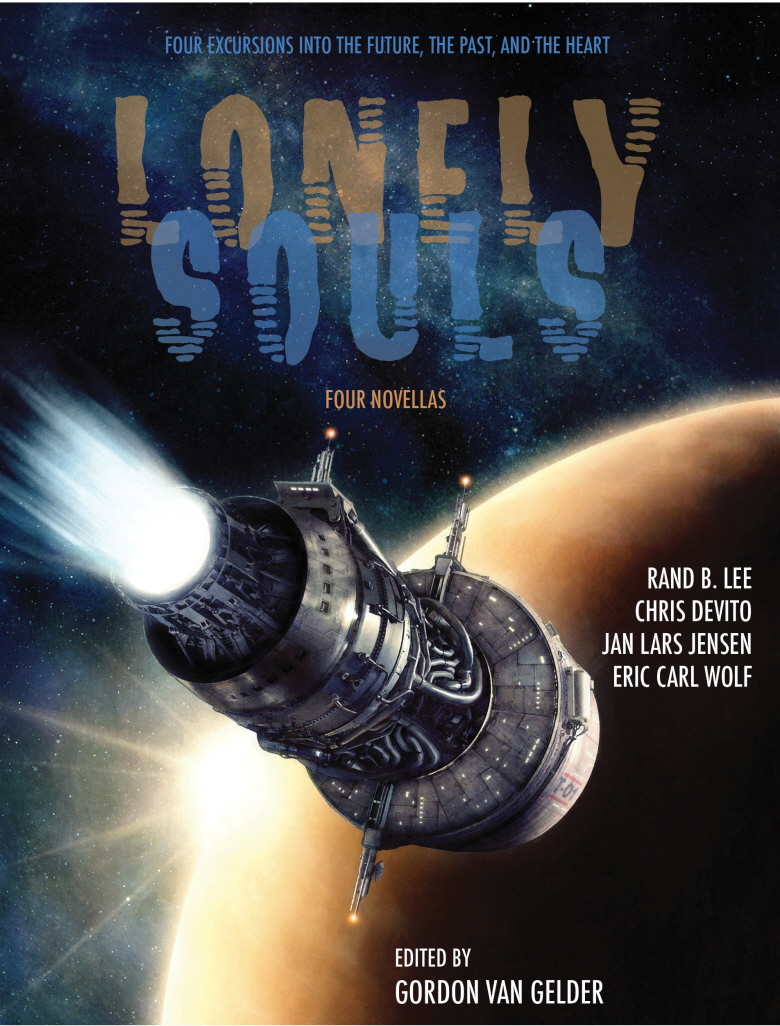
Lonely SoulsI love novellas, and I think they’re the perfect length for SF and fantasy. Long enough to really explore characters and setting, short enough to demand ruthless pacing — and to read in one sitting. I bought as many as I could fit for Black Gate (a few more than I could fit, truthfully), and writers were always grateful. Time and again I was told that the novella was a hard sell these days… only a handful of markets would take them.

One editor who does regularly feature novellas is Gordon van Gelder, for The Magazine of Fantasy & Science Fiction. Even though each issue is a massive 256 pages, however, he’s still limited in how many he can fit. So I was pleased to see the recent appearance of Lonely Souls, an anthology of four novellas just published by Gordon’s Spilogale press.

Many science fiction writers view the novella as the optimal length-short enough to be read in one sitting, but long enough to build a world. And what better world can we build and examine, than the landscape of our lonely souls? Gordon Van Gelder has brought together a set of four novellas that dig deeper into the recesses of our beings.

In “Goliath of Gath,” Jan Lars Jensen offers us a look at figure of legend not usually considered: Goliath. One of the last of his people, the giants, in a changing social and political landscape. A pacifist manipulated into death with the promise of peace. A man whose story is rarely examined in favor of David, the plucky hero of the Bible.

Then Eric Carl Wolf brings us to a grassy, cowboy-country, beef-herding planet as barren as the Old West in “Demands of Ghosts,” where we meet a former assassin seeking anonymity and redemption.

In “One Day at the Zoo” by Rand B. Lee a young girl with special powers is “saved” from being experimented on by the closest person to her, her mother, who seeks instead to destroy her.

In a strange, violent, debauched future, an assassin confronts a new technology that enables immortality, destroying the value of death, and he begins a quest for oblivion, so goes “Final Kill” by Chris DeVito.

Spilogale also publishes digital versions of Fourth Planet from the Sun (covered here) and F&SF. We covered the July/August issue of F&SF here.

Lonely Souls is currently available in electronic format. It is 267 pages, priced at $5.99. There is currently no print edition. Learn more here. Check it out and support great short fiction at a great price!

You’ve Got Crime in My Fantasy Novel. You’ve Got Fantasy . . .

You’ve Got Crime in My Fantasy Novel. You’ve Got Fantasy . . .

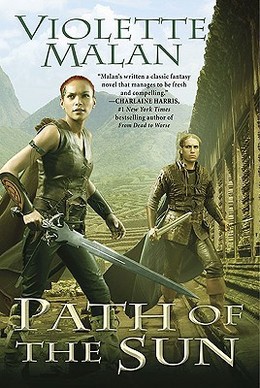
PathSo, I decided to write a serial-killer book. All my friends were.

Perhaps I should explain. A lot of my friends are crime and mystery writers, and with them, after a few glasses of wine, the talk always seems to turn to serial-killer books. Who’s writing one. Who wants to. Who’s never gonna, no matter what. How publishers always push for one. It’s like serial killers are the new black.

Inevitably someone turns to me and says “Well, you don’t have to worry, Violette. It’s not like you could write a serial-killer fantasy novel.” Well, as you can imagine, I regarded those as fighting words – and now you know the origin of my novel, Path of the Sun.

Of course, that friend was echoing the John W. Campbell opinion on science-fiction mysteries that I mentioned a few weeks ago. According to Campbell, it couldn’t be done. Here in the community, experience has shown us that Campbell was wrong. But the attitude among non-fantasy or SF readers is still pretty much the same as his.

The trick, as most of you know, is to solve the crime – sometimes after figuring out how to commit the crime – within the parameters of our created worlds. Sometimes, we can even create crimes our pure-mystery-loving friends have never even thought of. Any common thief can steal money, the Fantasy or SF thief can steal your soul. Or a few hours of time out of your life. Or, perhaps, the best time of your life.

But let me get back to my serial killer.

Read More Read More

Goth Chick News: Stoker’s Manuscript by Royce Prouty

Goth Chick News: Stoker’s Manuscript by Royce Prouty

image002Tell me a good story and I’ll follow you anywhere.

This is what I mean at least, when I say “willing suspension of disbelief.” It doesn’t imply your narrative has to be perfect, with every “T” crossed and every “I” dotted. Instead it implies that close is good enough, if you tell me a tale sufficiently riveting to distract me from the details you might have missed.

Case in point: World War Z the movie.

I recently read a review that outlined three major flaws in the plot; specifically, things the audience would need to get over in order to enjoy the movie. Having read the book, I was prepared to not get over any of it, and suffer through the potential cinematic bastardization just so I could tell you not to.

Instead, twenty minutes in I was utterly willing to forget why anyone would be the least bit interested in Gerry’s (Brad Pitt) survival considering he was neither a scientist nor a doctor, and was at best a disenfranchised United Nations worker of some kind. I just let it all go while watching a horde of manic zombies crawl over each other by the thousands to scale an insanely high wall and eat the inhabitants of Jerusalem.

Just tell me a good story and I’m right there with you…

And that is why I feel particularly abused when a good story stretches my disbelief to the breaking point, utterly diverting me from the tale and making it impossible for me not to say, “Huh…?”

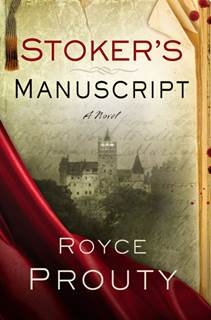
Which brings us (finally) to Royce Prouty’s freshman outing, Stoker’s Manuscript.

Read More Read More