Browsed by
Category: Books

John DeNardo’s 2015 Science-Fiction, Fantasy, and Horror Holiday Gift Guide
John DeNardo’s 2015 Science-Fiction, Fantasy, and Horror Holiday Gift Guide

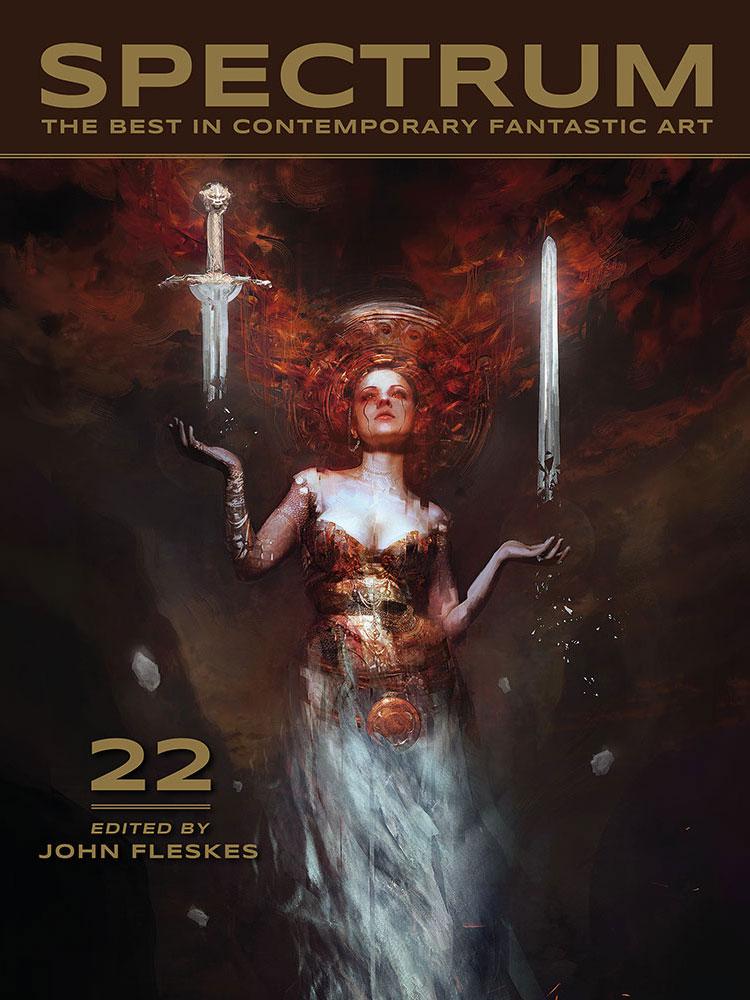
Spectrum 22-smallWell, Christmas is over, the gifts are (mostly) unwrapped and, barring that one uncle who always seems to be traveling on Christmas, all the presents have been exchanged. Which means it’s finally safe to look at gift-giving guides again (I don’t know about you, but all the best ones seem to pop up just as I finish my shopping.) After all, you need some suggestions on what to spend those gift certificates on, right?

Perhaps the best guide I found this year was John DeNardo’s 2015 Science-Fiction, Fantasy, and Horror Holiday Gift Guide, published in two parts over at Kirkus Reviews. What makes it so cool? It’s packed with deluxe comics, Star Trek and Stars Wars books, cool merchandise, and lots more. Here’s his suggestions for how to spend on the art lover in your life.

The go-to gift for your visually oriented loved ones is an art book. Science fiction and fantasy fans would adore Spectrum 22: The Best in Contemporary Fantastic Art edited by John Fleskes. Its 300 pages are jam-packed with an amazingly diverse selection of art, especially considering that they are all spectacular. It’s is a book you’ll pick up again and again. Or maybe your giftee leans toward the creepy? The Art of Horror: An Illustrated History by Stephen Jones is a visual feast aimed at lovers of horror. It contains an endlessly impressive selection of horror art since the late 19th century. Every page deserves multiple visits.

John has so many ideas, he had to split his list into two parts.
Read More Read More

Future Treasures: Midnight Taxi Tango by Daniel José Older

Future Treasures: Midnight Taxi Tango by Daniel José Older

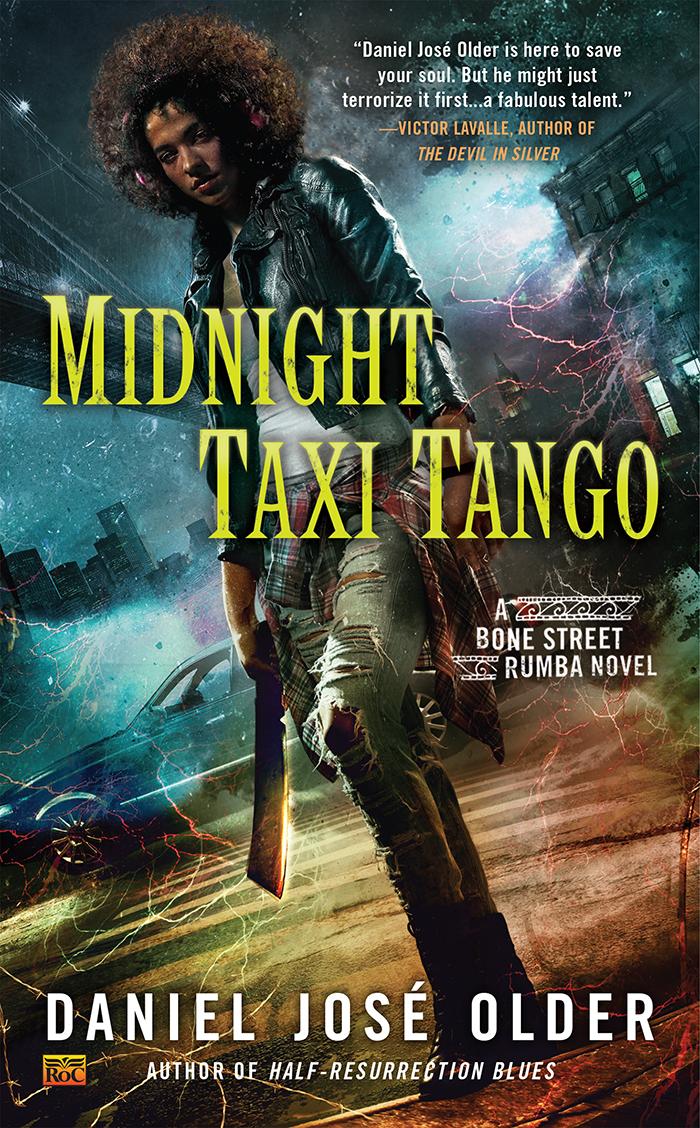
Midnight Taxi Tango-smallDaniel José Older’s first Bone Street Rumba novel, Half-Resurrection Blues, was one of the most acclaimed novels of the year, selected as one of the Best Fantasy Books of 2015 by BuzzFeed, Barnes & Noble, and other fine establishments.

The second in the series, Midnight Taxi Tango, will be released in paperback next month. If you’re a regular reader at Tor.com, you’ve probably already sampled it, as portions were originally published there as three original short stories: “Anyway: Angie,” “Kia and Gio,” and “Ginga.”

The streets of New York are hungry tonight…

Carlos Delacruz straddles the line between the living and the not-so alive. As an agent for the Council of the Dead, he eliminates New York’s ghostlier problems. This time it’s a string of gruesome paranormal accidents in Brooklyn’s Von King Park that has already taken the lives of several locals — and is bound to take more.

The incidents in the park have put Kia on edge. When she first met Carlos, he was the weird guy who came to Baba Eddie’s botánica, where she worked. But the closer they’ve gotten, the more she’s seeing the world from Carlos’s point of view. In fact, she’s starting to see ghosts. And the situation is far more sinister than that — because whatever is bringing out the dead, it’s only just getting started.

Midnight Taxi Tango will be published by Roc on January 5, 2016. It is 322 pages, priced at $7.99 for both the paperback and digital versions. Sadly, the gorgeous cover art is uncredited.

Read the first chapter at Tor.com.

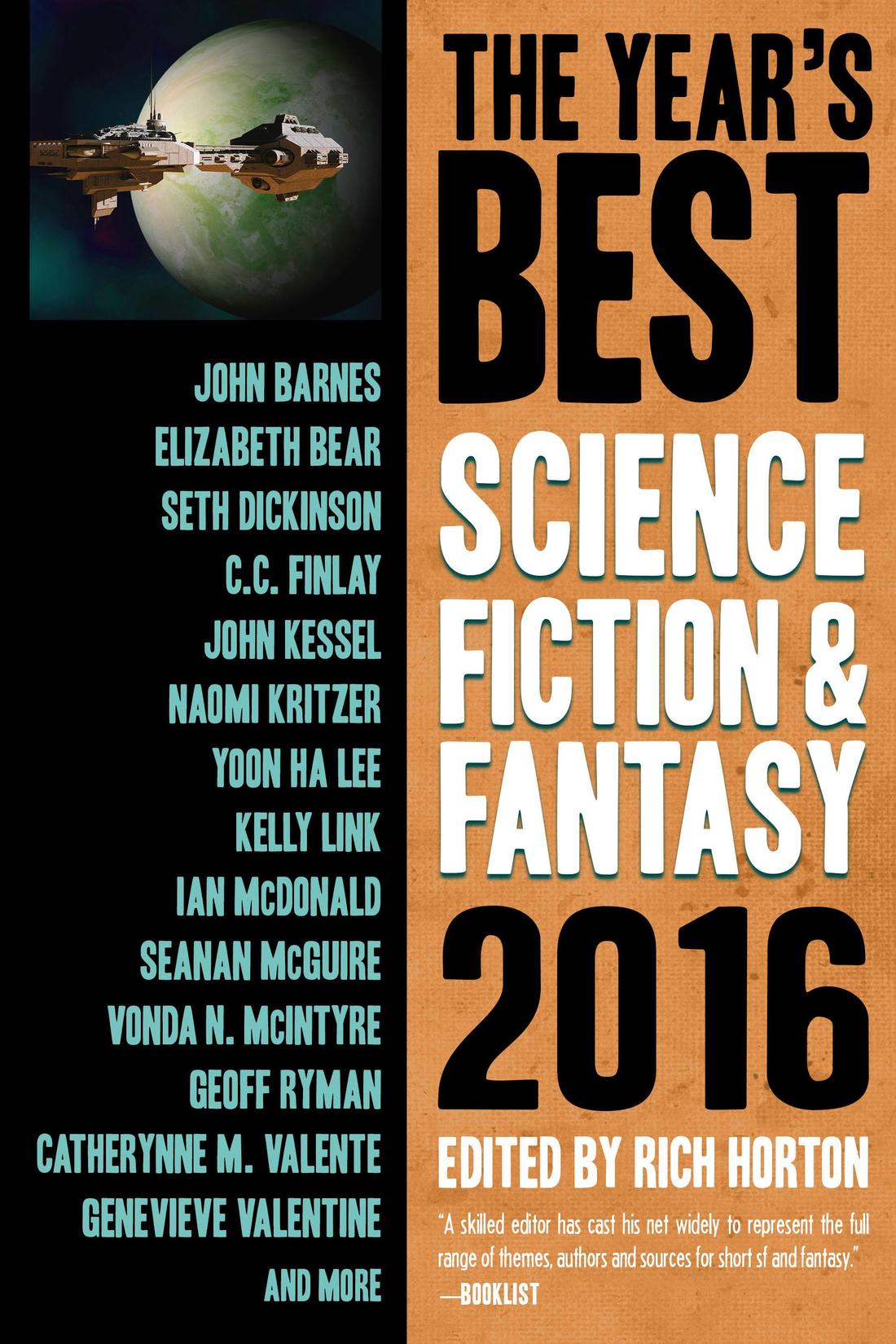
The Cover and TOC for Rich Horton’s The Year’s Best Science Fiction and Fantasy 2016

The Cover and TOC for Rich Horton’s The Year’s Best Science Fiction and Fantasy 2016

The Years Best Science Fiction and Fantasy 2016Ten years ago Rich Horton, who’d already published several highly detailed survey articles in the print edition of Black Gate (including “Building the Fantasy Canon: the Classic Anthologies of Genre Fantasy” and “The Big Little SF Magazines of the 1970s”) wrote the first installment of what was to become a highly ambitious series: Rich Horton’s Virtual Best of the Year.

Rich surveyed virtually every piece of short fiction published in the genre in 2005 (an astounding 9.5+ million words), and compiled a list of the best, and we published it here at Black Gate. He repeated that feat in 2006 and 2007, and his reports on the field became more in-depth and insightful each year.

In 2006, Rich also began publishing two anthologies with Prime Books: Fantasy: The Best of the Year and Science Fiction: The Best of the Year. In 2009 those books merged into one massive volume, The Year’s Best Science Fiction & Fantasy, which quickly became one of the most respected and acclaimed anthology series in our industry. It has been published every year since.

Last week Prime Books released the cover of the 2016 edition (at right, click for bigger version), the eighth volume in the series, alongside the Table of Contents. This one contains fiction from C.S.E. Cooney, Kelly Link, Vonda M. McIntyre, Catherynne M. Valente, Naomi Kritzer, Seanan McGuire, Chaz Brenchley, Elizabeth Bear, Ian McDonald, Geoff Ryman, Genevieve Valentine, and many others.

Here’s the complete TOC.

Read More Read More

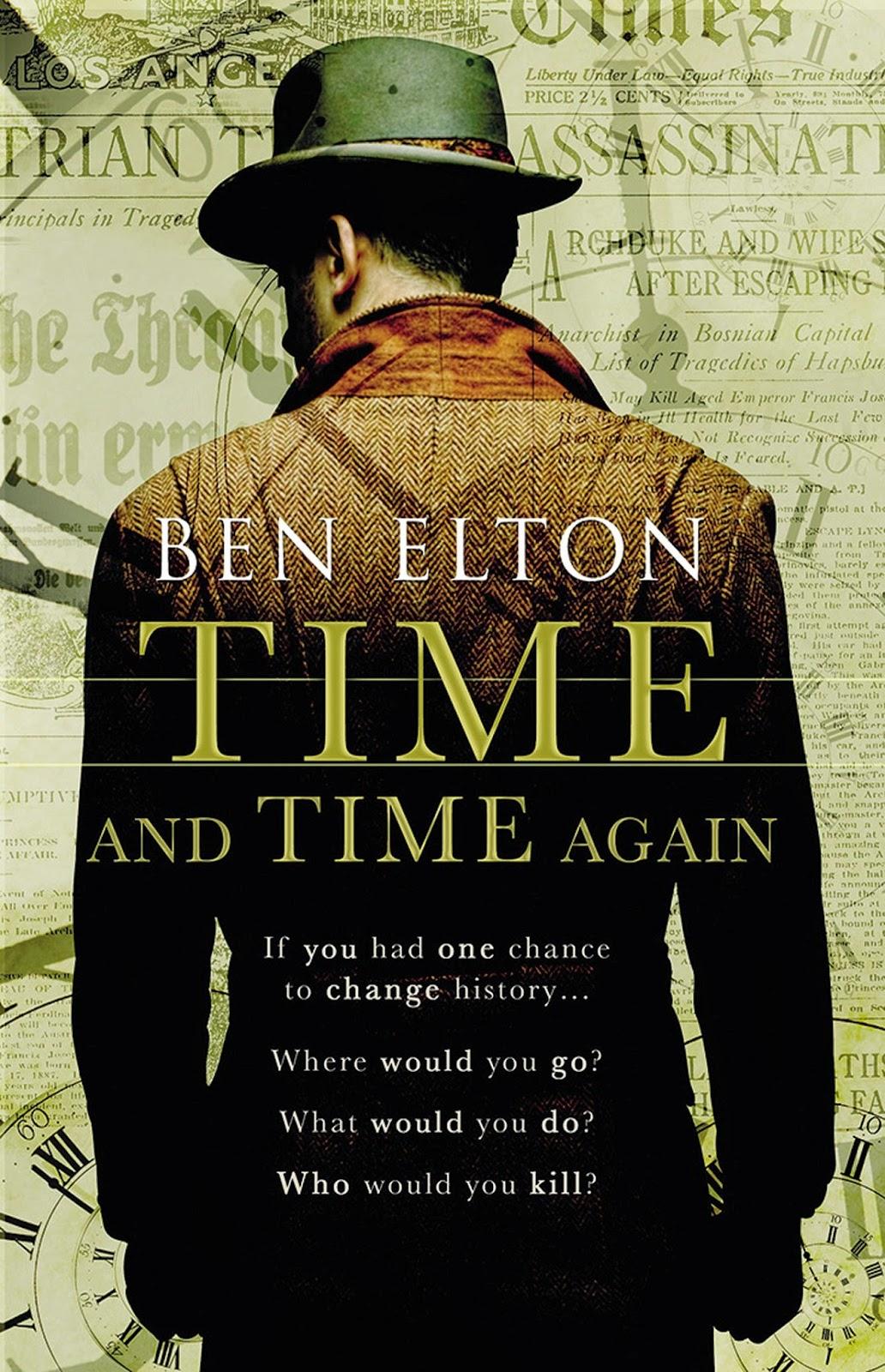
New Treasures: Time and Time Again by Ben Elton

New Treasures: Time and Time Again by Ben Elton

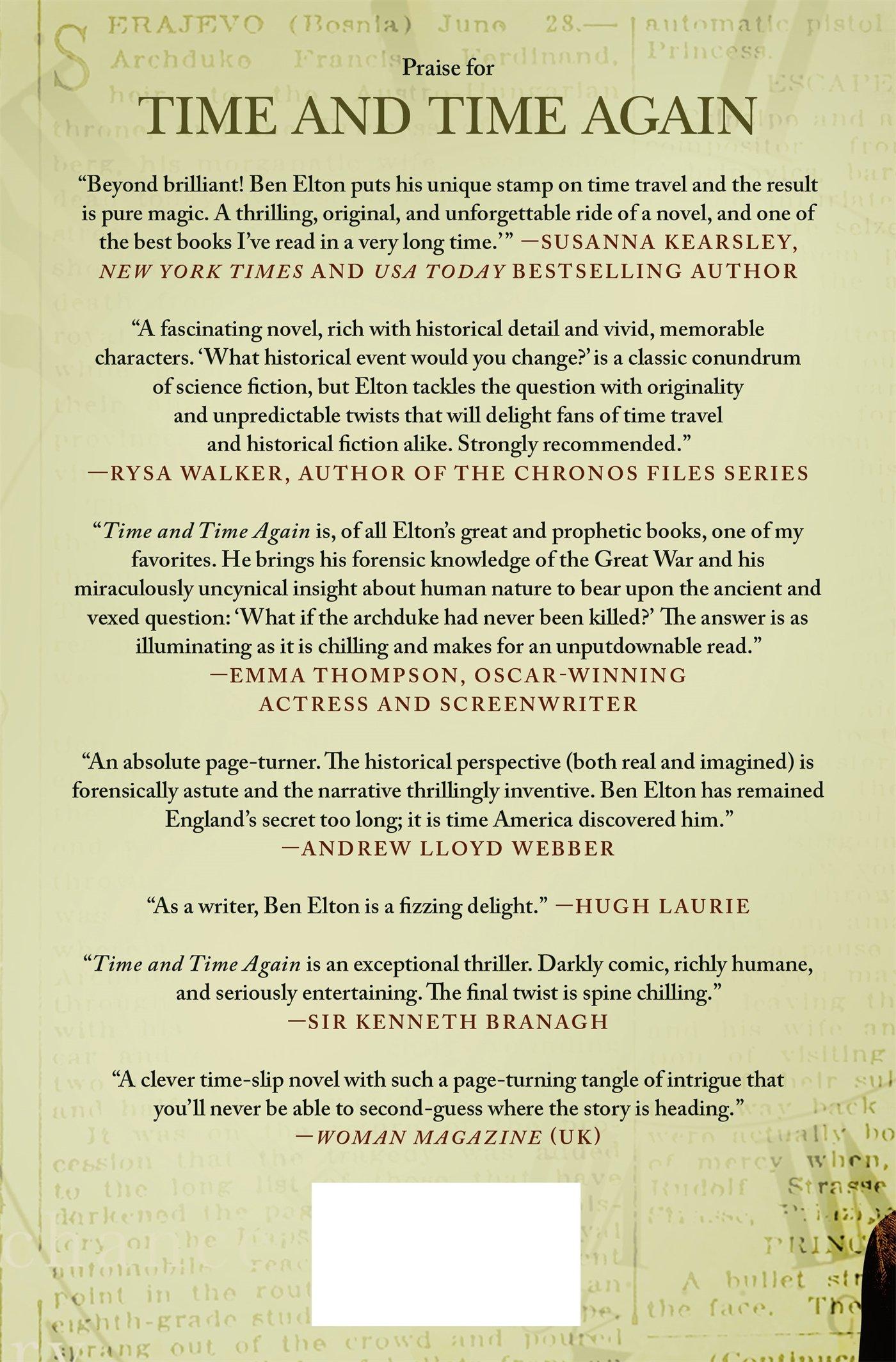
Time and Time Again Ben Elton-small Time and Time Again Ben Elton-back-small

Ben Elton has written fourteen international bestsellers, including Dead Famous and Two Brothers. His latest novel is a time-travel mystery which Sir Kenneth Branagh calls “An exceptional thriller. Darkly comic, richly humane, and seriously entertaining. The final twist is spine chilling.” It was released in hardcover on Tuesday.

It’s the first of June 1914 and Hugh Stanton, ex-soldier and celebrated adventurer is quite literally the loneliest man on earth. No one he has ever known or loved has been born yet. Perhaps now they never will be.

Stanton knows that a great and terrible war is coming. A collective suicidal madness that will destroy European civilization and bring misery to millions in the century to come. He knows this because, for him, that century is already history.

Somehow he must change that history. He must prevent the war. A war that will begin with a single bullet. But can a single bullet truly corrupt an entire century? And, if so, could another single bullet save it?

Time and Time Again was published by Thomas Dunne Books on December 22, 2015. It is 387 pages, priced at $26.99 in hardcover and $12.99 in digital format. The cover was designed by Mulcahey & Claire Ward/TW. Click on the images above for bigger versions.

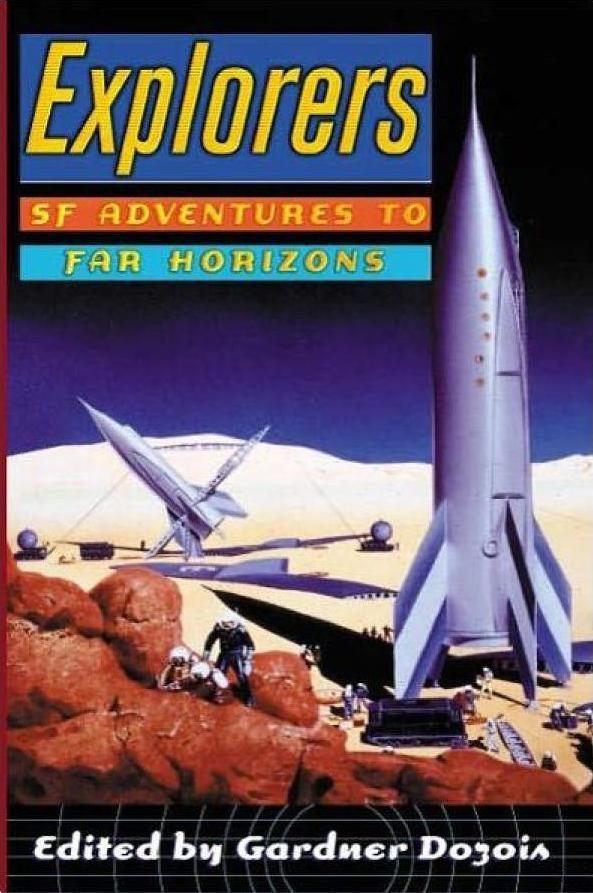
Vintage Treasures: Explorers and The Furthest Horizon, edited by Gardner Dozois

Vintage Treasures: Explorers and The Furthest Horizon, edited by Gardner Dozois

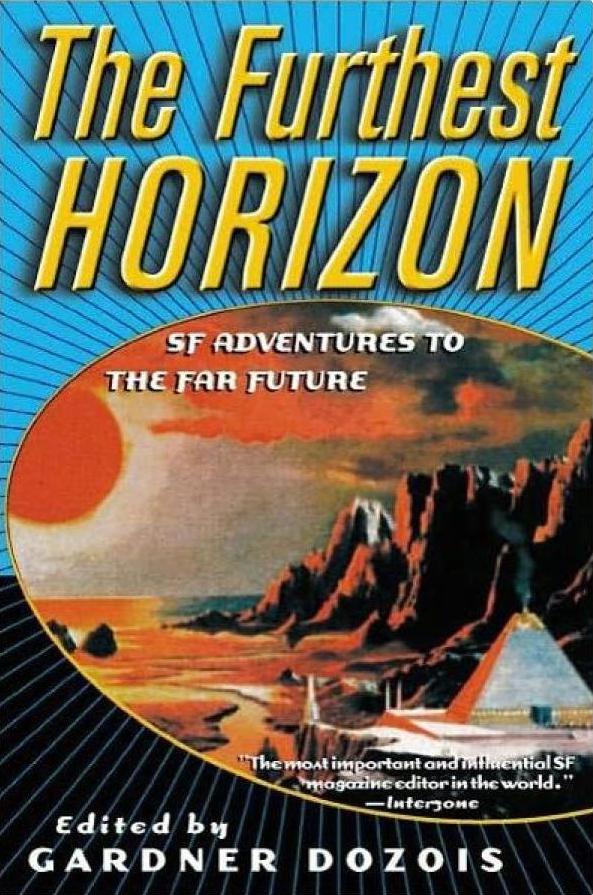
Explorers The Furthest Horizon

Last week I talked about two of my favorite anthologies by one of the most acclaimed editors in the field: The Good Old Stuff (1998) and The Good New Stuff (1999) (collected into one massive 982-page volume as The Good Stuff by the Science Fiction Book Club in 1999), both edited by Gardner Dozois. Those books collected some of the best adventure SF from the last century, alongside Dozois’ detailed and affectionate commentary on each author. The result was the equivalent of a Master’s level course in Adventure SF of the 20th Century, and its most proficient writers.

A year later, Dozois did the same thing with another pair of anthologies, this time focused on two similarly fascinating branches of science fiction: tales of deep space exploration, and tales of the far future. Like the first two volumes, they were both released in trade paperback from St. Martin’s/Griffin, and they are both excellent:

Explorers: SF Adventures to Far Horizons (495 pages, April 2000, $17.95)
The Furthest Horizon: SF Adventures to the Far Future (492 pages, May 2000, $17.95)

Both had covers by famous SF artist Chesley Bonestell. Like the first volumes, they include Dozois’ lengthy and highly informative intros to each story. These volumes perfectly compliment the first two, forming the basis for a solid library of modern science fiction.

Read More Read More

Future Treasures: The Ballad of Black Tom by Victor LaValle

Future Treasures: The Ballad of Black Tom by Victor LaValle

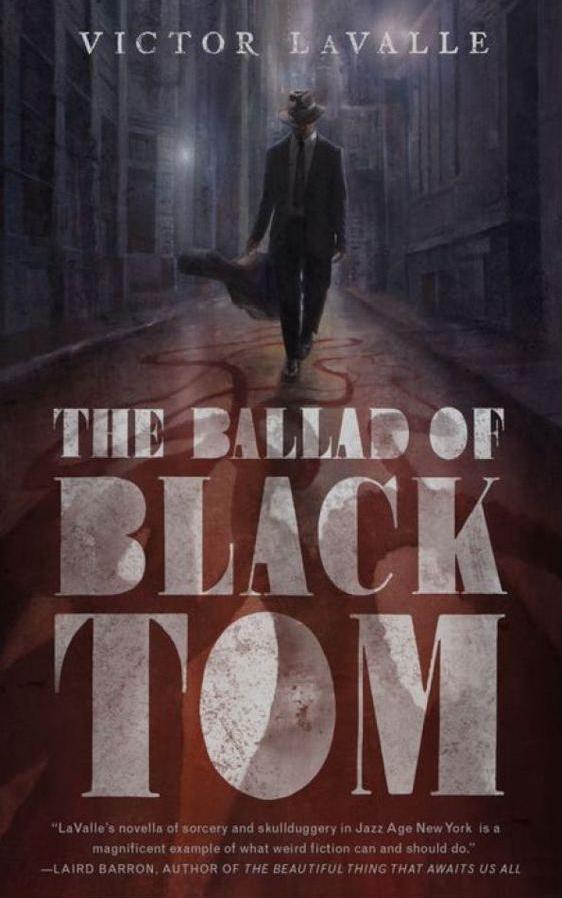
The Ballad of Black Tom-smallTor.com‘s first book in their new premium novella line, Kai Ashante Wilson’s The Sorcerer of the Wildeeps, made several Best of the Year lists for 2015. The publishing experiment has proven successful enough that Tor.com is continuing with more novellas in 2016, including Victor LaValle’s The Ballad of Black Tom, a tale in the Cthulhu mythos set in Brooklyn and Harlem in the early 20th century.

Victor LaValle is the author of Big Machine (2010) and The Devil in Silver (2013). About Black Tom, Laird Barron says “LaValle’s novella of sorcery and skullduggery in Jazz Age New York is a magnificent example of what weird fiction can and should do.”

People move to New York looking for magic and nothing will convince them it isn’t there.

Charles Thomas Tester hustles to put food on the table, keep the roof over his father’s head, from Harlem to Flushing Meadows to Red Hook. He knows what magic a suit can cast, the invisibility a guitar case can provide, and the curse written on his skin that attracts the eye of wealthy white folks and their cops. But when he delivers an occult tome to a reclusive sorceress in the heart of Queens, Tom opens a door to a deeper realm of magic, and earns the attention of things best left sleeping.

A storm that might swallow the world is building in Brooklyn. Will Black Tom live to see it break?

See the complete list of Tor.com novellas we’ve covered so far below.

Read More Read More

New Treasures: Bohemian Gospel by Dana Chamblee Carpenter

New Treasures: Bohemian Gospel by Dana Chamblee Carpenter

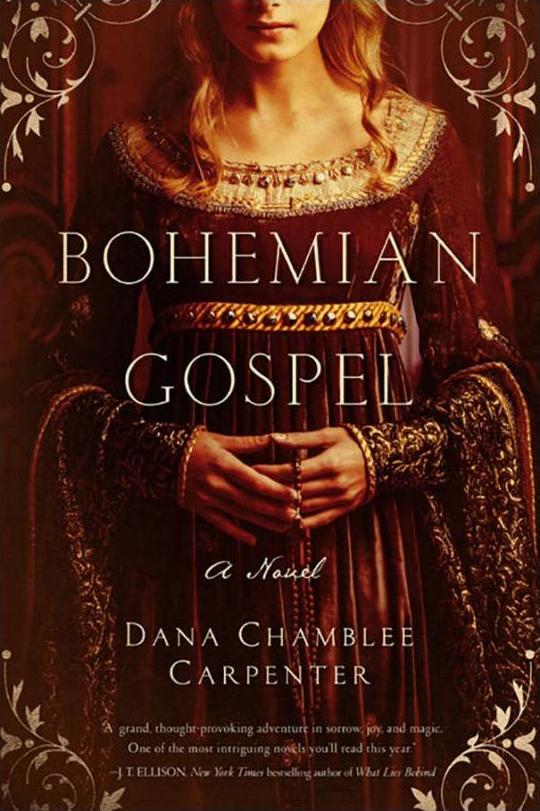
Bohemian Gospel-smallNow here’s something interesting that may have slipped past most BG readers… a gothic fantasy set in 13th-century Bohemia that has been getting some excellent reviews. Publishers Weekly calls it “A deliciously creepy debut… [with] an intricate world full of terrifying details,” and Kirkus Reviews sums it up as “Part history, part horror, part love story… does a good job of interweaving history with mythology and the supernatural… Brings the Dark Ages to strange and bewitching life.”

Set against the historical reign of the Golden and Iron King, Bohemian Gospel is the tale of a bold girl with unusual gifts who finds herself at odds with supernatural forces in a world rich with superstition. Well worth a look.

Thirteenth-century Bohemia is a dangerous place for a girl, especially one as odd as Mouse, born with unnatural senses and an uncanny intellect. Some call her a witch. Others call her an angel. Even Mouse doesn’t know who — or what — she is. But she means to find out.

When young King Ottakar shows up at the Abbey wounded by a traitor’s arrow, Mouse breaks church law to save him and then agrees to accompany him back to Prague as his personal healer. Caught in the undertow of court politics at the castle, Ottakar and Mouse find themselves drawn to each other as they work to uncover the threat against him and to unravel the mystery of her past. But when Mouse’s unusual gifts give rise to a violence and strength that surprise everyone — especially herself — she is forced to ask herself: Will she be prepared for the future that awaits her?

Bohemian Gospel was published by Pegasus on November 15, 2015. It is 367 pages, priced at $25.95 in hardcover and $22.73 for the digital edition. The cover was deigned by Faceout Studio.

Wandering the Worlds of C.S. Lewis, Part III: Dymer

Wandering the Worlds of C.S. Lewis, Part III: Dymer

DymerThis is the third in a series of posts about the fictions of C.S. Lewis. I began on Sunday with a look at his juvinilia, published in Boxen: Childhood Chronicles Before Narnia, and then yesterday looked at his first book of lyric poems, Spirits in Bondage. Today I round out my look at Lewis’ early works with some thoughts on the first of his long narratives to be published, an epic poem called Dymer, written while he was struggling to get a job as a professor and while he was in the process of moving from strict atheism to belief in Christianity. I also take a look at his short story “The Man Born Blind,” probably written soon after Dymer was published.
In 1922 C.S. Lewis recorded in his diary that he had “started a poem on ‘Dymer’ in rhyme royal.” His phrasing’s interesting: a work “on” Dymer, as though it were a well-known subject. “Dymer” was already a familiar story to him. He’d written it out in prose in 1917, one of his first mature prose works to use modern diction and avoid the archaisms of William Morris’ novels. Late in 1918 he wrote in a letter that he’d just completed a “short narrative, which is a verse version of our old friend Dymer, greatly reduced and altered to my new ideas. The main idea is that of development by self-destruction, both of individuals and species.” Nothing of this version seems to have survived in the 1922 poem, which was finished in 1925 and published in 1926 to mixed reviews.

Dymer is a fast-moving poem, and it’s to Lewis’ credit that few or none of the rhyme royal stanzas seem to solely serve the plot; each stanza has some image or line striving to catch the eye. On the other hand, the striving’s often too obvious. The quick pace also means some material feels underexplored, while incidents on the whole come too quickly. Much as one must grant some poetic license, questions can’t help but arise. Some key events reported to Dymer feel underexplored, and some plot elements feel abandoned too easily. Symbolism is occasionally obtrusive. Lewis himself wrote in his diary on June 22, 1922 that he was dissatisfied at “having now left the myth and being forced to use fiction[.]”

Read More Read More

Three Classic Books for Medieval Worldbuilders and Armchair Time Travellers

Three Classic Books for Medieval Worldbuilders and Armchair Time Travellers

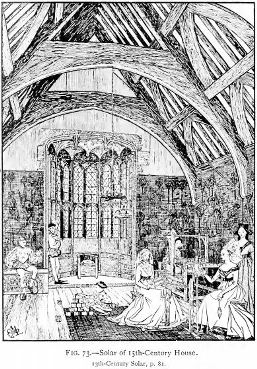
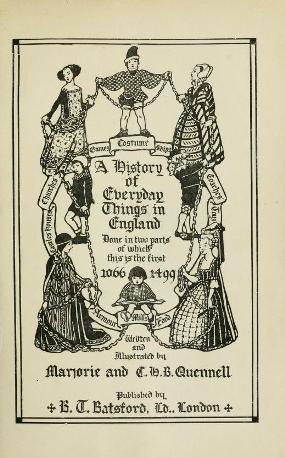
historyofeveryda00quenuoft_0007
…this beautifully illustrated book covers everything

This time next week you’ll be contemplating a pile of Amazon gift vouchers and book tokens.

How do know?

Everyday Life
…a cosy oak-panelled read for fireside days while the rain batters at your window

You’re a Black Gate reader. Your muggle relatives can’t even guess your tastes. Your geeky friends know that your wishlist is too specific to second guess.

So book tokens.

I won’t try to guess your tastes either! However, if you are interested in the medieval world, or medieval-style worlds, some of the following old books from my research shelf might tempt you…

A History of Everyday Things in England (Archive.Org link) by Marjorie and CHB Quennell is a pre-WWI classic and part of a series that goes through to 1914 (Wikipedia).

Aimed at the older children of yesteryear — meaning it’s a fine read for a modern adult — this beautifully illustrated book covers everything from pottery to architecture, arrow loops to siege engines, and armour to aumbries, it drops in lots of quotes from original sources, and — written in a time of servants and country weekends — feels authentic when it explores the manor houses and castles of the time.

It also approaches the culture and economics from the inside, with sections on ships and merchants, and ground plans of typical buildings.

Though it pulls no punches — describing the English as acting like the Hun in 14th-century France — it’s a cosy oak-panelled read for fireside days while the rain batters at your window, but also a jumping off point for recreating medieval domesticity.

Read More Read More

Fantastic Reference and Non-fiction Books

Fantastic Reference and Non-fiction Books

At the centre of all the fuzzy sets is a rough definition of what we mean by fantasy: a fantasy text is a self-coherent narrative which, when set in our REALITY, tells a story which is impossible in the world as we perceive it (see PERCEPTION); when set in an OTHERWORLD or SECONDARY WORLD, that otherworld will be impossible, but stories set there will be possible in the otherworld’s terms. An associated point, hinted at here, is that at the core of fantasy is STORY. Even the most surrealist of fantasies tells a tale.

                                      — from the foreword of The Encyclopedia of Fantasy by John Clute and John Grant

oie_21313286sNQbIjqI like to think I have a fairly extensive knowledge of swords & sorcery and other fantasy sub-genres. While I never took courses on the hermeneutics of Conan, or Fafhrd and post-modernism, I do have about forty years of time on job reading the stuff. When I write I try to bring that knowledge to bear in a close reading of the story. But I know better than to rely just on my brain all the time, so sometimes I turn to my small but valuable collection of fantasy non-fiction titles.

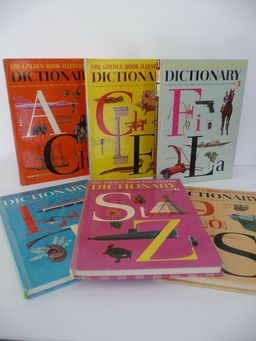
I have always loved reference books. When I was little I pestered my mother to buy me several sets of books, starting with the Golden Book Illustrated Dictionary and followed by the Funk & Wagnalls New Encyclopedia. The latter was bought, one volume every few weeks, at A&P. Sadly, she didn’t get two of them:  Vol.14, ISRAE to LACCA, and Vol.21, RUSSI to SUMAL. Which meant I didn’t learn much about Kipling or rutabagas until I was older. I spent hours upon hours poring over those books, just reading about whatever was in front of me.

That initial love for reference books only grew as I got older, eventually extending into the various genres of fiction I read. I’ve got several good books on crime fiction and science fiction that have steered me toward books I might never have otherwise known about or been willing to give a chance. Writing about swords & sorcery for the past four and half years, though, it’s the fantasy references that I’ve drawn on the most for ideas and information.

Read More Read More