Browsed by
Category: Books

The Ordinary World is a Myth: Marc Levinson’s The Box

The Ordinary World is a Myth: Marc Levinson’s The Box

The Box Marc Levinson-smallThe Box: How the Shipping Container Made the World Smaller and the World Economy Bigger
Marc Levinson
Princeton University Press (400 pages, $20.95, January 27, 2008)

Just finished reading The Box: How the Shipping Container Made the World Smaller and the World Economy Bigger by Marc Levinson.

Stifle that big **YAWN** for a minute. Especially as a science fiction writer, I love these histories of ordinary technologies, because they remind you that “ordinary” is itself a myth. Some revolutions come with explosions and special effects and some sneak up on you, but they both change the world.

As Levinson himself says in the book’s introduction, shipping containers are just big aluminum shoeboxes, less esthetically interesting than a can of beans, but their effects were just as revolutionary as the microchip and the Internet, and they were probably more important in building the globalized economy we live in today.

Before containers, loading a single ship with cargo was backbreaking, labor-intensive sweatwork that could take multiple gangs of longshoremen a week or longer. Costs were high, efficiency was low, wages and working conditions were terrible, and corruption and theft were endemic. However, at the same time, traditional ports supported a culture of their own, with whole neighbourhoods, factories, and a complete way-of-life centered around them.
Read More Read More

Future Treasures: The Dark Days Club by Alison Goodman

Future Treasures: The Dark Days Club by Alison Goodman

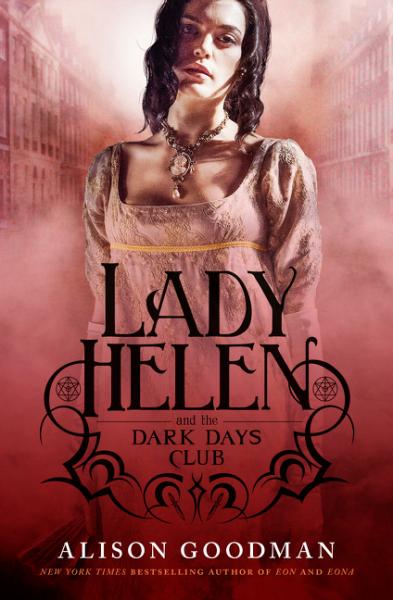
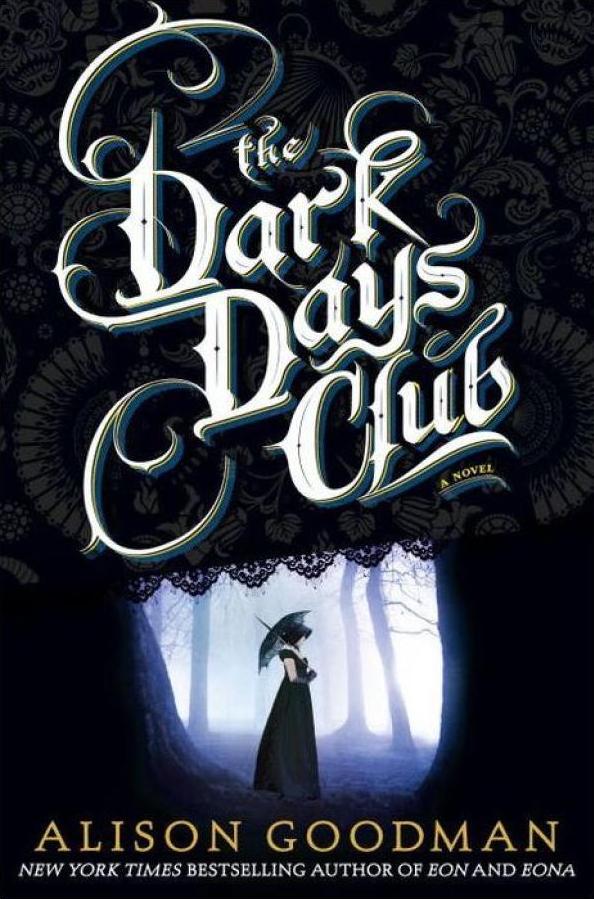
Lady Helen and the Dark Days Club-small The Dark Days Club-small

Alison Goodman is the author of the New York Times bestseller EON, winner of the 2008 Aurealis Award and a Tiptree nominee, and its sequel EONA, both set in a mythical China. Her other novels include the SF thriller Singing the Dogstar Blues and Killing the Rabbit. Her latest novel is The Dark Days Club (published as Lady Helen and the Dark Days Club in her native Australia), a Regency adventure starring a stylish and intrepid demon-hunter. It is the opening volume in the new Lady Helen fantasy series.

Helen must make a choice: Save her reputation, or save the world.

London, 1812. Eighteen-year-old Lady Helen Wrexhall is on the eve of her debut presentation at the royal court of George III. Her life should revolve around gowns, dancing, and securing a suitable marriage. Instead, when one of her family’s maids disappears, she is drawn into the shadows of Regency London. There, she meets Lord Carlston, one of the few able to stop the perpetrators: a cabal of demons that has infiltrated all levels of society. Carlston is not a man she should be anywhere near, especially with the taint of scandal that surrounds him. Yet he offers her help and the possibility of finally discovering the truth about the mysterious deaths of her parents.

Soon the two of them are investigating a terrifying conspiracy that threatens to plunge the newly Enlightened world back into darkness. But can Helen trust a man whose own life is built on lies? And does she have the strength to face the dangers of this hidden world and her family’s legacy?

The Dark Days Club will be published by Viking Books on January 26, 2016. It is 496 pages, priced at $18.99 in hardcover, and $10.99 for the digital edition.

The Public Life of Sherlock Holmes: The Shannara Chronicles

The Public Life of Sherlock Holmes: The Shannara Chronicles

ShannaraChron_PosterI was reading fantasy before I discovered Sherlock Holmes and it’s still one of my two favorite genres. Now, one of my favorite series’ has finally been brought to the screen. Last October, Fletcher Vrendenbuergh posted about his re-read of Terry Brooks’ classic, The Sword of Shannara. Sword, loved by many (me among them) and reviled by many, was a huge hit upon release, appealing to the horde of Tolkien fans who wanted more of that style of fantasy. It’s a good essay with lots of comments: go check it out.

After Sword, Brooks wrote a big chunk of a sequel, which (Lester) Del Rey told him to chuck and start over. Brooks did so and in 1982, we got The Elfstones of Shannara, which took place two generations after Sword. Shea’s grandson, Wil Ohmsford, now had the magical elfstones. Wishsong of Shannara rounded out the trilogy.

Two dozen more Shannara books would follow, with another due out later this year. Some take place before Sword, with most afterwards. Back when fantasy films consisted of “efforts” such as The Sword and the Sorcerer, Krull, Ator and even Ah-nuld’s two Conan movies, I always wondered why someone didn’t take Sword to the screen; be it live-action or animated. But nope: nothing.

Of course, Peter Jackson redefined fantasy films with his six movies from Tolkien’s books. And HBO created a monster with George R. Martin’s Game of Thrones. The 44-episode Legend of the Seeker, based on Terry Goodkind’s Sword of Truth novels, did not fare so well and was cancelled after two seasons on television.

But now, in 2016, we finally have The Shannara Chronicles, a ten-episode miniseries, based on The Elfstones. For that, we have MTV to thank. Well, it’s a mixed blessing.  You got a sneak preview and some Black Gate commentary HERE last summer.

Read More Read More

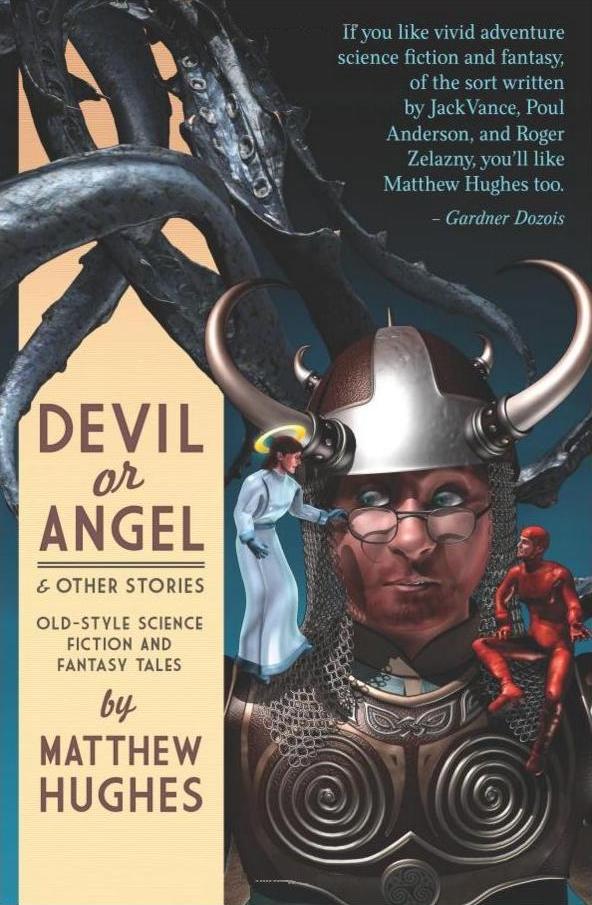
New Treasures: Devil or Angel and Other Stories by Matthew Hughes

New Treasures: Devil or Angel and Other Stories by Matthew Hughes

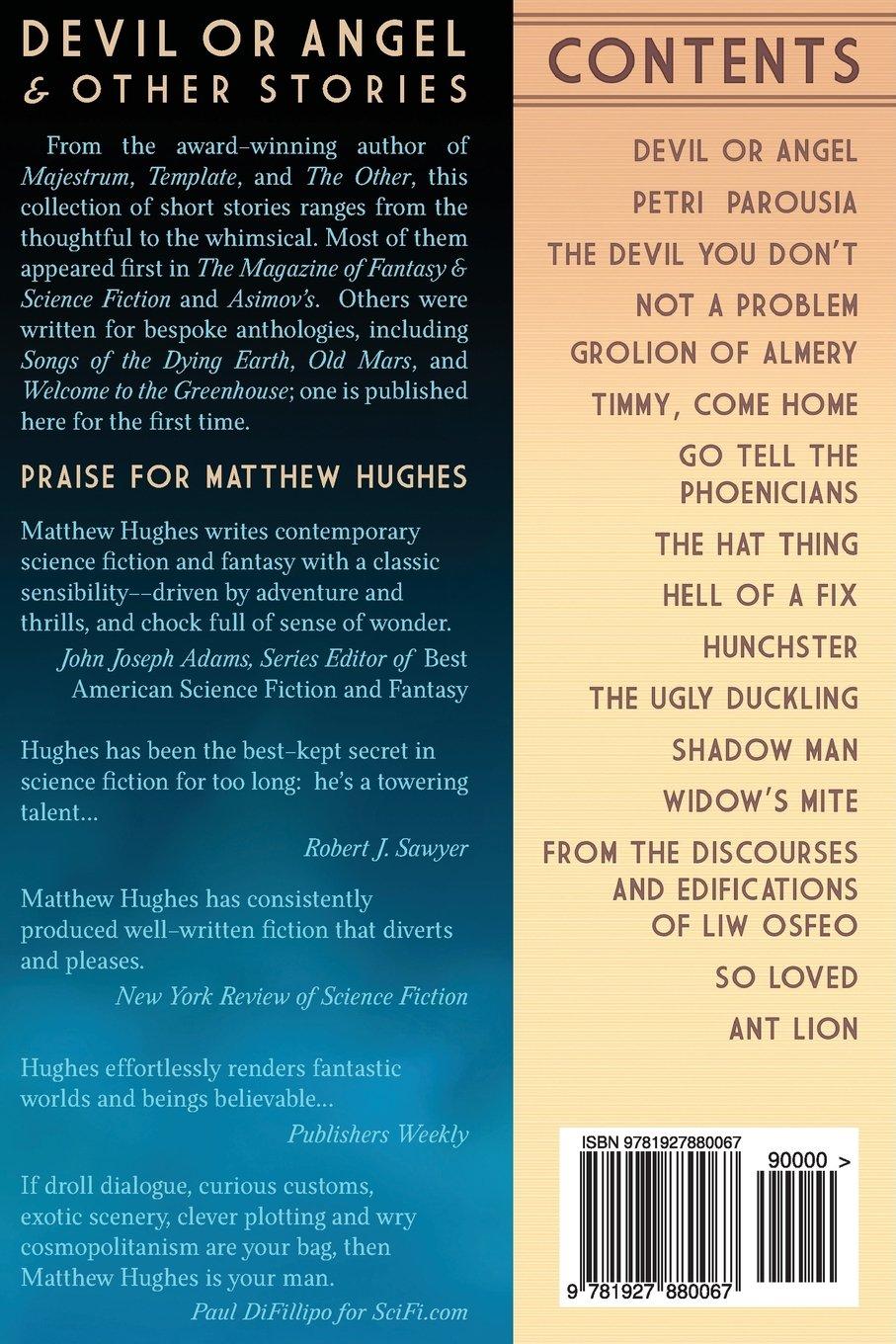
Devil or Angel and Other Stories-small Devil or Angel and Other Stories-back-small

Matthew Hughes’ novels include the To Hell and Back trilogy (Damned Busters, Costume Not Included, and Hell to Pay), Gullible’s Travels, The Other, and his Tales of Henghis Hapthorn (Majestrum, The Spiral Labyrinth, and Hespira). He also writes crime fiction as Matt Hughes, and media tie-in novels as Hugh Matthews.

I’ve been extremely impressed with his short fiction, which has been collected in The Gist Hunter and Other Stories (2005), The Meaning of Luff (2013), and Tales of Henghis Hapthorn (2013). His newest self-published collection, Devil or Angel and Other Stories, is subtitled “Old-Style Science Fiction and Fantasy Tales.” It includes 16 stories that originally appeared in The Magazine of Fantasy & Science Fiction, Asimov’s, and a smattering of anthologies. One story, “Ant Lion,” appears here for the first time. Hughes is one of the best short fiction writers working in fantasy today, especially if you’re a fan of the classic space-opera style of Jack Vance.

Devil or Angel and Other Stories was self-published by Matthew Hughes on July 30, 2015. It is 264 pages, priced at $12.99 in paperback and $3.99 for the digital edition. The cover is by Bradley W. Schenck.

Vintage Treasures: Travelers of Space, edited by Martin Greenberg

Vintage Treasures: Travelers of Space, edited by Martin Greenberg

Travelers of Space 1951-small

Gnome Press, the brainchild of Martin Greenberg and David A. Kyle, was founded in 1948, and it published some of the most important science fiction and fantasy of the 20th Century in hardcover for the first time — including Sixth Column by Robert A. Heinlein (1949), The Castle of Iron by L. Sprague de Camp and Fletcher Pratt (1950), Conan the Conqueror by Robert E. Howard (1950), I, Robot (1950) and Foundation (1951) by Isaac Asimov, City by Clifford D. Simak (1952), Robots Have No Tails by Lewis Padgett (1952), Judgment Night by C.L. Moore (1952), and Sands of Mars by Arthur C. Clarke (1952). The Gnome Press hardcovers — gorgeously designed and made with great care — are some of the most collectible books in the field.

For me however, the most desirable Gnome Press books are their original titles, and especially their anthologies, which gathered neglected short fiction from the Golden Age of science fiction pulps for the first time. They published several in their Adventures in Science Fiction series, all edited by Martin Greenberg, including Men Against the Stars (195), Journey to Infinity (1951), The Robot and the Man (1953), and Travelers of Space (1951).

Read More Read More

John DeNardo’s January Must-Read Speculative Fiction

John DeNardo’s January Must-Read Speculative Fiction

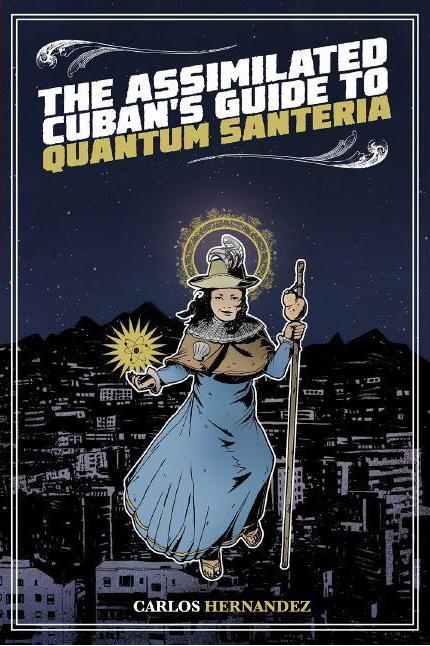
The Assimilated Cubans Guide to Quantum Santeria-smallWe try to keep tabs on the best in upcoming fantasy here at Black Gate. But nobody does it as well as John DeNardo, editor of SF Signal. Over at Kirkus Reviews he offers a tantalizing survey of the best new speculative fiction for the month.

Have you made any reading-related New Year’s resolutions? If speculative fiction is on your reading radar, allow me to offer some suggestions. Here’s an abundant selection of tasty speculative titles being released this month. Titles here include a two-second time [machine], cosmic horrors, multiple worlds, a prison memoir, 1920s Hollywood, and airship heists.

John’s highlights for the month include All the Birds in the Sky by Charlie Jane Anders, Broken Hero by Jonathan Wood, Ancestral Machines by Michael Cobley, Jani and the Great Pursuit by Eric Brown, and several that we’ve covered here at Black Gate — including Daughter of Blood by Helen Lowe, Medusa’s Web by Tim Powers, Skinner Luce by Patricia Ward, The Bands of Mourning by Brandon Sanderson, and the acclaimed first collection from Carlos Hernandez, The Assimilated Cuban’s Guide to Quantum Santeria.

Read the complete article here.

Read More Read More

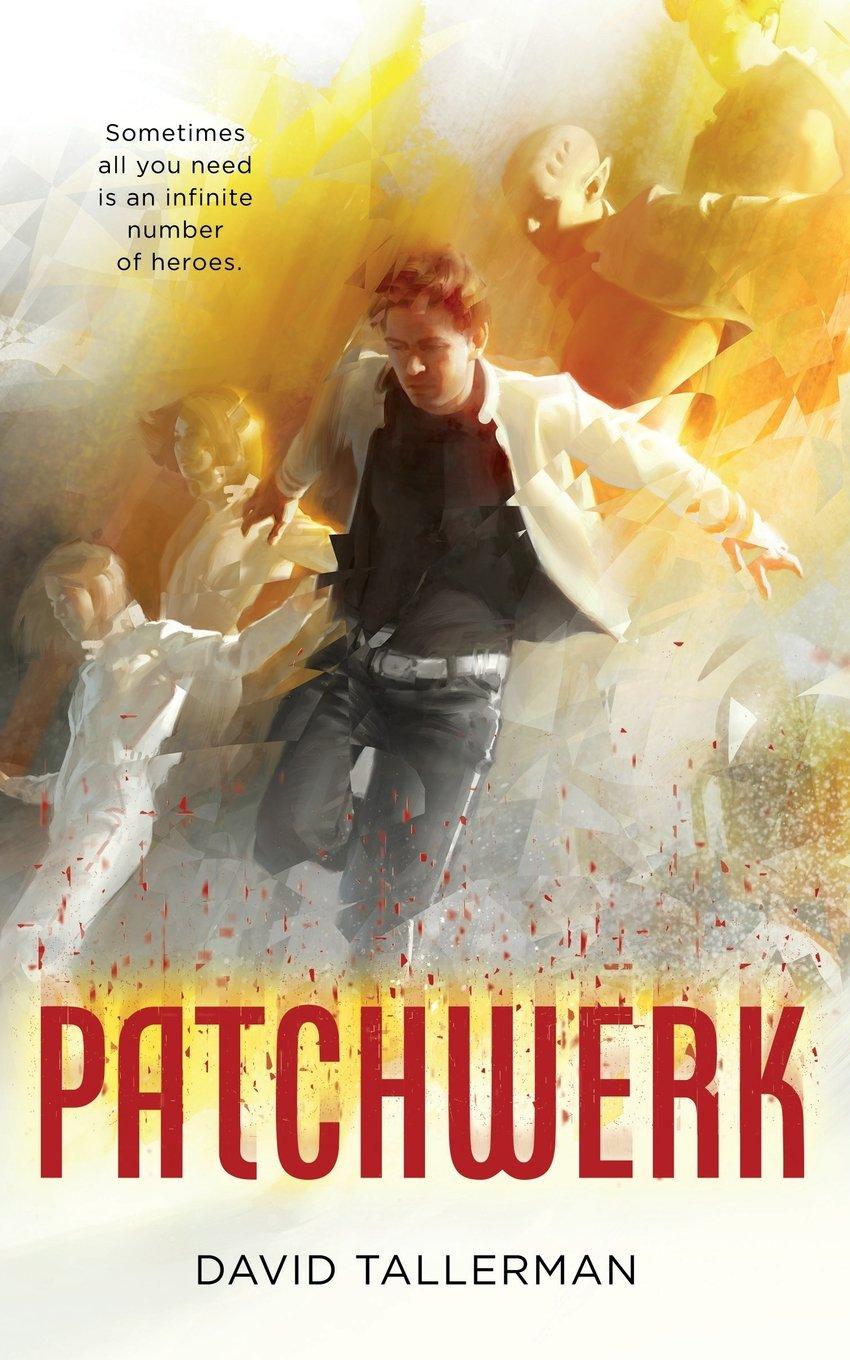
Future Treasures: Patchwerk by David Tallerman

Future Treasures: Patchwerk by David Tallerman

Patchwerk-small Patchwerk-back-small

Now that it’s a new year, Tor.com has relaunched their ambitious novella publishing program with their 2016 titles, starting with Emily Foster’s The Drowning Eyes, released early this week. They’ll be publishing roughly a title a week for the next few months, an extremely impressive schedule — especially considering the authors they’ve got on deck.

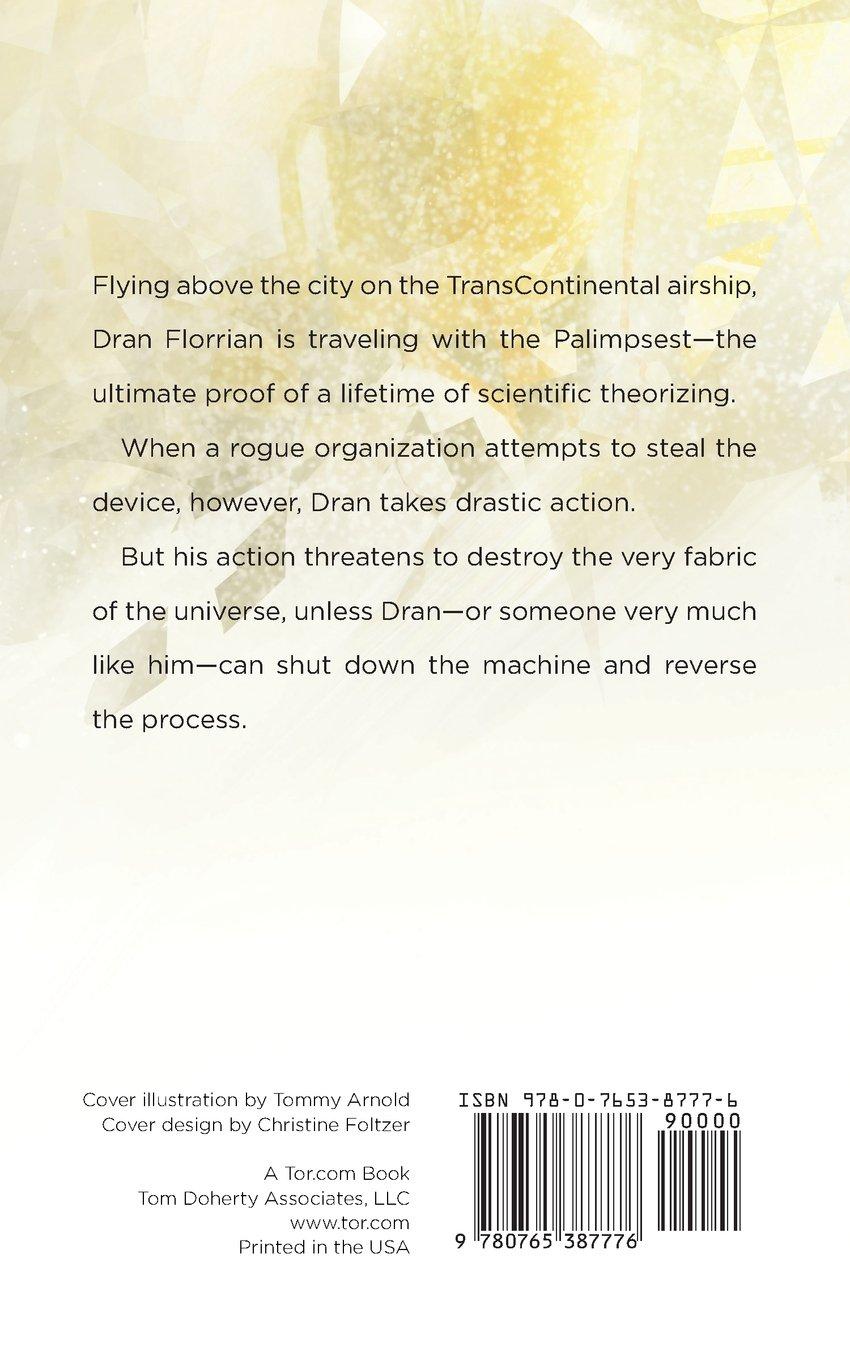
Next week is Patchwerk from David Tallerman, author of the Tales of Easie Damasco trilogy (Giant Thief, Crown Thief, Prince Thief), and many short stories published at Clarkesworld, Lightspeed, Bull Spec, and Beneath Ceaseless Skies. Patchwerk follows the adventures of Dran Florrian, a scientist carrying a device capable of destroying worlds… and his desperate flight from those who want to use it for their own purposes.

Read More Read More

On Writing Modern Noir Fantasy

On Writing Modern Noir Fantasy

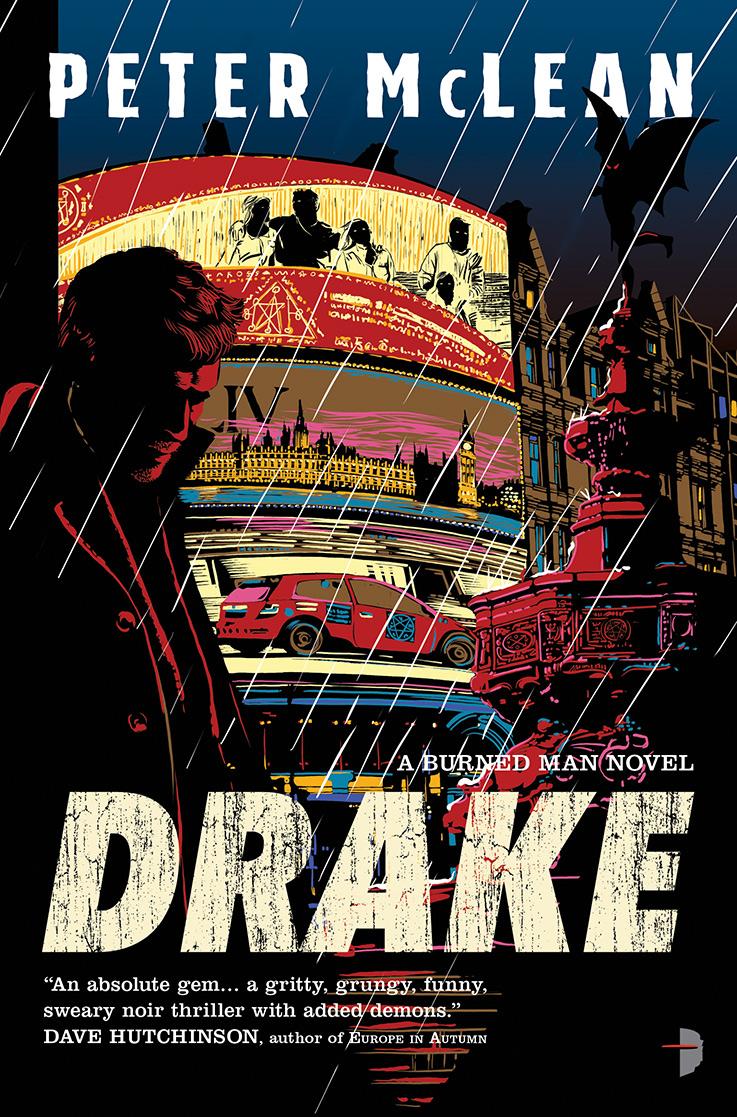
Drake Peter McLean-smallMy first novel Drake has been described as a mix of Urban Fantasy and Noir, and I suppose it is, in a way. So what does that mean to me?

Well I think we all have an idea of what Urban Fantasy is – the king of the genre is obviously The Dresden Files, with the magical detective in a big modern city helping the cops solve the unsolvable, inexplicable paranormal crimes.

Drake’s not that.

Don Drake isn’t a detective, he’s a hitman. He doesn’t help the cops – hell, he doesn’t have anything to do with the cops if he can help it. Drake works for gangsters, and demons, and demon gangsters. He’s not Harry Dresden, not by a long way.

But he’s not Philip Marlowe or Mike Hammer either, for all that he’d like to be. The world Drake lives in is hard-boiled but he really isn’t. He’s a cynical, somewhat cowardly opportunist who does the best he can to make his way in a world he barely even understands.

A Noir world.

So what’s that? Noir needs to be dark, by definition, but I don’t think it has to be tied to any particular time period. The classic Hollywood Noir is set in LA or New York in the 1940s but it can work equally well in the backstreets of ancient Rome or the mean cantinas of Mos Eisley, or even in modern South London for that matter.

Read More Read More

New Treasures: The Lesser Dead by Christopher Buehlman

New Treasures: The Lesser Dead by Christopher Buehlman

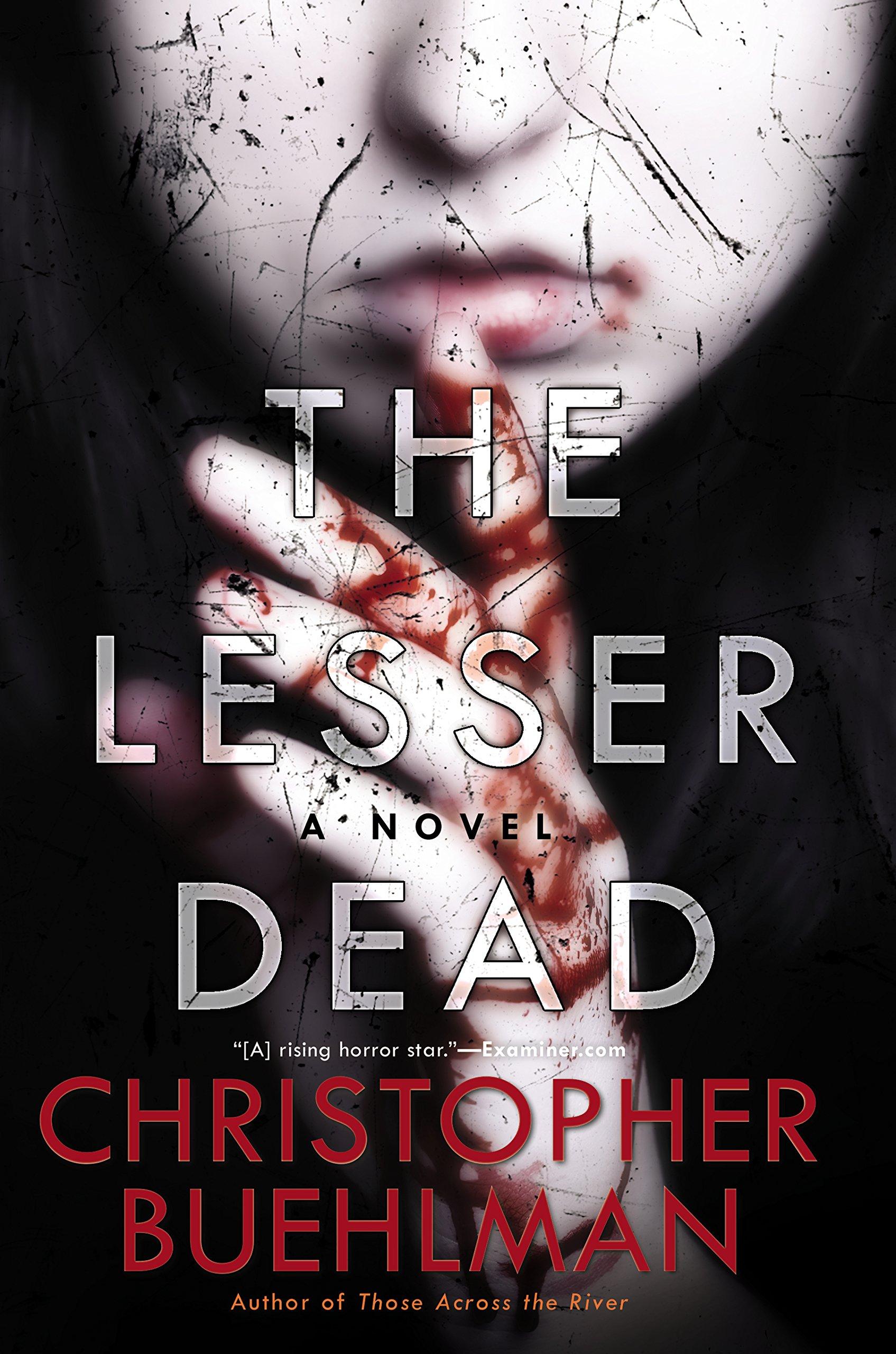
The Lesser Dead-smallChristopher Buehlman’s debut novel Those Across the River (2011) was nominated for a World Fantasy Award, and Charlaine Harris called it “one of the best first novels I’ve ever read.” He followed up with Between Two Fires (2012), the tale of a disgraced knight coming face-to-face with apocalyptic horror in 1348, and The Necromancer’s House (2013), the story of a modern sorcerer on the run from a monster straight out of Russian folklore.

His newest novel, The Lesser Dead, was published in hardcover in 2014, and released in trade paperback late last year. It was nominated for the Shirley Jackson Award for best novel, and won the American Library Association’s Best Horror Novel of the Year award. It’s the story of a secret colony of vampires in New York City who find themselves being preyed on by something far darker than themselves….

New York City in 1978 is a dirty, dangerous place to live. And die. Joey Peacock knows this as well as anybody — he has spent the last forty years as an adolescent vampire, perfecting the routine he now enjoys: womanizing in punk clubs and discotheques, feeding by night, and sleeping by day with others of his kind in the macabre labyrinth under the city’s sidewalks.

The subways are his playground and his highway, shuttling him throughout Manhattan to bleed the unsuspecting in the Sheep Meadow of Central Park or in the backseats of Checker cabs, or even those in their own apartments who are too hypnotized by sitcoms to notice him opening their windows. It’s almost too easy.

Until one night he sees them hunting on his beloved subway. The children with the merry eyes. Vampires, like him…or not like him. Whatever they are, whatever their appearance means, the undead in the tunnels of Manhattan are not as safe as they once were.

And neither are the rest of us.

The Lesser Dead was published by Berkley on October 6, 2015. It is 368 pages, priced at $16, or $11.99 for the digital edition.

Feast Or Famine?

Feast Or Famine?

Tom Jones1Typically my characters don’t spend a lot of their time eating. It’s not because I’m not interested in food, quite the contrary (see my previous BG posts on the subject, here, here, and here.) No, it’s usually because, if I can paraphrase my agent for a moment, I’ve found my characters something more interesting to do. Having your characters sit down and eat is a useful device, however, in that it does give them something to do – even if it doesn’t forward the plot – while they’re talking, which usually does forward the plot. As a general rule, characters need to be doing something while they talk to each other, and if they eat, you can also use the details of the food to help with world-building and setting.

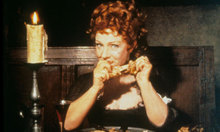
Joyce RedmanStill, even when my characters are eating, they’re not usually attending a banquet. Indeed, banquets and eating scenes in general are usually something we encounter visually, rather than on the page. Who can forget the scene in the Errol Flynn version of The Adventures of Robin Hood, where he walks into Prince John’s supper banquet with a stag on his shoulders?

Read More Read More