Browsed by
Category: Books

Review: Elizabeth Gilbert’s Big Magic: Creative Living Beyond Fear — Actually Rather Wise

Review: Elizabeth Gilbert’s Big Magic: Creative Living Beyond Fear — Actually Rather Wise

BigMagic
I wanted — expected — to hate this book.

I wanted — expected — to hate this book.

I only know the work of Elizabeth Gilbert from the movie Eat, Love, Pray: Men Are Kind of Expendable (And Arranged Marriages Are Cute as Long as You Are a Bystander) which I believe may not quite have caught the depth of the original book.

So Big Magic… Creative Living…

OMG this is where those damned writer memes come from! (See my ranty guest post on Charles Stross’s blog.)

But actually, behind the willful whimsy Elizabeth Gilbert speaks wisdom that applies to we Black Gate folk, and SF&F fans in general. It also reminds me of a long lost essay by Ryan Harvey entitled something like, “What if the Fifteen-Year-Olds were right?”

It has six parts, with inspiring titles. However, the structure is more literary than… well structural, and really she’s taking us on a tour of her mental map of the creative life, so I’ll just tell you why I was impressed (or in one case, unimpressed).
Read More Read More

New Treasures: Graft by Matt Hill

New Treasures: Graft by Matt Hill

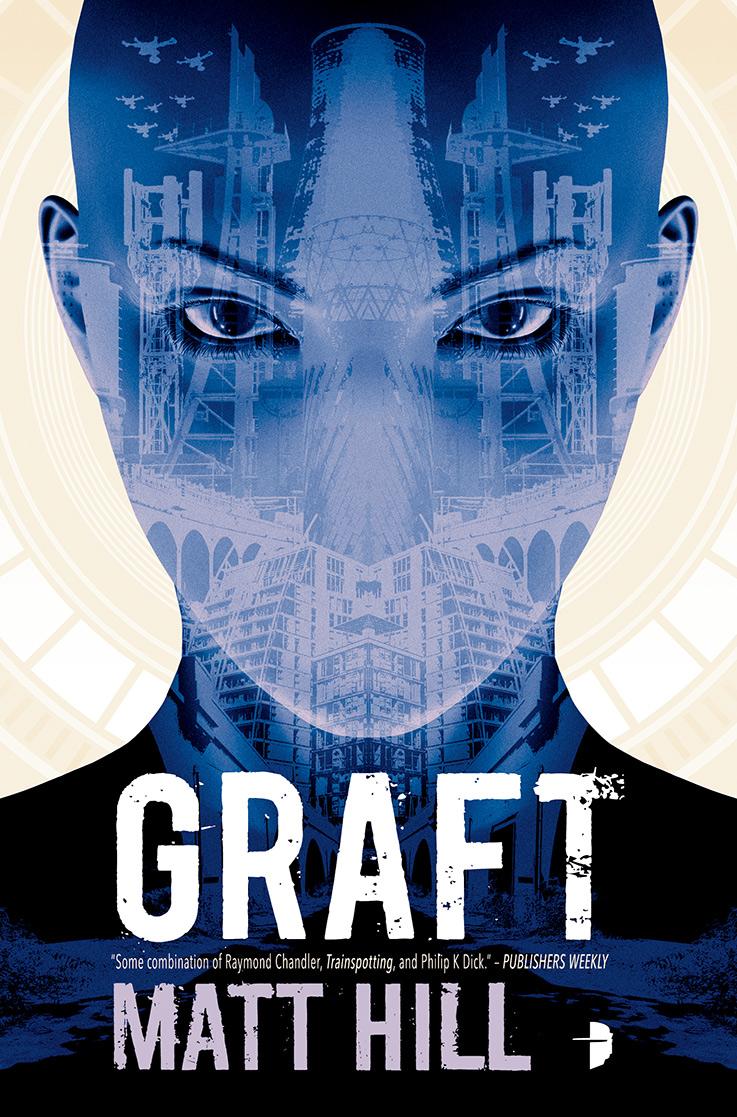
Graft Matt Hill-smallI don’t know much about British writer Matt Hill. He lives in London and has written one previous novel, The Folded Man (2013). But I like the sound of his second book, Graft. Author James Smythe says “Graft is exactly what science fiction should be right now: it’s brutally dark, twisted at its heart, with an incredible sense of foreboding… one of the best books I’ve read in a long time.” I’m putting this one near the top of my to-be-read pile.

Manchester, 2025. Local mechanic Sol steals old vehicles to meet the demand for spares. But when Sol’s partner impulsively jacks a luxury model, Sol finds himself caught up in a nightmarish trans-dimensional human trafficking conspiracy.

Hidden in the stolen car is a voiceless, three-armed woman called Y. She’s had her memory removed and undertaken a harrowing journey into a world she only vaguely recognises. And someone waiting in the UK expects her delivery at all costs.

Now Sol and Y are on the run from both Y’s traffickers and the organisation’s faithful products. With the help of a dangerous triggerman and Sol’s ex, they must uncover the true, terrifying extent of the trafficking operation, or it’s all over.

Not that there was much hope to start with.

A novel about the horror of exploitation and the weight of love, Graft imagines a country in which too many people are only worth what’s on their price tag.

Graft was published by Angry Robot on February 2, 2016. It is 444 pages, priced at $7.99 in paperback and $6.99 for the digital edition. The cover is by John Coulthart.

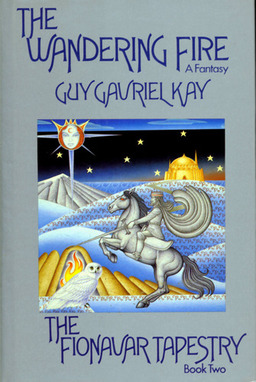
The Fionavar Tapestry Book 2: The Wandering Fire by Guy Gavriel Kay

The Fionavar Tapestry Book 2: The Wandering Fire by Guy Gavriel Kay

oie_2251331IZpxRuY1When I set out to delve into epic high fantasy late last year, I deliberately chose some stories I’d read already and remember liking. Rereading The Summer Tree, first volume of Guy Gavriel Kay’s The Fionavar Tapestry, justified my fond memories of it. I ended my review stating: “This is how epic high fantasy can look if it doesn’t want to merely ape LotR or regurgitate the same bits and pieces over and over again.” Those words do not apply to the second book, The Wandering Fire (1986).

Upon finishing the second volume I remembered that, when I read it the first time, I didn’t rush to read the concluding book, The Darkest Road. In fact, it was several years before I picked it up. It won’t be so long this time, but I sure don’t feel like reading it tomorrow.

In The Summer Tree, five Canadian grad students were magically transported from Toronto to Fionavar, the primary universe. Over the course of the novel, they were transformed spiritually and, some of them, even physically. Dave Martyniuk became Davor, adopted member of the nomadic Dalrei, and keeper of the horn that unleashes the Wild Hunt. Kimberly Ford became the Seer, able to manipulate certain magics and see the future. More drastically, Paul Schaefer, distraught over the death of his girlfriend a year earlier, sacrificed himself on the Summer Tree to summon, and become a conduit for, the god Mornir. Jennifer Lowell was kidnapped and raped by Rakoth Maugrim, Fionavar’s dark lord. Only happy-go-lucky Kevin Laine seemed to escape unchanged, yet Fionavar was stimulating his natural mournful romantic tendencies to some unseen end.

While The Wandering Fire purports to move the group deeper into the heart of the growing fight against Maugrim, what was once exciting and focused now feels hurried and slapdash. Momentous events come and go in the space of a few paragraphs. In one case a major secret is discovered but so little time was invested in it beforehand, it seems tossed off and rather inconsequential instead of horrifying, as intended.

Read More Read More

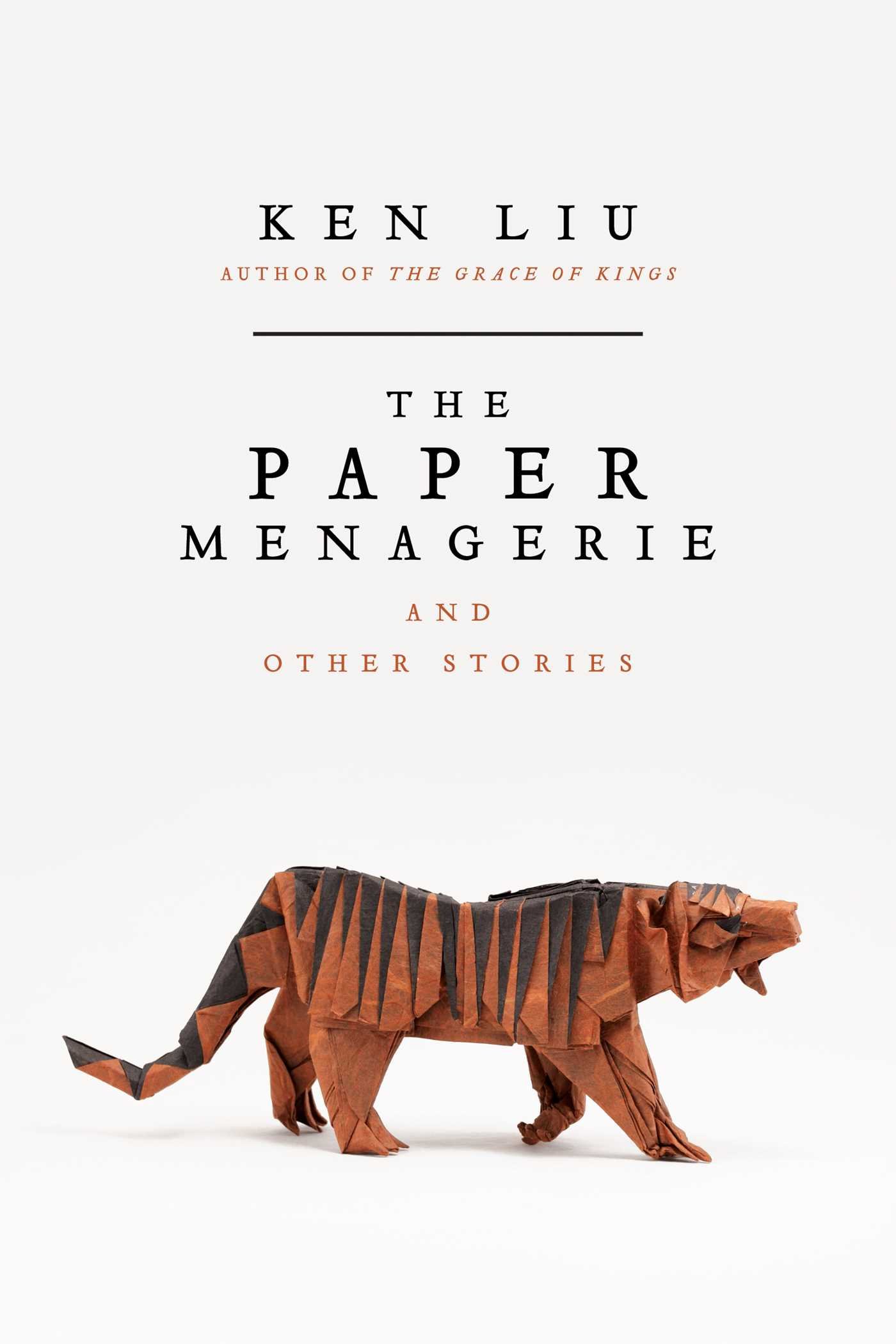
Future Treasures: The Paper Menagerie and Other Stories by Ken Liu

Future Treasures: The Paper Menagerie and Other Stories by Ken Liu

The Paper Menagerie and Other Stories-smallKen Liu has been one of the breakout fantasy stars this decade. His first novel, The Grace of Kings, was nominated for a Nebula Award last week, and Amal El-Mohtar called it “a magnificent fantasy epic.” As a translator he’s brought some of the most important Chinese-language SF to America, including last year’s Hugo winner, The Three Body Problem, by Cixin Liu.

But much of Ken Liu’s reputation was built on a stellar series of short stories published in places like Clarkesworld, F&SF, Asimov’s, Analog, Strange Horizons, and Lightspeed. He’s received virtually every award our field has to offer for his short fiction, including the Nebula, Hugo, and World Fantasy Awards — and he was the first person ever to win all three awards for a single story, “The Paper Menagerie,” originally published in the March-April 2011 issue of The Magazine of Fantasy & Science Fiction (read the complete story at io9).

Next month Saga Press will publish Ken’s first short story collection, The Paper Menagerie and Other Stories, collecting all of his award-winning and nominated fiction, including “The Man Who Ended History: A Documentary” (Finalist for the Hugo, Nebula, and Theodore Sturgeon Awards), “Mono No Aware” (Hugo Award winner), “The Waves” (Nebula Award finalist), “The Bookmaking Habits of Select Species” (Nebula and Sturgeon award finalists), “All the Flavors” (Nebula award finalist), “The Litigation Master and the Monkey King” (Nebula Award finalist), and the title story, “The Paper Menagerie.”

The Paper Menagerie and Other Stories also includes a brand-new story exclusive to this volume, “An Advanced Reader’s Picture Book of Comparative Cognition.”

Here’s the complete Table of Contents.

Read More Read More

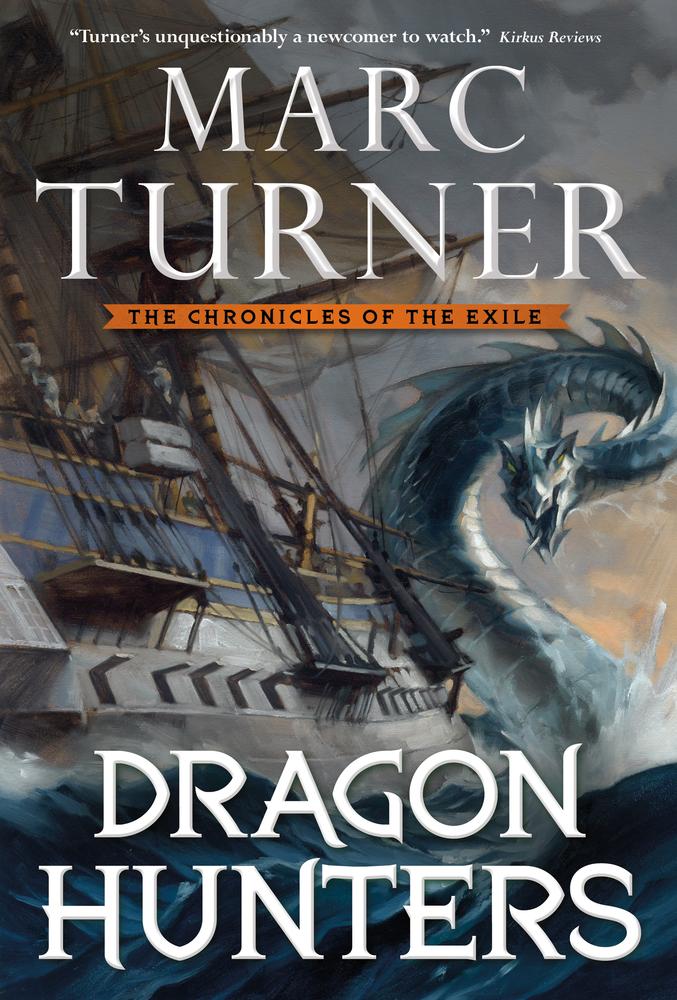
New Treasures: Dragon Hunters by Marc Turner

New Treasures: Dragon Hunters by Marc Turner

Dragon Hunters Marc Turner-smallIn his December article for Black Gate, Marc Turner described his first novel thusly:

My epic fantasy debut, When the Heavens Fall, came out in May this year, and it can best be summed up as The Lord of the Rings meets World War Z. It’s not a zombie apocalypse novel, but that’s going to come as scant consolation to the characters who find themselves having to wade through an army of undead.

Sounds plenty intriguing to me. The second book in the series, Dragon Hunters, has been much anticipated in these parts, and it finally arrived earlier this month. Here’s the description.

Once a year on Dragon Day the fabled Dragon Gate is raised to let a sea dragon pass from the Southern Wastes into the Sabian Sea. There, it will be hunted by the Storm Lords, a fellowship of powerful water-mages who rule an empire called the Storm Isles. Alas, this year someone forgot to tell the dragon which is the hunter and which the hunted.

Emira Imerle Polivar is coming to the end of her tenure as leader of the Storm Lords. She has no intention of standing down graciously. She instructs an order of priests called the Chameleons to infiltrate a citadel housing the mechanism that controls the Dragon Gate to prevent the gate from being lowered after it has been raised on Dragon Day. Imerle hopes the dozens of dragons thus unleashed on the Sabian Sea will eliminate her rivals while she launches an attack on the Storm Lord capital, Olaire, to secure her grip on power.

But Imerle is not the only one intent on destroying the Storm Lord dynasty. As the Storm Lords assemble in Olaire in answer to a mysterious summons, they become the targets of assassins working for an unknown enemy. When Imerle initiates her coup, that enemy makes use of the chaos created to show its hand.

Dragon Hunters is the second novel in The Chronicle of the Exile; we covered the first volume here. It was published by Tor Books on February 9, 2016. It is 493 pages, priced at $29.99 in hardcover and $14.99 for the digital version. The cover is by Greg Manchess.

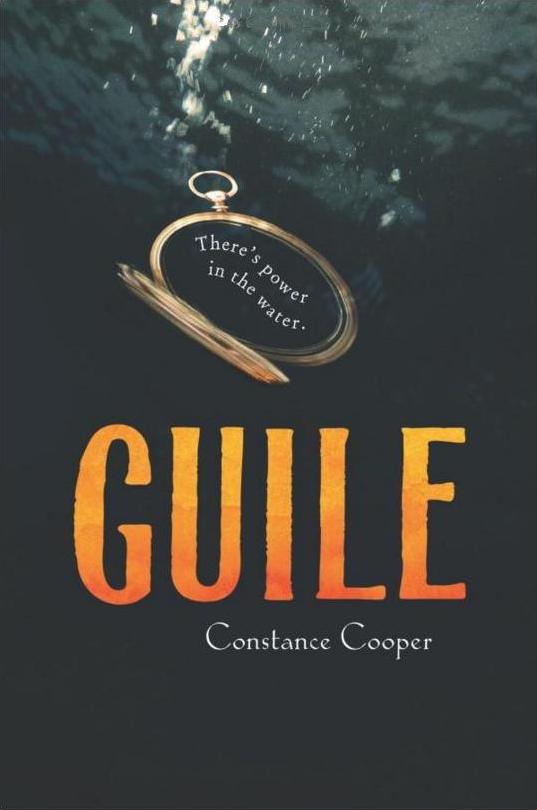
Future Treasures: Guile by Constance Cooper

Future Treasures: Guile by Constance Cooper

Guile Constance Cooper-small Guile Constance Cooper back-small
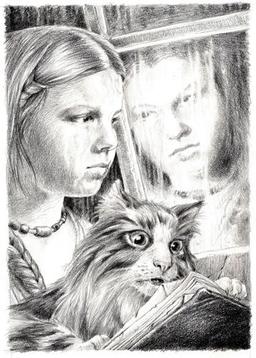
Art for "The Wily Thing" by Michael Vilardi (BG 12)
Art for “The Wily Thing” by Michael Vilardi (BG 12)

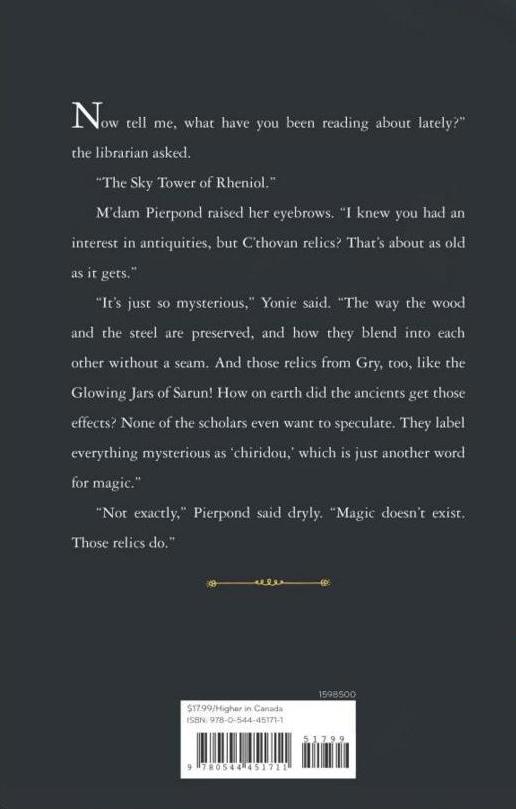
I frequently get excited by upcoming fantasy novels. But I rarely get as excited as I am by Guile, the debut fantasy novel from Constance Cooper, to be released next month by Clarion Books. Here’s Constance, from her blog:

Guile started with a short story called “The Wily Thing” which was published in Black Gate magazine in 2008. It was well received…

It was indeed. Here’s Lois Tilton at The Internet Review of Science Fiction:

Yonie and her cat LaRue make a meager living as Seers in one of the cheaper districts of Wicked Ford. Actually LaRue is the Seer, having been nearly drowned as a kitten. It is prolonged contact with the waters that make an object or a person guileful. Now a fisherman has brought Yonie an object, a ship’s gong taken from a wrecked vessel, that has some very dangerous wiles, but the fisherman has disappeared before she can warn him about it — and be paid.

An absolute delight. The setting is fascinating and original, every detail crafted in prose with real charm… RECOMMENDED.

“The Wily Thing” originally appeared in Black Gate 12, and it’s one of my favorite stories from that era of the magazine. The novel tells a brand new tale of Yonie and her magically gifted cat LaRue, set in the treacherous waters of Wicked Ford.

Read More Read More

Blogging The Insidious Dr. Fu-Manchu by Sax Rohmer – Part Two: “The Zayat Kiss”

Blogging The Insidious Dr. Fu-Manchu by Sax Rohmer – Part Two: “The Zayat Kiss”

NOTE: The following article was first published on March 14, 2010. Thank you to John O’Neill for agreeing to reprint these early articles, so they are archived at Black Gate which has been my home for over 5 years and 260 articles now. Thank you to Deuce Richardson without whom I never would have found my way. Minor editorial changes have been made in some cases to the original text.

ZayatInColliersfumanchu1It has often been noted that Nayland Smith and Dr. Petrie are cut from the same cloth as Sherlock Holmes and Dr. Watson and yet they display as many differences as they do similarities to their more famous progenitors. When Sax Rohmer incorporated “The Zayat Kiss” into the first three chapters of his first novel, British readers had a distinct advantage over their American counterparts in that the UK edition, The Mystery of Dr. Fu-Manchu contains chapter titles that The Insidious Dr. Fu-Manchu is lacking. The first chapter is titled, in a direct reference to the opening chapter of the first Holmes novel, “Mr. Nayland Smith of Burma.”

Yet it is not Nayland Smith who conjures the most indelible image of Sherlock Holmes so much as it is the brilliant, but eccentric criminal pathologist, Chalmers Cleeve who we meet as he crawls beetle-like about the crime scene. Cleeve is stumped by the murder of Sir Crichton Davey as much as Scotland Yard’s Inspector Weymouth (who Smith and Petrie meet for the first time in this tale) for it requires more than deductive reasoning to successfully combat Dr. Fu-Manchu. The Devil Doctor can only be matched by an opponent destined to defeat him. Fate, in its distinctly Eastern concept, is the deciding factor in restoring order to the frenzied paranoiac world that Rohmer vividly creates for his readers in sharp contrast with Sir Arthur Conan Doyle’s prevailing belief that trained reasoning can solve any problem.

Read More Read More

The Body’s Upstairs at Hangover House

The Body’s Upstairs at Hangover House

HangoverColliersHangoverRandomSax Rohmer’s last title to receive a hardcover edition in the US during his lifetime was Hangover House. It was Rohmer’s final showing on the bestseller lists and his only novel published by Random House. It was first serialized in Collier’s from February 19 to March 19, 1949 prior to its hardcover publication by Random House in the US and Herbert Jenkins in the UK.

Interestingly, Collier’s had published an earlier iteration as the short story, “Serpent Wind” in their November 7, 1942 issue. This story was part of a series later collected in book form in 1944 by Robert Hale as Egyptian Nights in the UK and by McBride & Nast under the title Bimbashi Baruk of Egypt in the US. “Serpent Wind” was retitled “The Scarab of Lapis Lazuli” for its hardcover publication. The story later appeared under its original title in the anthologies, Murder for the Millions in 1946 and Horror and Homicide in 1949.

Read More Read More

SFWA Announces the 2016 Nebula Award Nominations

SFWA Announces the 2016 Nebula Award Nominations

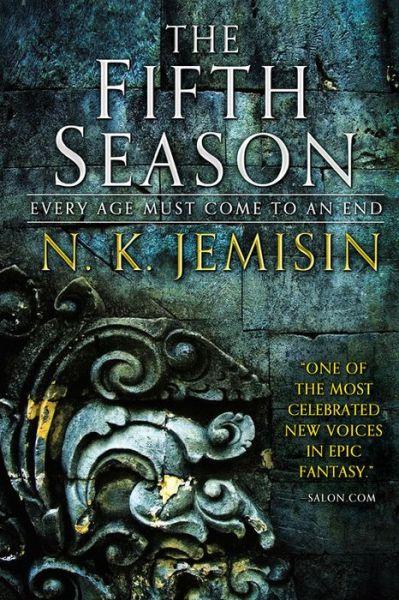
The Fifth Season Jemisin-smallThe Nebula Award is one of the most prestigious awards our industry has to offer, and last year’s awards were a pretty big deal for me. I was asked to present the award for Best Novelette of the Year at the Nebula Awards weekend in downtown Chicago, an honor which I won’t soon forget.

The Science Fiction Writers of America (SFWA) has announced the nominees for the 2016 Nebula Awards, and this year’s nominations are a pretty big deal for me as as well, but for different reasons. Several Black Gate bloggers and authors — including Amal El-Mohtar, Lawrence M. Schoen, and our website editor C.S.E. Cooney — have captured nominations, and that’s even more thrilling.

This year’s nominees are (links will take you to our previous coverage):

Novel

Raising Caine, Charles E. Gannon (Baen)
The Fifth Season, N.K. Jemisin (Orbit)
Ancillary Mercy, Ann Leckie (Orbit)
The Grace of Kings, Ken Liu (Saga)
Uprooted, Naomi Novik (Del Rey)
Barsk: The Elephants’ Graveyard, Lawrence M. Schoen (Tor)
Updraft, Fran Wilde (Tor)

Read More Read More

Announcing the Winners of The Final Programme by Michael Moorcock

Announcing the Winners of The Final Programme by Michael Moorcock

The Final Programme-smallWoo hoo! We have three winners!

Last week we invited you to enter a contest to win one of three copies of The Final Programme, the opening volume in Michael Moorcock’s classic Cornelius Quartet, available again in a brand new edition from Titan Books. To enter, all you had to do was send us an e-mail with a one-sentence review of your favorite Michael Moorcock tale.

We don’t have room to present all the entries here, but we can offer up a half-dozen of the best. The very first one we received was from Stu White, who gets extra points for using our word of the week, ‘reconceptualization,’ in a grammatically correct sentence:

Elric of Melnibone is a stellar reconceptualization of the fantasy genre, and was perhaps the first time I read a book that focused on an antihero.

Meanwhile, Stephen Milligan gets points for taking the pulp angle.

The Jewel in the Skull is a masterclass in pulp, introducing exquisitely-named hero Dorian Hawkmoon and his battle against the inspired evil empire that mixes history and horror equally well, all in a swift little volume that sates the need for sword and sorcery while whetting the appetite for the next volume.

While Rob Baseel sounds just like a 1970s Marvel supervillian villain, by making terrific use of the phrase ‘musclebound do-gooder.’

Read More Read More