Browsed by
Category: Books

Shipwrecks, Labyrinths, and Sentient Islands: The Nightmare and Other Tales of Dark Fantasy by Francis Stevens
Shipwrecks, Labyrinths, and Sentient Islands: The Nightmare and Other Tales of Dark Fantasy by Francis Stevens

The Nightmare and Other Tales of Dark Fantasy-small The Nightmare and Other Tales of Dark Fantasy-back-small

The Bison Frontiers of Imagination line has reprinted dozens of books by Edgar Rice Burroughs, Jules Verne, H.G. Wells, Clark Ashton Smith, Philip Wylie, E.E. “Doc” Smith, A. Merritt, Jack London, Ray Cummings, Hugo Gernsback, Robert Silverberg, and many others, in handsome and affordable trade paperback editions. We’ve reviewed several of them here at Black Gate including:

The Circus of Dr. Lao by Charles G. Finney, reviewed by Thomas Parker
Perfect Murders by Horace L. Gold, reviewed by Bill Ward

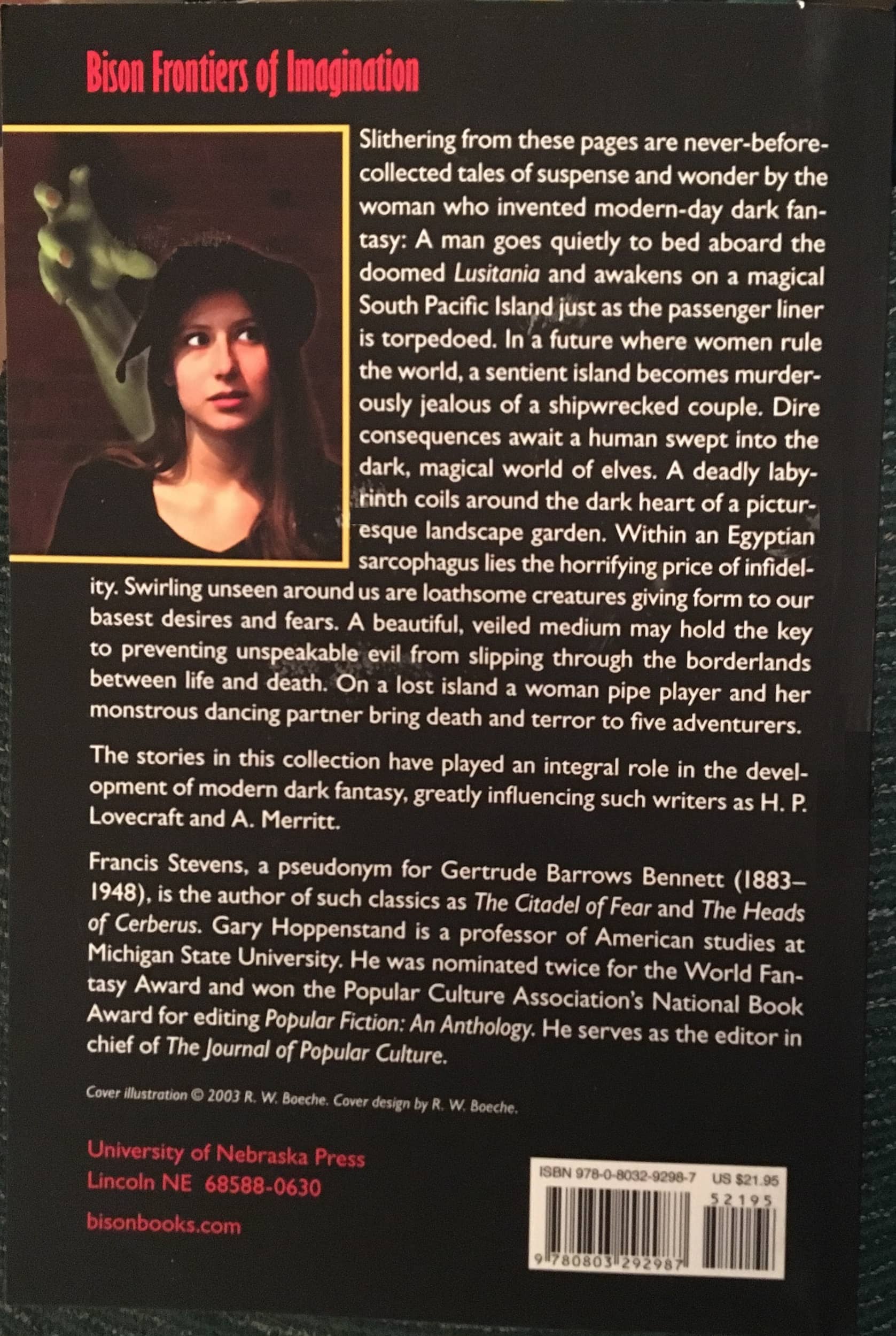
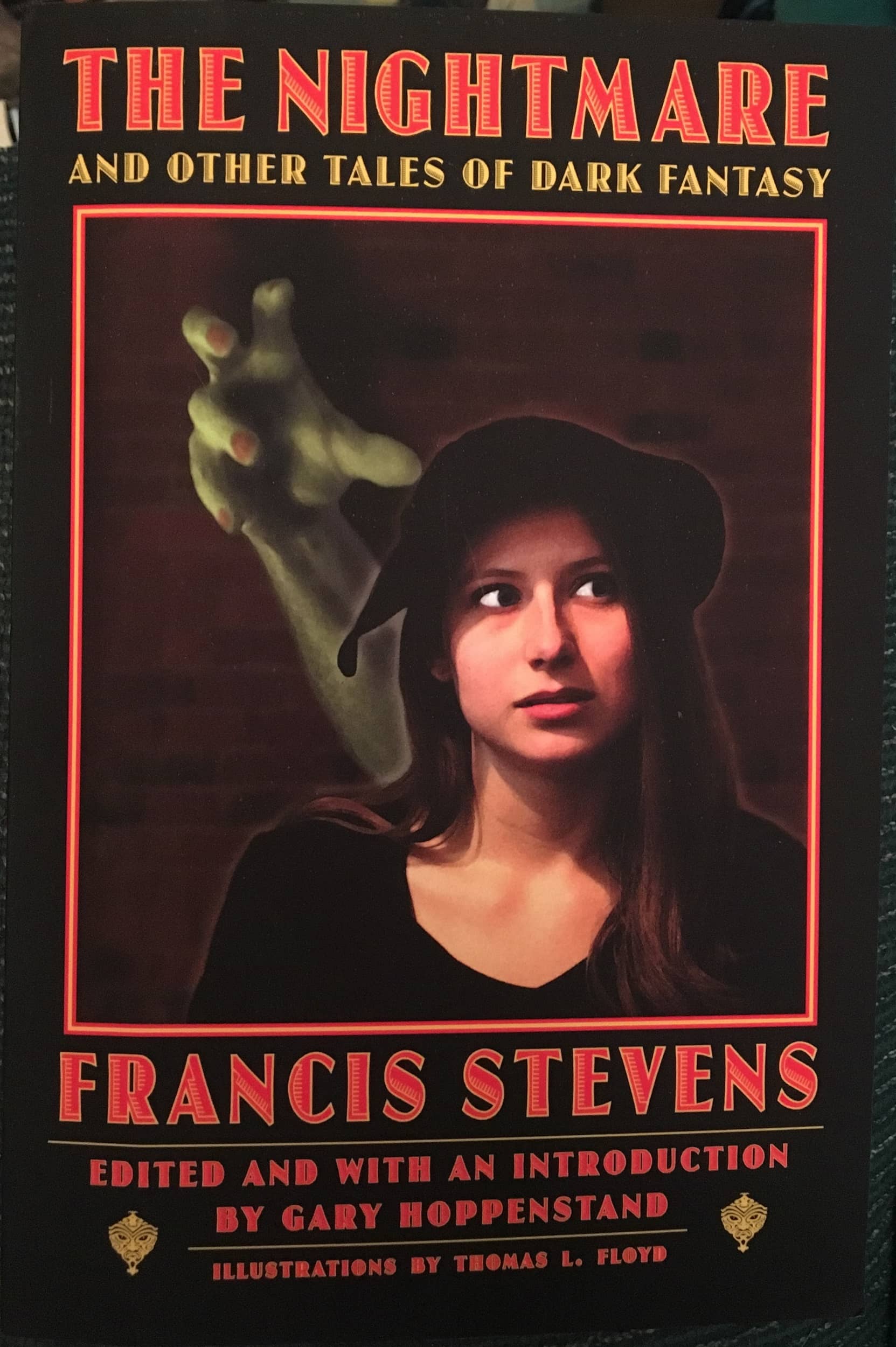
I’ve been accumulating them for over ten years, starting with the Clark Ashton Smith volumes Lost World and Out of Space and Time, which are among my favorite Smith reprints. But recently I’ve been a little more experimental with my Bison purchases, and so far I haven’t been disappointed. Last week I bought a copy of The Nightmare and Other Tales of Dark Fantasy by Francis Stevens, a pseudonym for Gertrude Barrows Bennett (1883 – 1948), author of The Citadel of Fear and The Heads of Cerberus. Her work appeared in many horror anthologies I’ve enjoyed over the years, including Jonathan E. Lewis’s Strange Island Stories (2018), and Sam Moskowitz’s Horrors Unknown (1971) and Under the Moons of Mars (1970). Here’s a snippet from the back cover to demonstrate her range.

In a future where women rule the world, a sentient island becomes murderously jealous of a shipwrecked couple. Dire consequences await a human swept into the dark, magical world of elves. A deadly labyrinth coils around the dark heart of a picturesque landscape garden. Within an Egyptian sarcophagus lies the horrifying price of infidelity. Swirling unseen around us are loathsome creatures giving form to our basest desires and fears…

Sounds like just what I’m in the mood for. The Nightmare and Other Tales of Dark Fantasy was edited and introduced by Gary Hoppenstand, and published by Bison Books on October 1, 2004. It is 404 pages, priced at $21.95. There is no digital edition. The cover is by R.W. Boeche.
Total Pulp Victory: A Report from Windy City Pulp & Paper 2019

Total Pulp Victory: A Report from Windy City Pulp & Paper 2019

Windy CIty Pulp and Paper 2018 paperback treasures-small

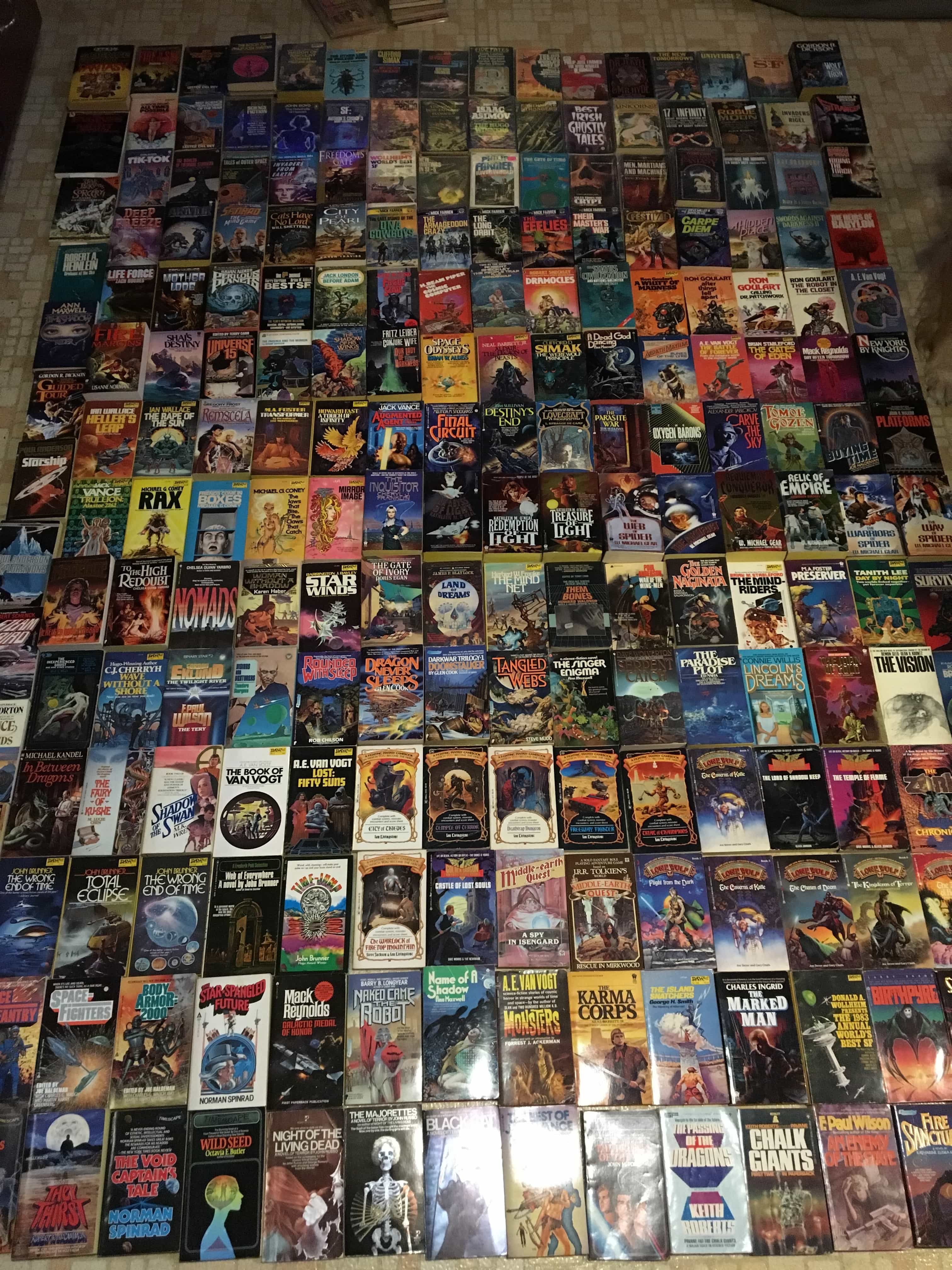
A few of the $1 paperbacks I brought home from Windy City

I returned from the 2019 Windy City Pulp and Paperback Show a few hours ago, weary and happy. It was another fabulous convention, and once again it proved to be the undisputed best show in Chicagoland for those who love vintage books and magazines.

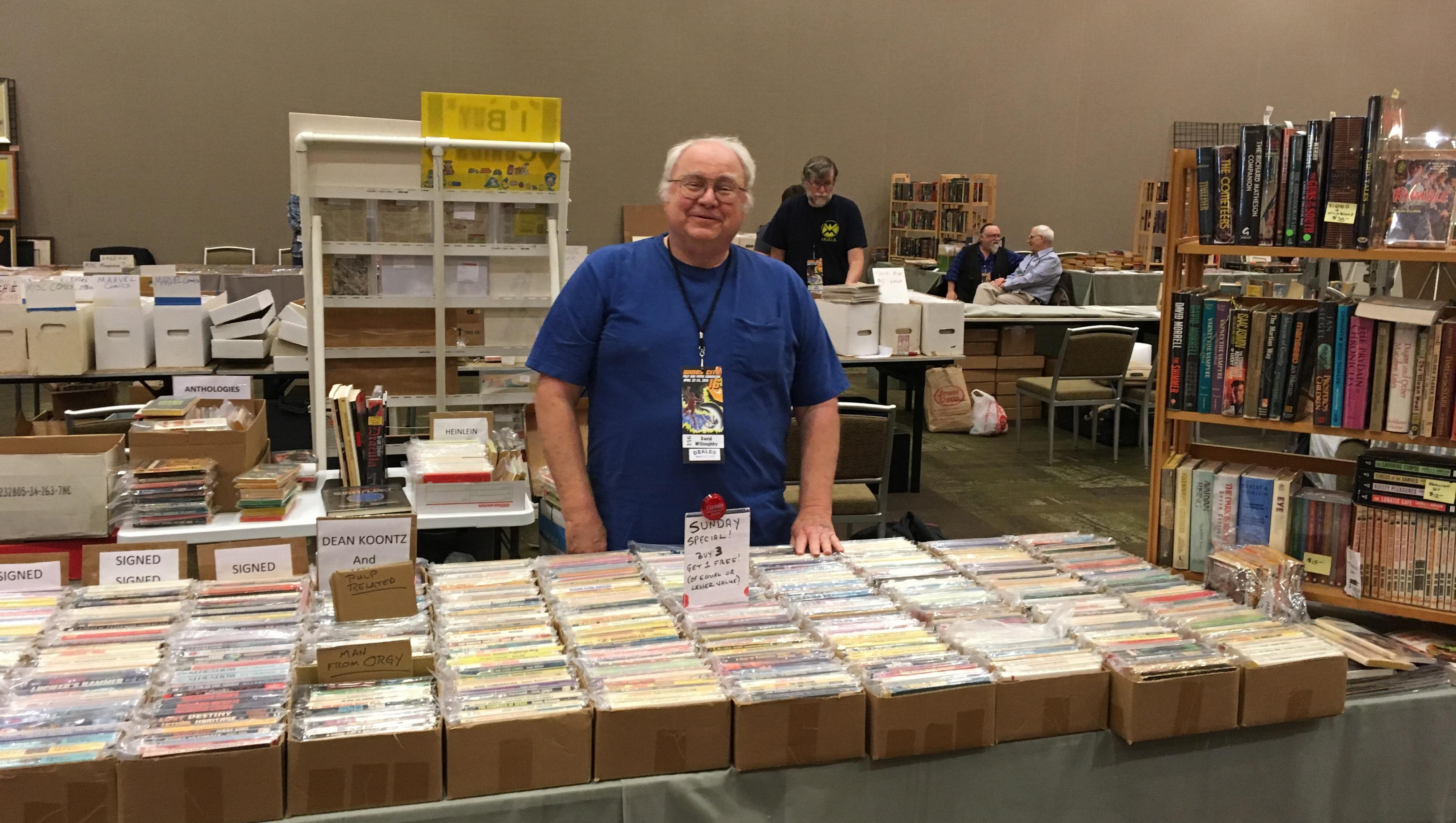
This was the 19th annual convention. It was founded in 2001 by Doug Ellis, and I’ve been attending ever since Howard Andrew Jones and John C. Hocking made the long trip to the 7th Windy City way back in 2007. This year I spent most of the show with friends, including BG bloggers Bob Byrne, Rich Horton, and Steven Silver, as well as local booksellers Arin Komins and Rich Warren, who had a booth and a few spare chairs and were kind enough to let us hang out. There was lots of great food and terrific conversation, and we toasted absent friends, including Howard Andrew Jones, Jason M. Waltz, Barbara Barrett, and especially bookseller and all-around great soul Dave Willoughby, who passed away last year. Dave personified the friendly and welcoming nature of Windy City better than anyone else, I think, and he was profoundly missed.

I made numerous great purchases at the show, including an assortment of Arkham House hardcovers from Doug, some marvelous books from the Glenn Lord estate (purchased from his widow, Lou Ann), a couple of recent Dark Adventure Radio Theater releases from Greg Ketter, a box of vintage SF digests in great condition — and some really wonderful treasures at the auction, including a copy of the 1990 Donald Grant illustrated edition of Lovecraft’s At The Mountains of Madness, several stacks of pulps, and an absolutely magnificent set of 1927 Weird Tales, bound in two volumes.

But as usual, most of what I took home with me was paperbacks. Lots of paperbacks. I found a few that I was willing to pay a premium for, including some Clark Ashton Smith collections and horror anthologies, but the vast majority of them — well over 200 in total — were less than $1 each, including all those I spread out on my kitchen floor to photograph when I got home (see above).

Read More Read More

Tomorrow Isn’t Always Another Day: Remembering Howard Fast’s The Edge of Tomorrow

Tomorrow Isn’t Always Another Day: Remembering Howard Fast’s The Edge of Tomorrow

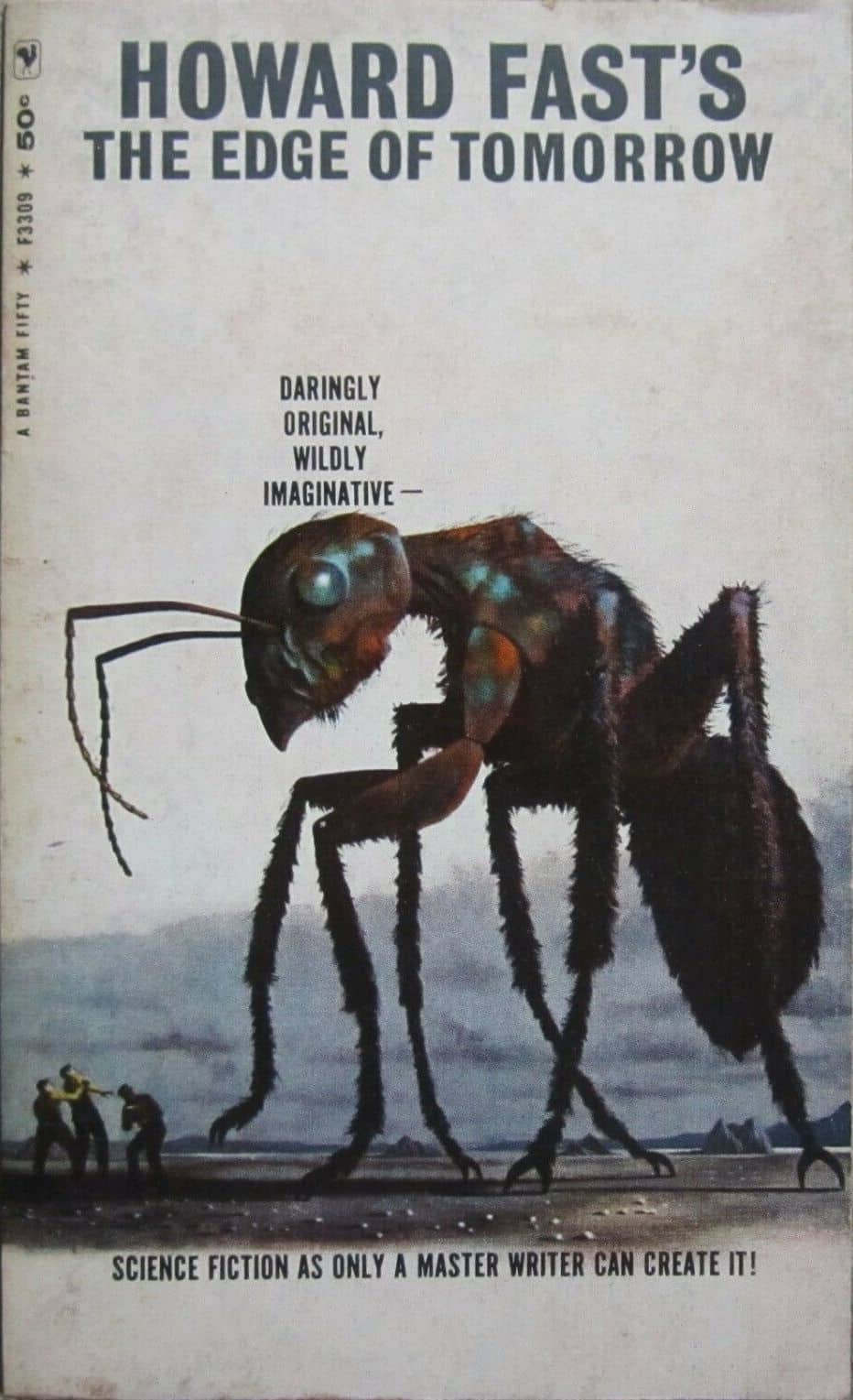
Howard Fast The Edge of Tomorrow-small Howard Fast The Edge of Tomorrow-back-small

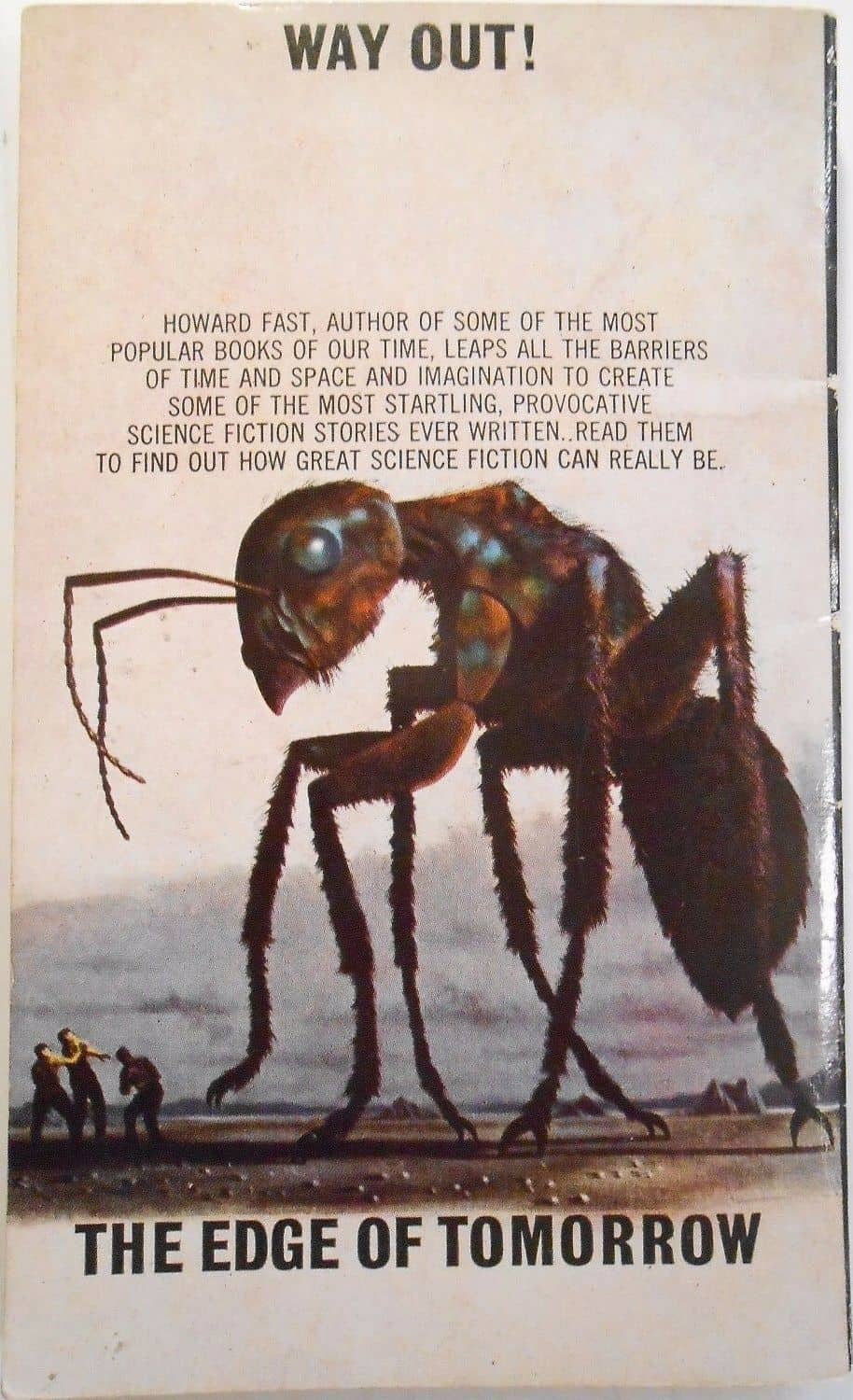
The Edge of Tomorrow (Bantam, 1966) Cover artist uncredited

Books, like music, can evoke images of another time and place. When I picked up The Edge of Tomorrow recently, it triggered memories of Manhattan, Kansas, just before my husband left for Vietnam. It was mid-June 1966 when I drove from California to Fort Riley.

Manhattan was a whole new world. I remember heat and humidity so heavy it was like walking around on the bottom of a warm fish bowl. But there were awesome times too — a Harry Belafonte concert, thunder so loud I thought it would flatten me, and staring out a window all night during a tornado watch.

Yet, my most vivid memories are about food and friends. It was still early days for the anti-war protests and we were not aware of them. Uppermost in our minds was knowing our husbands or fathers or sons or brothers would be going to Vietnam. With so much uncertainty in our lives, we made the best of the moments we had and meals were about the only time life seemed normal.

The troops at Fort Riley trained twelve to fourteen hours a day. That left evenings and some weekends for relaxation. When Bob was home, his Army friends often stopped by for a beer and a chat. Many times, they stayed for a home-cooked dinner. During the five months in Kansas, I prepared a lot of food. Mostly from family recipes. So did other wives. We tasted dishes we had only heard about and exchanged recipes. One of my favorite memories centers around a feast those of us from California put together. We craved Mexican food but tortillas, pinto beans and hot sauce weren’t available in the local stores then. That problem was solved when we wrote and asked our families to send supplies. They were generous beyond belief. All our friends were invited. For a few hours, while we were eating tacos, enchiladas, refried beans, rice, burritos, guacamole and hot sauce, we were home.

Read More Read More

The Golden Age of Science Fiction: The 1973 Hugo Award for Best Fan Writer: Terry Carr

The Golden Age of Science Fiction: The 1973 Hugo Award for Best Fan Writer: Terry Carr

Fandom Harvest

Steven Silver has been doing a series covering the award winners from his age 12 year, and Steven has credited me for (indirectly) suggesting this, when I quoted Peter Graham’s statement “The Golden Age of Science Fiction” is 12, in the “comment section” to the entry on 1973 in Jo Walton’s wonderful book An Informal History of the Hugos. You see, I was 12 in 1972, so the awards for 1973 were the awards for my personal Golden Age. And Steven suggested that much as he is covering awards for 1980, I might cover awards for 1973 here in Black Gate.

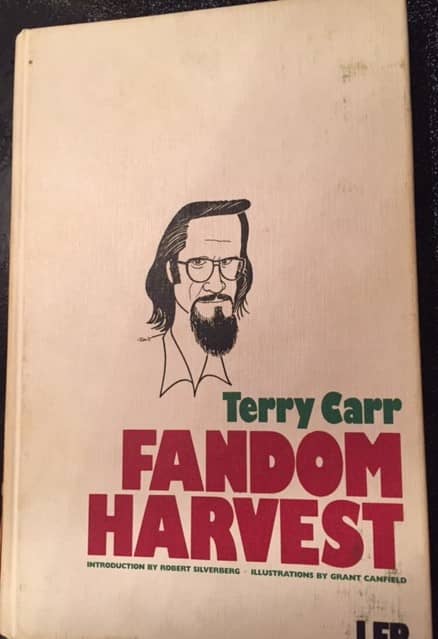
The 1973 Hugo Award for Best Fan Writer went to Terry Carr. Terry Carr (1937-1987) won four Hugos overall – in 1959 he won for Best Amateur Magazine for Fanac (along with his co-editor Ron Ellik), and in 1985 and 1987 he won for Best Professional Editor. (Alas, he died early in 1987, so did not get to receive that award. Famously, this was the second consecutive year that the award was given posthumously – though in 1986 Lester Del Rey bitterly refused the award to his wife Judy-Lynn. (There could be a third posthumous Best Editor award this year, as Gardner Dozois is one of the nominees for Best Editor, Short Form.) Like the great majority of Fan Writer winners, Terry Carr was also an accomplished professional writer, probably best known for his stories “Hop-Friend” and “The Dance of the Changer and the Three” and for his novel Cirque.

Carr wrote some fine fiction, as noted, and also spent some time as an agent, and he was a prolific and wonderful fan writer and fanzine editor. But his largest contribution to the field was as an editor. He worked at Ace through most of the 1960s. There he co-edited the World’s Best Science Fiction series with Donald A. Wollheim, and he spearheaded the classic first Ace Science Fiction Special series. After leaving Ace he became a freelance editor, most famous for his Best Science Fiction of the Year series for Ballantine/Del Rey, and for his Universe series of original anthologies. He also edited the third series of Ace Specials.

Read More Read More

The Golden Age of Science Fiction: Jem, by Frederik Pohl

The Golden Age of Science Fiction: Jem, by Frederik Pohl

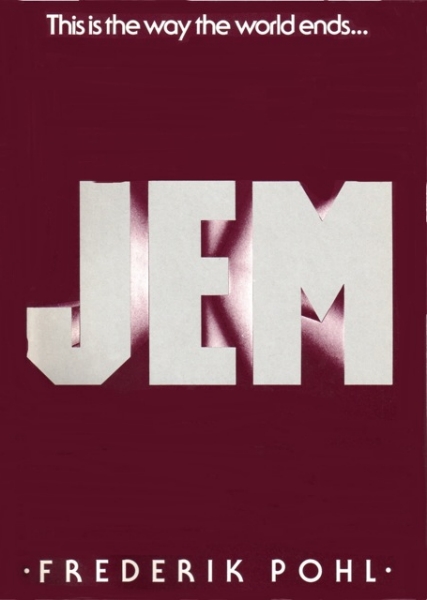
Cover by Irving Freeman

The National Book Awards were established in 1936 by the American Booksellers Association. Although the Awards were not given out between 1942 and 1949 because of World War II and its aftermath, the awards were reestablished in 1950 and given out annually since then. Since 1950, only US authors are eligible for the award, which is designed to celebrate the best of American literature, expand its audience, and enhance the value of good writing in America. From 1980 through 1983, the American Book Awards were announced as a variation of the National Book Awards, run by the Academy of the American Book Awards.

While the National Book Awards were selected by a jury of writers, the TABA program relied on entry fees, committees, and voters made up of groups of publishers, booksellers, librarians, and authors and critics. The change was controversial and a group of authors including Nelson Algren, Saul Bellow, Bernard Malamud, Joyce Carol Oates, Philip Roth, and Susan Sontag, among others, called for a boycott of the award.

The American Book Award included genre categories, presenting awards for mysteries, science fiction, and westerns. Two awards were presented in the science fiction category, one for hardcover, one for paperback. The genre awards were abandoned after a single year. The only winner of the National Book Award for Hardcover Science Fiction was Frederik Pohl’s Jem. The Awards were presented in New York on May 1, 1980 at a ceremony hosted by William F. Buckley and John Chancellor. Isaac Asimov presented the science fiction awards.

I tend to find a lot of Pohl’s novels depressing, even while acknowledging he can write biting satire. His satire tends to be the darkest of humor, and Jem is certainly dark. It opens at a scientific conference held in Bulgaria in the near future, sometime after 2024. Earth has been divided into three massive alliances which are based on the products of the countries involved, The People countries that provide labor, the Oil countries that provide power, and the Food countries. Pohl introduces four individuals at the conference, Ana Dimitrova, a translator from the food bloc, her lover, Abdul Dulla, a scientist from the people countries, Danny Dalehouse, a scientist from the food countries, and Marge Menninger, a soldier from the food countries.

Read More Read More

New Treasures: Necropolis PD by Nathan Sumsion

New Treasures: Necropolis PD by Nathan Sumsion

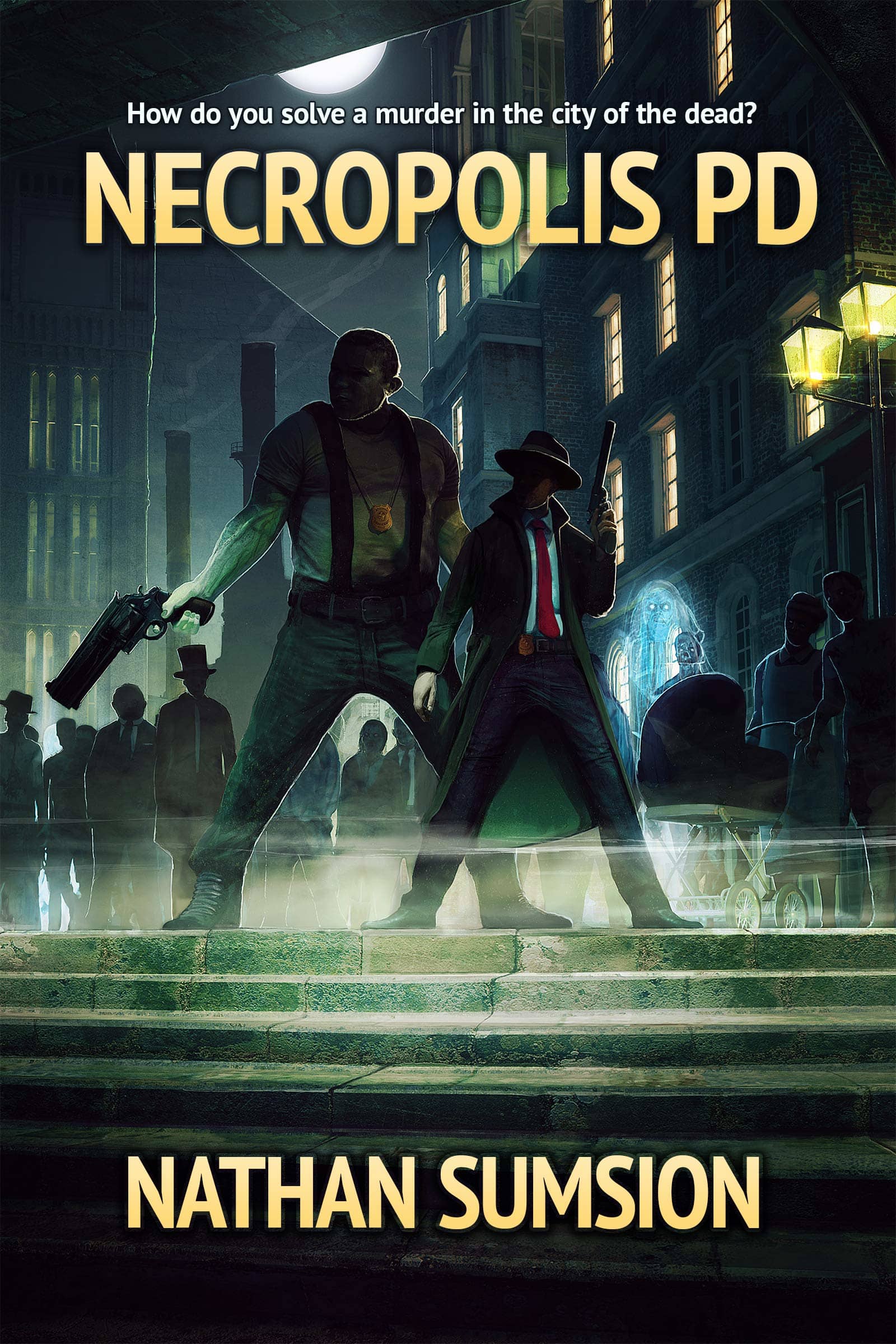
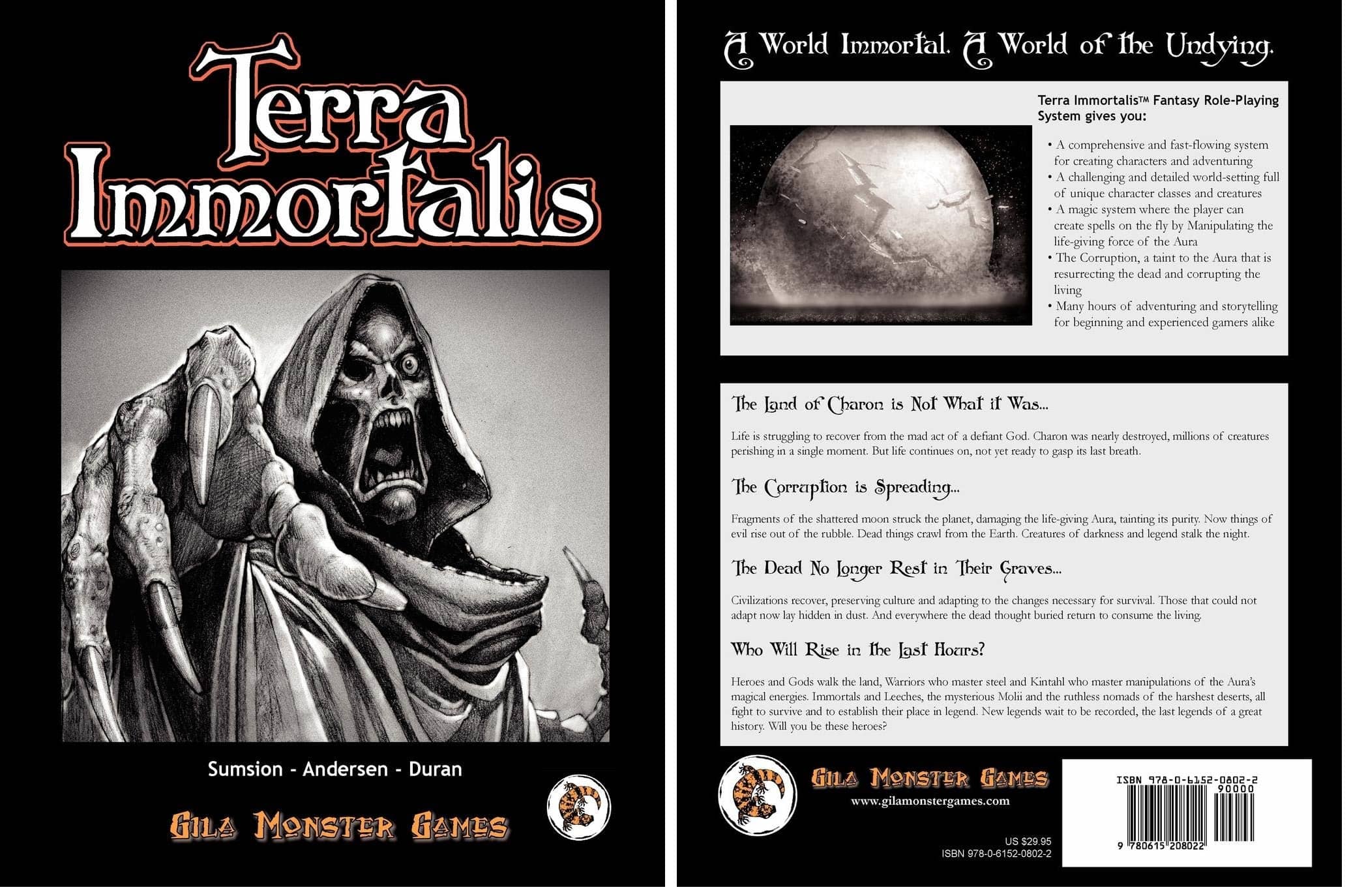
Necropolis PD-smallBack in October, I managed to trap Parvus Press co-founder Colin Coyle in a bar long enough to get the scoop on his upcoming releases. There were plenty of interesting titles in the mix, but the one that really grabbed my attention was the debut fantasy novel by Nathan Sumsion, co-creator of the Terra Immortalis role playing game. Here’s what Colin shared then.

Necropolis PD is one of my favorite urban fantasies in a long time. It’s a cousin to both Butcher’s Dresden Files and Gaiman’s Neverwhere and I honestly feel that it brings a new flavor to a genre that has been heavily tread in recent years.

Necropolis PD is the tale of Jacob Green, trapped in the Meridian, a city of the dead, and pressed into service to solve a series of bizarre murders. Andy Whitaker at SFCrowsnest says Meridian “is a strange and compelling place. Don’t be fooled by the dark humour and strange environment… [Sumsion] might just have struck gold.” Here’s the description.

How do you solve a murder in the city of the dead?

Jacob Green was just an average college student. But three months ago, he ran through the wrong door and found himself trapped in the city of Meridian – a literal necropolis, concealed from the modern world, made up of forgotten places and populated entirely by the dead.

As the only living, breathing resident, Jake has struggled to scrape out an existence while waiting for the Necropolis Police Department to decide his fate, and it’s not looking good. But when an unusual string of crimes hits the city, Jake’s overseer and tormentor, NPD Detective Marsh offers him a deal: Jake’s life in exchange for helping them solve the worst series of crimes in the necropolis’ history.

Someone, or some thing is killing the dead, and if Jake can’t figure out who’s responsible, he could be next.

Necropolis PD is a hidden world fantasy that combines mystery, horror, magic, and more than a little humor. This book is perfect for the living and recently-departed alike.

Necropolis PD is the latest in the flourishing sub-genre of undead detective fiction. If you like it as much as I do, here’s a few more recent examples.

Read More Read More

The Strange Tale of the Fighting Model T Fords

The Strange Tale of the Fighting Model T Fords

81QMbTR6RdL

While writing my next novel in the Western Desert of Egypt (something I’ve discussed in several previous posts), I came across an interesting local landmark. Behind my campsite in Bahariya Oasis stands a grim heap of black volcanic stone called “English Mountain”. When I asked around about this unusual name, the local Bedouin told me that it was once home to an English soldier who kept watch for attacking tribes back in the days when Egypt was still a colony. I was told the ruins of his house could still be seen.

So of course I went up to see them!

But not before taking Ahmed Fakhry’s excellent book Bahariya and Farafra out of my backpack to see what he had to say about this. Yes, I travel through the Sahara with a bag full of books.

Written in 1974 but mostly based on expeditions the archaeologist took in the 1930s, Fakhry’s book is full of useful information and folklore. In it he says that English Mountain is actually named after a New Zealander named Claud Williams, who commanded No. 5 Light Car Patrol during World War One. Williams, Fakhry says, kept a lonely vigil atop that mountain for hostile Senussi tribesmen.

And therein lies a tale.

Read More Read More

Future Treasures: A Time of Blood, Book 2 of Of Blood and Bone, by John Gwynne

Future Treasures: A Time of Blood, Book 2 of Of Blood and Bone, by John Gwynne

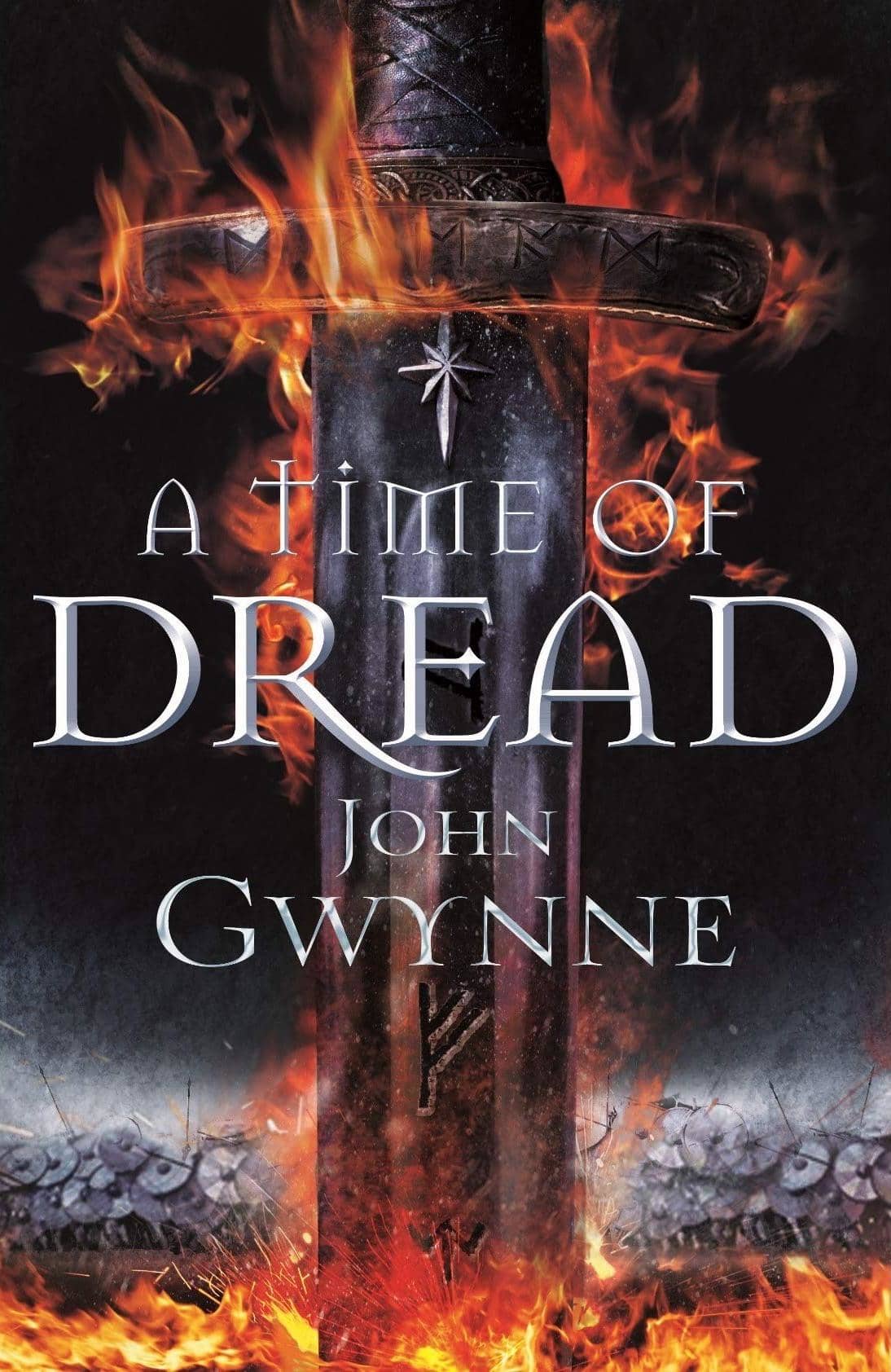
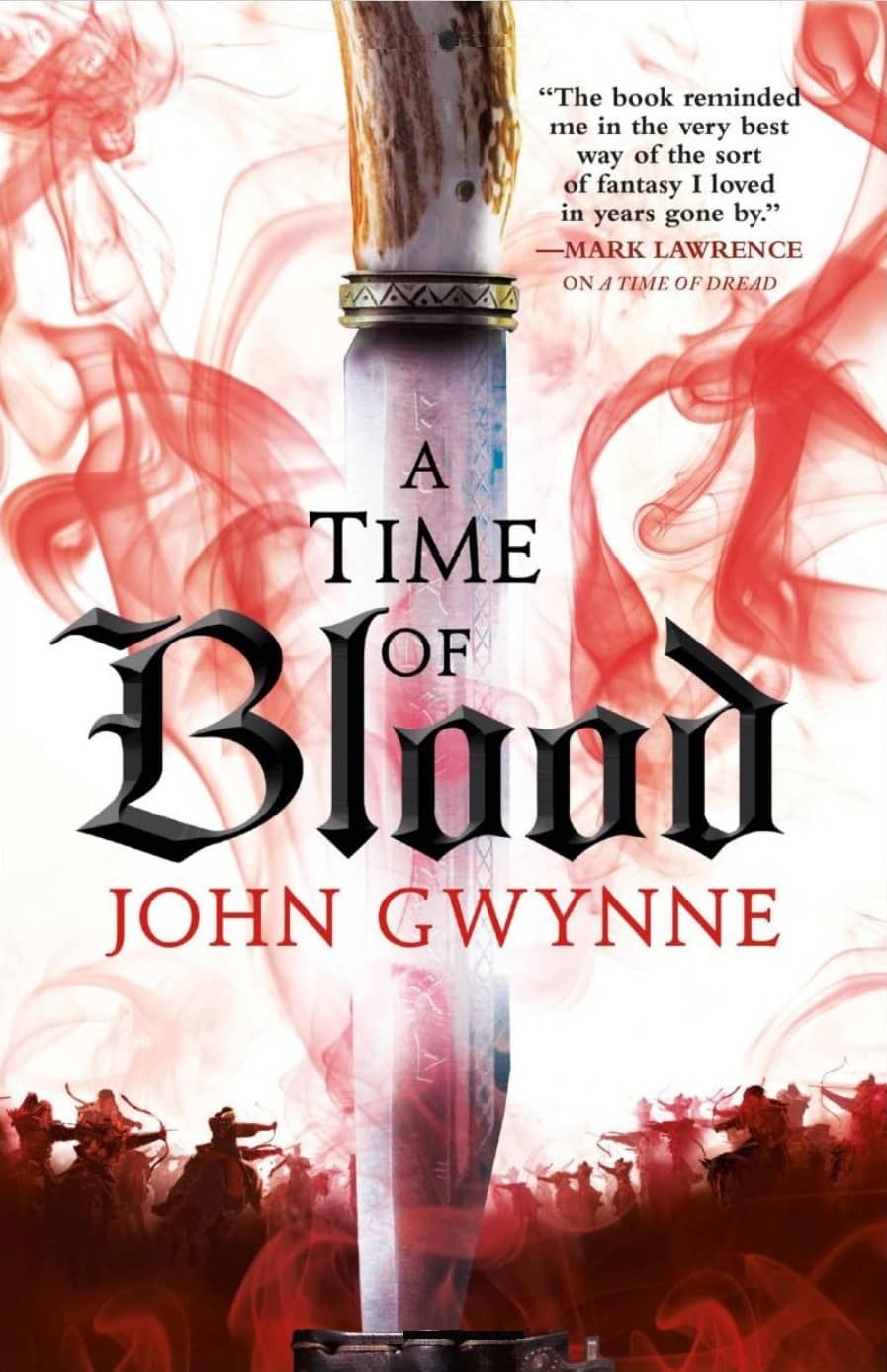
A Time of Dread-small A Time of Blood-small

John Gwynne won the David Gemmell Morningstar for Malice, the opening novel in his 4-book series The Faithful and the Fallen. That series has enthusiastic fans all over the world, and when word spread that Gwynne was preparing a sequel series, Of Blood and Bone, it generated plenty of interest. In his review of the first volume of that new series at The Fantasy Hive, A Time of Dread (2018), Charlie Hopkins wrote:

Wrath was an awe-inspiring, frenetic finale to one of the all-time great fantasy series – The Faithful and the Fallen – and I’d just finished reading it when I heard John Gwynne’s new project would also be set in the Banished Lands, but a few generations into the future… If you’ve not read the first series, don’t hesitate to start here with this one and then go back later to read the “prequel.’ A Time of Dread is going to be on every ‘Best of’ list, and you’d be daft not to move it to the top of your ‘must read’ pile.

A Time of Dread was well received when it first appeared. Here’s part of the Publishers Weekly review:

Nice guys finish alive, and not always last, in this gritty but not grimdark fantasy of battling supernatural forces, set in a fantasy world where humans battle the demonic Kadoshim with the assistance of the Ben-Elim, a winged race of warriors from the ethereal Otherworld. Bleda, a human warrior-prince whose siblings are killed by a Ben-Elim they attacked, is taken hostage and raised by the Ben-Elim. When the supposedly defeated Kadoshim suddenly spring out of hiding with their own human allies and human-demon children, Bleda teams up with Riv, a fellow denizen of the Ben-Elim citadel, to take them on. Riv finds that the angels she knows often fight and scheme among themselves, their conflict instigated by the issue of “improper” human–Ben-Elim relationships. Separately, Sig, a bear-riding giant familiar from Gwynne’s The Faithful and the Fallen series, embarks on a solo quest to eradicate the Kadoshim… [Gwynne] avoids much of the cynicism that reduces epic struggles to mere realpolitik.

A Time of Blood, Book 2 of Of Blood and Bone, arrives next week from Macmillan (UK) and Orbit (US). It is 474 pages, priced at $16.99 in trade paperback and $11.99 in digital formats. The cover is by Paul Young. Read a lengthy excerpt from A Time of Dread here.

The Golden Age of Science Fiction: George O. Smith

The Golden Age of Science Fiction: George O. Smith

George O. Smith
George O. Smith

First Fandom was established in 1958 following a conversation among fans at Midwestcon who realized they had all been active in fandom for more than 20 years.  The original cut-off date for membership was that individuals had to be active in fandom prior to January 1, 1938, although that timeline has been loosened up and there are now multiple classes of membership.  The original chair of First Fandom, Robert A. Madle, is still alive.

The First Fandom Hall of Fame was established in 1963 to recognize contributions to science fiction as either a fan, author, artist, editor, or agent.  The first inductee was E.E. “Doc” Smith.  There was no inductee in 1965.  Up until 1984, only one person was inducted in a given year, the exception being in 1974 when both Sam Moskowitz and Forrest J Ackerman were inducted.  Following 1985, multiple annual inductees became the norm. Isaac Asimov became the first posthumous inductee in 2008, and now most year include a posthumous inductee.

In many years, the First Fandom Award has been presented at the beginning of the Hugo Award Ceremony.  In 1980, the award was presented at Noreascon Two in Boston, Massachusetts on August 31 by Lester del Rey. The award was accepted on George O. Smith’s behalf by Frederik Pohl.

Born on April 9, 1911 in Chicago, Illinois, George O. Smith is best known as the author of the Venus Equilateral series and his first published short story, “QRM—Interplanetary,” which appeared in the October 1942 issue of Astounding Science-Fiction kicked off that series. The stories revolve around a satellite which is meant to act as a relay station when the sun blocks radio waves as the planets move in their orbits.  Smith used the series to discuss various technical issues.

Read More Read More

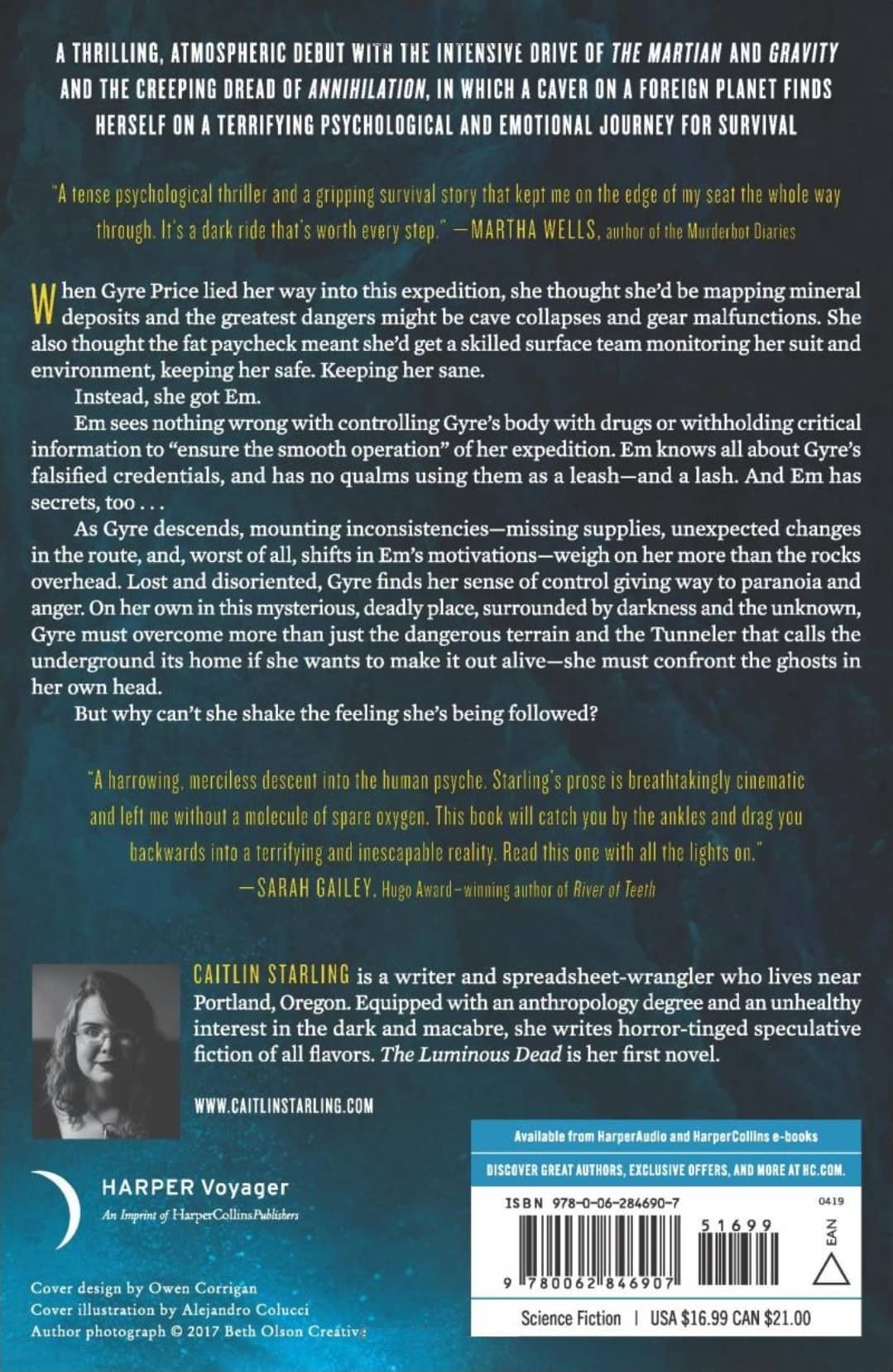
New Treasures: The Luminous Dead by Caitlin Starling

New Treasures: The Luminous Dead by Caitlin Starling

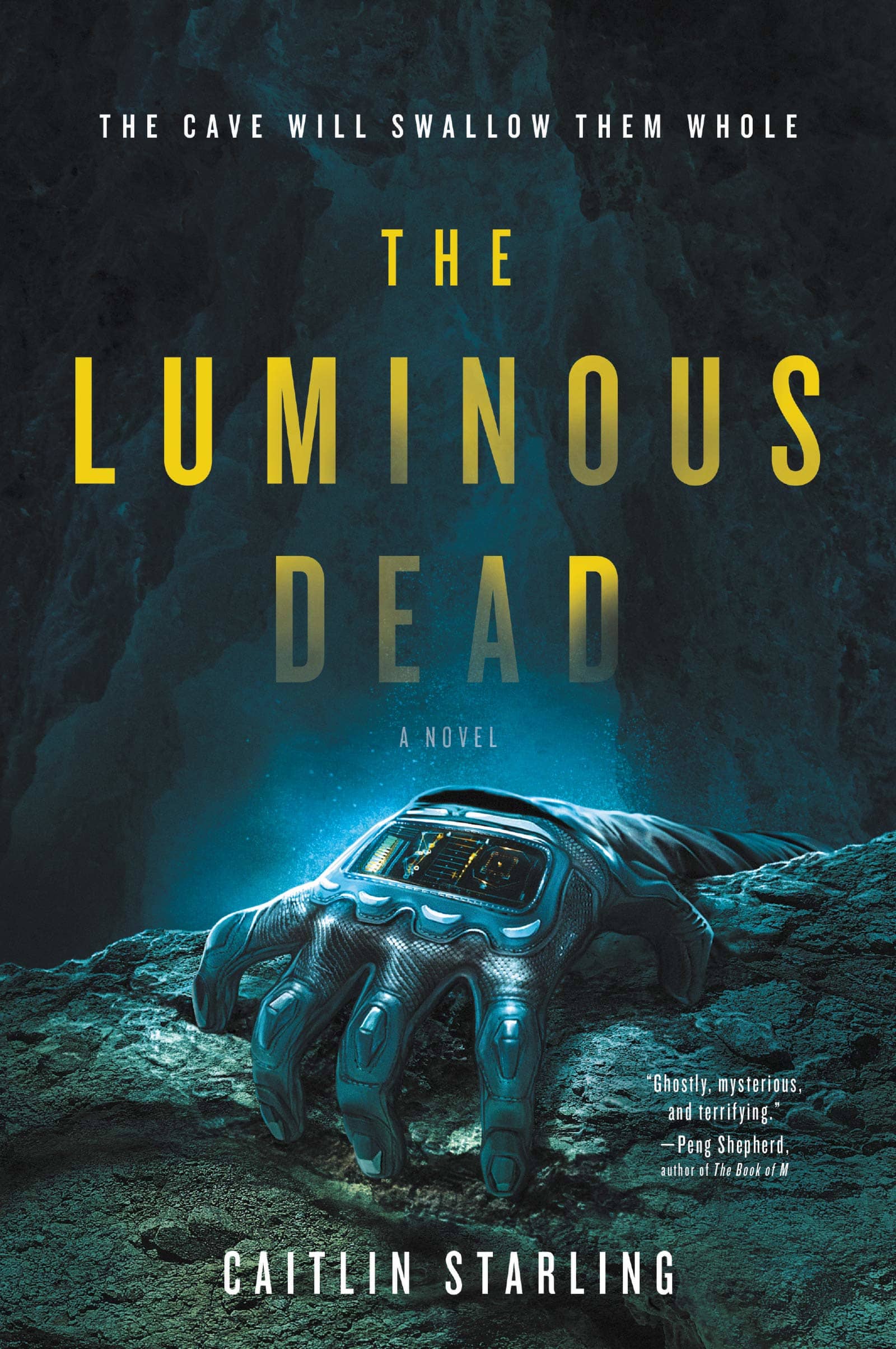
The Luminous Dead-small The Luminous Dead-back-small

There’s nothing like a good sci-fi horror tale. A lot of my favorite SF is horror, in fact — Alien, Dan Simmons’ Carrion Comfort, Stephen King’s The Stand, Lovecraft’s At the Mountains of Madness.

The tale of an ill-fated mining expedition on an alien planet, Caitlin Starling’s debut novel The Luminous Dead looks like one of the most promising SF horror tales of the year. Liz Bourke at Tor.com says it’s “a gripping debut from a talented voice,” and Black Gate author Martha Wells calls it “A tense psychological thriller and a gripping survival story… a dark ride that’s worth every step.” Here’s Martin Cahill, from his review at The Barnes & Noble Sci-Fi & Fantasy Blog.

Outfitted in a state of the art suit monitors and feeds her — and shields her presence from the mysterious, monstrous Tunnelers that dwell within the plane — Gyre’s life depends on the reliability of the tech and the skill of her team of handlers, who are ostensibly steering her toward the safest paths from the surface… Except there is no team, there’s just Em. Brilliant, cold, and tactical, Em has no qualms with using drugs on Gyre without her consent, manipulating her, and keeping her in the dark (both literally and metaphorically) as she works toward her own ends.

Together, Gyre and Em delve into one of the most dangerous cave systems on the planet, for a purpose that Gyre doesn’t know and Em won’t reveal. And though she’s certainly isolated on her journey, Gyre may not be alone in the dark.

That’s just a hint of the horrors lurking within The Luminous Dead, the fantastic horror sci-fi debut from Caitlin Starling. It’s a novel as claustrophobic as the premise suggests… As danger closes in on all sides, we’re never quite sure who love, who to hate, or who to trust.

And oh what dangers there are: treacherous drops, vicious riptides flowing through underground pools, an alien fungus that infects everything it touches, and the Tunnelers, ravenous creatures drawn to disturbances in the rock, Gyre’s suit batteries running low, missing supply checkpoints, and more. There is much to fear down in the dark.

The Luminous Dead was published by Harper Voyager on April 2, 2019. It is 414 pages, priced at $16.99 in trade paperback and $11.99 for the digital edition. The cover is by Alejandro Colucci. Read a generous 35-page sample (the complete first three chapters) here.