Browsed by
Category: Books

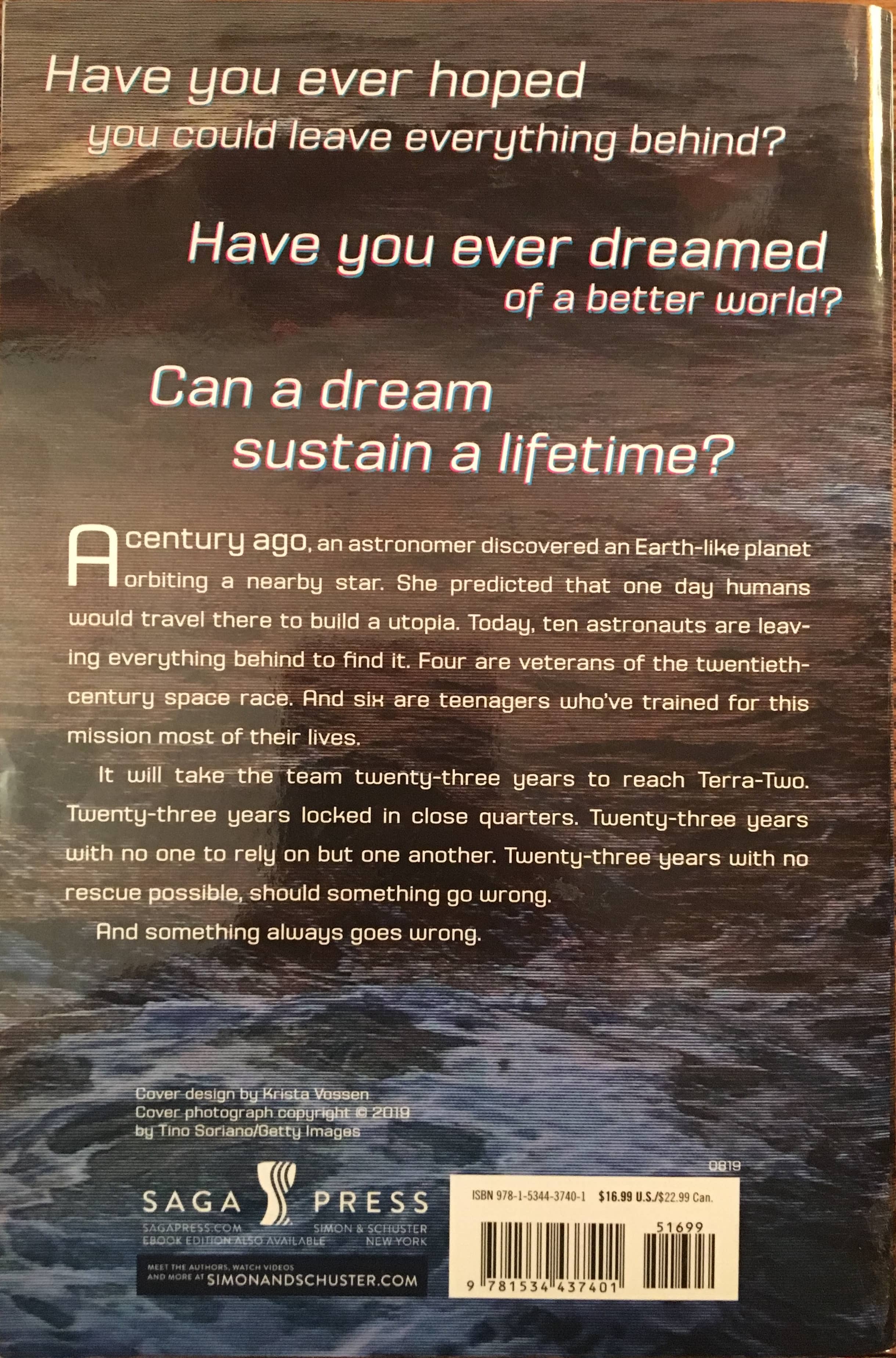
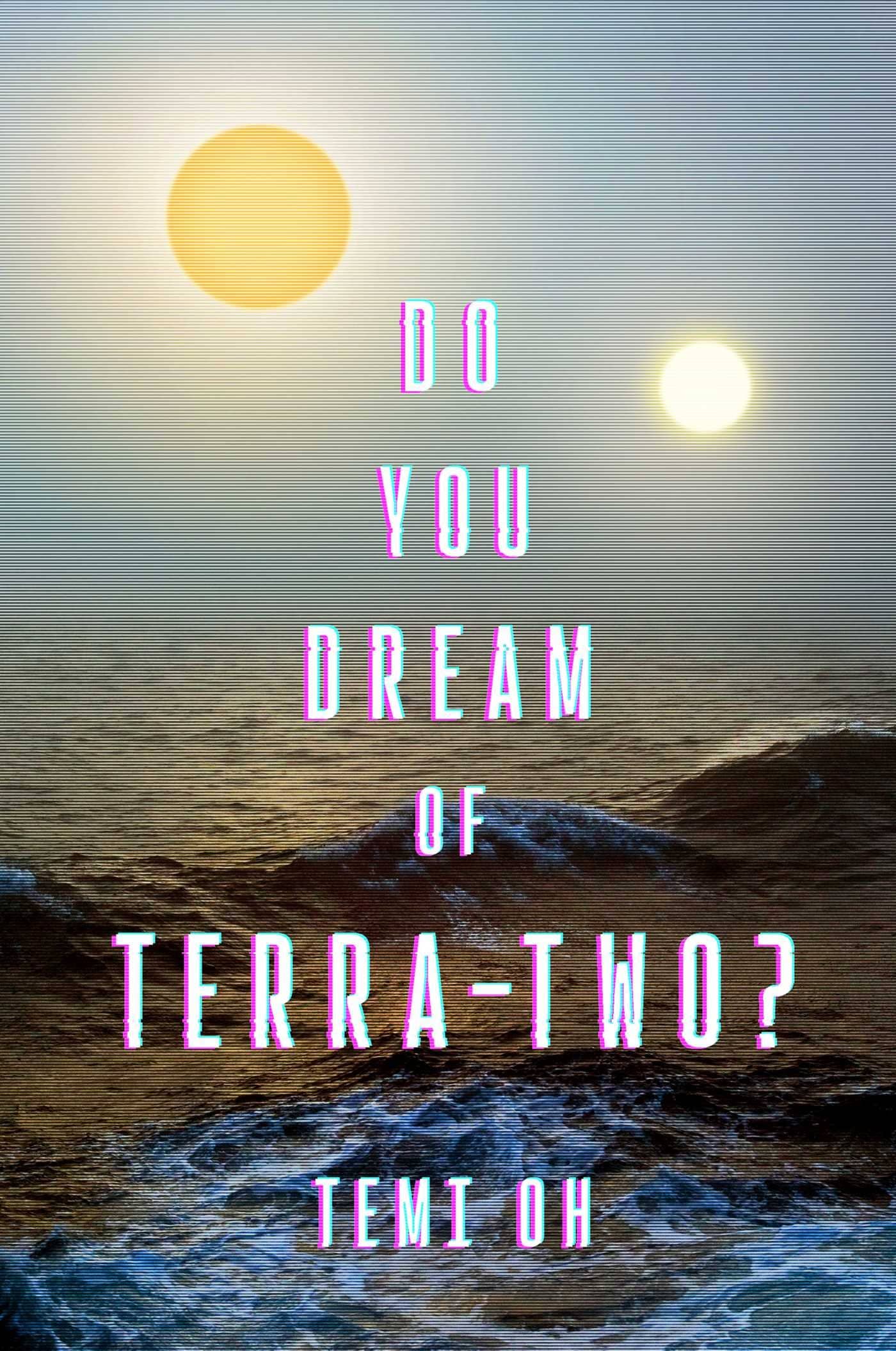
New Treasures: Do You Dream of Terra-Two? by Temi Oh
New Treasures: Do You Dream of Terra-Two? by Temi Oh

Do You Dream of Terra-Two-small Do You Dream of Terra-Two-back-smll

Cover design by Krista Vossen

I’ve recently signed up for Audible, Amazon’s downloadable audiobook service, and it’s totally changed my daily commute to downtown Chicago. I’ve finished three audiobooks in the past two weeks, and enthusiastically filled up my queue with titles from my to-be-read pile. Sure, it’s a little irritating to pay for audio versions of books I already own, but the satisfaction of finally making progress on that towering pile more than makes up for it.

If anything can interrupt that victorious clearing of the dusty pile on my night table, it’s a highly acclaimed debut. There have been a few in the last two months, and one of the most compelling is Temi Oh’s Do You Dream of Terra-Two?, which NPR calls “Gorgeous. Thoughtful. Contemplative.” And Colleen Mondor at Locus reviewed it warmly, saying:

This book is a doorstop, but it’s also an incredibly unique and realistic space novel that will give read­ers a lot to think about and should not be missed… various space agencies have been working on various plans to reach a distant planet, Terra-Two, and have begun a colonization project. As humans have already been to Mars and there are other missions slightly beyond that point, reaching Terra-Two is not im­possible. The problem is that it will take over 20 years to get there, and so the first astronauts need to be very young when they depart. The solution is a space academy for teenagers and a selection of six of them to launch, with four older, experi­enced astronauts, when the younger “beta” group is under 20 years old….

In most space operas, there is an attack or some other horrific drama brought upon the people traveling in space. There certainly is, eventually, something dramatic that happens to the crew of the Damocles (spoiler alert: no aliens), but most of the narrative involves itself with the quieter dramas involved in the reality of this great commitment the young crew has made… once on Damocles, once they have settled into what will become a years-long rhythm of life and work, then the proverbial wheels start to come off the bus… Do You Dream of Terra-Two? is not the usual sort of space novel; it’s an investment in relation­ships, a look at how complicated the social aspects of interstellar space travel will likely be. Temi Oh takes big risks with this big novel, and I think she accomplishes some big things. It’s not what you expect but, in every important way, it’s what you really need to read.

I haven’t decided yet if Do You Dream of Terra-Two? will displace any of the titles on my Audible queue, but I did pick up a print copy. It was published by Saga Press on August 13, 2019. It is 532 pages, priced at $16.99 in trade paperback and $7.99 in digital formats. The cover was designed by Krista Vossen. See all our recent New Treasures here.
Of Horizons and Common Sense Lost

Of Horizons and Common Sense Lost

51G8TVzla+L._SX323_BO1,204,203,200_I recently got around to reading Gerry Conway’s introduction to Marvel’s Deadly Hands of Kung Fu Omnibus, Volume One for a forthcoming article. If there was a retroactive Astounding Award for Best Self-Loathing Writer of 2016, Mr. Conway would surely be a contender. There is nothing wrong with a writer looking back in some embarrassment over past work or even admitting their good intentions now seem naive from the vantage point of the present, but Mr. Conway apologizes so profusely for several thousand words one would be forgiven for thinking he committed a capital crime.

Truth be told, Mr. Conway’s unforgivable sin was his cultural appropriation in daring to cast people of color as heroes in his fiction of the 1970s. For you see, by some cruel twist of fate, he had the misfortune to be born to a white family and raised in a white neighborhood in the 1950s. Personally, I thought his having created diverse characters to appeal to minority readers and encourage tolerance among all readers in the decade following the Civil Rights movement is something he should be proud of, but apparently not so.

What’s more, all of his wailing and grinding of teeth is in the form of an introduction to a volume reprinting the work he is so ashamed of. One wonders what the purpose is of writers telling readers who just spent money buying reprints of their work how truly offensive those same works are. Given that Mr. Conway spent much of his career at Marvel Comics channeling Stan Lee’s voice, one wonders why Stan Lee isn’t likewise condemned for cultural appropriation for creating Black Panther and the Utopian nation of Wakanda. Of course, logical thinking isn’t advisable in a society that feeds off emotional reactions to maintain a constant state of division.

Read More Read More

Vintage Treasures: Minds Unleashed, edited by Groff Conklin

Vintage Treasures: Minds Unleashed, edited by Groff Conklin

Minds Unleashed-small Minds Unleashed-back-small

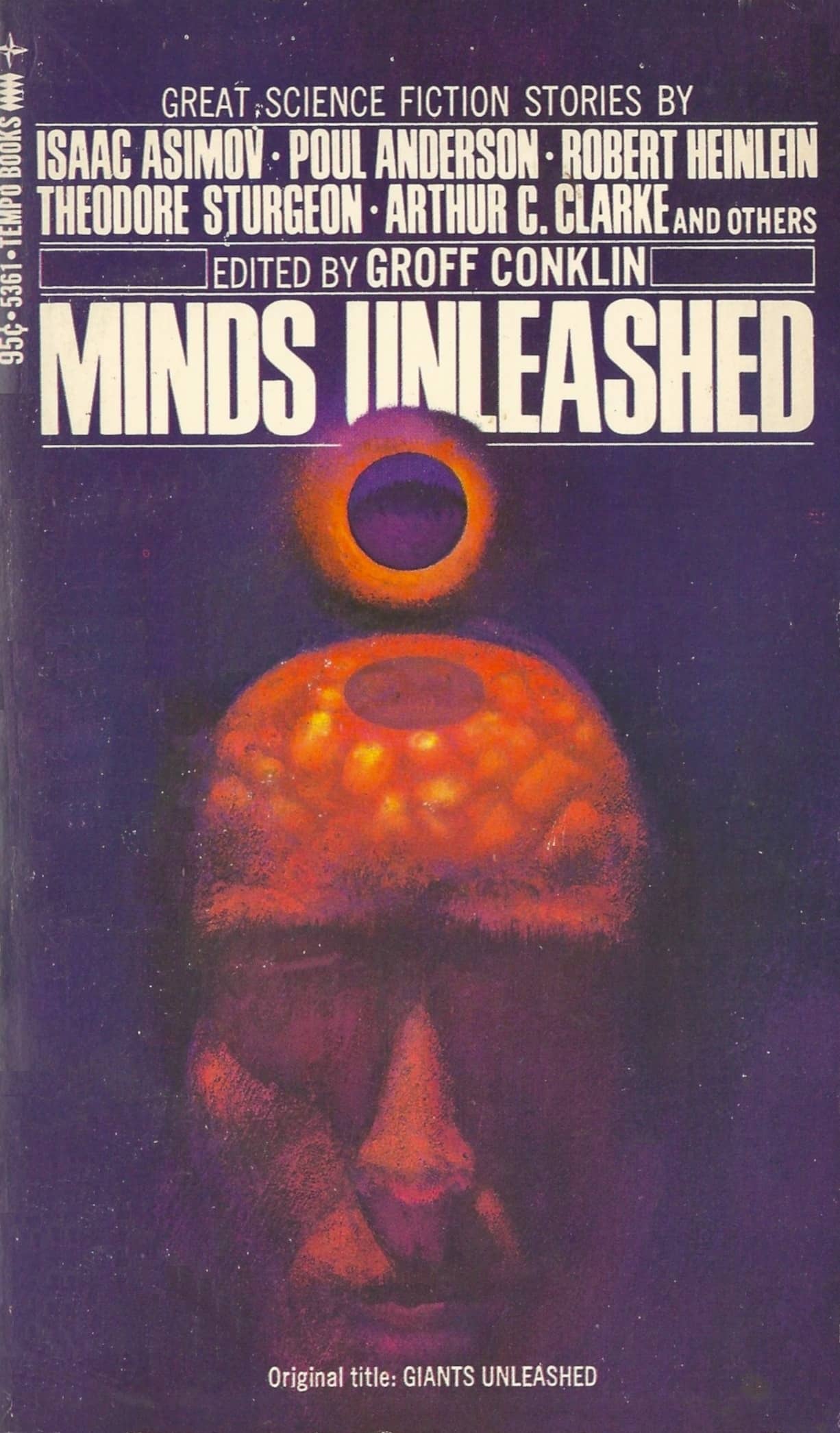
Minds Unleashed, Tempo Books, 1970. Cover by, well, no one really knows.

You know what I try hard to do every day? Not sit around and talk about the good ‘ole days. It takes effort, let me tell you.

Not that everything was better in the good ‘ole days, Lord knows. But you could get terrific original anthologies in spinner racks at the supermarket for under a buck, and let’s face it, that’s what really matters.

Anthologies like Groff Conklin’s Minds Unleashed (Tempo, 1970). Just look at that gorgeous cover. A big red brain with a glowing blue ball representing… I dunno? The super brainpower we’d all have fifty years in the future, probably? I love it. I don’t love that Tempo Books was such a low-budget operation that they couldn’t afford to tell you who painted the damn cover, but these are the burdens we live with. Mind you, if you do the math, that far-off future fifty years after 1970 is… the year 2020. Which means my blue floaty brainball should show up any day now. Come on, future brainpower.

While we’re waiting, we can all can help prepare our superbrains by reading great science fiction stories about “the potential of human imagination and the range of strength of human intelligence” by Arthur C. Clarke, Theodore Sturgeon, Murray Leinster, Robert A. Heinlein, Poul Anderson, Eric Frank Russell, Isaac Asimov, William Tenn, and many others. Let’s have a look at the table of contents.

Read More Read More

The Golden Age of Science Fiction: Debut Novels

The Golden Age of Science Fiction: Debut Novels

Cover by Ian Wright
Cover by Ian Wright

Cover by Larry Kresek

Wereblood
Wereblood

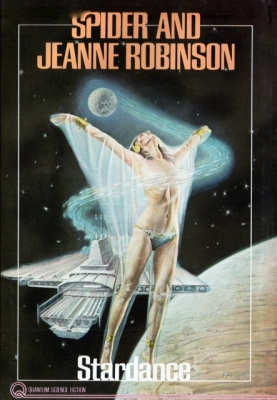
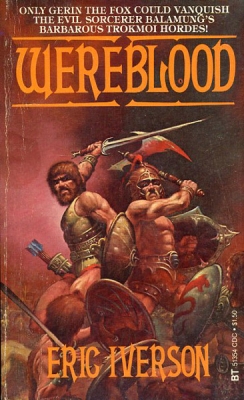
Taking a break from award winners, several authors published their first novels in 1979.  Some of these authors had previously published short stories and one notable one was active in radio and television and wound up winning several awards for work done in 1979 (Douglas Adams).  Here is a look at some of the debut novels of 1979.

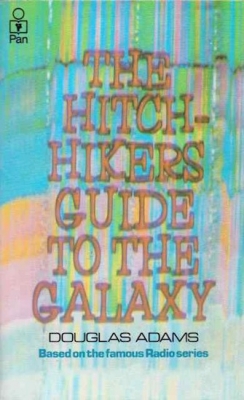
Perhaps the biggest splash for a debut novel in 1979 was Douglas Adams’s The Hitchhiker’s Guide to the Galaxy, although it was really a novelization and abridged version of his radio show of the same title, which had previously aired in 1978. The novel, of course, sparked a series of five novels by Adams, plus one more by Eoin Colfer, and adaptations for stage, television, screen, and upcoming, a streaming service. A satire on the tropes of science fiction, the absurdity of the situations and responses in the books hit a nerve with the public and have expanded beyond the genre, with people who haven’t read science fiction at least recognizing that the number 42 is a cultural touchstone.

Read More Read More

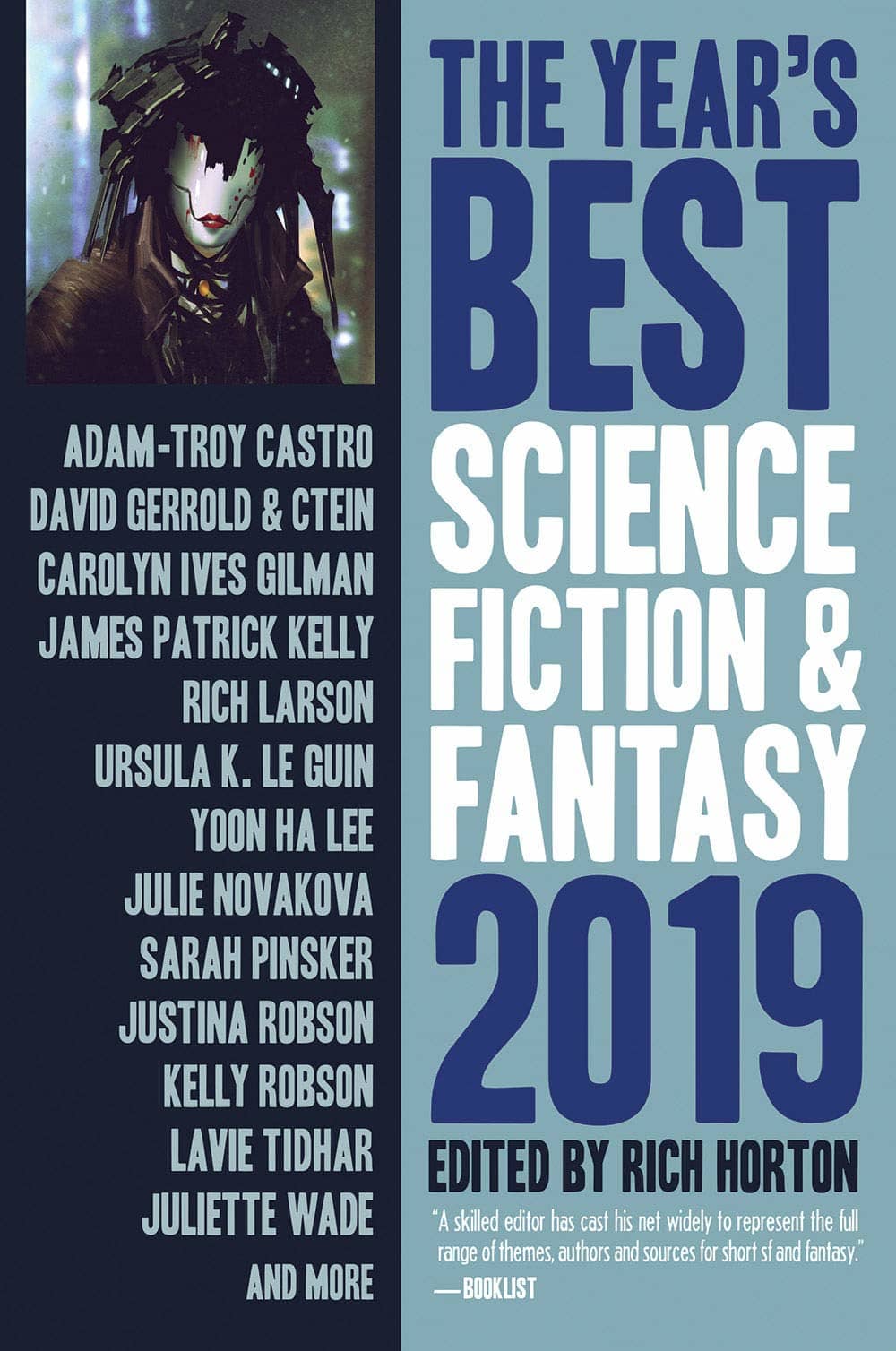
New Treasures: The Year’s Best Science Fiction & Fantasy 2019, edited by Rich Horton

New Treasures: The Year’s Best Science Fiction & Fantasy 2019, edited by Rich Horton

The Year's Best Science Fiction & Fantasy 2019-smallThe latest volume of Rich Horton’s Year’s Best snuck up on me. I know, I’m supposed to be on top of these things. For some reason I was expecting it later in the year, but it popped up in my Amazon cart last week, in stock and everything.

Rich produces my favorite Year’s Best every year, but hasn’t always seemed totally comfortable with all the trappings of being an editor. He hasn’t shown the same enthusiasm for lengthy introductions or Yearly Summations that Gardner Dozois famously did, for example. But in the last few years Rich seems to have really found his voice, and these days I find I really enjoy his intros. He avoids Gardner’s critical edge, for example, focusing instead on the collegial nature of the science fiction community.

This year he gives an affectionate shout out to his nominal competitors for your Best of the Year dollars, including editors Jonathan Strahan, Ellen Datlow, Neil Clarke, and even Gardner, who passed away last year, shortly before his Thirty-Fifth Annual Collection was released, ending an era. Have a look.

There are a lot of Best of the Year volumes in our field, and frankly I recommend them all. One of the features of SF in 2018 is how much of it there is. There’s enough short fiction that the Hugo shortlist can very nearly ignore men, and still be mostly full of strong stories. (There are a couple of duds, but so it always was.) There’s enough that both the Hugo and Nebula shortlists can completely ignore the traditional print SF magazines (F&SF, Asimov’s, Analog, and Interzone, let’s say), and still be mostly full of strong stories. How then to resolve that issue? Read as many of the Best of the Year volumes as you can, I say! (And, hey, why not subscribe to one of the print magazines, if that’s possible? And try some original anthologies as well.)

The main distinction, of course, for each of these books is the editor’s individual tastes. (Or so Hannibal Lecter tells us)… if I think my book is the best — and I do! — it’s for the obvious reason that my personal taste aligns pretty closely with the editor’s! But that said, I am abashed year after year to realize that Jonathan or Ellen or Neil or one of the other editors, (or, sigh, Gardner!) has chosen a gem or two I really should have taken myself.

Here’s the complete Table of Contents for the 2019 volume of The Year’s Best Science Fiction & Fantasy.

Read More Read More

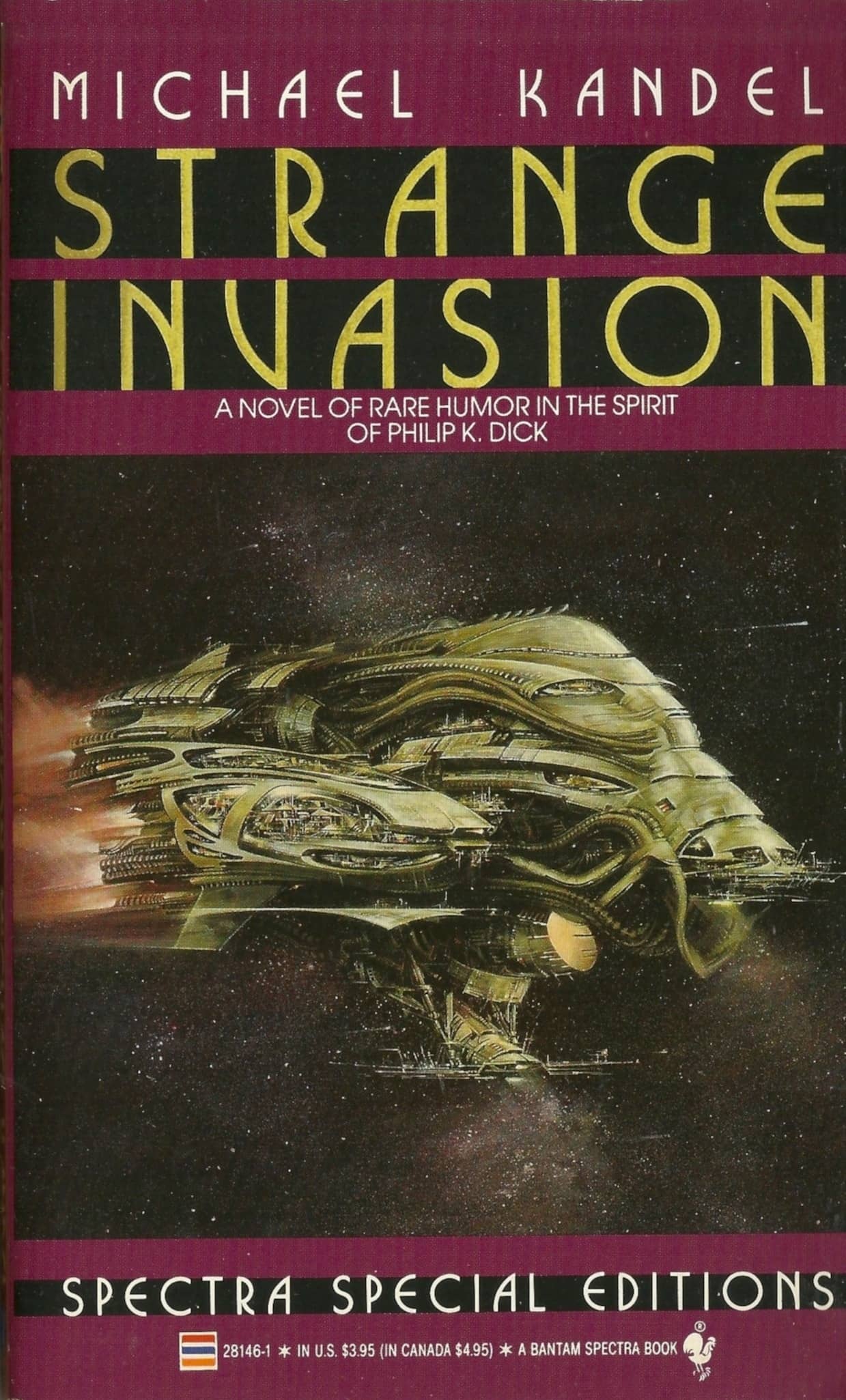
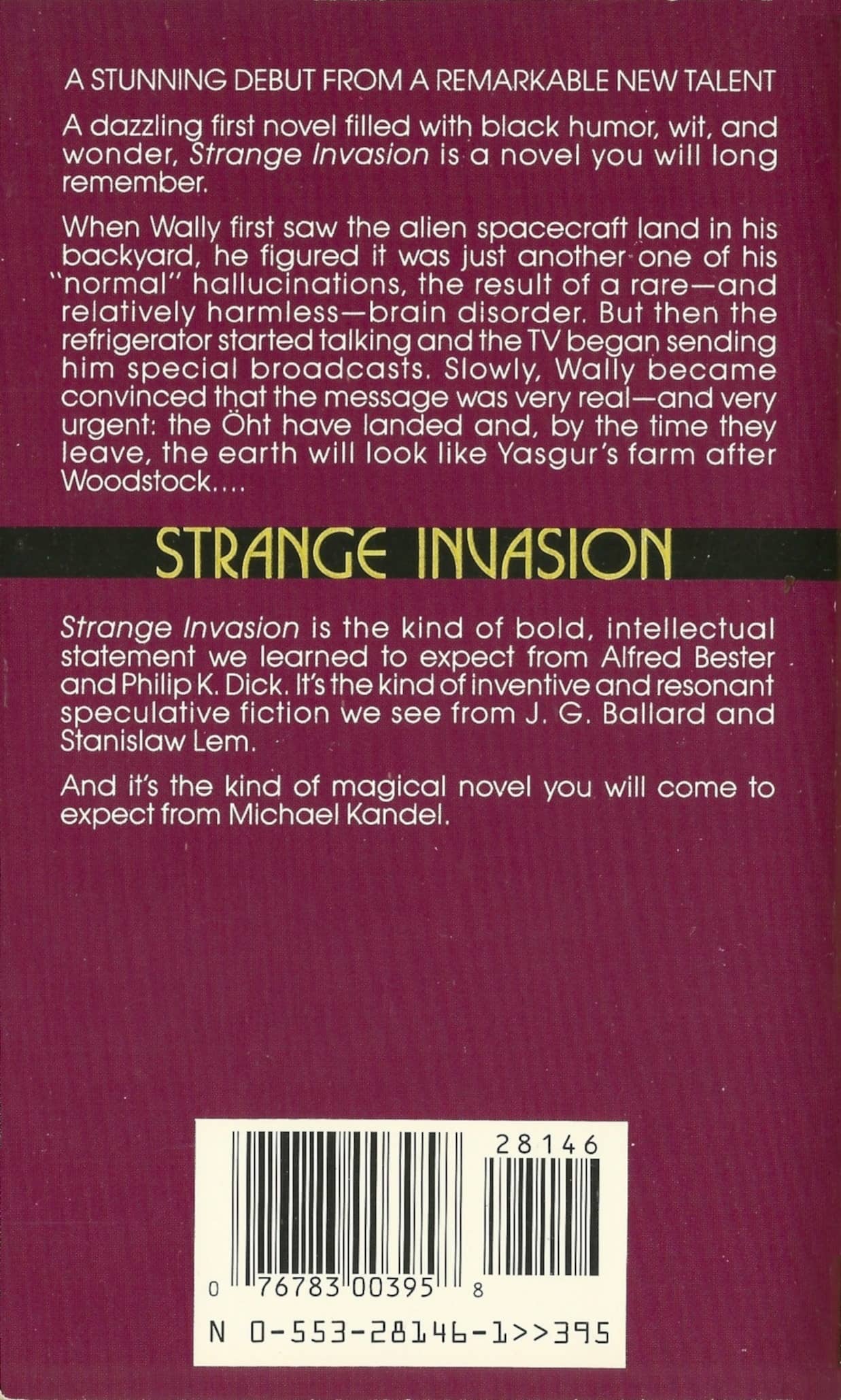
Vintage Treasures: Strange Invasion by Michael Kandel

Vintage Treasures: Strange Invasion by Michael Kandel

Strange Invasion-small Strange Invasion-back-small

Bantam Spectra Special Edition (1989), cover by Edwin B. Hirth, III

Michael Kandel began his career translating Stanislaw Lem’s Polish novels into English, including The Futurological Congress, The Cyberiad, and The Star Dairies. He was twice nominated for a National Book Award for his efforts. In 1989 he published his first novel with Bantam Spectra, Strange Invasion, followed quickly by In Between Dragons (1990), Captain Jack Zodiac (1991), and Panda Ray (1996). Since then he’s been writing mostly short fiction, most recently two stories in Gordon van Gelder’s 2017 anthology Welcome to Dystopia.

At the time Strange Invasion appeared, Bantam Spectra was the most prestigious imprint in the business. Founded by Lou Aronica when he was just 27 years old, its first release was David Brin’s Startide Rising (1983), which claimed a Hugo and a Nebula award. Spectra followed up with multiple hits, including Neal Stephenson’s debut Snow Crash (1992) and bestsellers from Isaac Asimov, Arthur C. Clarke, Raymond Feist, William Gibson, and Neil Gaiman — and, in 1996, a little book called A Game of Thrones, by George R.R. Martin. His acclaimed Full Spectrum anthology series ran for five volumes. Before he left Bantam in 1994, Aronica acquired five consecutive Nebula Award winners. In recent years the imprint has become moribund, and I believe it is now dead.

Strange Invasion came in 5th in the annual Locus Award for Best First Novel. But it has never been reprinted, and hasn’t seen a lot of modern attention. In some quarters it is still considered a modern classic, however. For example, here’s Don Web’s review at Bewildering Stories.

Read More Read More

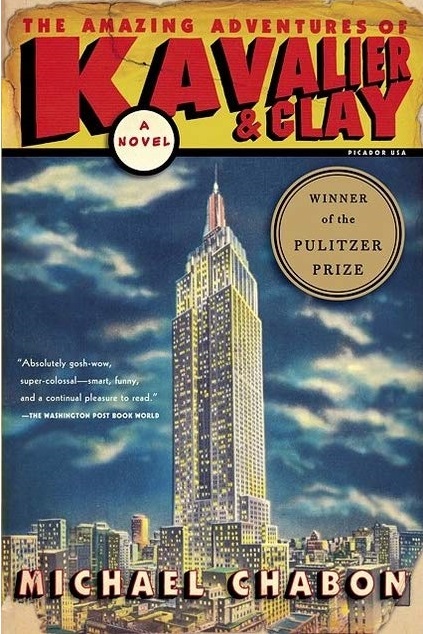
The Dawn of Comics in The Amazing Adventures of Kavalier & Clay, by Michael Chabon

The Dawn of Comics in The Amazing Adventures of Kavalier & Clay, by Michael Chabon

3985._UY635_SS635_

It isn’t often that comic books are a legitimate topic in works of literature, or that when they are, the book in question wins a Pulitzer. The Amazing Adventures of Kavalier & Clay, by Michael Chabon, is such a novel. It was published in 2000 to near universal acclaim. It tells the story of two Jewish cousins from 1939 to 1953.

Read More Read More

Dinosaurs, Mermaids, and Haunted Lumber: The Best of L. Sprague De Camp

Dinosaurs, Mermaids, and Haunted Lumber: The Best of L. Sprague De Camp

The Best of L. Sprague De Camp Book Club Edition-small

The Best of L. Sprague de Camp
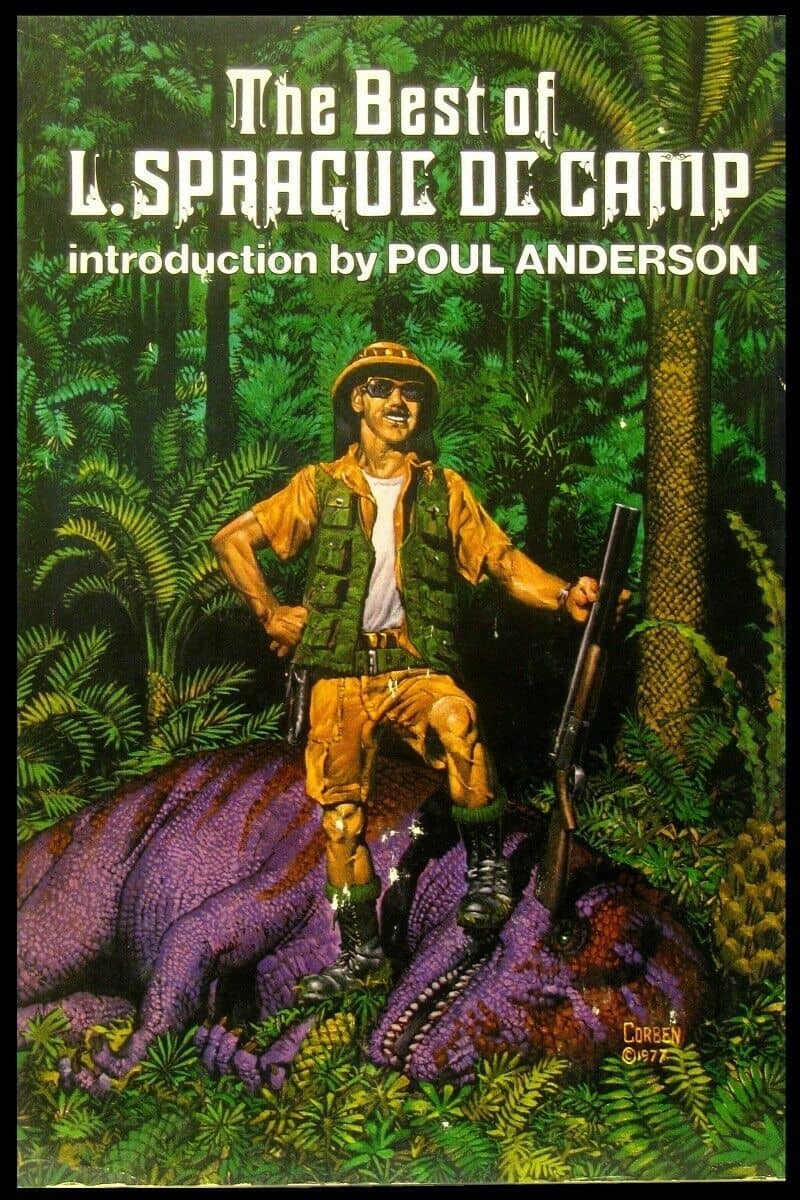
(Science Fiction Book Club edition, 1978. Cover by Richard Corben)

The Best of L. Sprague De Camp (1978) was the fifteenth installment in Lester Del Rey’s Classic Science Fiction Series. Poul Anderson (1926–2001) gives the introduction. Darrel Sweet (1934–2011) does his second cover of the series, the first being The Best of Cordwainer Smith. L. Sprague De Camp (1907–2000), still living at the time, wrote the afterword.

I’m a fairly late-comer to science fiction. I grew up with Star Wars and typical sci-fi shows and movies of the late 70s and 80s, but my reading picks tended to be more towards fantasy and horror. So, like many of these classic sci-fi authors in the Del Rey series, L. Sprague De Camp was a new name to me. And it’s interesting, I think, how one can come to a new writer.

In all honesty, I was not looking forward to reading this volume. Most of what I’ve read of and about De Camp hasn’t given me the most favorable impression. Case in point: A couple of years ago I compared De Camp’s Robert E. Howard (REH) biography with Mark Finn’s. If you know anything about De Camp’s reputation among many REH fans, you’ll know that it is usually less than favorable (again, see my earlier post for more details). And, after reading De Camp’s REH bio, I came around to agreeing with some of this critical press. In short, I thought that De Camp could often come off as conceited with his overly bold claims, especially given his tendency of providing insufficient evidence — or none at all!

But after reading The Best of L. Sprague De Camp, I have to say that despite his reputation with many an REH fan, this has become one of my favorite volumes in the Del Rey series. I found De Camp to be a very fascinating writer. Two things, I think, really stand out in his science fiction writing.

Read More Read More

The Golden Age of Science Fiction: “The Woman Who Loved the Moon,” by Elizabeth A. Lynn

The Golden Age of Science Fiction: “The Woman Who Loved the Moon,” by Elizabeth A. Lynn

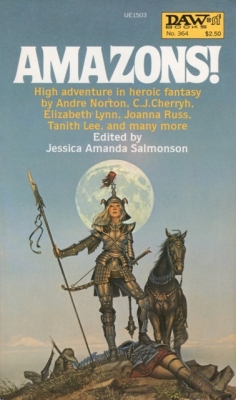
Cover by Michael Whelan

The World Fantasy Awards are presented during the World Fantasy Convention and are selected by a mix of nominations from members of the convention and a panel of judges. The awards were established in 1975 and presented at the 1st World Fantasy Convention in Providence, Rhode Island. Traditionally, the awards took the form of a bust of H.P. Lovecraft sculpted by Gahan Wilson, however in recent years the trophy became controversial in light of Lovecraft’s more problematic beliefs and has been replaced with a sculpture of a tree. The Short Fiction Award (sometimes called short story award) has been part of the award since its founding, when it was won by Robert Aickman for “Pages from a Young Girl’s Journal.” In 1980, the year Lynn received the award for the story “The Woman Who Loved the Moon,” the convention was held in Baltimore, Maryland. Lynn tied for the award with Ramsey Campbell for the story “Mackintosh Willy.”

The World Fantasy Awards were good to Elizabeth A. Lynn in 1980. Her novels Watchtower and The Dancers of Arun both were nominated for the Best Novel award, with Watchtower winning, but her short story “The Woman Who Loved the Moon,” originally published in Jessica Amanda Salmonson’s anthology Amazons!, tied for the short fiction award (and the anthology would also win a World Fantasy Award that evening).

The story is a take on a traditional type of revenge fairy tale, although Lynn adds her own twists to it. Three sisters are mighty warriors in their homeland, so much that they scare off all possible suitors, reminiscent of the Greek story of Atalanta, times three. The sisters each specialize in a different weapon an eventually a warrior who claims to be from a distant land shows up and challenges and kills the first sister. On the stranger’s second visit, the second sisters seeks revenge and is also best in combat, but the third sister, in seeking vengeance falls in love and essentially enters a fairy realm, only returning home decades later.

Read More Read More

New Treasures: Velocity Weapon by Megan E. O’Keefe

New Treasures: Velocity Weapon by Megan E. O’Keefe

Velocity Weapon-small Velocity-Weapon-back-small

Two years ago I wrote a couple of articles about Megan E. O’Keefe’s Scorched Continent trilogy. The opening volume, her debut novel Steal the Sky, was nominated for the David Gemmell Morningstar award, and Beth Cato called it “like an epic steampunk Firefly.” The last book in that series appeared in 2017, so I’ve been keeping my eye out for something new from her, and it finally arrived early this summer. And it looks like space opera, my favorite new genre! Is the world good to me, or what. Here’s what Kirkus said about it.

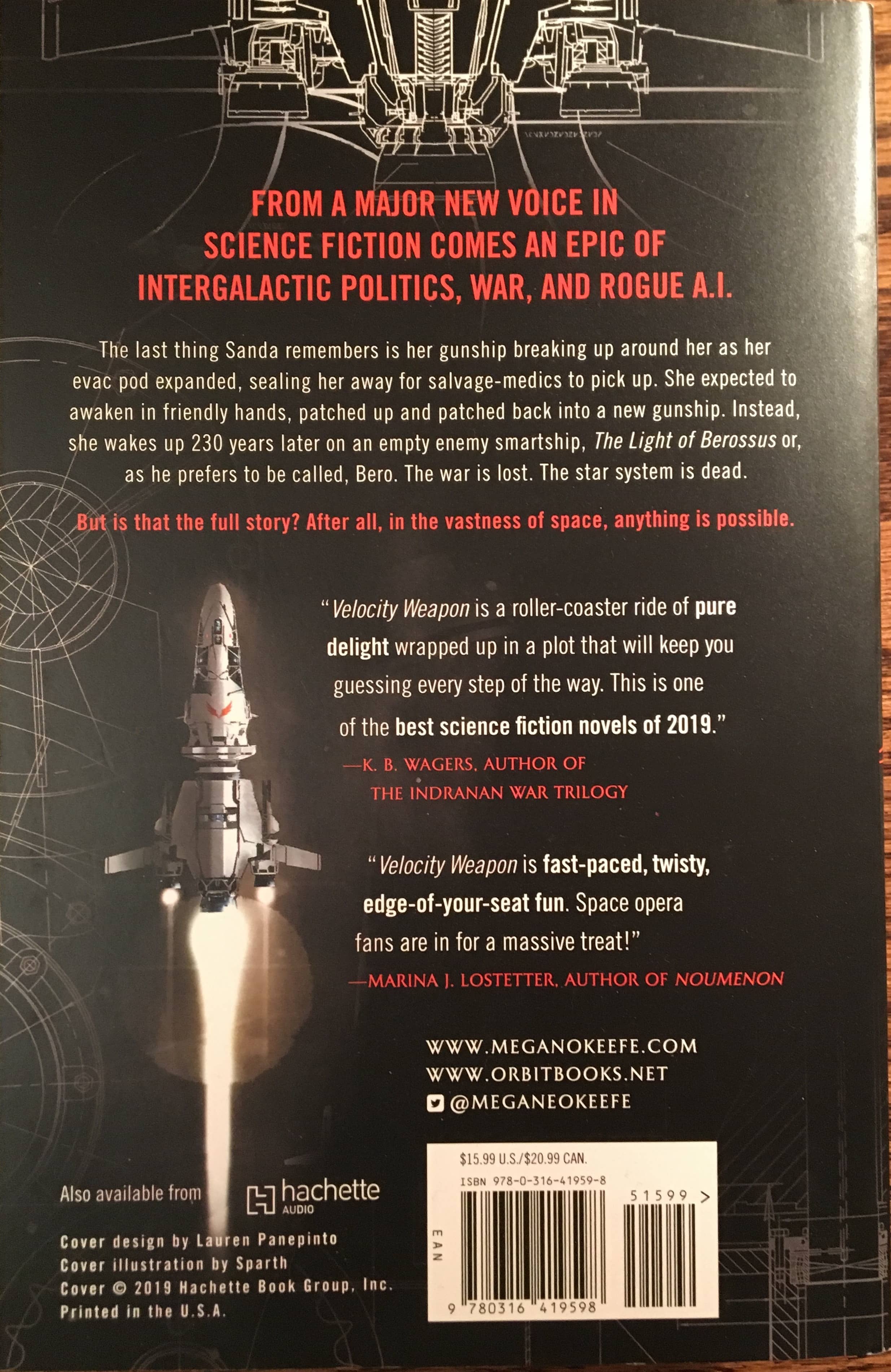
The last thing Sanda Greeve remembers is her ship being attacked by rebel forces. She’s resuscitated from her evacuation pod missing half a leg — and two centuries — as explained to her by the AI of the rebel ship that rescued her. As The Light of Berossus — aka Bero — tells her, she may be the only living human for light-years around, as the war wiped both sides out long ago. Sanda struggles to process her injuries and her grief but finds friendship with the lonely spaceship itself. Sanda’s story is interspersed with flashbacks to the war’s effects on her brother, Biran, as well as scenes from a heist gone terribly wrong for small-time criminal Jules. The three narratives, separated by a vast gulf of time, are more intertwined than is immediately apparent. When Sanda rescues Tomas, another unlikely survivor, from his own evacuation pod, she learns that even time doesn’t end all wars….

Meticulously plotted, edge-of-your-seat space opera with a soul; a highly promising science-fiction debut.

That’s tantalizing enough for me; I bought a copy last week. I want to dig into this one right away — which may mean I have to spring for the audio version. I’ve been traveling a lot recently (9 states in the last two weeks), and I find listening to books while I’m driving is a lot more productive that trying to stay awake reading in a hotel room.

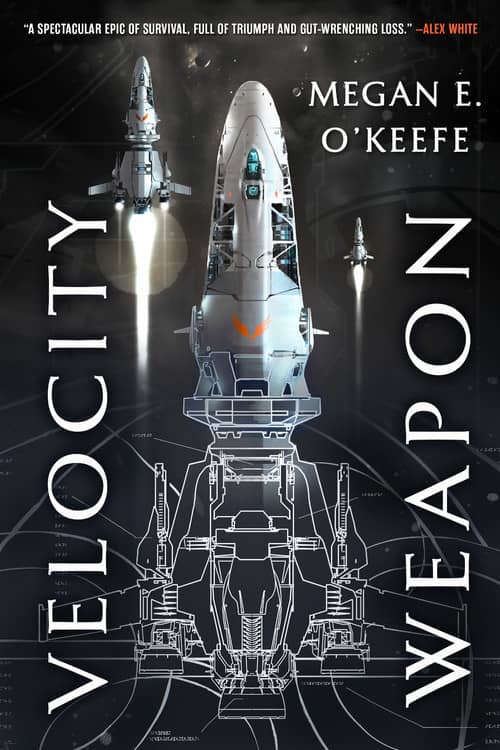
Velocity Weapon was published by Orbit in June, 2019. It is 505 pages, priced at $15.99 in trade paperback and $9.99 in digital formats. The cover is by Sparth. See all our recent New Treasures here.