Browsed by
Category: Blog Entry

The Golden Age of Science Fiction: Rendezvous with Rama by Arthur C. Clarke

The Golden Age of Science Fiction: Rendezvous with Rama by Arthur C. Clarke

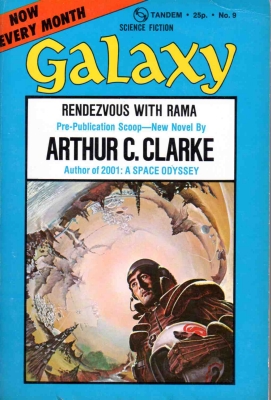
Cover by Brian Boyle

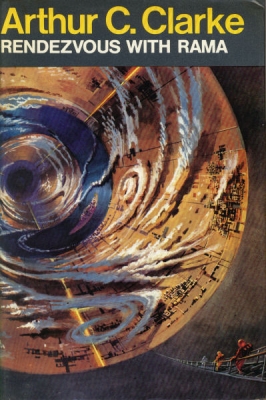
Cover by Bruce Pennington

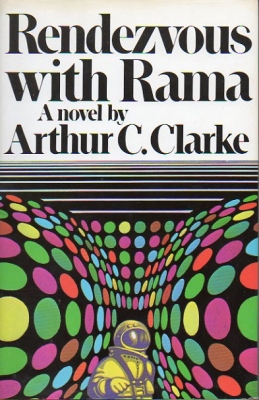
Cover by Hal Siegel
Cover by Hal Siegel

The Seiun Awards are often described as the “Japanese Hugo Awards” since they are voted on by the membership of annual Japanese Science Fiction Convention. This description almost invariably is followed up by pointing out that Seiun is Japanese for Nebula. A Seiun Award for Best Foreign Novel and Best Foreign Short Fiction has been presented since 1970, although in 1980, the year being explored in this series, no Short Fiction Seiun was awarded. The first Seiun Award for Best Novel was presented to J.G. Ballard’s The Crystal World (originally published in 1966) and the first award for Short Fiction was presented to Thomas M. Disch for “The Squirrel Cage,” published in the same year. Because the awards are presented for works in translation, there is generally a lag of a few years from first publication. For many years, the Seiun Award foreign categories were presented at Worldcon as part of the Hugo Award ceremony.

Arthur C. Clarke’s Rendezvous with Rama was first published in 1973 and by the time it was translated into Japanese, it had won the Nebula Award, the Hugo Award, the Locus Award, and the BSFA Award. In a Locus Poll in 1975, it was ranked the 20th best novel in science fiction history.
Read More Read More

The Golden Age of Science Fiction: Robert A. Heinlein

The Golden Age of Science Fiction: Robert A. Heinlein

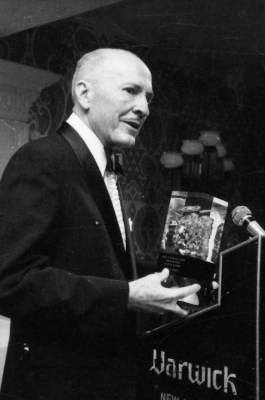
Heinlein accepting the Nebula

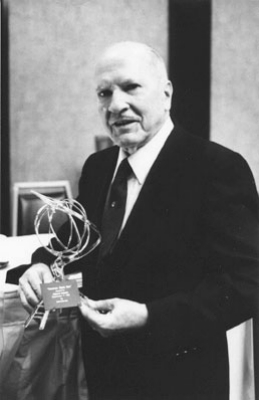
Robert A. Heinlein
Robert A. Heinlein

The Forry Award has been presented annually by LASFS (the Los Angeles Science Fantasy Society) since 1966 and is named for Forrest J Ackerman.  The award celebrates lifetime achievement in science fiction and the recipients are selected by a vote among LASFS members. The first award was presented in 1966 to Ray Bradbury and has generally been presented to science fiction professionals, although an occasional fan has received the award as well.  Ackerman didn’t receive the award until 2002. Robert A. Heinlein received the award in 1980. The award was presented at Loscon 7, the weekend of November 28-30 at the Anaheim Sheraton.

Books have and will continued to be written about Robert A. Heinlein, some recent examples being William H. Patterson’s two volume Heinlein biography and Farah Mendlesohn’s The Pleasant Profession of Robert A. Heinlein. From 1979, there was H. Bruce Franklin’s Robert A. Heinlein: America as Science Fiction, which I discussed on May 6. Of course, Heinlein also has his staunch devotees and partisans as well as his detractors.

Read More Read More

The Many Lives of Otto Mattix

The Many Lives of Otto Mattix

Otto 2013

Don Wiggins was one of the charmed young men who became college legends back in the days when just being a college student came with a halo of prestige. A native of nearby Jacksonville, he entered the University of Florida in the late 1940s and in 1951 was named to UF’s Hall of Fame. He graduated in 1952 with an Electrical Engineering degree and was immediately hired as an Assistant in Research before rapidly rising to the professorial ranks. His nerdiness was not in question, but he probably never got teased by the jocks at the football-crazed school. At least not twice. He was also faculty instructor to the Judo Club.

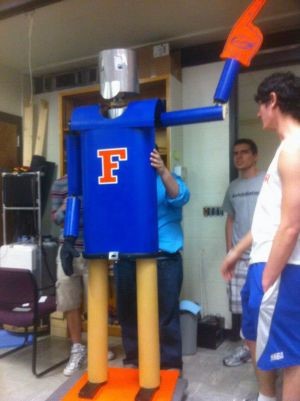
All of that paled to his true claim to fame. He was “father” to Otto Mattix, the school’s robot mascot, here with minor personages like the college’s dean and president.

Read More Read More

On Writing Advice

On Writing Advice

Black Gate clouds-small

This isn’t my view, but it’s pretty darn close

Good afternoon, Readers!

It’s a beautiful summer’s day here in Ottawa, Canada as of the writing of this. A lovely cool breeze is coming in the window, mitigating the heat of the sun, while cotton-puff clouds float through an impossibly blue sky.

I’m sitting by the window while my dad cooks a spectacular fry- up brunch, letting my thoughts drift with the clouds. I have nothing with me but his old iPad and a cup of delicious locally roasted coffee from my friends at JenEric Coffee.

This is all a poetic way of saying that I’ve been thinking a lot about writing advice of late, and I figured I would share my thoughts with you.

(You want clumsy segues? I’m your gal!)

Read More Read More

The Golden Age of Science Fiction: Alien

The Golden Age of Science Fiction: Alien

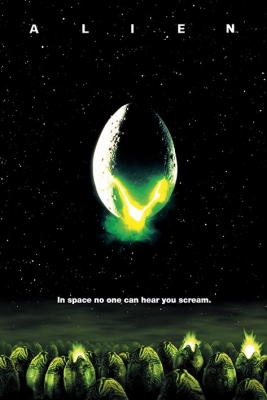
Alien poster
Alien poster

Ripley (Sigourney Weaver) and Jones

The Best Dramatic Presentation category was not one of the original Hugo categories in 1953, but was introduced in 1958, when it was won by The Incredible Shrinking Man. No Award won in 1959 followed by three years of The Twilight Zone and another No Award. The Award, called variously Best Dramatic Presentation and Best SF or Fantasy Movie, was given out annually from 1958 through 2002 when it was split into two categories, one for Short Form and one for Long Form. In 1980, the Hugo Award was presented at Noreascon Two in Boston, Massachusetts on August 31.

In 1972, the British Fantasy Society began giving out the August Derleth Fantasy Awards for best novel as voted on by their members. In 1976 the name was changed to the British Fantasy Award, although the August Derleth name was still the name for the Best Novel Award. A category for Best Film was created in 1973 and ran years until 1990 and has not been replaced. In 1980, the awards were presented at Fantasycon VI in Birmingham.

Stanley Kubrick’s 2001: A Space Odyssey was released in 1968.  Eleven years later, Ridley Scott released Alien. Although one is generally thought of as a spiritual science fiction film and the other is a science fiction horror film, there are similarities between the two.

Read More Read More

A Whole World of Metal Men?

A Whole World of Metal Men?

1937-10-17 San Francisco Examiner [American Weekly 3] A Whole World of Metal Men, The Last Robot

“Creaking painfully, its joints rusty, the last robot to survive the civilization which man is making to replace the dwindling crop of babies, would crawl along to a heap of scrap-iron, the cemetery for defunct robots.

“Rain, ceaseless torrents of rain, would bring the germs of the only disease which could possibly affect a mechanical man: Rust.”

Read More Read More

The Golden Age of Science Fiction: Night Shift, by Stephen King

The Golden Age of Science Fiction: Night Shift, by Stephen King

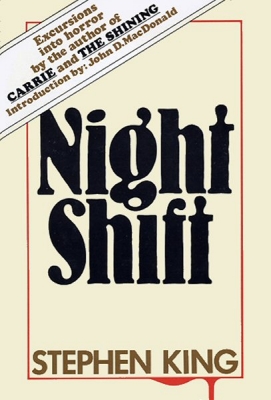
Cover by Fred Marcellino

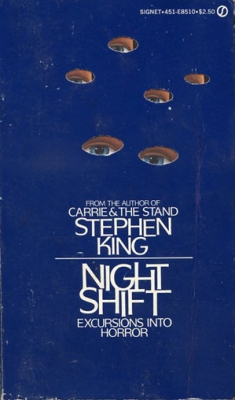
Outer cover by Don Brautigam

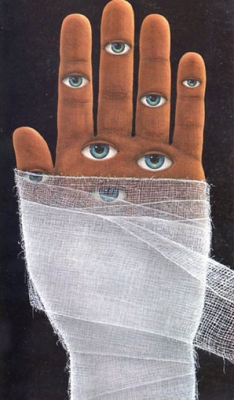
Inner cover by Don Brautigam

The Balrog Award, often referred to as the coveted Balrog Award, was created by Jonathan Bacon and first conceived in issue 10/11 of his Fantasy Crossroads fanzine in 1977 and actually announced in the final issue, where he also proposed the Smitty Awards for fantasy poetry. The awards were presented for the first time at Fool-Con II at the Johnson County Community College in Overland Park, Kansas on April 1, 1979. The awards were never taken particularly seriously, even by those who won the award. The final awards were presented in 1985. The Balrog Award for Collection/Anthology was presented each year that the awards were active.

The stories in Night Shift cover a period from the late 1960s through 1976, a time when King was maturing as an author and finding his own voice as well as becoming a best selling author. Many of the stones in Night Shift would form the basis of novels and films, notably “Jerusalem’s Lot,” “Lawnmower Man,” “children of the corn,” and “Graveyard Shift.”

King opens The collection with “Jerusalem’s Lot,” which was a previously unpublished version of his novel Salem’s Lot. Although King comments that the story has a basis in Bram Stoker’s Dracula, it’s even more obvious antecedents are the works of H. P. Lovecraft. Even as King tries to emulate Lovecraft’s style, he never quite captures it, making the story of The Boone family in  Maine feel overwritten rather than chilling. By the time King gets to “The Man Who Loves Flowers,” he has discovered that a more naturalistic world provides the opportunity for much more chilling horror. The fantastic creatures of “Jerusalem’s Lot” could only happen in fiction or dreams, but the sociopathic horror of kings’ protagonist in he later story could be anyone the reader meets on the street.

Read More Read More

Reflecting The World

Reflecting The World

Diverse Rome

Yes, there were black people in Europe, dating as far back as the Bronze Age. Kindly get over it.

Good morning, Readers!

It’s pride month, so I’m going to talk about representation.

As much as speculative fiction can be an escape from the world, it is also a reflection of the world in which we live. It reflects to us our failings, fears and hopes in fantastical settings. Often times, these are set in worlds which are supposed to closely reflect our own world, or its history. But there’s a problem.

They don’t. Not really. Or rather, not often.

In fact, so pervasive is this psuedo-representation that now there is outrage when something closer to reality is portrayed in speculative fiction, be it book or film.

Read More Read More

A (Black) Gat in the Hand Returns!

A (Black) Gat in the Hand Returns!

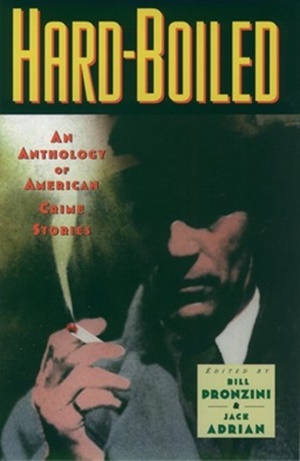
Gat_HardboiledPronziniEDITEDWith only three stories remaining, Hither Came Conan is taking a Monday off. We began trodding jeweled thrones beneath our feet back on January 7th. The series started the week after A (Black) Gat in the Hand, a hardboiled/pulp column, wrapped up its 34-week run on December 3st, 2018.

Well, after we talk about our last Conan story next month, A (Black) Gat in the Hand is making another summer appearance! With an attempt to cover a broader pulp range this time around, I’ve lined up another excellent bunch of guest posters. Of course, we’ll still be talking hardboiled, but there was a lot of good reading in other genres back in the pulp heyday.

“Sure, Bob. Who are these ‘guest posters’ you allegedly have lined up?” I’m glad you asked. Actually, I’m not, but I’ll answer anyways.

William Patrick Murray is going to tell us about my favorite pulp hero, Doc Savage. James Reasoner, who has forgotten more western pulp stuff than I’ve ever learned about, has a couple of contributions. Author Duane Spurlock will also be talking about westerns. It was a more popular genre than even hardboiled, you know!

Steve Scott, who knows more about John D. MacDonald than I do (and I can hold my own regarding John MacD!) has an essay on one of JDM’s few attempts at a series character, pre-Travis McGee.

I’ve long soaked up pulp knowledge from the writings of Evan Lewis and Stephen Mertz. Evan is going to be a guest poster, and Stephen agreed to let me use his excellent essay on the hardboiled pioneer, Carroll John Daly. And I got permission to reprint an essay from one of my favorite people, the late Bill Crider!!!

Paul Bishop, my go-to guy for Robert E. Howard boxing info, will be writing about a cool South African post-pulp series. And my new Windy City Pulp And Paper buddy, Joshua Dinges, will be writing on a very unique pulp topic.

Read More Read More