Browsed by
Category: Blog Entry

Evangelizing for Pulp Fiction
Evangelizing for Pulp Fiction

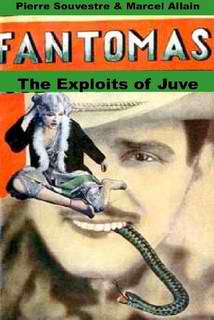
product_thumbnailproduct_thumbnail2David Lee White is an accomplished contemporary playwright in the Tri-State area who is also a man with a fervent mission. Through his publishing imprint, Beltham House, he has brought a number of obscure works back into print after many decades. L. T. Meade and Robert Eustace’s The Sorceress of the Strand (1902) and The Brotherhood of the Seven Kings (1899), a pair of obscure yet influential mysteries involving Madame Blavatsky-like female criminal masterminds, are two prime examples. However, it is with Pierre Souvestre and Marcel Allain’s Fantomas crime series that White has truly made his greatest impact. It is unlikely that any American has done more for bringing Fantomas back in the public eye in the United States than Mr. White.

Beltham House has been responsible for reprinting six long out-of-print titles in the series for the first time in decades, only to have numerous copycat public domain publishers quickly throw together their own knockoff editions. Since Beltham House is published through Lulu Press and not all of their titles are readily available on Amazon.com, it is likely that most of the specialized audience for the series is not even aware that Beltham House is the one-man operation that rediscovered these lost classics of the thriller genre. White also adapted a long-lost 1920 Fantomas serial as a novelization for Black Coat Press a few years back entitled, Fantomas in America. The book was the first new Fantomas novel in nearly fifty years and its historical significance was even greater for preserving a story that was otherwise lost to the ravages of time as no extant print of the serial has yet been recovered.

So it was that I approached Beltham House’s contribution to Fantomas’s centennial last year with a degree of skepticism. I already owned the nine original books that were back in print and White’s novelization of the serial, so why would I shell out the extra money for The Collected Fantomas, an omnibus edition collecting the first seven books in the series? If I already owned the books,  the omnibus could not possibly be of interest to me, right? Wrong.

Read More Read More

Goth Chick News: Harry Potter Gets Horny

Goth Chick News: Harry Potter Gets Horny

harry-potter-hornsIt was bound to happen eventually.

This week as I perused the backlog of seasonal goodies that find their way to my in-box every October, I opened one that made me feel a whole bunch of things at once; some of them very “adult.” It was about little Daniel Radcliffe’s latest movie project which just happens to be in the horror vein.

You all remember Daniel, right? He played the adorable, tussle-haired boy wizard in the Harry Potter franchise, though admittedly he did grow up somewhat by the last couple of films. Still, in the round glasses and brandishing a wand and all, it was difficult to see him as completely grown up.

From there, he daringly went nude on the stage in London and New York, playing the mentally-disturbed, decidedly grown-up role of Alan Strang in Equus. But there again, the character is only 17 years old and sick in the head enough to mutilate six horses.

Clearly not sexy.

Then most recently we saw Daniel in the very creepy, Victorian fright fest The Woman in Black. Yes, he played a bereaved lawyer with a child of his own; but trussed up in that white collar under about four layers of worsted British wool he somehow still evoked a character in a fantasy setting, albeit a spine-chilling one.

And now we come to the announcement of his latest venture.

Read More Read More

Teaching and Fantasy Literature: Hazards of Teaching Cool Stuff You Love in a Classroom

Teaching and Fantasy Literature: Hazards of Teaching Cool Stuff You Love in a Classroom

“Why do we have to read so much?” said the students who thought Intro to Myth would be an easy A. “And all this writing! You turned it into work!”
“Why are you asking us to think critically about mythology, of all things?” said the students who regarded stories only as entertainment. “I want to read this stuff the same way I read watered-down versions of it when I was ten.”

“Why are you making us read The Silmarillion?” said the less reflective of the Tolkien fans. “I’ve read The Lord of the Rings twenty times, and I thought I could get college credit for stuff I already did in high school.”

Alas, one side effect of attending college is that one may be asked to do college level work. Most of my students were good sports about it. I assured the students who weren’t that they were welcome to keep their copies of the syllabi and read the same books for kicks on their own, and they could get out of the bother of keeping pace, writing papers, or thinking about what they read. All they had to do was go to the registrar’s office and withdraw from my class. Nobody was making them stay.

Nearly all of them stayed.

Read More Read More

Adventures in Stealth Publishing: The Return of the Sorcerer

Adventures in Stealth Publishing: The Return of the Sorcerer

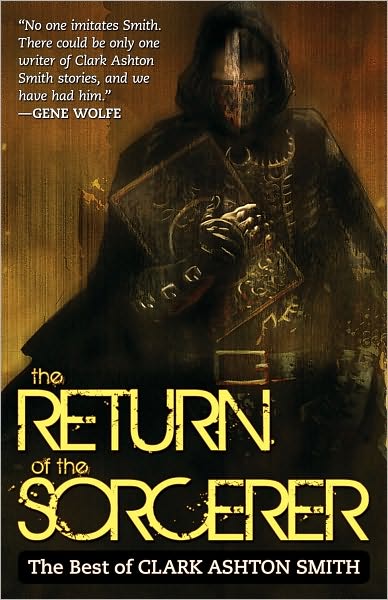
return-of-the-sorcerer-smallSome time, I dunno, about four years ago, I saw the cover for The Return of the Sorcerer: The Best of Clark Ashton Smith online, and I knew I had to have it.

Maybe it was the cool cover. Maybe it was the Gene Wolfe cover blurb. I can’t say. But I wanted it. Real bad.

Of course, it wasn’t published yet. So I had to wait. I added it to my Amazon cart, where it sat. For months. The publication date changed a few times, and then Amazon slapped it with one of those “Currently Unavailable” warnings that are code for “We have no clue when it’s going to ship, dude.”

So I reluctantly took it out of my cart. But I still kept an eye out in bookstores. For years. It was a long, lonely vigil, like Penelope waiting for Odysseus. Exactly like that, now that I think about it.

There were false reports from time to time. Private sellers listed it on Amazon, but when I queried them they admitted it was “available for pre-order.” Bastards. Our own Brian Murphy, usually rock-solid reliable, even wrote a detailed review in July of 2010, the poor deluded fool. It’s sad what deadline pressure can do, I know. When I have to, I make up books to review too, I’m not throwing stones.

Then today I saw it listed for sale by the Book of the Month club. Yes, the Book of the Month club. That’s just weird. They don’t sell books that don’t exist, usually.

So I dug a little further. I discovered, to my astonishment, that Amazon.com had it listed. So did Barnes & Noble. Apparently it came out in 2010.

Excuse me? 2010?? How the hell did it get past me? I had, like, a dragnet the size of Rhode Island out for this book. I’m usually pretty plugged in to the publishing industry. Really. I’m connected, man. It hurts that this book managed to get past me. For two years.

I blame the publisher, because they’re small and I can pick on them. Prime Books, you owe me an apology. And maybe a cinnamon danish.

Read More Read More

Black Gate Online Fiction: “The Whoremaster of Pald” by Harry Connolly

Black Gate Online Fiction: “The Whoremaster of Pald” by Harry Connolly

w-master2One of the most popular pieces of short fiction we’ve published in Black Gate magazine was Harry Connolly’s first fiction sale, “The Whoremaster of Pald,” which originally appeared in Black Gate 2.

Since that early sale, Harry has become a celebrated fantasy novelist, with titles including the Twenty Palaces novels Child of Fire and Game of Games. Featuring a brilliant and resourceful merchant in a corrupt and violent port city, “The Whoremaster of Pald” has all the hallmarks of his later fiction, and is filled with mystery, surprising twists, and great characters. Here are the opening paragraphs:

My prison cell stank like a bird cage. It was terribly dark, and I listened for the sound of rats. I despise rats. I lay down on the wooden plank that would serve as my bed for the night. My bruised back throbbed, but at least I could still breathe. It’s always nice to breathe after a beating.

In the morning a sweet little sparrow of a girl would testify against me. The charge was murder, and she had seen me do it. It had started only the evening before, when I decided that something had to be done about the new Warden.

RPGNet called the story “remarkably rich and textured,” and Locus magazine said:

[“The Whoremaster of Pald”] was one of my favorites. Harry James Connolly’s unlikely hero is a fat master of a whorehouse who cringes before bullies; not your usual fantasy hero at all. His story is told with smooth, vivid prose that is strongly reminiscent of Jack Vance, Connolly’s Zed gradually engages reader sympathy as he veers between bullying protection racketeers, a new worker who decides she can’t really stick to prostitution, a conniving rival, and the mayor’s lout of a nephew… an unputdownable tale. Connolly works the twists and turns so cleverly it’s impossible to guess what will happen. It’s hard to believe this is Connolly’s first published story.

Several years ago, we published the story in its entirety on the Black Gate website; we’re proud to offer it again here as part of the new line up of Black Gate weekly Online Fiction.

Read the complete story here, and the complete catalog of Black Gate Online Fiction, including the adventure fantasy novelette “The Duelist” by Jason E. Thummel and Sean McLachlan’s novella of dark fantasy, “The Quintessence of Absence,” here.

Art by Chris Pepper.

Mystery 101: Books To Die For is a Complete Course in Mystery Fiction

Mystery 101: Books To Die For is a Complete Course in Mystery Fiction

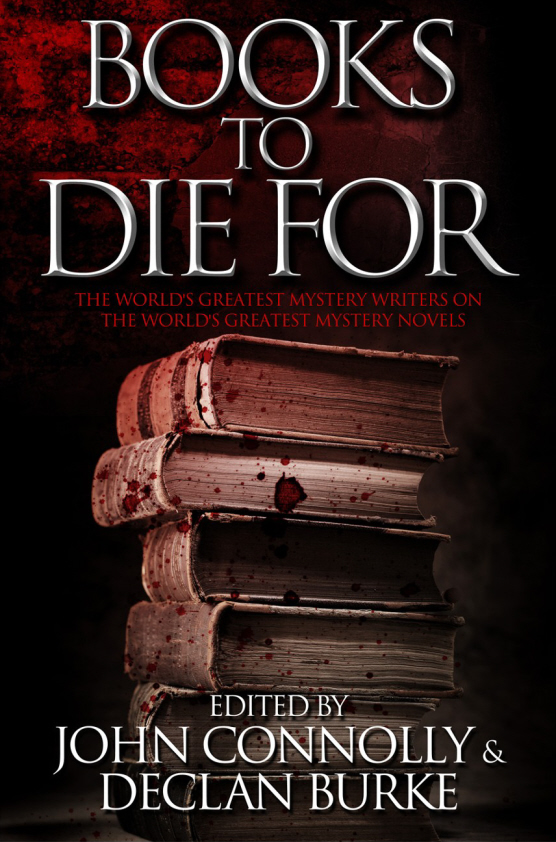
books-to-die-for-smallI don’t read much mystery fiction, and if I’m honest with myself it’s because I feel a little lost in the mystery section of the bookstore. I don’t know the authors or the major titles, and there are just so many choices it’s overwhelming. Safer to take my money and retreat back to the science fiction aisle, and buy that Asimov reprint.

But if I were a little more adventurous, or had a knowledgeable friend to hold my hand, I bet I’d find a lot of great reading in those shelves. There’s always a ton of old ladies buying mystery paperbacks, anyway. And if there’s a more discerning paperback reader than the American old lady, I haven’t met her.

It’s very possible that knowledgeable friend arrived in the mail this week, in the form of Books to Die For: The World’s Greatest Mystery Writers on the World’s Greatest Mystery Novels, a fabulous book that looks like it could open the door to a lifetime of mystery reading.

With so many mystery novels to choose among, and so many new titles appearing each year, where should a reader start? What are the classics of the genre? Which are the hidden gems?

In the most ambitious anthology of its kind yet attempted, the world’s leading mystery writers have come together to champion the greatest mystery novels ever written. In a series of personal essays that often reveal as much about the authors and their own work as they do about the books that they love, 119 authors from 20 countries have created a guide that will be indispensable for generations of readers and writers. From Agatha Christie to Lee Child, from Edgar Allan Poe to P. D. James, from Sherlock Holmes to Hannibal Lecter and Philip Marlowe to Lord Peter Wimsey, Books to Die For brings together the cream of the mystery world for a feast of reading pleasure, a treasure trove for those new to the genre and for those who believe that there is nothing new left to discover.

Even if you’re not in the mood for a mystery novel marathon, Books To Die For is perfectly suited for browsing, with brief personal essays from the world’s most illustrious mystery writers, chatting about the finest mystery novels ever written. The book is arranged chronologically, starting in 1841 with Edgar Allan Poe’s The Dupin Tales; the second entry is Charles Dickens’ Bleak House (covered by Sara Paretsky). The last one is The Perk, by Mark Gimenez, published in 2008.

In between are 118 enthusiastic mini book reviews, most averaging two to four pages, by writers including Rita May Brown, Linda Barnes, Carol O’Connell, Chuck Hogan, Joseph Finder, Charlaine Harris, Joe R. Lansdale, Laura Lippman, Max Allan Collins, Phil Rickman, Bill Pronzini, Jeffery Deaver, F. Paul Wilson, John Connolly, Joseph Wambaugh, Elmore Leonard, Eoin Colfer, Anne Perry, and many, many others.

Books To Die For is edited by John Connolly and Declan Burke; it was published by Atria on October 2. It is 560 pages in hardcover, and priced at $29.99. The digital edition is $14.99.

New Treasures: Castle Waiting, Volume Two

New Treasures: Castle Waiting, Volume Two

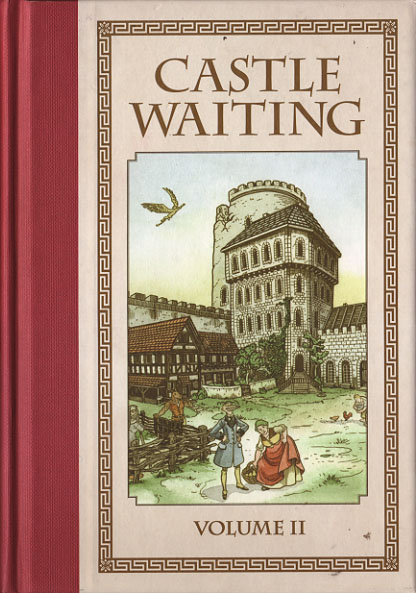
castle-waiting-volume-two-smallI first discovered the brilliant and touching Castle Waiting through Linda Medley’s self-published comic in the late 90s. Eventually collected into the graphic novel Castle Waiting: The Curse of Brambly Hedge, it retold the fairy tale of Sleeping Beauty (sort of), as seen by an odd cast of mostly minor characters. It was well written and beautiful, feminine in perspective and mood, incredibly slow-paced, and wholly original. I loved it.

And then it pretty much vanished. Stray issues popped up now and again in my local comic shop over the years, but it looked to me like Castle Waiting would always be one of those undiscovered indie treasures that never broke into the mainstream.

Fanatagraphics turned all that around in 2006 with the massive Castle Waiting, a 472-page omnibus collecting virtually all the early issues in an attractive and affordable format. Picking up the story many years later, Medley follows the new inhabitants of Sleeping Beauty’s ancient castle, most of them fairy tale characters with mysterious origins. Managed by the unflappable (literally) stork Rackham, the Castle is home to an eclectic mix of humans, outcasts, and friendly but mischievous sprites and other spirits.

This volume was successful enough that it allowed Medley to return to publishing Castle Waiting on a regular schedule in 2006. She published fifteen issues with Fantagraphics, and those issues were finally collected in 2010. Focusing chiefly on the pregnant Lady Jain, who has fled to the castle to escape an abusive husband, this second volume drew wide praise from NPR, Time Magazine, and many other sources, and Publishers Weekly ranked it one of the best comic books of 2006 in a critics’ poll.

With its long-awaited second volume, Linda Medley’s witty and sublimely drawn fantasy eases into a relaxed comedy of manners as Lady Jain settles into her new life in Castle Waiting.

Unexpected visitors result in the discovery and exploration of a secret passageway, not to mention an epic bowling tournament. A quest for ladies’ underpants, the identity of Pindar’s father, the education of Simon, Rackham and Chess arguing about the “manly arts,” and an escape-prone goat are just a few of the elements in this delightful new volume.

The book also includes many flashbacks that deepen the stories behind the characters, including Jain’s earliest romantic entanglements and conflicts with her bratty older sisters, the horrific past of the enigmatic Dr. Fell, and more.

Interestingly, except for a tiny copyright notice on page 377, the book is published totally anonymously, with no mention of Linda Medley anywhere on the cover, spine, or title pages.

Castle Waiting, Volume Two was published in December 2010 by Fantagraphics. It is 384 pages in hardcover for $29.99. There are no paperback or digital editions. With its slow pacing and glacial (almost non-existent) plot, it’s not for everyone. But I recommend it highly.

Vintage Treasures: Hong on the Range by William F. Wu

Vintage Treasures: Hong on the Range by William F. Wu

hong-on-the-range4I admit this one doesn’t seem very vintage to me, but perhaps that’s just because I’m getting a little vintage myself.

William F. Wu’s fourth novel, Hong on the Range, was published 23 years ago. It was originally published in hardcover and has never had a paperback release.

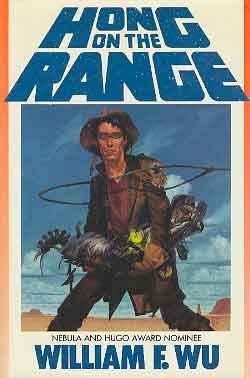
And that’s too bad, since it’s the kind of off-the-wall science fantasy that I think would really appeal to a modern audience. Set in a post-apocalyptic American West where cities have decayed and the surviving towns cling to the railway, where most people have cyborg enhancements, meat is harvested from cows without harming them, and a young man named Louie — a “control-natural” forbidden by law from enhancing himself, and who is shunned and misunderstood by others — heads West to find his fortune.

The Old West Was Never This Wild! In a New West filled with cyber-enhanced cowboys and mechanized singing steers, Louie Hong must make his way through hostile territory filled with cattle rustlers and bank robbers, and a passel of cyborg bounty hunters who think he’s both! A story about coming of age in a strange and dangerous land where a young man’s most faithful friend may just turn out to be a computerized steer named Chuck.

While it’s the only novel in the sequence, Hong on the Range is part of a series of stories written by Wu that began in 1985 with “Wild Garlic.” Most of them were published in Pulphouse magazine; the last one, “In the Temple of Forgotten Spirits,” in 1993.

Hong on the Range was published by Walker & Co in 1989. It is 286 pages in hardcover. It has never had a paperback release, but it was re-released in a digital edition for $2.99 last October.

Black Gate Online Fiction: “The Quintessence of Absence” by Sean McLachlan

Black Gate Online Fiction: “The Quintessence of Absence” by Sean McLachlan

sean-mclachlan-smallA young wizard in the grip of addiction discovers his drug of choice is at the center of a sorcerous conspiracy in Sean McLachlan’s urban fantasy novella, “The Quintessence of Absence.”

“Herr Eisenbach has a problem,” Francesco said.

“Then fix it yourself. You got me fired, remember?”

“You got yourself fired, smoking that noxious paste… I’ll get straight to the matter at hand. Herr Eisenbach recently discovered Birgit is smoking nepenthe.”

“But she’s just a kid,” Lothar said. He remembered Eisenbach’s daughter, a bright-eyed child who was the joy of the household.

“She’s sixteen now, and arranged to be married to the Margrave of Nordhausen. When Herr Eisenbach found out she was smoking, he locked her in her room. Unfortunately she escaped and hasn’t been seen in a couple of weeks. We’ve been looking all over for her, but we were hoping someone with your… connections… might have better luck.”

“How much is in it for me?”

“A hundred franks, more if you can return her, ah, intact. She’s due to be married, after all.”

“If she’s living on the street, don’t count on it.”

Sean McLachlan is the author of the collection The Night the Nazis Came to Dinner, and Other Dark Tales; A Fine Likeness, a horror novel set in Civil War Missouri; and numerous history books on the Middle Ages, the Civil War, and the Wild West. Author photo courtesy of Leo Stolpe.

You can read the complete catalog of Black Gate Online Fiction, including last week’s adventure fantasy novelette “The Duelist” by Jason E. Thummel, here.

“The Quintessence of Absence” is a complete 25,000-word novella of dark fantasy offered at no cost.

Read the complete story here.

The Nightmare Men: “Master By Name, Master By Number”

The Nightmare Men: “Master By Name, Master By Number”

‘He was impossible to miss. Tall in his dark suit, with his leonine head and imposing looks, he would have seemed prominent in any crowd…’ Such is the description of Titus Crow, delivered by his amanuensis and friend, Henri-Laurent De Marigny in the opening pages of the 1977 story, “The Viking’s Stone”. Created in 1971 by author Brian Lumley, the character was crafted in the tradition of other occult investigators, such as John Silence or Carnacki; Crow was an avowed agent of good, his struggles all the more impressive for occurring as they did in the harsh, nihilistic universe created by HP Lovecraft.

“Titus Crow?” said Arnold. “Yes, well, we’ve all had reason to fear him in our time…”

-Geoffrey Arnold, “The Black Recalled” (1983)

thecompleatcrowTitus Crow first appeared in Lumley’s 1971 story, “The Caller of the Black”. Crow’s credentials as a psychic sleuth and occult investigator are impressively vetted in the story, as he defeats both mortal and immortal enemies through the cunning application of the standard Lovecraftian eldritch lore, a shower faucet and a window pole. From the outset, it is clear that Crow inhabits the same deadly universe as Inspector Legrasse or John Kirowan, where elder entities prey on a mostly unaware human population; but unlike the former, Crow is well-armed against such entities and, unlike the latter, he’s quite happy to test himself against their machinations out of  simple heroism.

Schooled in a wealth of occult lore and possessed of an innate desire to confront evil, Crow is seemingly destined from birth to pit himself against the abominable. Indeed the 1987 story, “Inception” concerns the weird circumstances of Crow’s birth and baptism and the battle between Good and Evil which revolves around the latter. Too, the occult numerology behind the date and hour of that special birth comes into play more than once, as those numbers show Crow to be a Master Magus, a fact which puts a spanner into more than one opponent’s scheme.

In “The Lord of the Worms” (1983), Crow’s early career working for the British War Department in World War Two is mentioned, during which he worked to foil Hitler’s occult machinations. His destruction of the eponymous entity is his first step on the road which leads to his first ‘official’ case as an occult investigator in “The Caller of the Black”, wherein he confronts the villainous sorcerer Gedney and the nightmarish entity known only as ‘The Black’.

Read More Read More