New Treasures: Astonishing Swordsmen & Sorcerers of Hyperborea
 Back in 2010, I attended Garycon II, a rapidly-growing game convention in Lake Geneva, Wisconsin, held in honor of Gary Gygax, the co-creator of Dungeons and Dragons. In my BG convention report I said:
One of the delights of the con for me was the discovery of Charnel Crypt of the Sightless Serpent, an adventure for the forthcoming Astonishing Swordsmen & Sorcerers of Hyperborea system by Gary’s Castle Zagyg co-author Jeffrey Talanian. A black and white staple-bound folio sold at a tiny table in the hallway for five bucks, Charnel Crypt reminded me of nothing so much as Dave Arneson’s original Blackmoor supplement, which first appeared in 1975 (and cost about the same.)
According to the program book Talanian was running players through the adventure in one of the gaming rooms, and I wished I’d had a chance to find them. He describes Hyperborea as “largely influenced by the fictional works of R.E. Howard, Clark Ashton Smith, and H.P. Lovecraft.”
That I’d like to see. He promises the rules will see print this year.
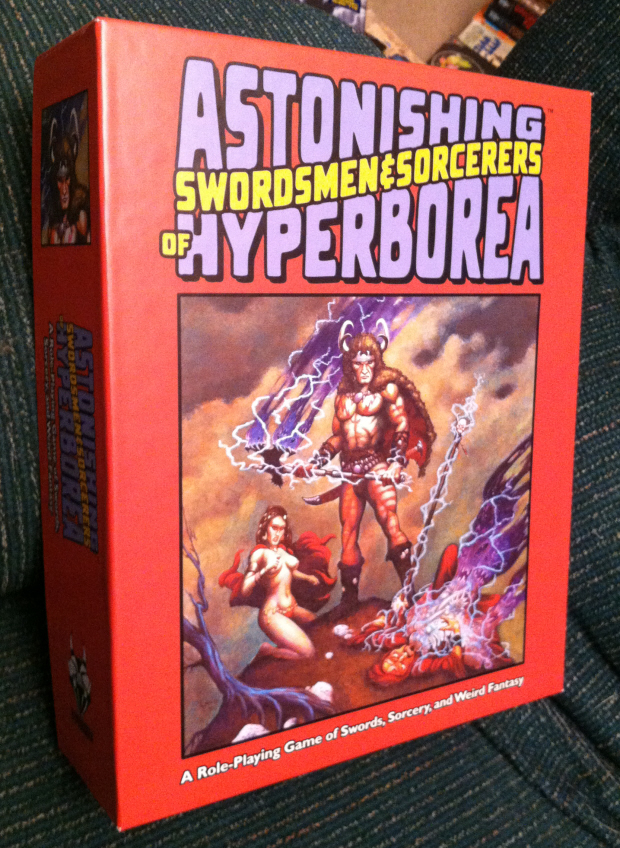
I’ve been keeping an eye on Jeff’s website at North Wind Adventures ever since, and I’m happy to say my efforts were not in vain. Astonishing Swordsmen & Sorcerers of Hyperborea was released in October and proved well worth the long wait.
Astonishing Swordsmen was clearly created in homage to the original boxed edition of Dungeons and Dragons (what’s known as the OE version, circa 1974, by Old School Renaissance gamers), and the contents reflect this. The box is massive — it’s like Gygax and Arneson’s original release got a Charles Atlas bodybuilding makeover. I was ooooing and awwwing for the first ten minutes as I pulled it open.
 The students in Intro to Poetry read scared. They started the semester twitchy as rabbits. Poetry made them feel stupid. No, let’s be more specific: being asked to explain poetry made them anticipate humiliation. Their baggage from their high school English classes led them to expect, reasonably or not, that they had to be experts already, that they would be chastised in front of one another and punished with bad grades for not already knowing as much as their teachers did. They felt like newly licensed drivers trying to merge onto a freeway from a stop sign.

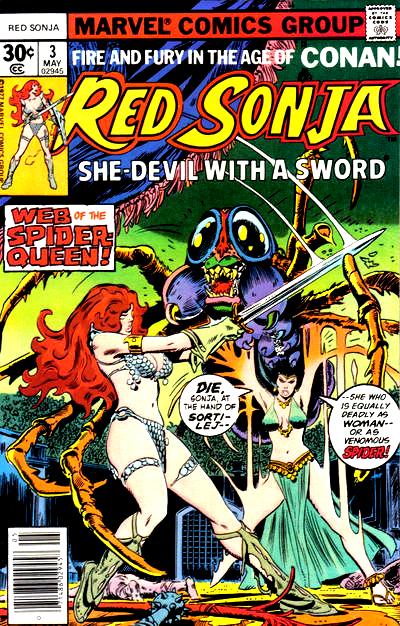
 The Hugo Award for Best Graphic Story was first given out in 2009. The category was a nice idea, especially given the increased prominence of comics in the media landscape, but I have to admit that up to this year, I’ve been underwhelmed by the choice of winners. Or, more precisely, winner, singular: Phil and Kaja Foglio’s webcomic Girl Genius took the award three times straight. I don’t dislike the comic, but from what I’ve read, I’d be hard-pressed to identify anything in it that makes it worth a major award ahead of any number of series — Hellboy or Mouse Guard or Wednesday Comics or RASL or All-Star Superman or you name it. After their third win, though, the Foglios announced they would decline to accept a nomination for the next year, in the interest of helping to establish the validity of the award. So the 2012 Hugo went to another title: