Browsed by
Category: Blog Entry

Twenty Years of Smart Science Fiction and Fantasy: The Tachyon Publications Catalog

Twenty Years of Smart Science Fiction and Fantasy: The Tachyon Publications Catalog

THE TREASURY OF THE FANTASTIC-small The Uncertain Places-small The Best of Michael Moorcock-small

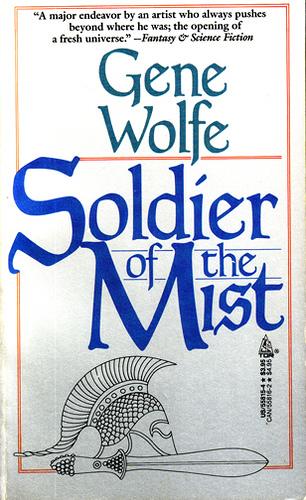
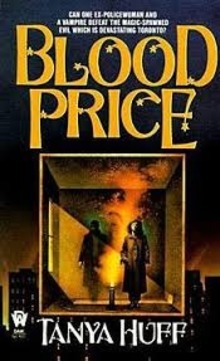
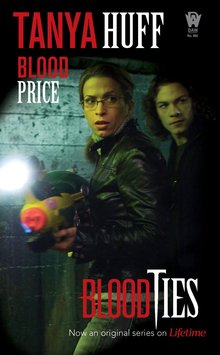
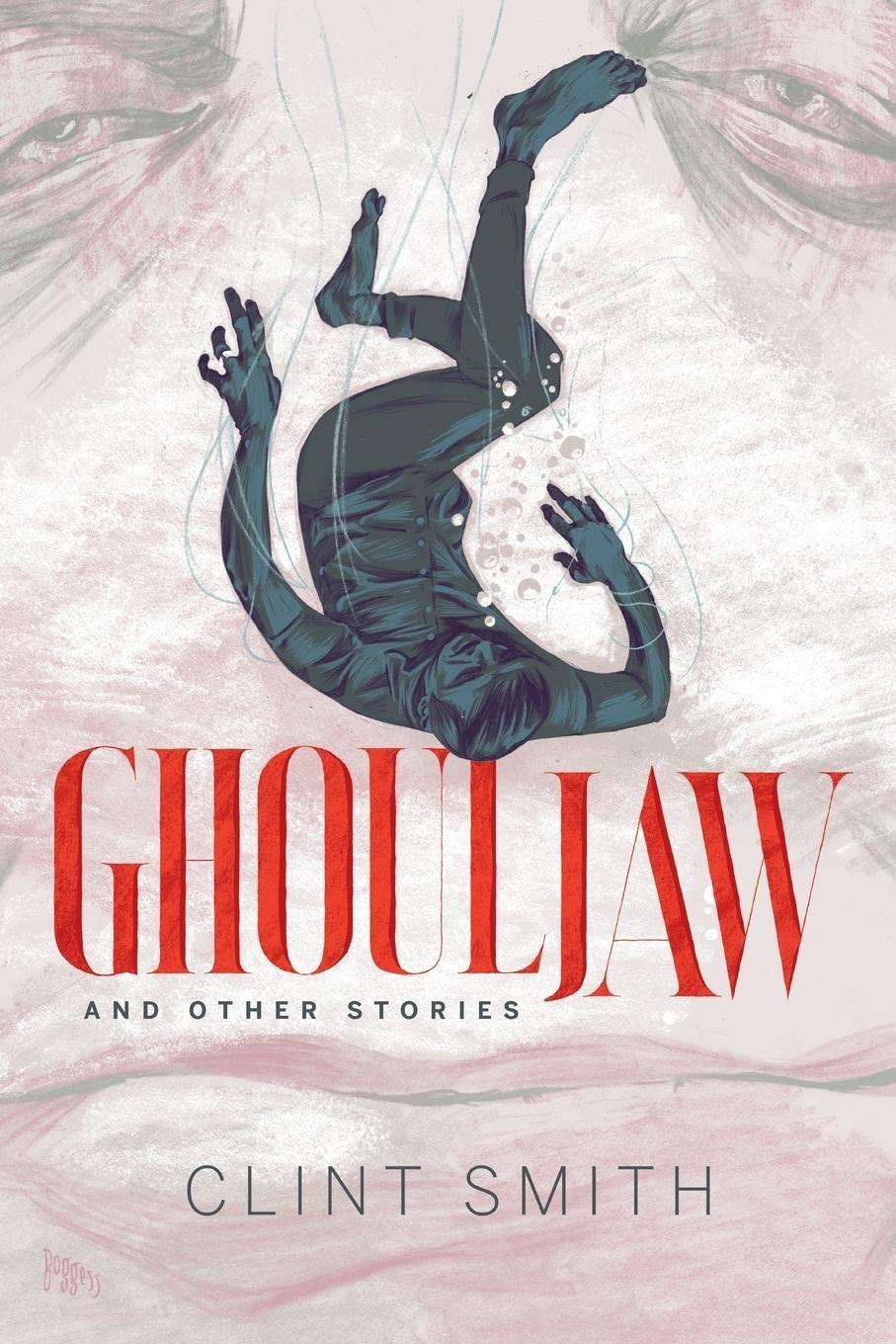
While I was at the World Fantasy Convention last November, I kept being irresistibly sucked into the Dealers Room. Seriously, the place was like a giant supermarket for fantasy fans. There were thousands of new and used books on display from dozens of vendors — books piled high on tables, books crammed into bookshelves, books being pressed into your hands by enthusiastic sellers.

When I came home I moped around for a few days, and then mocked up some HTML pages with dozens of thumbnail jpegs of books so I could pretend I was still at the convention. I waved a crisp twenty dollar bill in front of my computer screen and said things like, “I’ll take the new Moorcock collection, my good man.” I even haggled over the price of The Treasury of the Fantastic. Truly, it felt like I was there.

Read More Read More

SFWA Announces the 2015 Nebula Award Nominations

SFWA Announces the 2015 Nebula Award Nominations

The Goblin Emperor-smallWow, it’s almost the end of February. And that means that the Science Fiction Writers of America (SFWA) finally put an end to all that suspense, and announced the nominees for the 2015 Nebula Awards, one of the most prestigious awards our industry has to offer.

Last year there were no less than eight nominees for best novel; this year that number has dropped back to six. Does this mean there will be less infighting and disagreement over who should win?

You’re kidding, right? (In truth, the debate is half the fun — and it generates a lot of interest in a lot of deserving books.)

This year’s nominees are:

Novel

The Goblin Emperor, Katherine Addison (Tor)
Trial by Fire, Charles E. Gannon (Baen)
Ancillary Sword, Ann Leckie (Orbit)
The Three-Body Problem, Cixin Liu, translated by Ken Liu (Tor)
Coming Home, Jack McDevitt (Ace)
Annihilation, Jeff VanderMeer (FSG Originals)

Read More Read More

Writers as Barbarian Conquerors!

Writers as Barbarian Conquerors!

This is possibly the most brilliant way to think about writing ever. I can’t believe I’m just thinking about it now, and certainly won’t have to beat the metaphor into shape. Well, maybe a bit. But, who the heck cares. You can now view your writing as a freaking barbarian invasion! Like I said: brilliant.

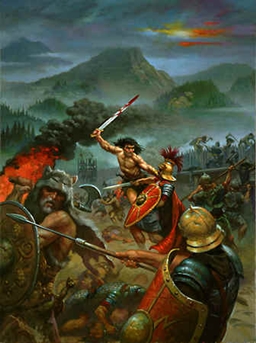
BattlePlan_small
Barbarians don’t post plans on the Internet, so I interviewed one and drew this. You’re welcome.

PLANNING THE BATTLE

Like any good invading army, you must first plan which of your troops are going where. It’s known as “plotting” in the writing world. It doesn’t need to be super detailed, but you should know the attack plan of your knights (aka hero) and archers (aka secondary characters. Sorry, Hawkeye). Plus, you should know a bit about your enemy’s defenses (aka villain).

Build up enthusiasm in your barbarian army with awesome speeches (aka writing down cool scenes).

FIRST WAVE OF ATTACK!

This is where you plunge in and WRITE! KILL! DESTROY! Your armies are in place. Your knights are totally rocking it! Your archers are shooting those little wooden arrows like they can’t run out AND THEY DON’T BECAUSE IT’S YOUR BOOK!

Read More Read More

Unbound: Flipping the Pages of Reality

Unbound: Flipping the Pages of Reality

UnboundFor those of us who love books, they are often like windows into their own vibrant, living worlds. The idea that these stories contain a magical power to transport the reader to a new world, not merely figuratively but also literally, has shown up before, perhaps most prominently in The Neverending Story. In recent years, the idea of storybook worlds being tied to our own have become the driving force behind the popular television series Once Upon a Time. And, of course, many magical systems throughout fantasy literature have involved words of power.

Jim C. Hines has contributed one of the most intriguing interpretations on this theme in his Magic Ex Libris series. The first two books, Libriomancer and Codex Born, have been previously reviewed by our very own Alana Joli Abbott, but here’s the quick recap:

Isaac Vainio is a libriomancer, a magician with the ability to tap into the magic of books, drawing objects from them into the real world. His particular interest is science fiction and fantasy, allowing him to manifest anything from a lightsaber to a laser assault rifle to healing potions.

Magic has its limits, though. Isaac, with more skill and tenacity than common sense, has pushed beyond those limits more than most other libriomancers. So much so that he has come directly into contact with a dark presence that exists within books, a consciousness called the devourers, which has existed on the periphery of magic for centuries.

The third book, Unbound (Amazon), brings this conflict between the libriomancers and the devourers to a head. Isaac begins the book at about the lowest point imaginable. Not to give away too many spoilers from the end of Codex Born, but Isaac has no access to his magic and has been ostracized from the Porters, the magical society founded and led by the near-immortal sorcerer Johannes Gutenberg. (Yes, that Johannes Gutenberg. Like John O’Neill, reading keeps him young.) But this doesn’t prevent him from trying to hunt down more information about the devourers.

Read More Read More

Is This Where John Norman Got His Inspiration?

Is This Where John Norman Got His Inspiration?

DSC_1549

I spotted this in the classifieds at the back of the March 1962 issue of Amazing. Too bad I didn’t know about this when I met John Norman!


Sean McLachlan is a freelance travel and history writer. He is the author of the historical fantasy novel A Fine Likeness, set in Civil War Missouri, and the post-apocalyptic thriller Radio Hope. His historical fantasy novella The Quintessence of Absence, was published by Black Gate. Find out more about him on his blog and Amazon author’s page.

From Poul Anderson’s Vault of the Ages to the End of All Things

From Poul Anderson’s Vault of the Ages to the End of All Things

VaultoftheAgesEven though this survey seeks to showcase, specifically, Anderson’s fantasy works, I want to begin with what may be argued to be his first novel: Vault of the Ages.  It moreover wouldn’t be all that hard to argue that this work is fantasy, anyway. Perhaps it’s historical fantasy – a kind that anachronistically depicts a medieval northern tribal culture in the future. It’s undeniably post-apocalyptic, and many of these works are not only fantasy but escapist fantasy at that. Who hasn’t been locked into a frustrating, mind-numbing job – a stereotypical office job, for instance – and thought, “If only I had some real problems with which to deal with right now, like zombies, or road warriors, or radioactive mutants”? Who hasn’t secretly yearned for the chance to see what they truly are capable of, to pit their meager store of talents against all that the dangerous world might offer, and who hasn’t secretly concluded that they would do just fine – they would just have to get a gun, of course, and stockpile some food – and take out that weirdo next door, first thing!

Not only would I classify Anderson’s first novel as belonging to the species of post-apocalyptic literature, but I’d also call it mundane science fiction, because none of the science in here is extrapolative. In fact, it can be argued that there is no “science” here at all, because the gist of the science is the salvage of iron, to be hammered into common swords and shields, out of radioactive cities. And gunpowder which is hidden in the – you guessed it – Vault of the Ages.

I also might classify this as a boy’s novel, because it begins with an overly informational account of actual time capsules in Atlanta, Georgia and in New York City. It’s hard to see what purpose this introduction might serve other than didacticism, and this consequently suggests an audience that often is perceived to be in need of didacticism. Moreover, the main characters are routinely called “boys,” which, intentionally or not, because of the way in which these characters gleefully and energetically hurl themselves into very scary, very potentially fatal situations, lends this work the character of an adventure novel aimed at Boy Scouts. In other words, for me, this book is short in emotional realism. We shall have to talk about Viking age perspectives in time, but even taking this into account, the boys’ worldviews and actions seem wantonly cavalier.

Read More Read More

January Short Story Roundup

January Short Story Roundup

oie_1743017Z1jBJggOHere we are again with a new batch of short stories for your reading pleasure. Some were good, some were alright, you know, the usual. Remember, though, whatever I write about these stories, take the time to go check them out yourself and let the writers and magazines know what you think.

Swords and Sorcery Magazine Issue 36 marks three years of continuous publication and is one of its best in a while. The first tale, “The Fourth River” by Brandon Ketchum, is a good old bit of monster-fighting set in the forests of a magical land called Ohio, in a seventeenth century filled with fantastical beasts. The story tells of the violent encounter between a party of colonial traders and a bunch of Shawnee with a Kinepikwa — a giant serpent with antlers and the power to paralyze any unlucky enough to view the evil gem embedded on its brow.

“The Fourth River” is good example of the continuing movement by some writers away from the too, too common medieval trappings of much fantasy. There’s not much to the characters — they’re too busy struggling to save the Ohio Territories from destruction — but Ketchum does a good job limning out his alternate reality in six thousand words.

Issue #36’s second story is “Warden’s Legacy” by Daniel Moley. It’s only his second published story, but it feel like it’s part of a much longer tale. Dane is a talented soldier hoping to join up with an elite unit, the Phantoms. They are the frontline in a war against a force of wizards bent on resurrecting the Forshai, a race of reptilian beings who once ruled mankind. Not a bad story at all, with enough tantalizing refrences to a larger world to make me want to read more.

Read More Read More

Destination Barsoom, Nehwon, Narnia: A Few Thoughts in Defense of Escapism

Destination Barsoom, Nehwon, Narnia: A Few Thoughts in Defense of Escapism

wardrobe
The wardrobe that inspired C.S. Lewis. Collection of Marion E. Wade Center, Wheaton College.

I memorized all of John Carter and Tarzan, and sat on my grandparents’ front lawn repeating the stories to anyone who would sit and listen. I would go out to that lawn on summer nights and reach up to the red light of Mars and say, “Take me home!” I yearned to fly away and land there in the strange dusts that blew over dead-sea bottoms toward the ancient cities. — Ray Bradbury (“Take Me Home,” The New Yorker June 4, 2012)

A couple weeks ago, friend and fellow Black Gate blogger Gabe Dybing texted me with a proposition. “Read chapter one of Maker of Universes,” he typed, “and if you’re interested let’s talk about doing a survey of the series together.”

World of Tiers is probably Philip José Farmer’s most renowned series next to Riverworld, which I read a few years back. Currently I’m reading the Dungeon books, a shared-author series of six novels set in another world created by Farmer. Did I want to add this to my plate? Gabe piqued my interest by noting that the protagonist is an older English professor, somewhat disillusioned, who wants to escape — a character with whom we would feel some personal sympathies.

And so I read the first chapter, and the survey is on. In coming weeks we will be reviewing the books together — interspersed, I’m sure, with Gabe’s own Wednesday survey of the fantasy works of Poul Anderson and my own eclectic ranging far and wide across the spec-fic landscape.

But before we begin that undertaking, here is a prologue of sorts, a few thoughts I jotted down after reading the first chapter of Maker of Universes (1965). My thoughts, you will see, apply broadly to all “escapist” fiction…

Read More Read More

Book Tour Tips for (Self-Published) Authors

Book Tour Tips for (Self-Published) Authors

book tourMy adventure begins sixteen tons of sundowns ago… maybe say, November-ish, when the Clarendon Hills Public Library in Illinois asked me to be a featured reader at their No-Shush Salon. They wanted an author for early 2015. My first response (which I thankfully didn’t send) was no. Grateful that they thought of me, but no way. Who can afford to travel 5 hours one-way for one reading?

And then, THEN! In a cosmic crapshoot of hell yeah, another Chicago reading series, Tuesday Funk, contacted me. They wanted me for a reading several days after No-Shush.

When the universe shimmies at you, you wink back. I said yes to both.

Read More Read More

The Public Life of Sherlock Holmes: The Case of George Edalji

The Public Life of Sherlock Holmes: The Case of George Edalji

Doyle_EdaljiIn the Old Testament, Nehemiah is the cupbearer to the king of Persia. His people, the Israelites, had been conquered by the Babylonians and sent into captivity years before. Groups of exiles had been allowed to return to Jerusalem, but the walls, which signified security and nation in those days, hadn’t been rebuilt.

When Nehemiah learned of the plight of his brethren, he wept, mourned, fasted and prayed. Such was the depth of his feeling for them.

In December of 1906, Sir Arthur Conan Doyle came across the case of George Edalji. Though he had no ties whatsoever to the disbarred solicitor from the village of Great Wyerly, Doyle was so outraged at the obvious injustice he perceived, that for over half of a year, he dedicated himself to exonerating the recently freed man.

There had been a series of cattle, horse  and sheep maimings in the Wyerly area in 1903. Based on specious circumstantial evidence, the twenty-seven year old Edalji (son of the local reverend), poor of vision and with a spotless record, was convicted and sentenced to seven years in prison. Edalji’s father was from Bombay and there is no doubt that prejudice played a huge part in the story. The Dreyfus Affair comes to mind. Edalji was released after three years with no pardon, no explanation and no recompense.

Read More Read More