Epic Fantasy: Notes Toward a Definition
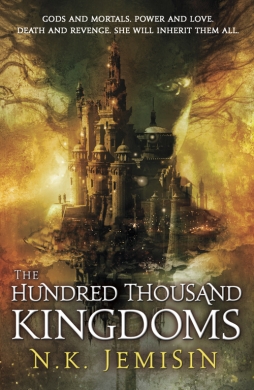 While one controversy about morality and fantasy was being thrashed out around these parts last week, another, quieter, discussion seemed about to get underway in the fantasy blogosphere. N.K. Jemisin began a discussion about “feminization” (her quote marks), sexual explicitness, and the male gaze in epic fantasy, which also involved considering the ways in which female-authored texts were presented to readers. The conversation was continued in a number of places around the web.
This is a potentially massively interesting topic about which I actually don’t have that much to say — because, in what looks like an example of a feedback loop at work, I haven’t read most of the writers Jemisin and others have mentioned. In fact, though I try to maintain a basic familiarity with contemporary fantasy fiction, many of the names they mention are completely unfamiliar to me. So this certainly goes some distance toward increasing my interest in examining the way certain writers are marketed and reviewed, and I’d like to see this discussion developed further.
What I’d like to contribute here is a bit of possibly-meaningless pedantry about definitions. To ask why certain books, specifically books by women, are not described, categorised, or marketed as epic fantasy means having a solid idea of what epic fantasy is. Jemisin noted that she herself was unsure whether some of the books she thought of as ‘epic’ would actually count for most people as epic fantasy. So what is an epic fantasy?
 This post is the latest installment of an ongoing discussion in the fantasy blogosphere, which I think has raised some interesting questions about fantasy and the fantastic tradition.
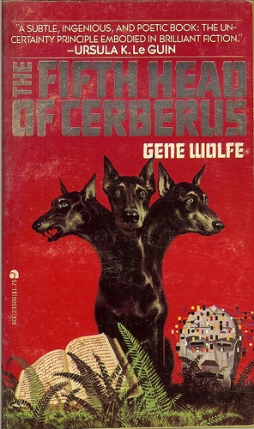 Reading The Fifth Head of Cerberus, I was struck by the way the book seemed eminently suited to the internet age. Never mind that it was written in the early 1970s. Like many of Gene Wolfe’s fictions, it’s a text whose nature is in harmony with the way the internet allows a text to be scrutinised; its depths, its meanings, its allusions — or at least some of them — can produce multiple readings, any of which can be valid, but which deepen the work as a whole the more of them you can think of and hold in your head at once. And can any one reader imagine as many different readings as a community of readers will produce?
 I’ve always been fascinated by history, which is one reason why
 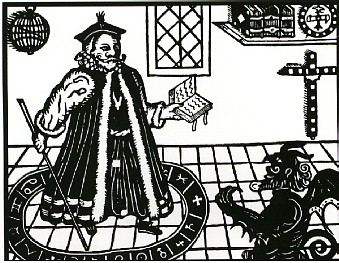 This week I read an advance copy of the second book in Mark Chadbourn’s series of espionage-fantasy-adventure novels, Swords of Albion. The Scar-Crow Men begins with the first performance of Christopher Marlowe’s play Doctor Faustus, and the story of the novel and the story of Faust end up connecting in a number of ways. It got me thinking about Faust, and why the story of Faust has flourished in the centuries since Marlowe wrote, and how many different ideas about wizards there really are.
 In the opening pages of The Anatomy of Criticism,
  I want to write about the novels of Felix Gilman, who I believe is one of the strongest new novelists in fantasy fiction today. He’s written three books, Thunderer, Gears of the City, and The Half-Made World, all of them accomplished and powerful, fusing imaginative range with a compelling style and real insight into character and voice. I’ve written about Thunderer
 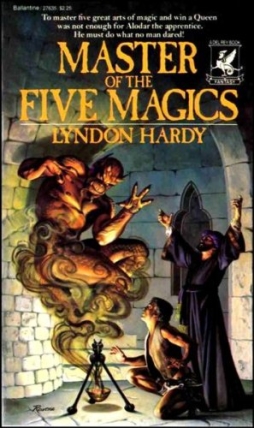 I’ve been thinking lately about fantasy in the 1980s. More specifically, about the wave of fantasy fiction that began to be published in the late 70s, in the wake of The Sword of Shannara and the first Thomas Covenant books, and which over the following years developed into fantasy as we know it now. So far as I can learn, it seems that this was when fantasy really took root as a novel category — that is, when fantasy novels stopped being relatively rare events and began to flourish as a genre. As a result, I think, it was a time when the idea of fantasy broadened; new ideas and forms and voices were tried, even if certain assumptions (like a quasi-medieval-European setting) were often unquestioned. What I wonder is whether certain things tried then and since almost forgotten are in fact worth revisiting.
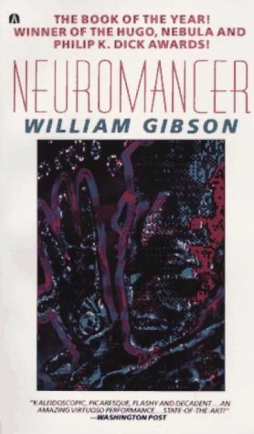 The first days of a year always have a feel, to me, of science fiction; of a piece of the future made real. You’re looking at a new date everywhere you turn. The name of the year is not the old name. You find yourself living inside something whose coming you have been awaiting, a future now present. But typically this strangeness doesn’t last long; sooner or later the human tendency to adapt makes a new normal, and life as it has been reasserts itself.