Browsed by
Author: Matthew David Surridge

Literature and Ideas: Olaf Stapledon’s Star Maker

Literature and Ideas: Olaf Stapledon’s Star Maker

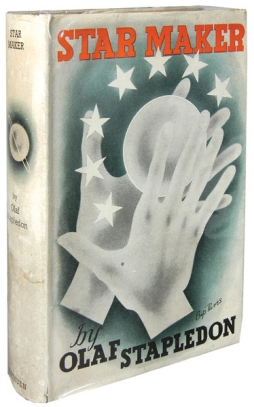
Star MakerIt’s often said that science fiction (or speculative fiction, whatever term you prefer) is a ‘literature of ideas’. I’ve never been able to agree with that statement. In part, I feel much the same way this writer does, though perhaps not as strongly; that is, to say that sf is a literature of ideas is to overlook the fact that the best mainstream literature is every bit as engaged with ideas, if not more so. Consider, say, Iris Murdoch’s use of Wittgenstein’s imagery and philosophy. Is that not writing engaged with ideas?

But I think also that there’s another difficulty with considering sf as a literature of ideas. That being: it seems to me sf very often fails to realise the promise contained in that phrase. What I mean is that ‘a literature of ideas’ would seem to imply a literature with a different structure than traditional literature; a literature with a different sense of how to shape a narrative, or how to use language. A literature actually shaped and structured by ideas, not plot or even character. I feel Murdoch goes some distance toward that sort of thing in a book like Under the Net, playing about with forms like farce and bildungsroman, and tying them together with the Wittgensteinian ideas about the representation of reality — with which, as somebody writing a basically mimetic work, she’s already engaged. What’s the science fiction equivalent of that?

It seems to me that an example of the true literature of ideas in sf is something like Olaf Stapledon’s Star Maker. Stapledon was a novelist, but a philosopher perhaps more so; and Star Maker seems often less like a traditional narrative than an extended philosophical meditation or anthropological field report. The whole book is essentially one big infodump. But a fascinating infodump.

Read More Read More

Epic Fantasy: Notes Toward a Definition

Epic Fantasy: Notes Toward a Definition

The Hundred Thousand KingdomsWhile one controversy about morality and fantasy was being thrashed out around these parts last week, another, quieter, discussion seemed about to get underway in the fantasy blogosphere. N.K. Jemisin began a discussion about “feminization” (her quote marks), sexual explicitness, and the male gaze in epic fantasy, which also involved considering the ways in which female-authored texts were presented to readers. The conversation was continued in a number of places around the web.

This is a potentially massively interesting topic about which I actually don’t have that much to say — because, in what looks like an example of a feedback loop at work, I haven’t read most of the writers Jemisin and others have mentioned. In fact, though I try to maintain a basic familiarity with contemporary fantasy fiction, many of the names they mention are completely unfamiliar to me. So this certainly goes some distance toward increasing my interest in examining the way certain writers are marketed and reviewed, and I’d like to see this discussion developed further.

What I’d like to contribute here is a bit of possibly-meaningless pedantry about definitions. To ask why certain books, specifically books by women, are not described, categorised, or marketed as epic fantasy means having a solid idea of what epic fantasy is. Jemisin noted that she herself was unsure whether some of the books she thought of as ‘epic’ would actually count for most people as epic fantasy. So what is an epic fantasy?

Read More Read More

The Decline and Fall of Bankrupt Nihilism

The Decline and Fall of Bankrupt Nihilism

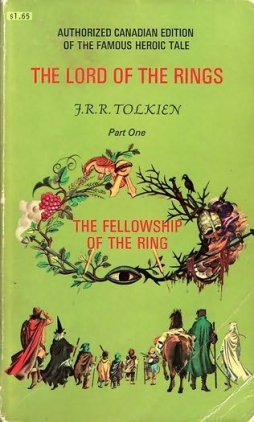
The Return of the KingThis post is the latest installment of an ongoing discussion in the fantasy blogosphere, which I think has raised some interesting questions about fantasy and the fantastic tradition.

It began when Leo Grin put up a post at Big Hollywood arguing that modern fantasy writers, specifically Joe Abercrombie, were inferior to J.R.R. Tolkien, Robert E. Howard, and other past writers; the inferiority, argued Grin, was a function of modern writers’ desire to tear down heroic ideals of the past. Abercrombie wrote a post responding to Grin; so did a number of other people, including John C. Wright (pro-Grin), R. Scott Bakker (mostly anti), and Jeff VanderMeer (fairly neutral and descriptive). Adam Whitehead, Phil Athans, and Paul Charles Smith, among others, also had comments. Around these parts, John O’Neill put up a post on the Black Gate blog which spawned an interesting discussion. Earlier today, another blogger here, Theo, put up a post restating Grin’s thesis and responding to Grin’s critics. I think Theo’s post was much clearer than Grin’s, though I still disagreed with the basic argument profoundly. I had a long response in the comments thread of that post, expressing that disagreement, but also noted that I had more to say. Which I now want to say here.

Grin and Theo both argue, among other points, that fantasy fiction was originally heroic and inspiring, but in recent years has become dominated by the anti-heroic and the disheartening. The point seems to be that while Tolkien and Howard can both be tragic, modern fantasy seems to question the existence of any meaningful system of values. From the heroic, fantasy has become ironic. Theo, specifically, argues that “something material and significant has changed within the field of fantasy fiction” in the past 71 years (roughly since the publication of the last of Howard’s stories), and specifically in the past 52 years (since the publication of Return of the King). I think that this argument raises a number of issues, and that it’s worth looking at them to see what we might learn about fantasy and the development of fantasy fiction.

Read More Read More

Internet Possibilities, Gene Wolfe, and The Fifth Head of Cerberus

Internet Possibilities, Gene Wolfe, and The Fifth Head of Cerberus

The Fifth Head of CerberusReading The Fifth Head of Cerberus, I was struck by the way the book seemed eminently suited to the internet age. Never mind that it was written in the early 1970s. Like many of Gene Wolfe’s fictions, it’s a text whose nature is in harmony with the way the internet allows a text to be scrutinised; its depths, its meanings, its allusions — or at least some of them — can produce multiple readings, any of which can be valid, but which deepen the work as a whole the more of them you can think of and hold in your head at once. And can any one reader imagine as many different readings as a community of readers will produce?

The internet’s helped change the way an audience interacts with a story. Fan communities discuss and break down details on blogs and message boards; it’s most obvious with TV shows and serialised comics, where analysing past stories may help predict future plot developments, but it’s there also for stand-alone narratives like movies and novels. To an extent it was always there, whether in the form of literary criticism or of things like fanzines and APAs, but the internet’s made that degree of interaction and communal scrutiny far more common.

On one level it’s obvious why Wolfe’s writing thrives under this sort of analysis. A typical Wolfe story will seem simple on the surface, with a few odd gaps or apparent contradictions in the narrative; but, when investigated, those gaps or contradictions will seem to suggest a different way of reading the story, suggest that what’s actually happening is something larger and perhaps more disturbing than what appears to be going on, suggest perhaps that the story that’s actually being told is completely other than it appears at first glance to be. A lively critical community — and Wolfe has an active mailing list and a wiki dedicated to his work — can help unpack these subtleties, and clarify some of the possibilities confronting the reader. The Fifth Head of Cerberus, though, is an example of how a community of readers can be even more useful.

Read More Read More

Classic Alternatives: Keith Roberts’ Pavane

Classic Alternatives: Keith Roberts’ Pavane

PavaneI’ve always been fascinated by history, which is one reason why I write about it. So by extension one of the kinds of speculative fiction which has always fascinated me is the alternate history tale. Whether as a ‘pure’ alternate history tale, describing a world where things just happened to go a different way than we knew, or as a ‘warped’ history in which deliberate meddling has created some new reality, the rethinking of historical assumptions is challenging and invigorating — at least, up to a point. The changes have to make sense.

I think a lot of science fiction and fantasy requires careful attention to setting; attention in constructing a setting, attention in how the setting is communicated to the reader, and attention in working the setting and its communication smoothly into the narrative. Along, of course, with attention to how the setting affects character, and, ultimately, the language a character uses and the language in which the story is told. The alternate-history story is an extreme example of all these things. It’s the setting that makes it the story it is. And in changing history, the writer makes decisions about character, style, and — implicitly — theme and structure; as in any kind of sf, what kind of fictional world the writer creates is intimately connected with what the story’s about and how it’s told.

Which brings me around to Keith Roberts’ novel Pavane. It’s a set of linked short stories, describing a world in which Queen Elizabeth I of England was assassinated, the Spanish Armada conquered England, and Europe remained wholly Catholic. The book, first published in 1966, takes place in the late twentieth century of this other world, in which technological and social progress has been slowed by the authoritatian hand of the Church. It moves from character to character, showing developments over the course of generations as some things change and some things do not.

Read More Read More

The Scar-Crow Men, Faustus, and Wizards: Three Posts

The Scar-Crow Men, Faustus, and Wizards: Three Posts

Marlowe's FaustThis week I read an advance copy of the second book in Mark Chadbourn’s series of espionage-fantasy-adventure novels, Swords of Albion. The Scar-Crow Men begins with the first performance of Christopher Marlowe’s play Doctor Faustus, and the story of the novel and the story of Faust end up connecting in a number of ways. It got me thinking about Faust, and why the story of Faust has flourished in the centuries since Marlowe wrote, and how many different ideas about wizards there really are.

So this post breaks down into three posts, offering ruminations on the book, on Faust, and on wizards.

Read More Read More

Robert E. Howard: The Barbarians

Robert E. Howard: The Barbarians

The Anatomy of CriticismIn the opening pages of The Anatomy of Criticism, Northrop Frye introduced a theory of modes, of types of stories, based on the power of action held by a story’s hero. If the hero has powers superior in kind to other characters, the story is a myth; if the hero has powers superior in degree, like a Launcelot or a Charlemagne, then the story’s a romance (in the old sense of a fantastic adventure story). A hero superior to other characters but not to the world around him is a leader, the kind of protagonist you might have in an epic or a tragedy, like Macbeth or Odysseus, and so belongs to the high mimetic mode: a mode imitating life, but at a higher pitch than life is commonly lived. A hero “superior neither to other men nor to his environment” impresses us with a sense of shared humanity, and exists in the low mimetic mode. A hero with less power or agency than ourselves creates the ironic mode, a story about “bondage, frustration, or absurdity.”

Frye has a lot more to say about all these different modes, but that’ll do for a start. I’ve been thinking about Frye and his theory of modes with respect to Robert E. Howard and to Howard’s three great barbarian heroes: Kull, Conan, and Bran Mak Morn. It seems to me that the theory of modes helps to explain the substantive difference between the three characters; why their stories, as far as I’m concerned, feel so different one from another. All of them are characters of the romance mode, but a story in one mode can be pulled toward another, and I think that’s what’s happening with these characters.

Read More Read More

The Book of Modred: An Excerpt

The Book of Modred: An Excerpt

Last November, I blogged about my participation in NaNoWriMo. The following is an excerpt from what I wrote that month, for those who’d like to see how it turned out. Editing is minimal, principally for spelling. Although the story’s from the middle of the book, it should be fairly self-explanatory. It’s the story of Modred at the court of King Arthur, a young Modred who does not yet know the secret of his father’s identity, much less what’s coming for both of them in the future. As the excerpt begins, Modred’s about eighteen, possessed of a magical sword called Naught, and accompanied by his squire, who also happens to be the King’s bard, a somewhat older man named Taliesin …

Read More Read More

Steampunk Thoughts: The Novels of Felix Gilman

Steampunk Thoughts: The Novels of Felix Gilman

ThundererI want to write about the novels of Felix Gilman, who I believe is one of the strongest new novelists in fantasy fiction today. He’s written three books, Thunderer, Gears of the City, and The Half-Made World, all of them accomplished and powerful, fusing imaginative range with a compelling style and real insight into character and voice. I’ve written about Thunderer on my own blog, and was able to interview Gilman at the 2009 Worldcon. I’d like consider now all three of his novels, and what makes them work. Before trying to describe the virtues of these books in detail, though, I think I first need to write a bit about steampunk.

I need to write about the genre because it’s a form that seems to me to be intrinsic to Gilman’s work; or, put another way, I think Gilman’s work illustrates something of what’s remarkable about steampunk. To explain that, I need to explain steampunk, and what it means to me. As it happens, I’ve seen a couple of essays lately which criticise steampunk on various grounds, so I want to consider these objections as a way of defining exactly what steampunk means, and where I think Gilman’s work fits in with it.

Read More Read More

80s Fantasy and Master of the Five Magics

80s Fantasy and Master of the Five Magics

Master of the Five MagicsI’ve been thinking lately about fantasy in the 1980s. More specifically, about the wave of fantasy fiction that began to be published in the late 70s, in the wake of The Sword of Shannara and the first Thomas Covenant books, and which over the following years developed into fantasy as we know it now. So far as I can learn, it seems that this was when fantasy really took root as a novel category — that is, when fantasy novels stopped being relatively rare events and began to flourish as a genre. As a result, I think, it was a time when the idea of fantasy broadened; new ideas and forms and voices were tried, even if certain assumptions (like a quasi-medieval-European setting) were often unquestioned. What I wonder is whether certain things tried then and since almost forgotten are in fact worth revisiting.

It sometimes seems like that generation of books is either ignored, or remembered only for its most popular examples — the big sellers, or the series which started then and are still going. I can’t find much thoughtful criticism of 80s fantasy fiction as a whole, or even much discussion about the relevance of the books of that time to contemporary fantasy writing. This is annoying, as I think it increases the possibility of good work slipping through the cracks. I don’t mean to suggest that there’s a mass of neglected masterpieces, but I do suspect that some of those 80s fantasies have elements to them which might be worth re-examining, or which might speak to contemporary ideas in fantasy.

Take, for example, Lyndon Hardy’s three-book sequence Master of the Five Magics, Secret of the Sixth Magic, and Riddle of the Seven Realms.

Read More Read More