Gothic Ambiguity: Helen Oyeyemi’s White is for Witching
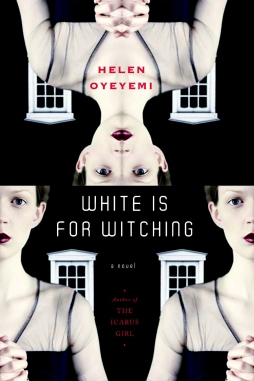 I picked up Helen Oyeyemi’s third novel, 2009’s White is for Witching, knowing very little about it. I’d read that Oyeyemi was a highly-regarded young writer in ‘mainstream’ literary circles, whose work contained some speculative elements (born in 1984, her first book had been 2005’s The Icarus Girl, followed by The Opposite House in 2007; a fourth book, Mr Fox, came out in 2011). What I found in White is for Witching was an excellent horror story whose intricacy demanded careful attention. It’s sharply-written and tightly-constructed, and if its plot is not immediately clear, the book’s strong enough to encourage careful attention.
The novel moves back and forth between several perspectives, building an unusual structure out of their interplay. The prologue at first borders on nonsensical, but as the tale goes on, things become clear: this is a novel of great ambition, not afraid to possibly bite off too much. If the tone had been slightly different, the sheer flashiness and verve might have been distracting; as it is, the book modulates nicely between voices, building from a normal-seeming reality to an increasing awareness of wrongness, madness, and the supernatural.
The inventiveness of the book rests on a traditional gothic framework. There’s a family saga here and a cursed dwelling. The house, in fact, is given a voice, a personality, and may be the monster, or a monster, moving events. But one of the book’s unusual aspects is the way you’re never quite sure who is the monster, even when you’re given the point-of-view of each character. It’s a book that seems to resist any one possible reading, any reduction to one truth.
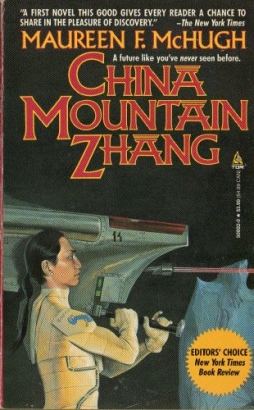 There’s a distinctive kind of surprise some science fiction books can generate: surprise that a book which seems to be speaking to the beliefs, fears, or world-view of a given time was in fact written well beforehand. I remember being taken aback, for example, that A Clockwork Orange was first published in 1962, before hippies and punks and the coining of ‘generation gap’ (first recorded 1967). And it’s interesting to me that Maureen F. McHugh’s China Mountain Zhang, published in 1992, calmly and thoroughly imagines a future dominated by China — something much discussed today, but a less common idea before the turn of the millennium. McHugh’s book is a twentieth century novel, lacking a world wide web or smartphones, that speaks to the twenty-first.
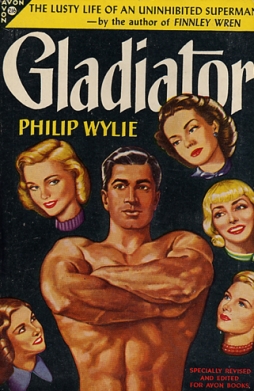 Growing up reading superhero comic books, it was almost inevitable that I’d hear about Philip Wylie’s 1930 novel Gladiator. It was said to be the inspiration behind Superman, the original story about an ultra-powerful strong man who set about trying to right wrongs. Growing older, I heard more: that Jerry Siegel, Superman’s co-creator, had reviewed the book for a fanzine; that he’d swiped dialogue from the book for use in his comics; that Wylie had threatened to sue.
 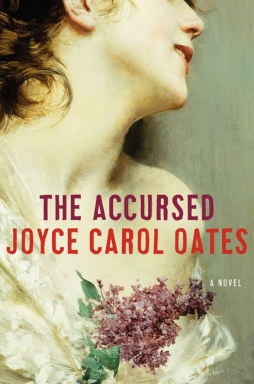 Last October, I looked at the four books of Joyce Carol Oates’ Gothic Quintet that had been published up to that point. I wrote about them in publication order, starting with
 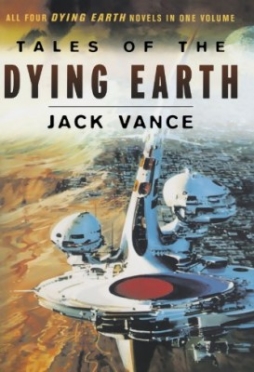 Last Sunday, May 26, veteran genre writer Jack Vance died at the age of 96. John O’Neill posted
 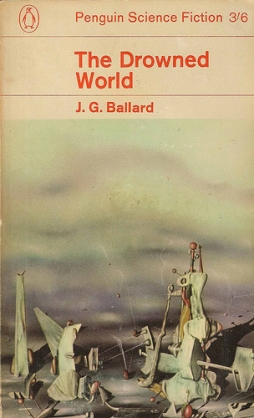 My copy of J.G. Ballard’s The Drowned World has an about-the-author section that describes the 1962 book as “a brilliant first novel that won him instant acclaim and had a dramatic effect on the state of science fiction.” Even allowing for the typically excessive claims of PR text, this is inaccurate: Ballard’s first novel was actually The Wind From Nowhere, published in 1961 and written in two weeks. Still, Ballard’s consistently downplayed and even disowned the earlier book, so let’s take him at his word. How does The Drowning World look fifty years on?
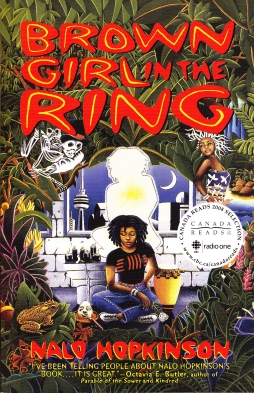 Published in 1998, Nalo Hopkinson’s debut novel was Brown Girl in the Ring, the first winner of the Warner Aspect First Novel Contest. It went on to be shortlisted for the Philip K. Dick Award and the James Tiptree Junior Award, to win the Locus Award in the First Novel category, and to help Hopkinson (who had already published several short stories) win the John W. Campbell Award for Best New Writer. She’s gone on to write five more novels, along with two collections of short stories, as well as editing and co-editing several anthologies.
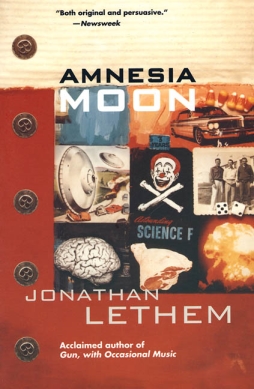 Not long ago, I came across a copy of Jonathan Lethem’s second novel, Amnesia Moon. I was curious: Lethem’s best known for his recent work in mainstream mimetic fiction, but his early novels were science fiction and he also wrote an odd take on Steve Gerber’s already-odd character Omega the Unknown for Marvel Comics in 2007. More, between 2007 and 2009, he edited
  Brian Aldiss
 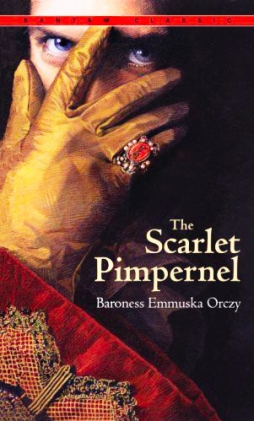 One of the strangest and most distinctive elements of a super-hero is a secret identity. It’s so distinctive we don’t even think about how strange it is. Or, more precisely, how strange the heroic identity is. There’ve been disguises and alter-egos throughout fiction, whether Odysseus showing up at his home incognito before killing his wife’s suitors, or the heroines of Shakespearean comedy dressing up as men and taking male names, or Sherlock Holmes ferreting out clues while masquerading as a humble old book-seller or opium addict. But the super-hero identity, in its classic form, is less a person than an idea: a being known by a code-name, who does not pretend to be a specific person, but instead wears a mask or cloak, and who exists only for one reason — usually to defend against some injustice, to right wrongs, or generally to fight crime. The super-hero identity is not a person or a personality; it’s the idea of a person, the dream of an identity. Much has been written about the symbolic presentation of masculinity the dual identity implies, a weak or nerdy exterior hiding a powerful secret persona. It’s interesting, then, that the idea seems to have been created by a woman.