Chapter Eight Changes Everything: Iris Murdoch’s The Sandcastle
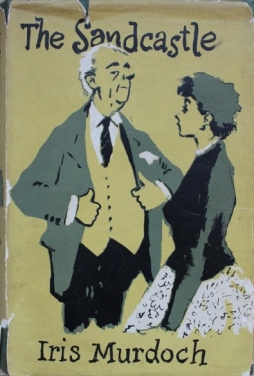 You never know when you’ll find something fantastical to write about.
A little while ago, I started an ongoing project of reading through the novels of Iris Murdoch. This came out of an appreciation of A.S. Byatt’s fiction, which led to me reading her study of Murdoch’s early novel, Degrees of Freedom. That book in turn led me to start in on Murdoch. I loved her first novel, Under the Net, which is something like what might have happened if P.G. Wodehouse had written a philosophical social realist novel. The next book, The Flight From the Enchanter, was well-written but sprawling and felt overly symbolically-determined. So I started on the third novel, 1957’s The Sandcastle, unsure of what I’d find.
It’s set in a town not far from London and deals with an extramarital affair between Bill Mor (known throughout the book as Mor), a teacher at St. Bride’s school for boys, and a young painter named Rain Carter, who comes to the school to paint a portrait of the school’s former headmaster, Demoyte, a longstanding friend of Mor’s. For the first seven chapters, the book unfolds much as you’d expect from a mimetic novel. The background of Mor and his family and his school is sketched in; his political ambitions are described; the implicit conflict with his strong-willed wife Nan is set up; the personality of Rain is implied; a set of accidents throw Mor and Rain into close proximity. The prose is direct, even simple, and on the whole without ornament.
Then we get to chapter eight and everything changes.
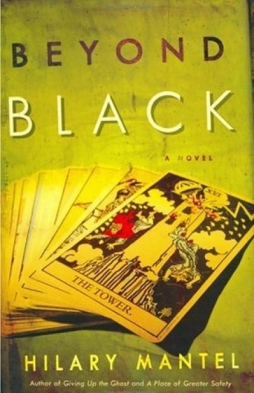 Hilary Mantel’s two novels of Tudor-era statesman Thomas Cromwell, 2009’s Wolf Hall and 2012’s Bring Up the Bodies, have both won the Man Booker prize; a third, The Mirror and the Light, will complete the trilogy, but has not yet been scheduled for publication. I want to write here not about those books, but about 2005’s Beyond Black, the last book Mantel published before embarking on the Cromwell trilogy. Her ninth novel, it was shortlisted for the Commonwealth Writers Prize and the Orange Prize. It’s a novel of the fantastic, in the broadest sense, and can be approached as fantasy, as horror, even as noir; but may be best understood simply as a thing in itself.
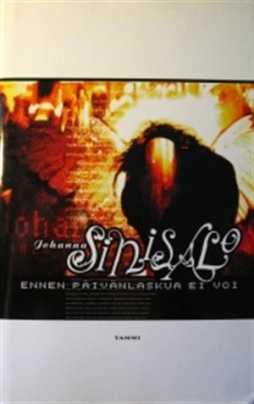 A few years ago, a cat came to live with me under unexpected circumstances. (This is getting around to a look at a fantasy novel, and no the novel has nothing to do with cats as such, and yes I have a point.) I’d never had a pet when I was young, so I suddenly found myself dealing with a new range of experiences and emotions; and found also that the depictions in most media of relationships between pets and their humans were notably lacking. There’s a complexity of living with, and to an extent being responsible for, a non-human animal. You have to learn about (and sometimes worry about) diet and medical needs and what certain behaviour patterns mean. You have to learn how to communicate with a creature that does not use words — but which may be surprisingly good at understanding emotions in a voice. These sort of things are rarely shown in most stories about humans and animals, but they’re a crucial part of the experience of dealing with a pet.
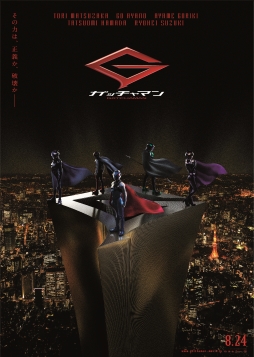 A couple weeks ago, I discussed one of the movies I saw at this year’s
 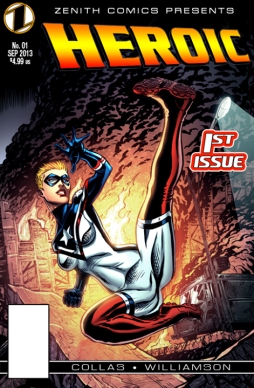 There’s been much discussion lately on Black Gate about Kickstarter: about projects
 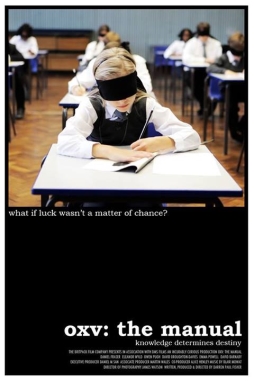 The 2013 edition of Montreal’s Fantasia film festival is well underway and I’ve been able to see three films so far, with more planned. A few days ago, I watched The Garden of Words, a visually spectacular 45-minute slice-of-life anime, and at noon yesterday took in After School Midnighters, a kid-oriented 3D animated movie that nicely balances plot and wackiness. Then, later that afternoon, I attended a showing of OXV: The Manual, a science-fiction film premiering at the festival. I was impressed enough to want to write about it here.
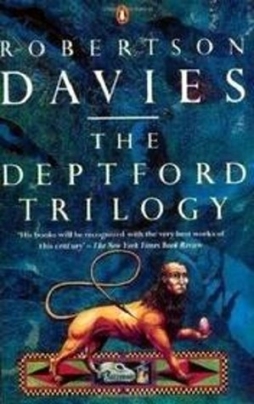 Normally, I write here about fantasy (which to me includes science fiction and horror). But some mimetic novels have a lot to say about the fantastic. Or a lot to say about related themes; wonder, for example, or the numinous. Those books are sometimes worth discussing at Black Gate, I think. Which is why I want to write now about Robertson Davies’s Deptford Trilogy — classics of Canadian literature, novels deeply concerned with wonder — and consider whether they should have been even more open to the fantastic than they in fact are.
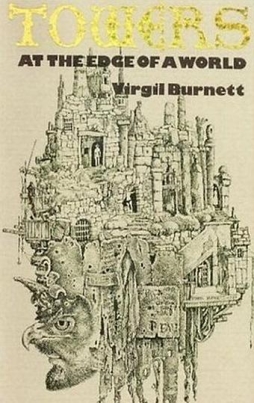 One of the distinct pleasures of book fairs and used book sales is finding an intriguing book you’ve never heard of. A greater and related pleasure comes when that book turns out to be quite good. Then, in reaction to that, there’s a melancholy that sets in from the fact that a worthwhile book is largely unknown. I’d like to think I can take the edge off that last sense by writing about some of these books here. So, given all that, a few words about Virgil Burnett’s Towers at the Edge of a World:
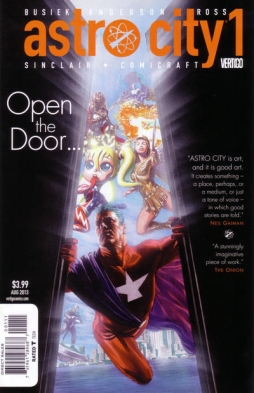 A couple Wednesdays ago, I did something I haven’t done in ages. I went down to my local comic store on new-comic day (which is Wednesdays) and bought a new super-hero comic off the rack. Not a Marvel or DC book, though — not really, though it was published by DC’s Vertigo imprint. This was the return of a series first published in 1995, under the Image Comics banner. The title’s moved around a fair bit since, and frequently been on hiatus from regular publication. But it’s back now, and hopefully for a long time to come. It’s Kurt Busiek’s Astro City, and I want to talk about what it is and why I’m going to be buying it going forward.
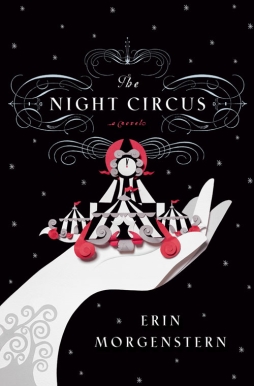 ‘Magic’ is an elastic metaphor. Among its many possible uses is that of a descriptor for something that happens in performance, especially live performance: the magic of an actor possessed by a character, the magic of a given moment invested with wonder and remaining in the memory, though inevitably passing away. The magic of stage magicians isn’t in the sleight-of-hand; it’s in the effect on the audience. The related magic of the carnival — the amusement park, the theme park — is a kind of second-person secondary-world magic. You are there. You are in a conjured fantasyland. A circus, in this reading, isn’t about the stink of animals or the scutwork of putting up tents and preparing performance spaces; it’s about the feeling the show tries to inspire. It is, potentially, for some, a venue for magic — transient, susceptible to thinning, but capable of generating wonder.