Second-hand Magic, Part I
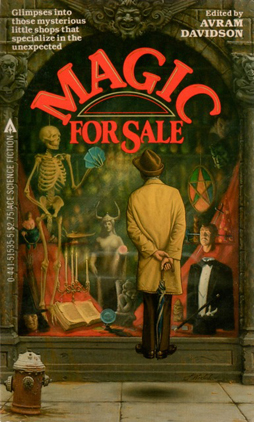 At a science fiction book sale not too long ago, I picked up an anthology from 1983 called Magic For Sale. There was something irresistibly appropriate in buying the book second-hand: edited by Avram Davidson, it’s a collection of stories for the most part precisely about the magic that lies within the second-hand. About purchasable goods with something in them beyond cost and explanation. About shoppers who find more than they expected. About supernatural bargains, each with its own twist.
Mostly. It’s actually difficult to find a plot description that fits all the stories in the book. Many involve strange old shops (that may or may not be present when a shopper returns), but many don’t. Most involve somebody buying something, but several are about decisions not to buy, or even simply about a customer escaping a shop more-or-less intact. Virtually all involve magic, except one or two that are, at least superficially, science fiction. So in some ways it’s quite a mixed bag.
And then again, in other ways it isn’t. Tonally, the stories feel quite similar, which might be a function of Davidson’s tastes as editor. But it’s interesting to wonder how much the similarity has to do with the nature of the book’s theme: the moment of transaction, the buying (or not) of the odd and dangerous. The way that the unnatural enters everyday life. Often, in horror and dark fantasy, critics like to talk about the “irruption” of the supernatural into the real; but the relevant definitions of irrupt have to do with something breaking in by force, and that’s exactly what doesn’t happen here, in most cases. Mostly, these stories are about making deals, and whether a character chooses to accept the deal they’re given, and what happens as a result. Mostly. One way or another, certain themes tend to emerge.
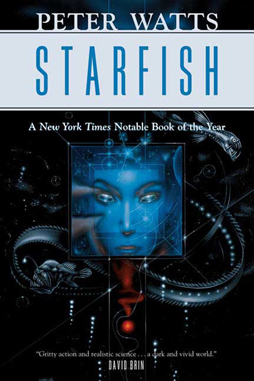 Usually I write here about books I’ve read and enjoyed. It’s really quite selfish: thinking about a good book extends the pleasure I get from reading it. This post, though, is a little different. I’m going to write about a science fiction trilogy in order to work out why I don’t like it more than I do. These are good books, even excellent books. But something about them didn’t grip me the way I would have thought they might.
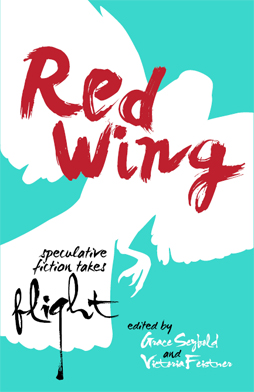 There’s a new anthology out that I want to talk about, partly because of what it is and mostly because I think it’s quite good. But you shouldn’t trust me on this. I’m going to be honest, in that I’m going to write what I think about the book, but what I think may be shaped by my connection to it: my girlfriend, Grace Seybold, is the editor. So.
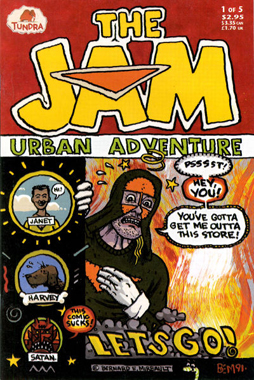 Not long ago, a friend of mine went on patrol with a super-hero.
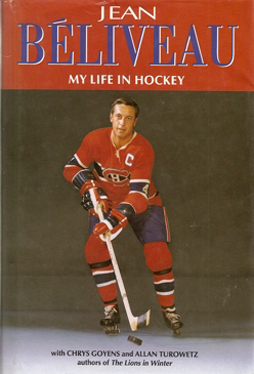 There’s a post I’ve wanted to write for this site for some time. I wasn’t sure exactly how to approach it, but I knew the general subject. I’d thought it’d fit here because it would be about myth and heroes. About stories and storytelling, and about the importance of story. In the wake of recent events I’ve come to feel the time has come to finally write that post. So here, on the shortest day of the year, are a few words about legends; about those that bear a torch through the longest darkness and inspire us to follow them. About heroes, in reality and in stories. And about the Montréal Canadiens.
 Last August,
 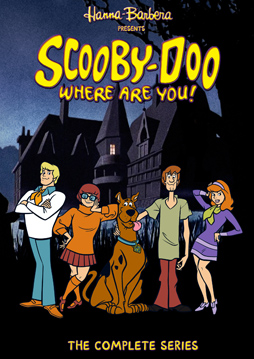 It’s been a while since I posted anything here at Black Gate. There’s no one reason; a number of things have kept me busy or occupied, most recently a persistent head cold and ear infection. I mention this because being under the weather has indirectly to do with the following post. Firstly, being sick led me to watch some TV shows which I now want to write a bit about. Secondly, my mental state shaped the way I thought about what I experienced; I can only hope now to capture the sense of coherence I had then. This essay will be more shapeless than usual, I’m afraid, an attempt to explain the connections that drifted through my mind between Alan Moore, Doc Savage, and Scooby Doo, among others.
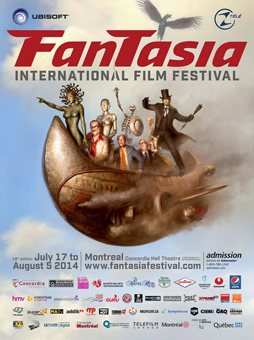 As I write this, I’m preparing for a vacation in the country. It’s an odd thing, in that the past three weeks have been a kind of vacation in themselves, as thanks to John O’Neill here at Black Gate and to the Fantasia staff, I was able to cover this year’s edition of the Fantasia International Film Festival. Still, watching (by my count) thirty-nine movies and writing about all of them was quite a project. Fun, though. I thought I’d take a quick post to wrap up my coverage by talking about what I’ve learned from the experience.
 I closed out this year’s Fantasia film festival with a movie on Wednesday and another on Thursday. Together they seemed to say something about the festival, in that they had virtually nothing in common. They’re from different countries, they’re different genres of film, they have wildly different budgets — and yet somehow they both seem to belong at Fantasia. Unsurprisingly, one played the big Hall Theater, while the other screened at the small De Sève.