Harpy’s Flight by Megan Lindholm (aka Robin Hobb)
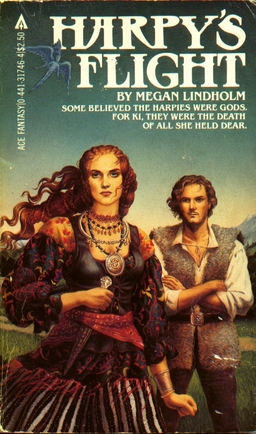 Before becoming the better known Robin Hobb, Mary Astrid Lindholm Ogden wrote under the pen name Megan Lindholm. Today, what little she writes under the Lindholm name tends to be contemporary fantasy. Initially, though, some of it came very close to heroic fantasy. Ogden’s first published story was a swords & sorcery tale under the Lindholm byline, in Jessica Amanda Salmonson’s important 1979 anthology Amazons!.
That first story, “Bones for Dulath,” introduced a pair of traveling adventurers: the stolid wagon driving Ki and her more lighthearted companion Vandien. In a review of Amazons! I wrote last year I said:
It’s not an especially exciting story but Ki’s voice and the easy camaraderie between the two feels real and comfortable. Ki and Vandien find themselves face to face with a strange, dangerous mountain creature and a town of people who’ve come to see it as a god. I’ve read a few of Lindholm’s novels under the Robin Hobb name and enjoyed them but they’re more mainline fantasy than this good slice of S&S.
In her first published novel, Harpy’s Flight (1983), Lindholm returned to Ki and Vandien to tell how they met and became companions. It’s not the work of heroic fantasy I was expecting based on “Bones for Dulath,” but instead something closer to the mainline fantasy of her Hobbs books. Still, it is good solid work, particularly for a first book. Lindholm/Hobb has a tremendous talent for creating truly strange, alien worlds and peopling them with multi-dimensional human characters, not simply hangers for a bundle of traits and quirks. That talent is beautifully displayed throughout Harpy’s Flight.
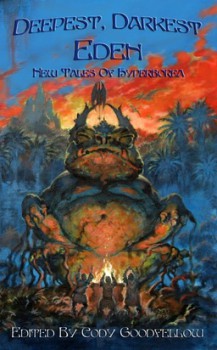 Clark Ashton Smith, one third of the Weird Tales triumvirate along with H. P. Lovecraft and Robert E. Howard, has been a favorite of mine ever since I bought a copy of the Lin Carter-edited collection Hyperborea. I was thirteen or fourteen and Smith’s archly told stories of the titular prehistoric land and its impending doom before an encroaching wall of ice, stunned me. I was long familiar with Lovecraft’s purple prose, yet nothing had really prepared me for Smith’s cynical, lush, and utterly weird writing. The stories were stunning and I was a fan.