Browsed by
Author: Bob Byrne

The Public Life of Sherlock Holmes: Stanford Does Holmes and More…
The Public Life of Sherlock Holmes: Stanford Does Holmes and More…

Stanford_CoverI don’t know how many Holmes and Sir Arthur Conan Doyle related books I have on my shelves. But it’s certainly several hundred. And I know almost every one of them and where they are. Some days, I like to simply pull various volumes out, look at them a bit and put them back. And once in awhile, I run across something I had forgotten about. Such happened to me as I was trying to decide what to write about this week.

Did you ever hear of the Stanford Victorian Reading Project? This admirable effort, currently on hiatus, released facsimiles of Charles Dickens and Sherlock Holmes stories. Regarding Dickens, they explored Great Expectations, A Tale of Two Cities and Hard Times.

I’m not much of a Dickens reader, so I’m only going to look at the Holmes project here.

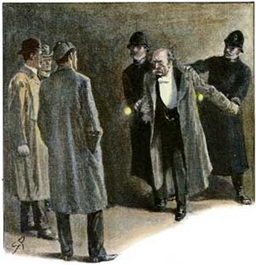
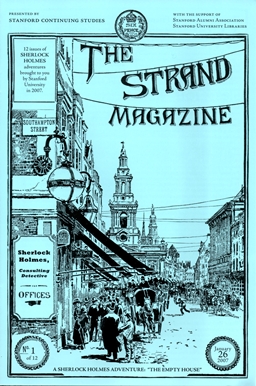
You could sign up and they would send you, in the mail, free, an issue with a recreated cover from The Strand Magazine, a very short essay somehow related to Holmes or Doyle, a facsimile of a story with Sidney Paget’s illustrations, and annotations, often including a map or other picture. Quite simply, these are neat! Starting in January of 2006, I received (on a weekly basis), ”A Scandal in Bohemia,” The Speckled Band,” The Hound of the Baskervilles in nine installments, and “The Final Problem.”

Beginning in January of 2007, the sent out “The Empty House,” “Silver Blaze,” “The Musgrave Ritual,” “The Reigate Squire,” “The Greek Interpreter,” “Charles Augustus Milverton,” “The Abbey Grange,” “The Second Stain,” “The Bruce-Partington Plans,” “The Devil’s Foot,” “The Dying Detective” and “His Last Bow.”
…

Read More Read More

The Public Life of Sherlock Holmes: Vincent Starrett’s intro to The Adventures of Solar Pons

The Public Life of Sherlock Holmes: Vincent Starrett’s intro to The Adventures of Solar Pons

Pons_StarrettAdventuresI received my DVD of Ian McKellan’s Mr. Holmes in the mail and anxiously popped it into the player, with the expectation that I would be writing about it for this week’s post. I fell asleep during the first try. Hey: I’m 48 years old and by the time my son is asleep and I settle down in front of the television, I’m near my own bedtime. It happens.

It took two further sessions to complete the film. It was such a disappointment that I’m not going to do a review. At least, not for a while. It’s a fair British melodrama, but as to the elements I look for in a Holmes movie, sadly lacking. I’ll note that most of my Holmes friends really liked it, so I’m in the minority. But that’s how I saw it.

Which left me with a hole in the schedule. An overview of Otto Penzler’s Sherlock Holmes Library (a nine-book collection of some classic Holmes writings from yesteryear) is high on my list. But I’ve still got some re-reading to do before that’s a go.

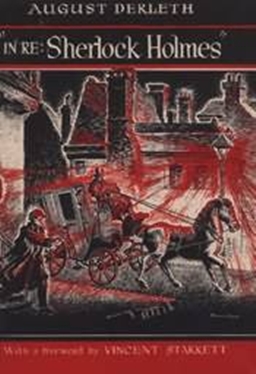
So, glancing over my shelves, my eyes, of course, wandered towards Solar Pons. Noted Sherlockian Vincent Starrett wrote the introduction to the first Pons short story collection, In Re: Sherlock Holmes – The Adventures of Solar Pons. I talked about the Doyle sons’ attempt to stop publication of that book in a prior post.

…

Read More Read More

Lost Stone Cities and Desolate Outposts: Exploring Runebound – The Mists of Zanaga

Lost Stone Cities and Desolate Outposts: Exploring Runebound – The Mists of Zanaga

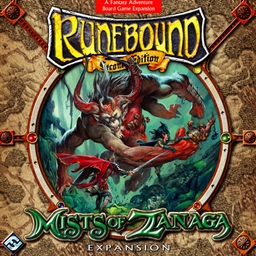
Zanaga_BoxI previously wrote about Runebound (2nd Edition), an RPG-like board game from Fantasy Flight. You might want to give it a quick read to get the basics down. I also did a post on The Sands of Al-Kalim expansion. Next up is a look at another of the big box expansions: The Mists of Zanaga.

Mists is another of the ‘big box’ expansions for Runebound. It comes with a board that you lay over most of the original Runebound board, completely changing the terrain.

Runebound is a traditional Middle-Earth type of fantasy world, while The Sands of Al-Kalim was a desert setting. Mists of Zanaga is the classic jungle environment, with lost stone cities and desolate outposts in the wild.

The idea is that some powerful entity known as Tarakhe sleeps deep beneath Zangara. It is a primal force that corrupts the world and drove the lizardmen to abandon their empire and descend into barbarism.

…

Read More Read More

The Public Life of Sherlock Holmes: Edgar Smith’s ‘The Implicit Holmes’

The Public Life of Sherlock Holmes: Edgar Smith’s ‘The Implicit Holmes’

Implicit_GasLampBy sheer numbers, Sherlock Holmes is more popular than he has ever been. This is in large part due to the massive success of BBC television’s Sherlock, which is an international sensation. The Robert Downey Jr. movies also contributed to a revival of interest in Holmes before that.

Anecdotal evidence isn’t as good as objective, but it can still be valid. There are Holmes fans that have never actually read any of Sir Arthur Conan Doyle’s sixty stories (the Canon) about the great detective. This used to bother me, but I’ve gotten over it: they’re the ones missing out, and they’re the ones who don’t have real knowledge of the world’s first private consulting detective: just some parody on screen. So I’m good.

There is a VAST body of work that has been written about the Canon; including my own free, online newsletters, Baker Street Essays. As the great Sherlockian, Christopher Morley said, his tongue planted in its accustomed place in his cheek, “Never has so much been written by so many for so few.”

…

Read More Read More

Discovering Robert E. Howard: David C. Smith on Bran Mak Morn

Discovering Robert E. Howard: David C. Smith on Bran Mak Morn

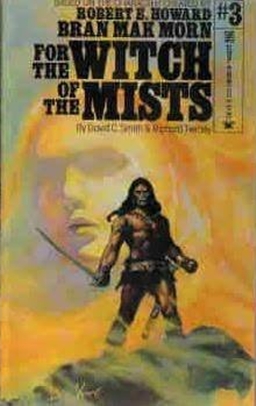
BranMak_MistsI discovered Oron before I first read a Conan tale. It was pretty much my introduction to barbarians in the world of fantasy. Author David C. Smith co-wrote the Red Sonja and Bran Mak Morn books with Richard Tierney. It’s safe to say that he knows his Howard. And about barbarians. So it’s natural that our ‘Discovering Robert E. Howard’ series turned to Dave to talk about Bran Mak Morn. “Worms of the Earth” was one of the first non-Conan stories I read from REH. Wow. Read on for Dave’s take on yet another topic for the series.


I was around 14 or 15 years old when I discovered the Hyborian. So now what will become of us, without barbarians. Those men were one sort of resolution.

— “Waiting for the Barbarians” (1897-1908) Constantine Cavafy

Howard knew the truth of these lines by Cavafy, just as South African author J. M. Coetzee did in his acclaimed novel of the same title. What do the barbarians bring to societies that are past their glory, that are overripe, living softly, in decline? What do the barbarians bring to societies whose citizens exist with each day the same as the day before, overripe citizens living softly?

These citizens have become soft while standing on the backs of those they kept down, slaves and serfs, and those they have conquered or coerced — the barbarians. When at last the barbarians turn on the overripe soft ones who keep them down, it is indeed one sort of resolution.

…

Read More Read More

Of Necromancers & Frog Gods – Part One (The Public Life of Sherlock Holmes)

Of Necromancers & Frog Gods – Part One (The Public Life of Sherlock Holmes)

NECROMANCER GAMES

OGL and D20

Necro_LogoWhen Wizards of the Coast rolled out the Open Game License for 3rd Edition Dungeons and Dragons, a plethora of third party companies would produce products, leaving players with a seemingly unlimited number of options available for purchase. A few were great, more were terrible and most were in between.

That period was known as the d20 boom, which inevitably led to a d20 bust and is explained in depth in Shannon Appelcline’s tremendous, four-volume RPG history, Designers and Dragons. If you have any interest in role playing history, you will love those books (they are broken up into decades: The Seventies, Eighties, Nineties and Two Thousands).

Along the way, many new and existing companies entered the official Dungeons and Dragons world. One of the most popular and successful was Necromancer Games, founded by Clark Peterson and Bill Webb. Under a different name, Necromancer’s offspring is a major player in the RPG scene today.

The Open Gaming License (OGL) made the 3rd Edition Dungeons and Dragons mechanics permanently “open use” and the basis of a System Reference Document (SRD). The OGL was accompanied by the d20 license, which verified that third party products were compatible with 3rd Edition.

The OGL and d20 licenses had distinguishing characteristics and somebody more versed than I in the intricacies should write a post on that whole shebang. Suffice to say here, companies began rolling out d20 products from day one.

…

Read More Read More

Discovering Robert E Howard: Morten Braten on The Road To Xoth: World-building in the Footsteps of Robert E. Howard

Discovering Robert E Howard: Morten Braten on The Road To Xoth: World-building in the Footsteps of Robert E. Howard

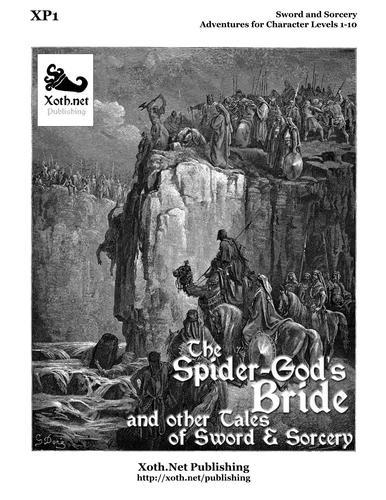
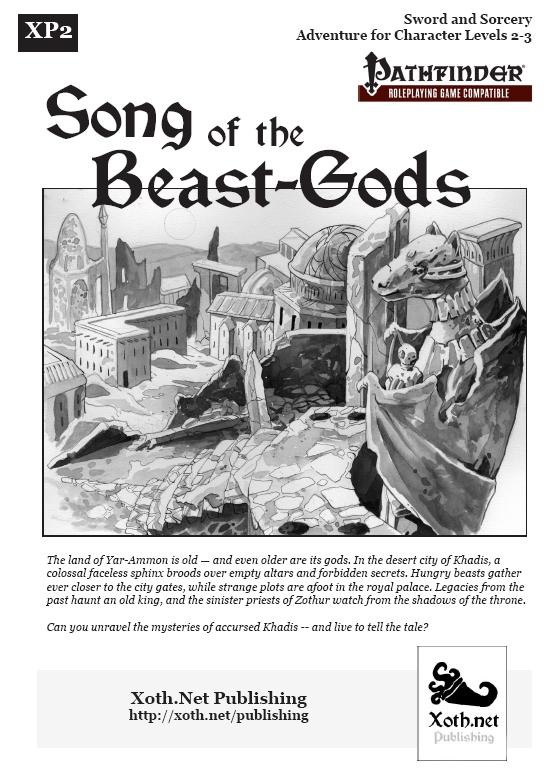
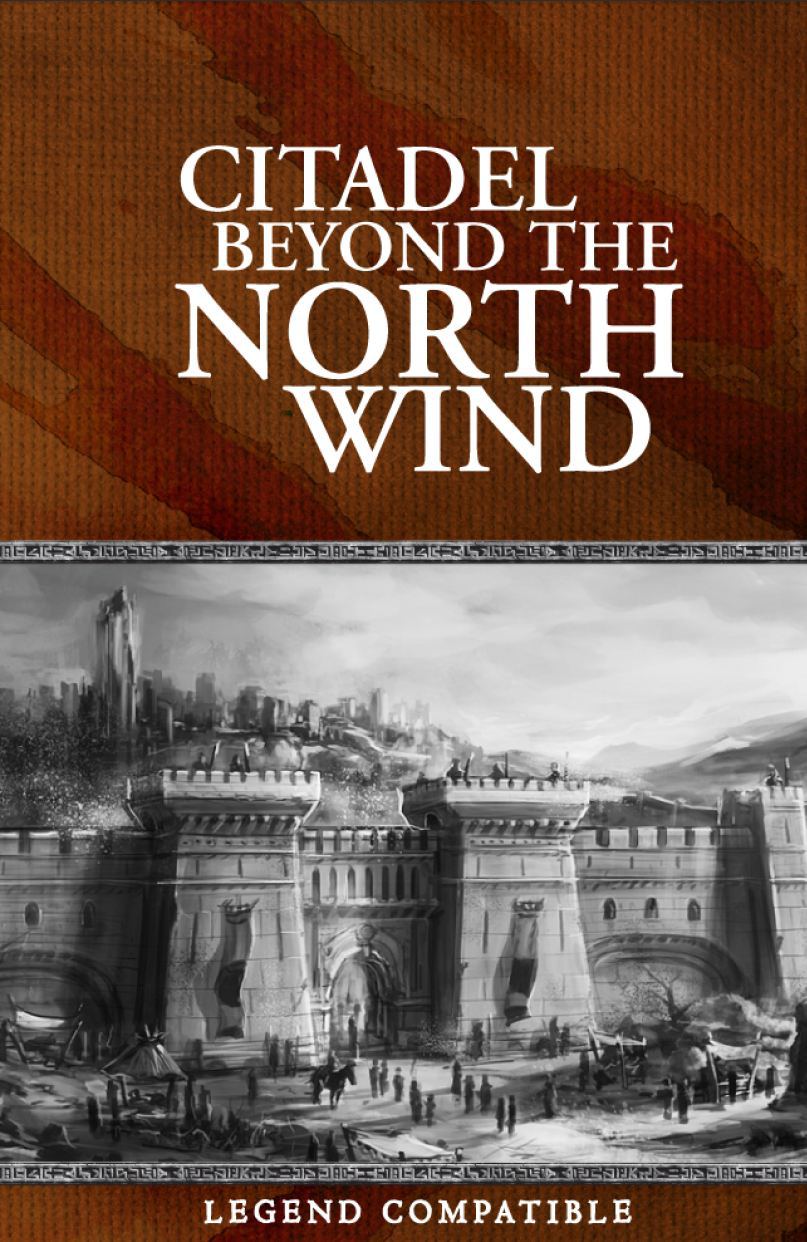
The Spider-God’s Bride and Other Tales of Sword and Sorcery-small Song of the Beast Gods-small Citadel Beyond the North Wind-small

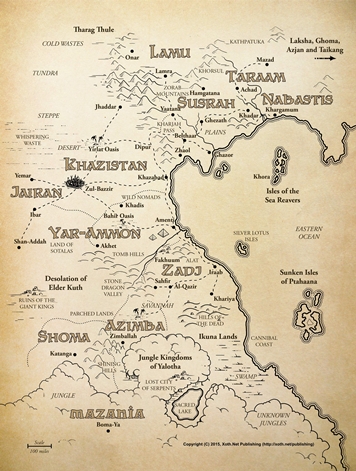
XothMapBGDue mostly to time constraints, I don’t play RPGs these days, but I still read RPG books pretty regularly – primarily Pathfinder and 3rd Edition Dungeons and Dragons. The pulpiest, most Robert E. Howard-ish stuff I have found is Morten Braten’s World of Xoth. Morten, who wrote the quasi-historical Ancient Kingdoms: Mesopotamia for Necromancer Games, clearly draws heavily on Robert E. Howard in his RPG design. If you haven’t discovered Xoth, you should give it a look. You can start by downloading the new, free, Player’s Guide! Here’s Morten…


I was around 14 or 15 years old when I discovered the Hyborian Age. Hanging out at a friend’s house, waiting for my turn to play some late 80s computer game, I noticed some black and white Conan comics on a bookshelf. The inside cover of each comic had a map of Conan’s world, apparently our own earth as it looked 10,000 years ago.

Even before I had read a single Conan story, the evocative names on that map filled my mind with colorful visions of long-lost lands: Hyperborea, Stygia and Zembabwei; and mysterious places such as Shadizar, Kutchemes, Kheshatta and Xuchotl.

I immediately knew that I wanted to run a role-playing game set in that world. Just around the same time, I had been introduced to Dungeons and Dragons (AD&D 2nd Edition, to be more specific), but at the time I was just learning the system as a player and was not yet ready to take on game mastering duties. In fact, my Hyborian Age campaign did not become a reality until a decade later. By then I had been game mastering several traditional fantasy campaigns, and I had learned a lot about world building from the Greyhawk boxed set.

…

Read More Read More

The Public Life of Sherlock Holmes: Haining’s The Final Adventures of SH

The Public Life of Sherlock Holmes: Haining’s The Final Adventures of SH

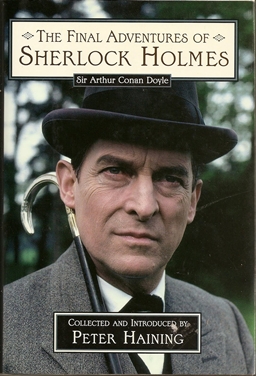
FinalAdventures_CoverThere are a LOT of books, fiction and non, about Sherlock Holmes and Arthur Conan Doyle that are worthy of standing alongside the sixty-story Canon of original Holmes tales. Today, we’re going to look at one I particularly like.

Barnes and Noble has been reproducing classic works for years and selling them at affordable prices. Their editions are a great way to get folks introduced to the classics.

But their output ranges father afield, and my Sherlockian bookshelf includes several of their titles, such as The Sherlock Holmes Companion, The Lost Adventures of Sherlock Holmes and The Final Adventures of Sherlock Holmes.

This last book is similar to the out of print and often difficult to find Sherlock Holmes: The Published Apocrypha by Jack Tracy. Both books include the “almost Sherlock Holmes” stories and plays that don’t fit in the Canon, but are certainly in the neighborhood. Back before you could find everything you ever wanted to look for on the Internet, The Final Adventures was quite the resource.

The introduction discusses the pieces that make up the book and you will find some interesting tidbits (much of which was previously in Tracy’s book).

…

Read More Read More

The Public Life of Sherlock Holmes: Holmes, the Police & Scotland Yard

The Public Life of Sherlock Holmes: Holmes, the Police & Scotland Yard

SY_MoranThe most common official police force encountered during Holmes’s sixty cases was Scotland Yard. One can safely say that Doyle’s portrayal of the men of the force was somewhat less than flattering. None ever outsmarted Holmes (though one came pretty close) and most of them are adrift until Holmes reveals all at the end of the story.

Scotland Yard was actually the descendant of an earlier police force in London. In 1748, Henry Fielding succeeded Thomas de Veil as Court Justice for Middlesex and Westminster, with headquarters on Bow Street. Fielding hired nine men to go out and catch criminals. This was, in essence, the first police force in London.

These ‘Bow Street Runners’ wore red vests and carried pistols. For eighty years, they were the only thief takers in London. Since there were never more than fifteen at a time, they were slightly outnumbered by the criminals.

In 1829, backed by Home Secretary Robert Peel, the Metropolitan Police Improvement Bill passed, creating an Office of Police for metropolitan London. It did not, however, include the one-square mile City of London, bounded by the ancient Roman walls. ‘The City’ retained that independence, which did not prove useful during the Jack the Ripper killings.

A nightstick and a rattle for summoning help were standard issue; guns were not. They were servants of the public and their power was to be based on the respect of the people, not fear.

It’s Elementary – ‘Peelers’ and ‘bobbies’ are nicknames for the London police and come from Sir Robert Peel’s name.

…

Read More Read More

The Public Life of Sherlock Holmes: Tying in the BBC Sherlock Special

The Public Life of Sherlock Holmes: Tying in the BBC Sherlock Special

Special_VictorianCostumeBack in July, what seems to be the most popular ‘The Public Life of Sherlock Holmes’ post appeared here at Black Gate. I looked at what I think went wrong with season three of the BBC’s Sherlock. I included the just-released ninety-second, ‘first look’ video for the upcoming Special, to be aired around Christmas. And I pointed out it seemed to be full of the “Look how clever we are” bits that I lamented in my post.

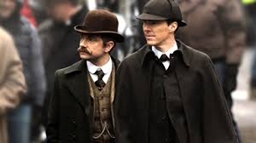
Now, just about everyone, including myself, loves that the Special is set in Victorian times; unlike the episodes in the first three seasons. Cumberbatch and Freeman would be given their first (and quite likely, only) opportunities to play Holmes and Watson in the Doyle mold. I view it as a chance for the show to get back on track and reclaim the multitude of fans it lost during season three.

That trailer was a fun little look at the Special and a second trailer came out earlier this month. “Fun” is not a word I would use. This is clearly not going to be a cute little Christmas episode, or a hunt for the owner of a goose and a hat (not a goose with a hat). In fact, it’s not about the yuletide at all. As you can see, it’s going to be some very serious business.

…

Read More Read More