Vampires, Shoggoths, and the Monsters of the Suburbs: The Year’s Best Horror Stories XVI, edited by Karl Edward Wagner
 |
 |
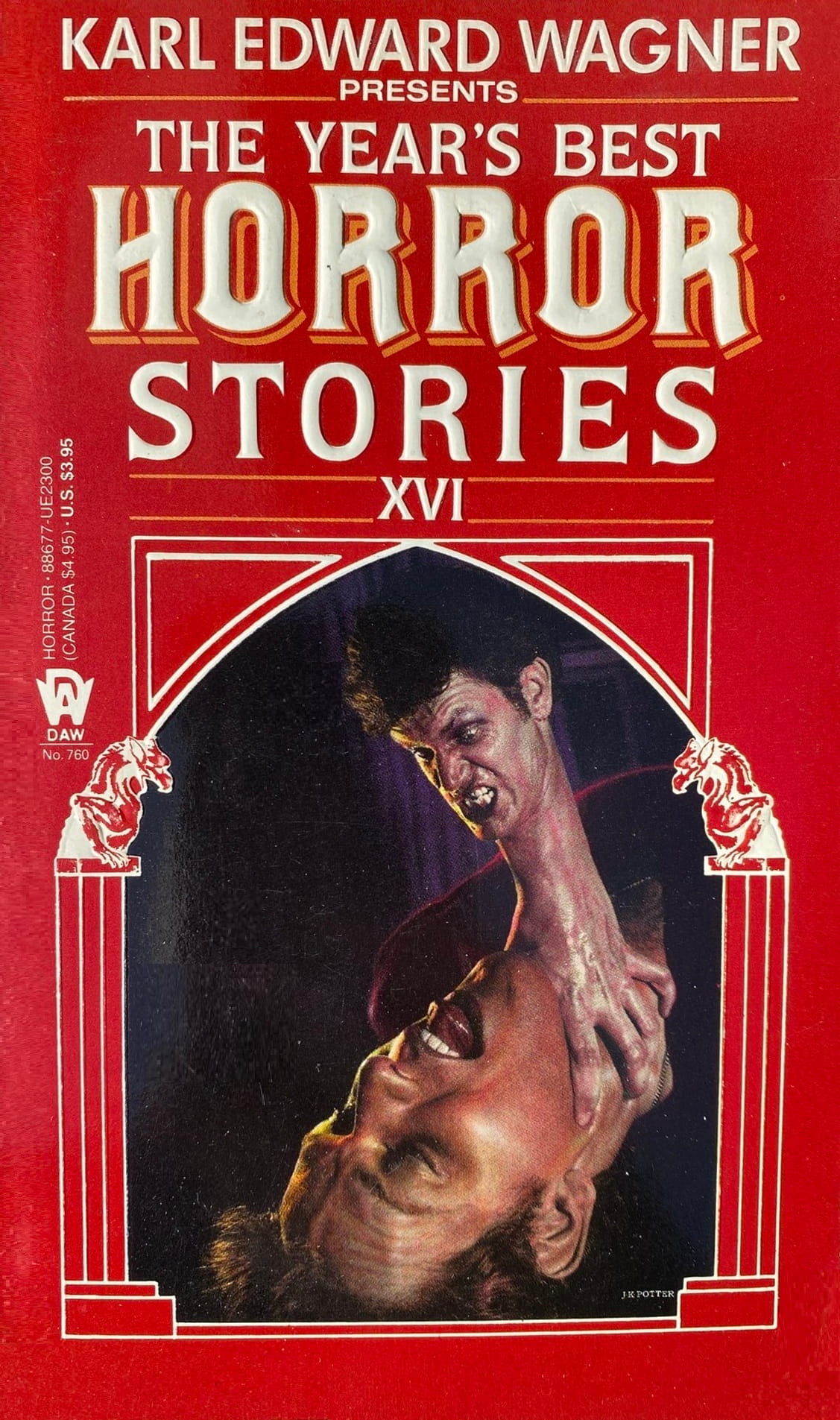
The Year’s Best Horror Stories XVI (DAW Books, October 1988). Cover by J.K. Potter
The Year’s Best Horror Stories: XVI was the sixteenth in the lineup and the eighth volume edited by the great Karl Edward Wagner (d. 1994). This book was copyrighted and printed in 1988 and represents the best short horror in the field for 1987. After twelve straight covers with Michael Whelan’s art, we now have a new cover artist, American illustrator J. K. Potter (b. 1956).
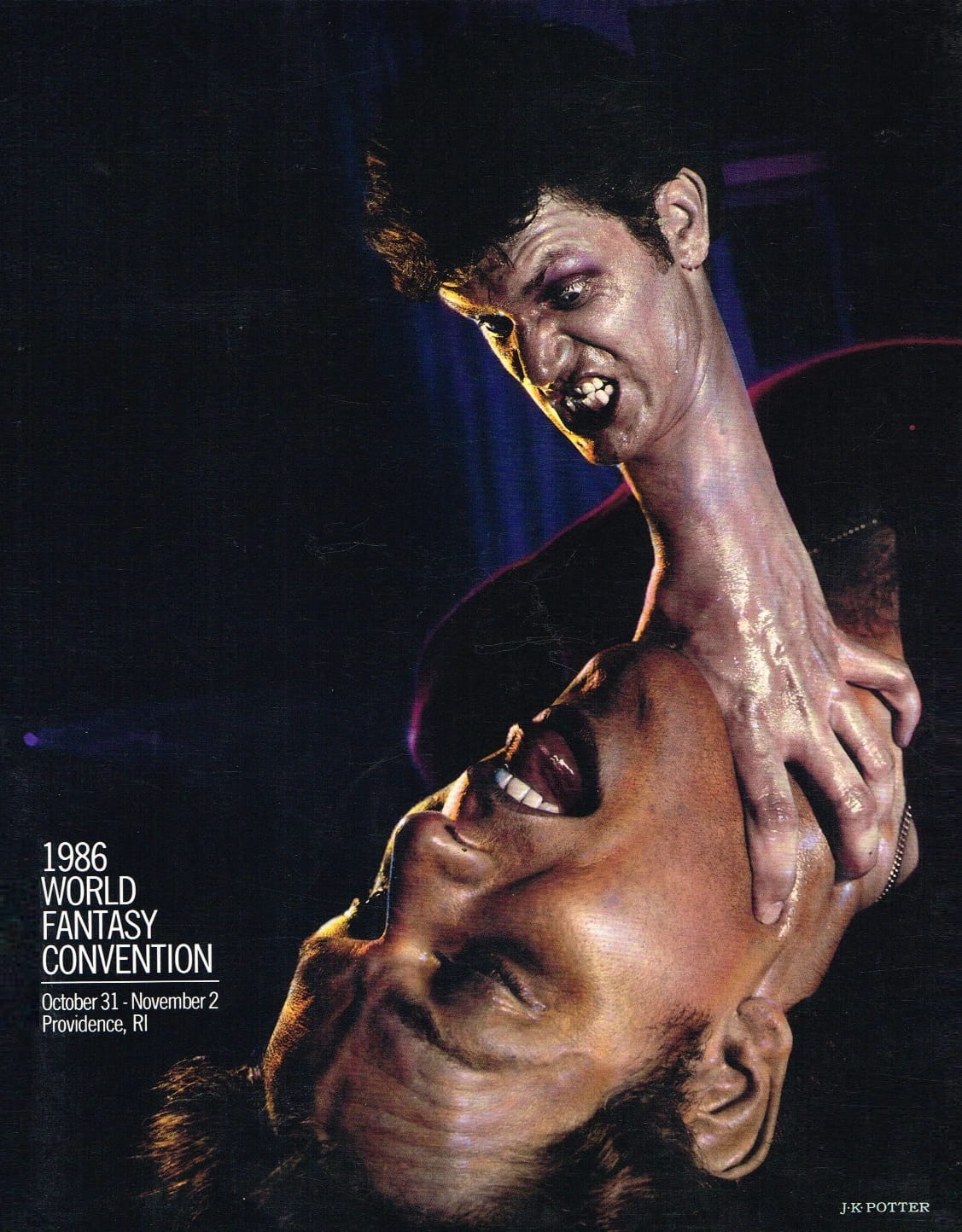
If this were published today, I’d think we’d suspect the cover was AI-generated. It looks almost photographic; but rather than being scary, it seems a little silly to me. But it’s still a horrific scene and was also on the cover the convention booklet in 1986 for the 12th World Fantasy Convention (see below). I’m sure in the mid-1980s it was quite original.
Series XVI contained sixteen short stories, each by a different author. All the authors were male but for three females. Seven were American authors, eight were British, and there was one Aussie, Greg Egan. Seven of these stories came from anthologies or collections. Six came from professional magazines. One from a fanzine, two from chapbooks.
In editor Ellen Datlow’s introductions to her still-running The Best Horror of the Year with Night Shade Books, she typically gives a “state of the Union”-type of address on the horror field. I find these very interesting, even if they’re probably only helpful for authors and editors.
In contrast, Wagner’s introductions are more like “big picture” takes on the state of horror in relation to culture at large. In this volume Wagner notes that, though the popularity of horror novels had evidently already peaked by 1987, short horror fiction was still booming in magazines and a growing plethora of fanzines, which made his (pre-internet) searches for such fiction harder and harder.
This being the case, Wagner is quite optimistic of the state of horror fiction. And the quality of these stories is good evidence toward this optimism, which are all quite different.
 |
 |
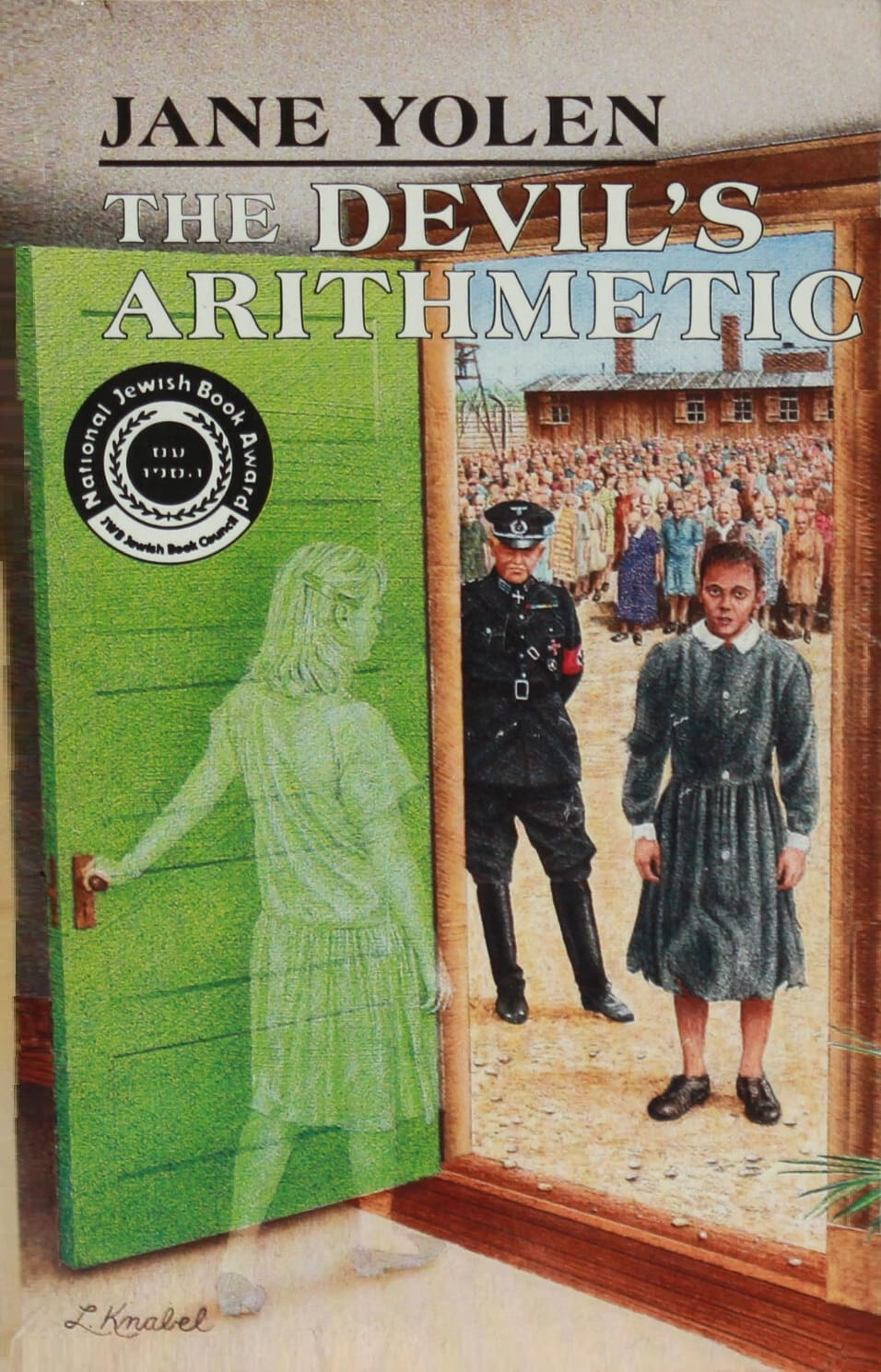
The Devil’s Arithmetic (Trumpet Club/Scholastic, January 1991). Cover by Lonnie Knabel
Stephen King’s “Popsy” is a new take on the vampire genre, which I really enjoyed. Jane Yolen, who just passed away this year, and is best known for such children’s books as Owl Moon and The Devil’s Arithmetic, gives a new take on the werewolf genre with “Wolf/Child,” which I also greatly liked.
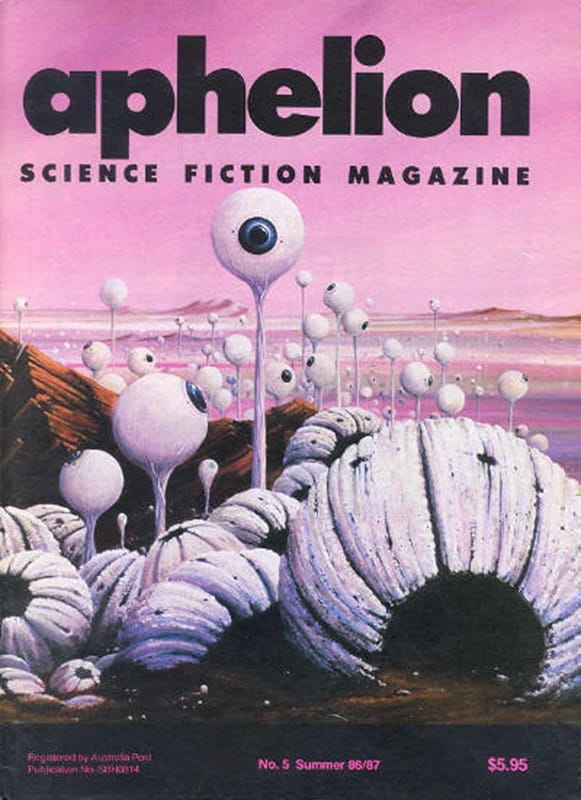
I’m a sucker for a good monster tale and Greg Egan’s “Neighbourhood Watch” (from Aphelion 5) is about a new suburb development and its homeowners’ association that has made a deal with some sort of monster that comes out at night to kill would-be burglars and vagrants. A very interesting new take on home security. Unfortunately, this monster seems to have a law degree and is thus able to find a loophole in his contract with the homeowners. This may sound goofy, but it was pretty scary and had a sad but satisfying ending.
Similar was Leslie Halliwell’s “La Nuit Des Chiens” (French for “Night of the Dogs”), which has more natural “monsters” than Egan’s tale but no less terrifying or dangerous.
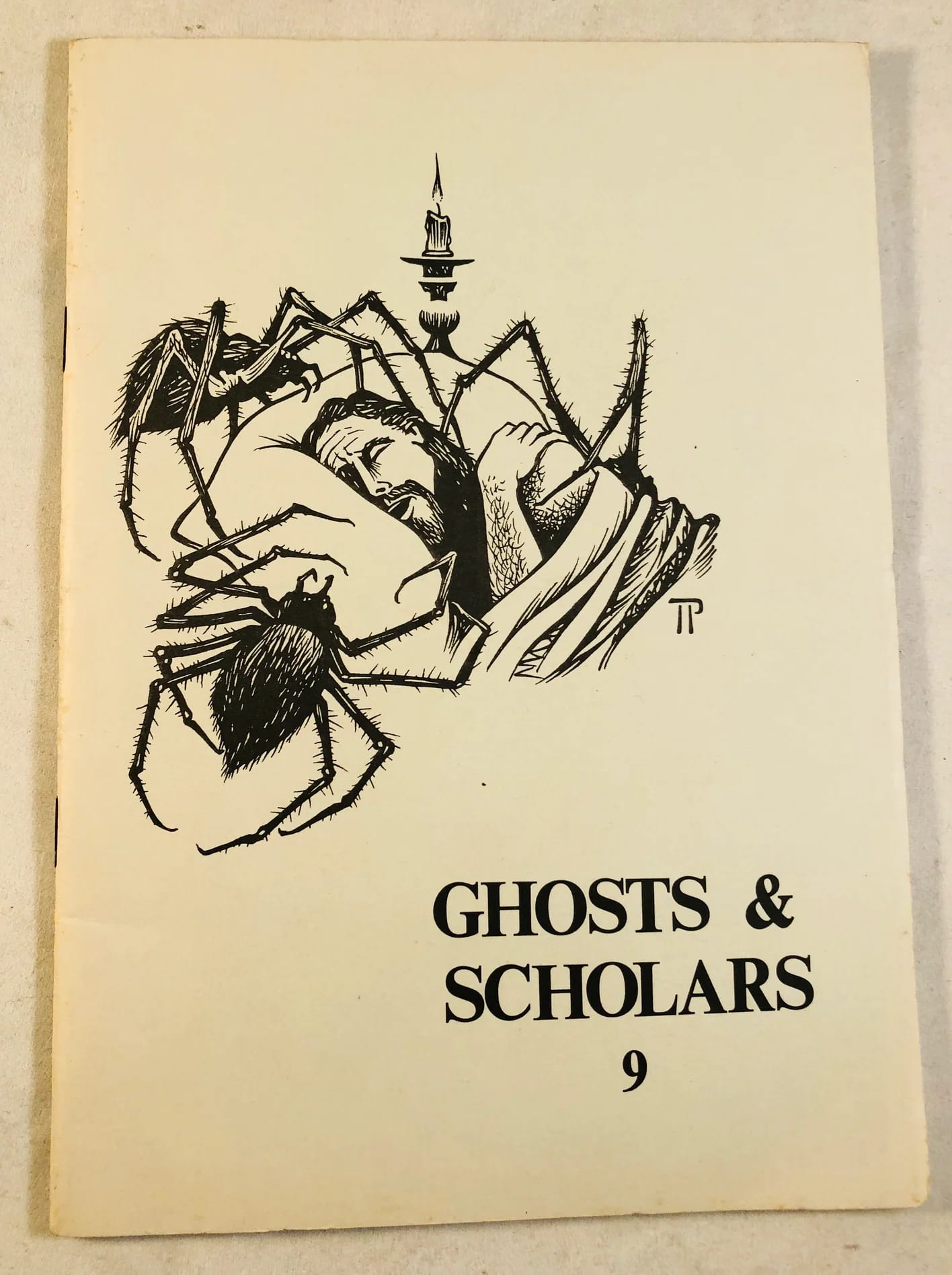
Ramsey Campbell’s story, “Merry May,” has a Wicker Man vibe. English folk horror never ends well, and neither does this story. “Echoes From the Abbey” by Shelia Hodgson was an English ghost story in the M. R. James tradition. No surprise this story was published in Ghosts & Scholars in 1987. James even appears as a character in Hodgson’s story! A. F. Kidd’s “The Bellfounder’s Wife” was also something of a ghost story and new take on the vampire genre.
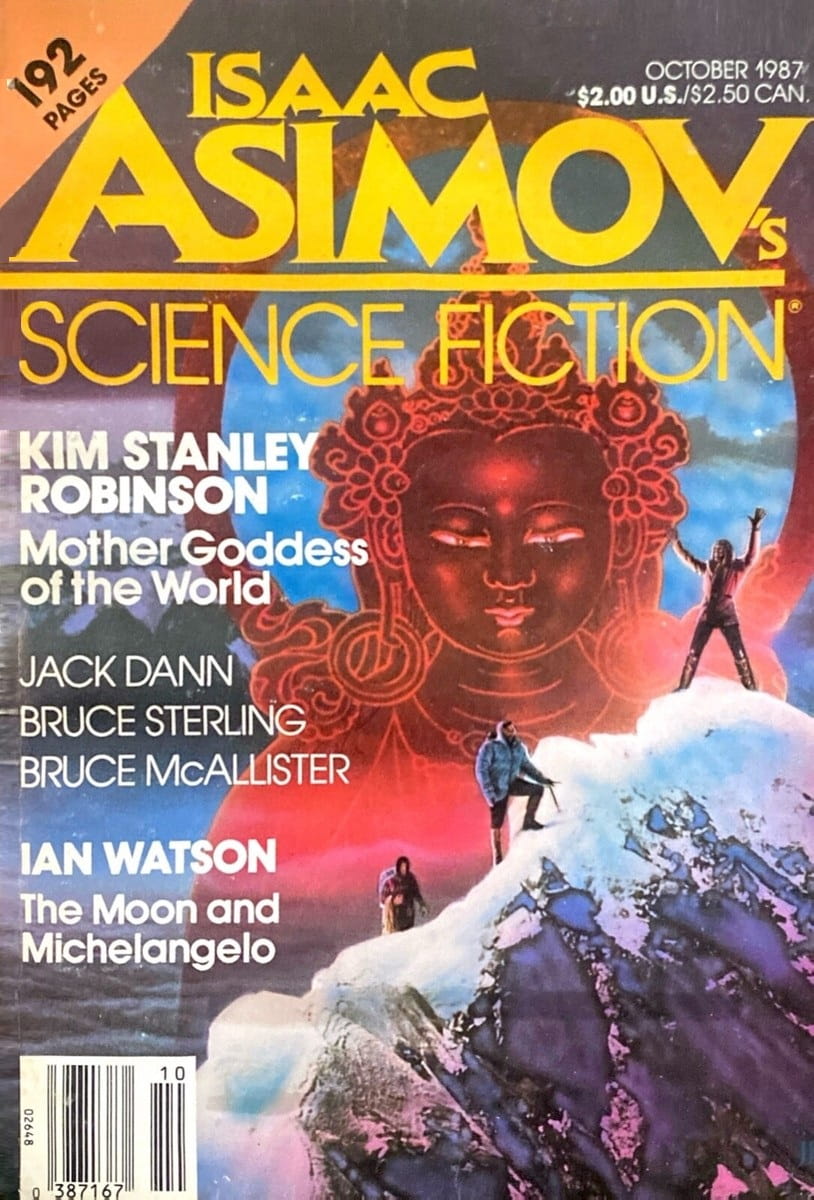
“Visitors” by Jack Dann (from Isaac Asimov’s Science Fiction Magazine, October 1987) wasn’t really a horror story at all, but about a young man who is on the cusp of death. It was primarily a sad little tale about dying too young but had a creepy moment or two. The old Mr. Benjamin is typically bedridden so that the young Charlie usually visits his room. But surprisingly, today, Mr. Benjamin is visiting Charlie in his room. There’s some hubbub out in the hallway suggesting that someone has just recently died in their wing of the hospital:
“I wonder who died,” Charlie asked.
Mr. Benjamin smiled sadly and stretched his long legs out under Charlie’s bed (p. 206).
Wagner keeps you guessing with his inclusions. The weirdest story was easily t. Winter-Damon’s “Martyr Without Canon,” which was like a stream of consciousness poem.
Interesting in bits but about what you’d expect from such “free” verse. I can actually get into this sort of thing at times. The late horror author Joe Pulver (1955–2020) sometimes did poetic verse like this. And of course Clark Ashton Smith’s (1893–1961) famous “The Hashish Eater” is a prime example of fantastic and horrific free verse.

But the story that stuck out amongst all of these very different and very good horror stories was the late Michael Shea’s (1946–2014) “Fat Face.” This story has been reprinted many, many times, and I think this volume was its first reprint appearance. Shea’s “Fat Face” is also considered a classic Lovecraftian tale.
If you’re familiar with the Lovecraftian homage and pastiche world, you may know there’s quite a bit of garbage out there. But some, like Karl Wagner’s own “Sticks,” Michael Chabon’s “The God of Dark Laughter,” and T. E. D. Klein’s “Black Man with a Horn” really stand out as modern, gritty evolutions of cosmic horror, though still relying upon Lovecraftian elements.
“Fat Face” is a very visceral horror story. Set in gritty Los Angeles, it follows a prostitute named Patti who fantasizes about a strange recluse who seems to always smile at her from an upstairs office window. Unbeknownst to her, this seeming simpleton is actually a highly intelligent, shape-shifting Shoggoth running a secret enclave that primarily preys on the city’s stray animals. Patti thinks she is going to do the chubby, smiling guy a favor by showing him a little bit of a good time. But the ending, and her ending, is absolutely horrible.
He gave a last pull and the row of buckles [on his suit] split crisply open. Ropy purple gelatin gushed from his suitfront into the tub. Patti ran to the door, which had no knob. As she tore her nails against it and screamed, she remembered the fly at the window, and heard Fat Face continue behind her:
“So we just imitate the head, and we never dissolve it, not to risk resuming it faultily and waking suspicions. Please struggle!”
She looked back and saw huge palps, like dreadful comic phalluses, spring from the tub of slime that now boiled with movement. She screamed.
“Oh, yes!” fluted the Fat Face that now bobbed on the purple simmer. Patti’s arms smoked where the palps took them. She was plucked from the floor as light as a struggling roach might be. “Oh, yes, dear girl — you’ll have bridesmaids Pain and dread, for vows you’ll jabber blasphemies…” (p. 303).
I’ll leave it to your imagination to fill in the last few lines of the story!
 |
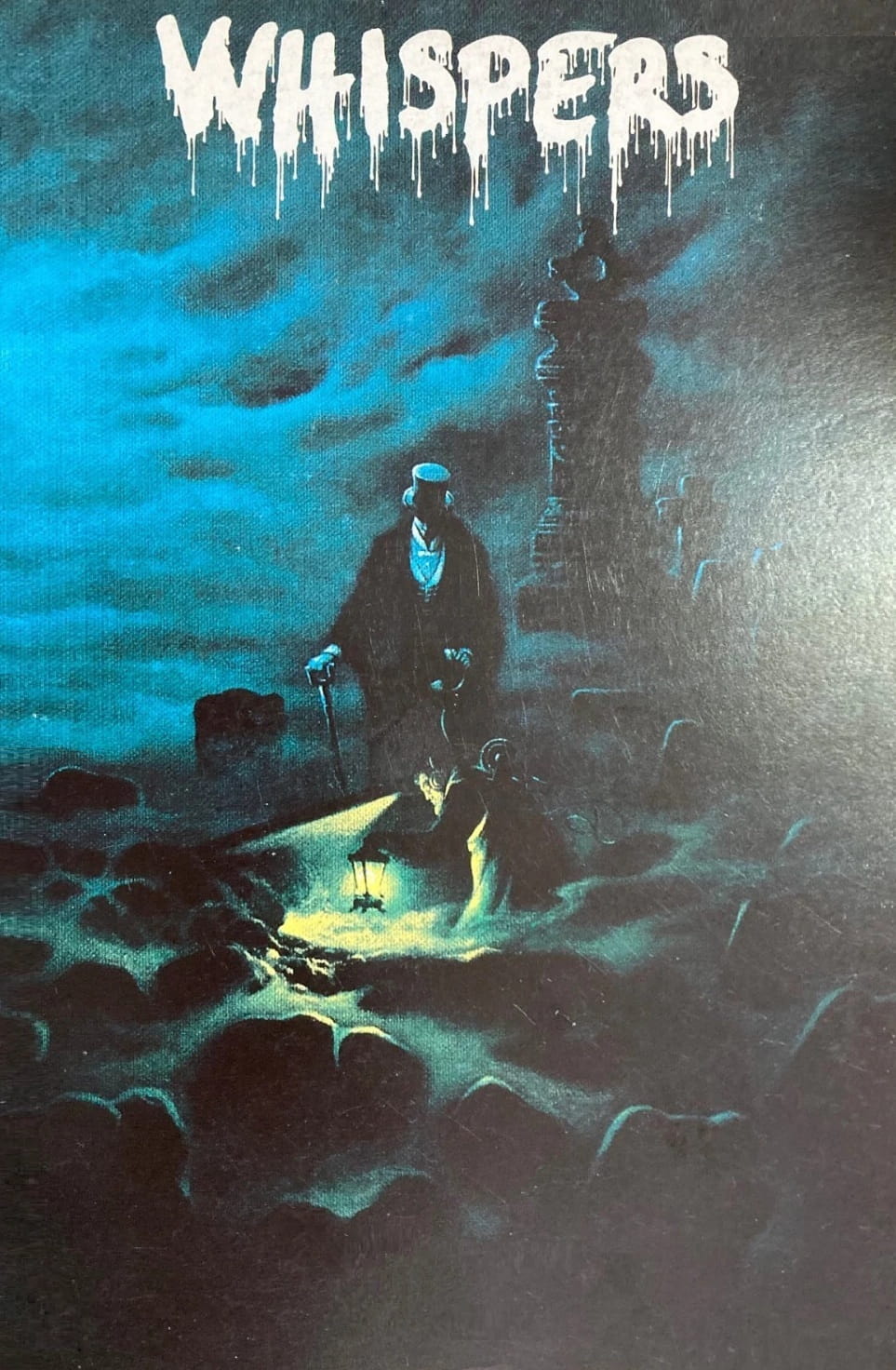 |
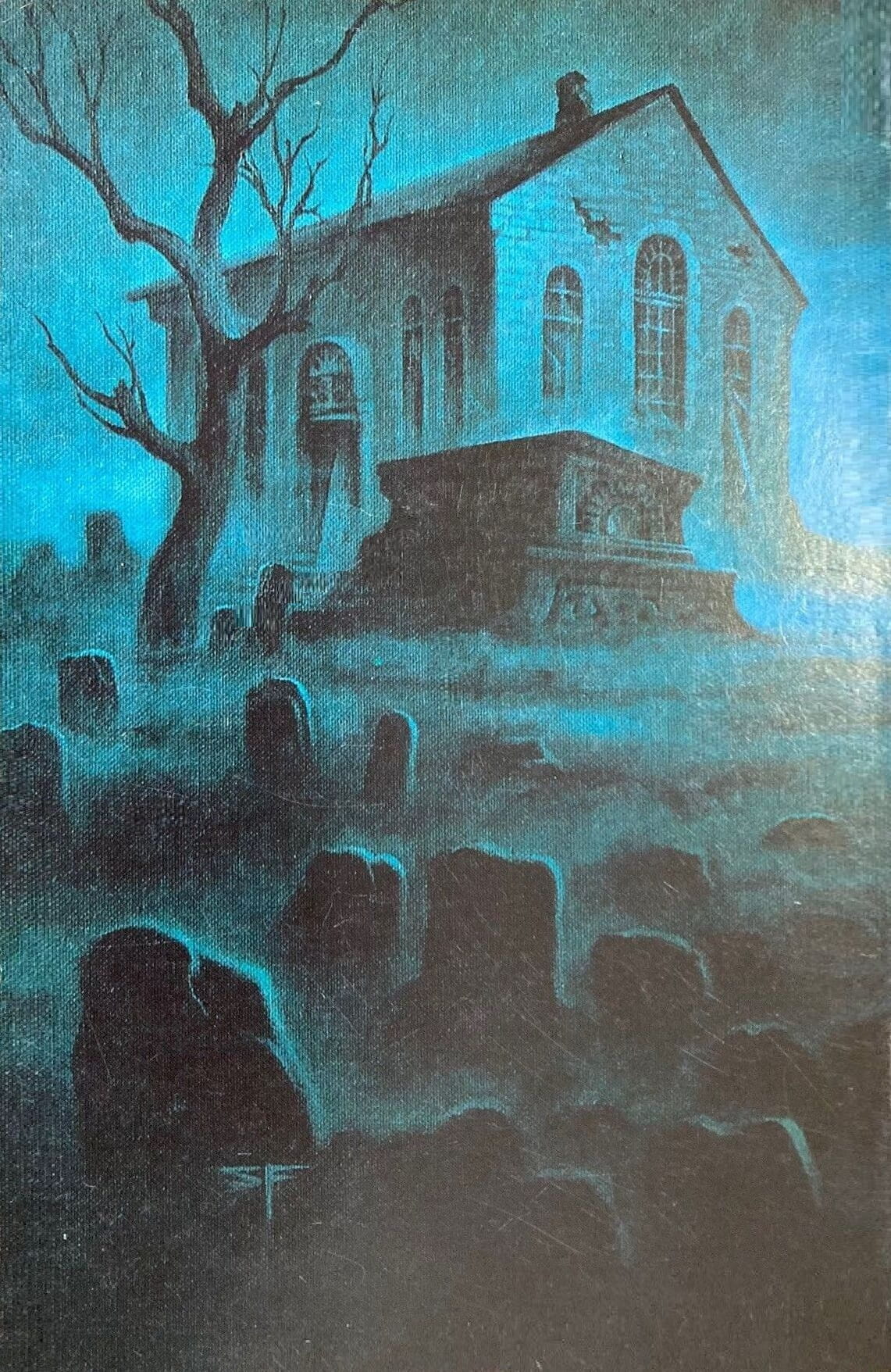
Whispers magazine, October 1987, edited by Stuart David Schiff, containing
“The Thin People” by Brian Lumley. Cover by Stephen Fabian
In short, Wagner assimilated a wide array of excellent horror stories in The Year’s Best Horror Stories: XVI. Here’s the complete Table of Contents:
Introduction: They’re Here — And They Won’t Go Away, by Karl Edward Wagner
“Popsy” (Masques II, 1987) by Stephen King
“Neighbourhood Watch” (Aphelion 5, 1987) by Greg Egan
“Wolf/Child” (Rod Serling’s Twilight Zone Magazine, June 1987) by Jane Yolen
“Everything to Live For” (Whispers VI, 1987) by Charles L. Grant
“Reposession” (Whispers VI, 1987) by David Campton
“Merry May” (Scared Stiff, 1987) by Ramsey Campbell
“The Touch” (Grue Magazine 4, 1987) by Wayne Allen Sallee
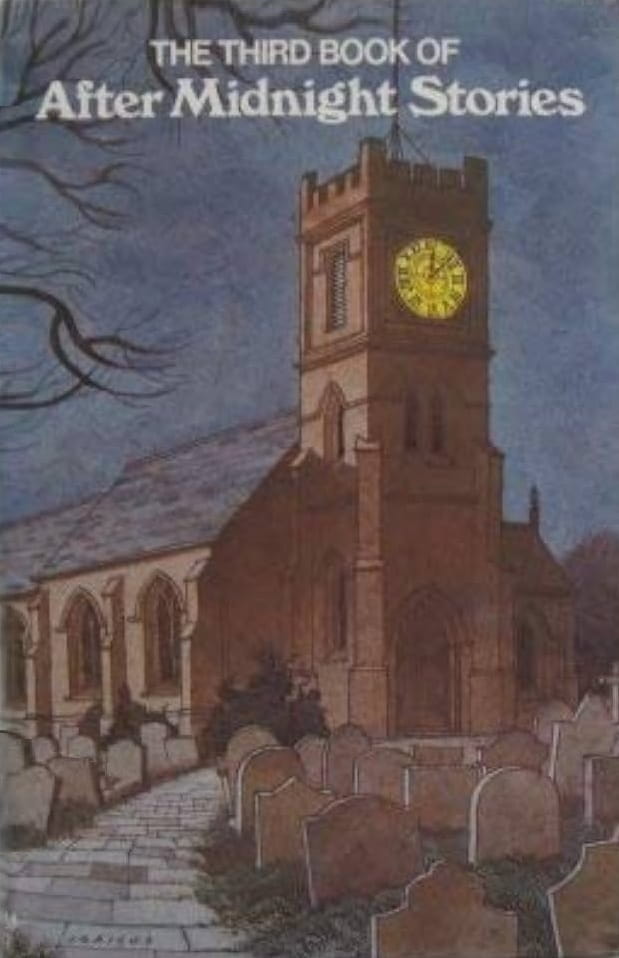
“Moving Day” (The Third Book of After Midnight Stories, 1987) by R. Chetwynd-Hayes
“La Nuit Des Chiens” (A Demon Close Behind, 1987) by Leslie Halliwell
“Echoes From the Abbey” (Ghosts & Scholars 9, 1987) by Shelia Hodgson
“Visitors” (The Architecture of Fear, 1987) by Jack Dann
“The Bellfounder’s Wife” (In and Out of the Belfry, 1987) by A. F. Kidd
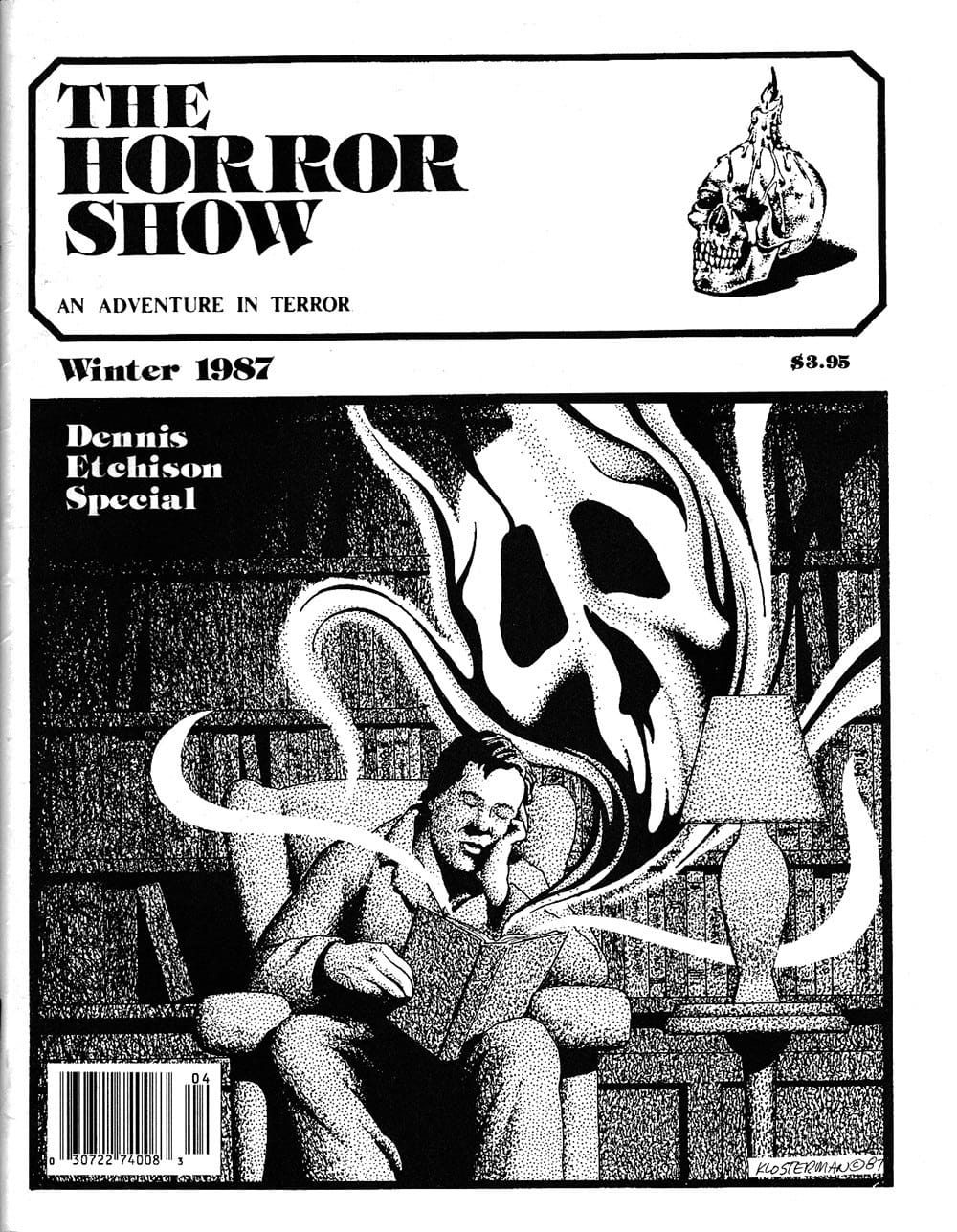
“The Scar” (The Horror Show, Winter 1987) by Dennis Etchison
“Martyr Without Canon” (Grue Magazine 4, 1987) by t. Winter-Damon
“The Thin People” (The Third Book of After Midnight Stories, 1987) by Brian Lumley
“Fat Face” (Fat Face, 1987) by Michael Shea
Previous installments in this series include:
Introduction To DAW Books’ The Year’s Best Horror Stories (1972–1994)
The Year’s Best Horror Stories: Series I (1972)
The Year’s Best Horror Stories: Series II (1974)
The Year’s Best Horror Stories: Series III (1975)
The Year’s Best Horror Stories: Series IV (1976)
The Year’s Best Horror Stories: Series V (1977)
The Year’s Best Horror Stories: Series VI (1978)
The Year’s Best Horror Stories: Series VII (1979)
The Year’s Best Horror Stories: Series VIII (1980)
The Year’s Best Horror Stories: Series IX (1981)
The Year’s Best Horror Stories: Series X (1982)
The Year’s Best Horror Stories: Series XI (1983)
The Year’s Best Horror Stories: Series XII (1984)
The Year’s Best Horror Stories: Series XIII (1985)
The Year’s Best Horror Stories: Series XIV (1986)
The Year’s Best Horror Stories: Series XV (1987)
What? No. What?! No! Yolen has left us, too? Augh! No. No. She’s one of the all-ages greats! I grew up with her “Wizard’s Hall,” and always appreciated how she tried to keep things equal (paired “No Damsel in Distress” with “Mightier Than the Sword”; wrote about both mermaids and mermen; unicorns were not allowed to be sissified; etc.) and never shied away from addressing the tough topics and hard stories for everyone (Holocaust; cancer; fairytales; creation myths; history; etc.)… she ought to have been immortal.
Reading wake #2, now. Her poor family. Hopefully, she has reunited with her husband.
Thank you for discussing “Wolf/Child.” I’ll have to hunt that one down.
I look up all the authors/editors for each volume on isfdb.com, which is kept up constantly. Yolen had only been dead a few weeks when I wrote this. Many of the authors from this series (remember it’s the late 80s) are in their 70s, if not already passed away. It’s the passing of a generation here!
I bought all of these over about a decade and a half starting in the 1990s, but I remember seeing this one when it came out back when I was working in a mall and frequented the bookstores (two bookstores! Blissful days!) I’ve since read it and I agree the stories are all excellent choices! The Potter cover reminds me of some of his covers for Fantasy Tales Magazine (which I also found at used stores in the 1990s!) Again, thanks for the trip down the shadowy parts of Memory Lane!
Thanks for the comment Jeff. These books are indeed a walk down memory lane for me as well, even though many of stories are new to my reading. Part of the joy of doing these reviews is stirring that nostalgia as well as seeing a sort of continuity in the horror field still today with the likes of Kiernan, Barron, Fracassi, Jones, and others.
I’ve been picking these up in chronological order so I may not get to this one for a bit but it does sound promising. In theme and tone it seems very eighties and that is one doozy of a schlocky cover. It would have been so much better as just a dismembered hand, either that of the guy being strangled or of a freshly handless corpse in the background. The photorealistic effect was pretty overdone in a lot of SFF art of this time as more and more illustrators worked a little too slavishly from photographs of models (often friends and girlfriends) they posed and shot.
It’s interesting to read that Wagner was already sounding the death knell of horror by this point (at least for noveks). My recollection was that it was just peaking and had a good five to six years to go, which is a lifetime in publishing. My memories here are pretty vague though and I’m probably wrong.
I plan on commenting on KEW’s sort of continual pushback on the so-called “end of horror” prophecies. What there ever a real “horror boom”?
I do love me some J.K. Potter art. I think the first time I encountered him was his cover and interior illustrations for the Arkham House Clark Ashton Smith collection A Rendezvous in Averoigne.
I know that cover! Interesting to see he was popular elsewhere. Not my favorite.