The Art of the Con: Can*Con 2016

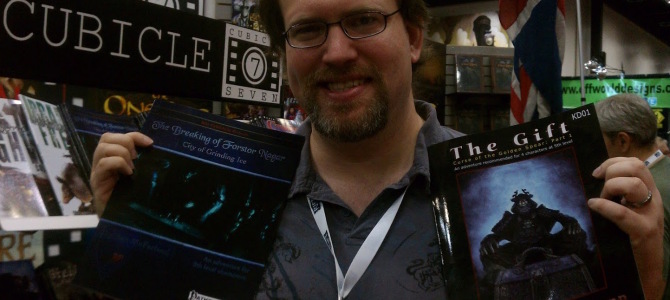
Earlier this year I was invited to join the programming team for Can*Con, the annual conference on speculative arts and literature held in Ottawa, Ontario. Since about January, I’ve been working with co-chair Derek Kunsken (who also blogs for Black Gate) and fellow author Evan May to develop the panels, presentations, workshops, etc, for this year’s conference, which will be held from September 9th to 11th at the Novotel Hotel. The next few paragraphs will be a glance behind the curtain at the work that goes into putting a con together.
I like to joke that behind that curtain are a few bedraggled wizards desperately seeking additional caffeine and occasionally pulling out the little hair left on their heads … but in all seriousness planning Can*Con has been a delight. My role really came into play after the Guests of Honor (GoHs) had already been confirmed by Derek. Those GoHs are critical because your programming tracks are based around them in many ways. For example, having Sheila Williams, editor of Asimov’s, attending this year allows us to create panels looking specifically at her magazine, analyzing what it means to be a woman in the publishing industry, and so on. If you want to have an entire track related to comics or costuming, you need a solid GoH to establish your framework. But that’s just a piece: the programming you can develop is also largely dependent on your Special Guests and panelists, and the sooner their attendance can be confirmed, the sooner you can start drafting ideas. That was pretty much where Evan and I came in earlier this year.
We started by asking potential panelists for panel ideas they would like to see or contribute to, as well as presentations, workshops, etc, they would be willing to offer. The more you can tap into people’s expertise and interest, the stronger your programming will be; you can’t have a really excellent panel focusing on queer narratives in science fiction, or the fundamentals of witchcraft, or whether The Exorcist still works in the 21st century unless you have panelists with a deep understanding of those topics. A lot of the work at this stage is emailing back and forth with panelists, to both solicit ideas and then sometimes refine them, if the idea is too similar to something that ran the year before or something that we don’t think would quite appeal to our attendees. The little brainstorming sessions with panelists hopefully yield programming that is compelling and which everyone is happy with.
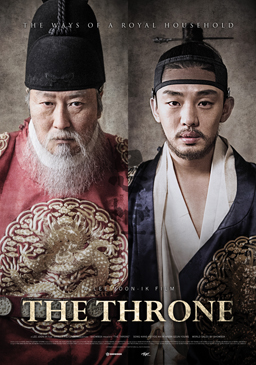 Sometimes the movies I get to see on a given day at Fantasia have an obvious common theme. Sometimes not. Sometimes there’s a commonality binding two otherwise different movies, but it’s tenuous. So it was that on Tuesday, July 19, I watched a Korean historical drama called The Throne (originally Sado), and followed it with a Polish musical-fantasy-tragicomedy called The Lure (originally Córki dancingu). They’re both films based on older stories, in the first case recorded history from the eighteenth century, and in the second Hans Christian Andersen’s fairy tale “The Little Mermaid.” As you might imagine from those two very different source materials, these are very different movies in very different genres. But it also seemed to me that the process of retelling the stories was very different as well.

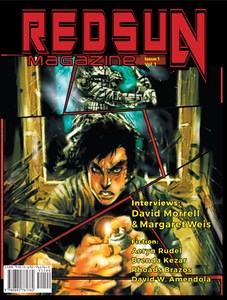
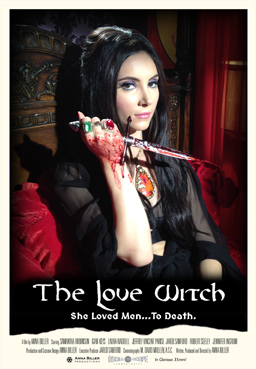 I had only one movie on my schedule for Monday, July 18, but thanks to the good offices of the people at the Fantasia Film Festival and at Oscilloscope Laboratories, I ended up able to catch another film first. The Love Witch was a movie that I’d been unable to watch in its theatrical showing at Fantasia due to a scheduling conflict. After seeing it Monday, I’d go on to the Hall Theatre for The Wailing (Goksung), a two-and-a-half hour Korean horror film. The movies made for an odd contrast. In both cases I greatly appreciated them but came away fairly sure I wasn’t part of their primary audience. But movies play to whoever sees them, and perhaps writing about these films will bring them to the attention of people with better perspectives than my own.