Toy Story 3: Genre fiction writers take heed
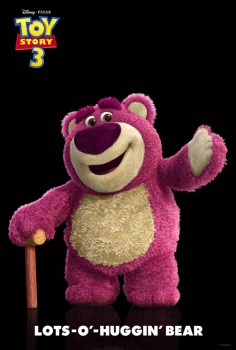 Warning: This essay contains some spoilers.
If fairy-story as a kind is worth reading at all it is worthy to be written for and read by adults.
–J.R.R. Tolkien, Tree and Leaf
I don’t get to the theatre too often these days, and with two young daughters in tow more often than not it’s to see a children’s film. But I’m not lamenting this fact, especially when the movies are of the quality of Toy Story 3.
Hey, I love Robert E. Howard, Bernard Cornwell, and the Viking novels of Poul Anderson as much as the next battle-mad fantasy fan, but I’m man enough to admit liking (most) Pixar films as well. And Toy Story 3 might be the best one I’ve seen. Critical consensus is not necessarily a hallmark of a good film (see Blade Runner, panned on its initial release by most critics, recognized as genius years later), but I think it’s telling that Toy Story 3 currently has a 99% “fresh” rating on Rotten Tomatoes. In this case, the critics are spot-on.
Toy Story 3 is a near-perfect children’s film. Like all children’s films, it possesses straightforward story lines, engaging visuals, and brisk action in order to keep young attention spans focused. (If these qualities sound like less than appealing, well, genre films can’t be all things to all people). So why sing its praises on Black Gate? Toy Story 3 serves as an instructive example of how to tell a great story within the confines of a given genre. Just like you can’t get too bogged down in dialogue or non-linear narrative techniques in a movie for kids, that story you submit to Heroic Fantasy Quarterly better contain some elements of sword play and sweeping action if you want to stand a chance of getting it published. If you disregard your audience you’re destined to fail.
 Has anyone ever asked what you would grab out of your house if it was on fire and you could only make one trip? Or maybe the question was, if you knew you were going to be stranded on a deserted island, what would you take with you?
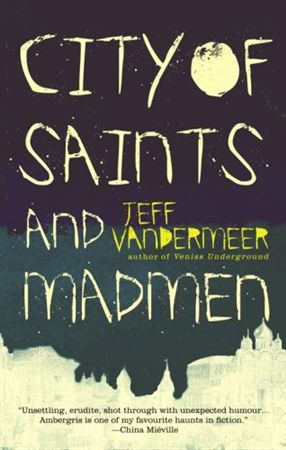
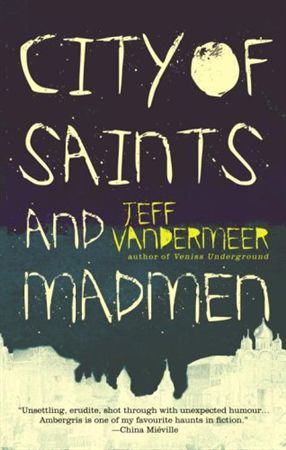 There sat a book that drew my hand toward its spine, and before I realized what I was doing, I was looking at the cover to CITY OF SAINTS AND MADMEN. Something in the back of my mind rose (squid-like) to the surface. I read the comments on the back of the book, and on the first few pages. There was something here…something I’d been looking for. To my amusement, the book itself validated my thought seconds later as I read the quote from Mr. Moorcock: “It’s what you’ve been looking for.”
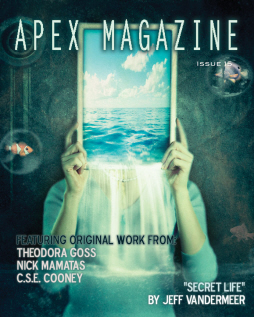 Apex Magazine #15 was published on August 2, featuring fiction from Theodora Goss, Nick Mamatas, a reprint by Jeff VanderMeer — and “Dogstar Men,” a short poem by Black Gate blogger C.S.E. Cooney.
 . . . And the boy thought,
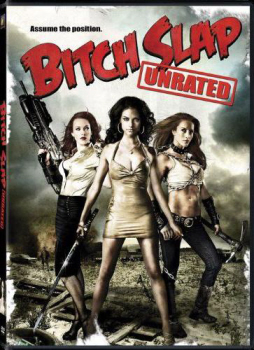 Bitch Slap the (unrated) film relates to fantasy fiction how, you may ask?
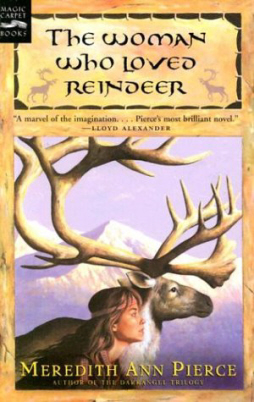 The Woman Who Loved Reindeer, by Meredith Ann Pierce
 I don’t know what makes a novel great. Maybe every great book is great in its own way. I suspect, though, that a novel’s greatness resides most often either in its structure (not just its plot, but its balancing of themes and elements, its division into units like chapters, and its decision of what to describe and when) or its prose (its ability to make every word count, not only in depicting character and setting, not only in moving forward story, but in advancing the theme of the book, what it’s about, the idea that prompted the telling of the tale in the first place).
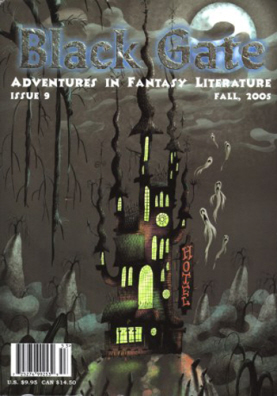 We’ve just re-vamped our
 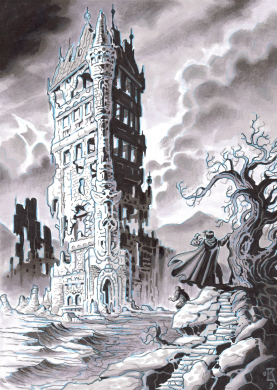 The ruined mansion seemed the perfect place to elude their pursuers… until they began to penetrate its secrets.