Fantasia Diary 2015, Day 20: Kahlil Gibran’s The Prophet, Outer Limits of Animation 2015, Experimenter, Ninja the Monster, and Strayer’s Chronicle
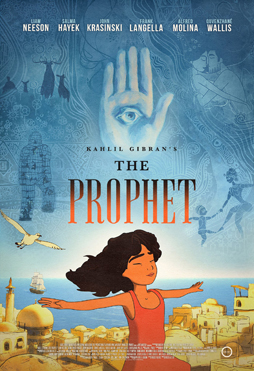 Sunday, August 2, was a day I’d been waiting for and slightly dreading. I was planning to see five films, one after the other. All of them at the large Hall Theatre, except for the second, a presentation of short animated films at the De Sève. It would kick off at 12:30 with Kahlil Gibran’s The Prophet, a cartoon adaptation of the classic book. The Outer Limits of Animation 2015 showcase would follow. Then Experimenter, a biopic about controversial psychologist Stanley Milgram, he of the notorious fake electroshock experiments. Then Ninja the Monster — as its title suggests, a film about a confrontation between a ninja and a monster. Finally would come Strayer’s Chronicle, a novel adaptation about a group of alienated teenagers with strange powers fighting to protect a world that hates and fears them. I was fairly sure it was possible to make a good movie out of that sort of material. But I had a lot of film to watch before I’d get to see it.
The Prophet is a co-production from Canada, France, and Lebanon, produced by Selma Hayek. It follows a poet named Mustafa (voiced by Liam Neeson) held captive by Turks on an island far from his homeland. He’s given the news he can go home — but do the Turks have a hidden plan? A determined little girl, Almitra (Quvenzhané Wallis), wants to protect Mustafa, while her mother Kamila (Hayek) is more worried about Almitra. Mustafa makes his way from his home to the docks, stopped along the way by peasants who praise him and ask him to speak of subjects that matter to them.
That’s the general outline of events, but the movie’s easy to view as an anthology: when Mustafa gives a speech, the realistic art of the story fades to be replaced by a highly distinct vision of some kind. Each of these sequences has a different director. The frame sequence, with Mustafa and Almitra and Kamila, is directed by Roger Allers. The directors of the inset sequences are Paul Brizzi, Gaëtan Brizzi, Joan C. Gratz, Mohammed Saeed Harib, Tomm Moore, Nina Paley, Bill Plympton, Joann Sfar, and Michal Socha. Each of the segments they create are at the very least effective and fun to watch, while the best are stunning.

 Saturday, August 1, would start early for me at Fantasia. At 12:30 I was seeing a Chinese fantasy adventure called Snow Girl and the Dark Crystal. Then I’d head over to the screening room, where I planned to watch a documentary about the Turkish film industry, Remix, Remake, Ripoff: About Copy Culture and Turkish Pop Cinema. Then I’d go to the De Sève Theatre for a pair of films, the post-apocalypse art-house movie Orion and then the Korean drama Socialphobia. Once again, a nice varied day.
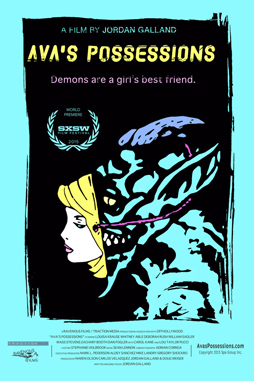 Friday, July 31, started late for me at Fantasia. My first movie, a horror-comedy called Ava’s Possessions, screened at the Hall Theatre at 5:15. After that I decided to watch the Indonesian wuxia movie The Golden Cane Warrior. Then I’d go across to the De Sève Theatre to catch the surreal science-fictional American-Argentinian movie H. before returning to the Hall for the Friday midnight movie, a Quebec-made tribute to 80s post-apocalypse action movies called Turbo Kid. That would carry me through to something like 2 AM. So if things started late, at least it looked like I had a lot on the agenda.
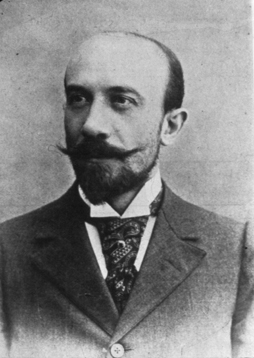 Thursday, July 30, looked like one of the odder days I had lined up at the Fantasia Festival. I’d head down to the De Sève Theatre early on to catch a new American science-fiction film called Synchronicity, then go to the screening room to watch a dialogue-free horror film called The Dark Below. After that, I’d go back to the De Sève to catch the Irish black comedy Traders, and finally wrap up with an event called Méliès et magie, an event presenting some of the classic short films by the first master of fantasy cinema. It looked like a varied day, though in the end it was less so than I’d expected.