Warhammer 40,000 Movie Announced
 Chances are if you are at all interested in fantasy or science fiction books or games, you’ve at least brushed against Games Workshop’s ubiquitous Warhammer franchise. Warhammer comes in roughly two flavors, the fantasy version which is a Tolkien, D&D, and Moorcock mash-up, and the space opera version, called Warhammer 40,000. Taking place in the bleak world of the 41st millennium, with the tagline “In the grim darkness of the future there is only war,” Warhammer 40k is a violent world of warring factions, lost technology, dark and corrupting forces, fanaticism, and a medieval Gothic aesthetic. It is a universe where power armored soldiers charge into battle with chainsaw swords screaming religious oaths, millennia-old spaceships a mile long look more like Notre Dame Cathedral than the starship Enterprise, and daemonic forces and hostile races in the form of orks, ‘elves,’ and H.R. Geiger aliens erode the power of a moribund human civilization presided over by a nearly-dead God Emperor.
Fans of the setting — which has slipped the moorings of miniature wargaming to include a fecund book publishing arm and a series of extremely popular and acclaimed video games — will be happy at the long overdue announcement that Warhammer 40,000 will be getting its first film, an animated/CGI straight to DVD production entitled Ultramarines (turn your speakers down if you click that link). Well, it’s about time — if the rather obscure Warzone/Mutant Chronicles can get its own film, it’s rather surprising that it has taken so long for such a visible and demonstrably bankable property such as 40k to enter the film arena.
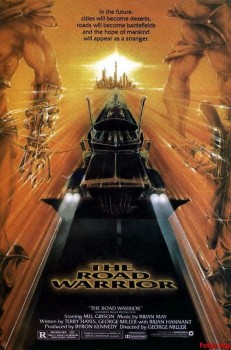 Right before I begin writing any major-length work, I do some important “stretching” exercises. No, not writing exercises; I do those nearly every day of the year regardless of what other projects I’m working on. This exercise is picking some DVDs off my shelves and queuing up a few key scenes that get me in the mood to tackle writing a novel. I don’t watch the whole movie (I usually don’t have the time), only a specific scene that does something to the synapses in my brain and makes me want to charge at the word processor and start slugging.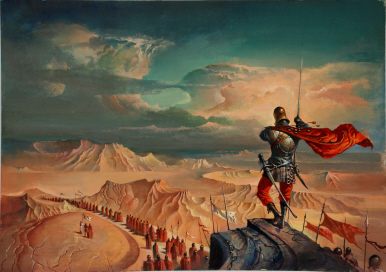
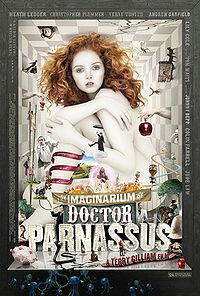 Very much looking forward to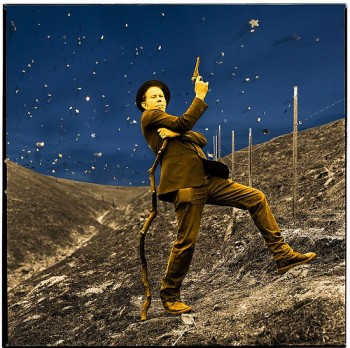
 When people ask me what I like to read I usually answer with a simple ‘everything,’ but of course that’s not strictly true. I don’t read trigonometry textbooks or Romance novels, celebrity memoirs or cookbooks, monographs on the evolution of sheep shearing or anything by Dan Brown (in fact, just give me that thing on sheep first). But when I say ‘everything’ I’m being figuratively if not literally honest, because my tastes — especially when compared to the average reader — are very broad. I don’t read only one kind of thing. I’m a generalist.
 I finally saw Spike Jonze’s Where the Wild Things Are a few days ago (because I’m never the first to see anything, as a matter of policy) and I thought it was pretty good. Some people have reacted with shock and horror to the violence and the scary bits, and maybe I’m over-reacting against them, but there wasn’t anything scarier in the movie than a regular kid might have to face in an average week. Which may, itself, be rather scary, but more so for adults and their illusions than for kids.
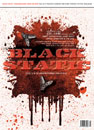 In the mail today, just in time for Halloween, is the blood-spattered graphic of the October/November
 cover of Black Static magazine, the horror and dark fantasy counterpart that alternates monthly appearances with Interzone science fiction published by the folks at
  In a few days, the clock will click over from October 31st, Halloween, and pass into November 1st, a day usually associated with the major retailers of North America vomiting out as much Winter Holiday displays they can. (Once they waited until the day after Thanksgiving, but now I think they are prepared to creep into mid-October as well, before the pumpkins are even carved.)
 For this edition of my irregular review of the latest (more or less) short fiction, I thought I’d try something a little different. Usually I try to focus on the stories that worked the most for me, with maybe some attention on those that didn’t and why; at the same time, I also try to convey a flavor of everything else, if only just to alert you that an author is in the publication without, for any number of reasons, wanting to get into discussing the story to any great length. Note the use of the word “try.” One of the challenges here is to provide some substantive, possibly even useful, discussion to an audience that I’m assuming hasn’t already read the material. As